


Ram Navami 2026 in Nepal: A Sacred Festival Marking a Bright New Political Dawn

In 2026, Nepal witnessed a rare and powerful moment where spirituality and politics came together in perfect harmony. The auspicious celebration of Ram Navami, one of the most revered Hindu festivals, coincided with a historic political milestone—the oath-taking ceremony of the newly appointed Prime Minister and Council of Ministers.
What made this day even more remarkable was the political transformation behind it. The new government was formed after a strong wave of youth-led Gen Z protests demanding accountability, transparency, and change. This movement reshaped Nepal’s political landscape and led to a historic victory by the Rastriya Swatantra Party (RSP), which secured an overwhelming 182 seats.
This unique convergence turned Ram Navami 2026 into more than just a religious festival—it became a symbol of hope, renewal, and a bright new beginning for Nepal.
The Deep Spiritual Essence of Ram Navami
Ram Navami celebrates the birth of Lord Rama, the seventh incarnation of Lord Vishnu and the embodiment of righteousness (dharma), truth, and ideal leadership. His life, as narrated in the epic Ramayana, continues to guide millions in matters of morality, duty, and justice.
Observed on the ninth day (Navami) of the bright half of the Chaitra month in the Hindu calendar, Ram Navami holds immense importance in Nepal, a country where Hindu traditions are deeply woven into everyday life. Devotees fast, visit temples, chant prayers, and participate in religious gatherings to honor Lord Rama’s birth.
The values associated with Lord Rama—honesty, sacrifice, compassion, and leadership—are not only spiritual ideals but also principles that resonate strongly in governance and public life.
Celebrations Across Nepal
From the ancient temples of Kathmandu to the sacred plains of the Terai, Ram Navami is celebrated with immense devotion and grandeur.
In Janakpur, the spiritual capital associated with Sita, thousands of pilgrims gather to celebrate the festival. The Janaki Mandir becomes the focal point of festivities, adorned with lights and flowers, echoing with devotional songs and prayers.
Similarly, in Kathmandu, the historic Ram Mandir attracts devotees who come to offer prayers and seek blessings. The atmosphere is filled with bhajans (devotional songs), recitations of the Ramayana, and a sense of peace and unity.
Homes are cleaned and decorated, families gather for special meals, and communities organize cultural programs that reflect the richness of Nepalese traditions.
The Historic Oath Ceremony: A New Chapter in Governance
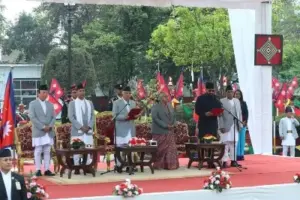
Alongside the spiritual celebrations, Nepal witnessed a major political turning point. The oath-taking ceremony of the Prime Minister and ministers marked the beginning of a new government formed after significant public demand for change.
The rise of this government is deeply connected to the Gen Z protest movement, where young citizens voiced their frustration with traditional politics and called for a new era of governance.
This public momentum led to the remarkable success of the Rastriya Swatantra Party (RSP), which won 182 seats, signaling a strong mandate for transformation.
The oath ceremony, conducted by the Office of the President of Nepal, symbolized not just a change in leadership but a shift in public expectations—toward transparency, accountability, and effective governance.
A Powerful Symbolism: Dharma Meets Democracy
The coincidence of Ram Navami and the oath ceremony created a powerful narrative—one where the ideals of dharma (righteousness) align with the responsibilities of governance.
Lord Rama is often regarded as the perfect king—“Maryada Purushottam”—who ruled with justice, compassion, and unwavering commitment to truth. His leadership style, often referred to as “Ram Rajya,” represents an ideal state where citizens live in harmony, justice prevails, and leaders act selflessly.
By taking the oath on this auspicious day, Nepal’s leaders symbolically connected themselves to these timeless values. It served as a reminder that leadership is not just about power, but about responsibility, ethics, and service.
For citizens, this alignment brought a renewed sense of optimism. It suggested that the new government could embody the virtues of Lord Rama—leading the nation toward stability, prosperity, and unity.
Public Sentiment: A Day of Hope and Pride
Across Nepal, people experienced a unique blend of spiritual fulfillment and civic pride. The streets were filled with festival celebrations, while homes and public spaces buzzed with discussions about the new government.
For many, this day represented:
- A fresh start for the nation
- A hopeful future under new leadership
- A reaffirmation of cultural and spiritual identity
Social media platforms were flooded with messages celebrating both Ram Navami and the new government. Citizens expressed their aspirations for progress, good governance, and national unity.
The Role of Culture in Shaping National Identity
Nepal is a country where culture and politics often intersect in meaningful ways. Festivals like Ram Navami are not just religious observances—they are expressions of national identity and collective values.
The events of 2026 highlighted how cultural traditions can reinforce political moments, giving them deeper meaning and resonance. The oath ceremony, when viewed through the lens of Ram Navami, became more than a constitutional requirement—it became a moral commitment.
This fusion of culture and governance is what makes Nepal unique. It reflects a society where spiritual values continue to influence public life and decision-making.
Tourism Perspective: A Unique Opportunity
For the tourism industry, this rare convergence presented a powerful narrative. Nepal, already known for its spiritual heritage and natural beauty, showcased an inspiring story of unity and renewal.
Travelers visiting during this time experienced:
- Vibrant festival celebrations
- Sacred rituals and temple visits
- A historic political moment
Destinations like Janakpur and Kathmandu offered a rich cultural experience, making Nepal an even more attractive destination for spiritual and cultural tourism.
For companies like Green Horizon Tours & Travels, this is an opportunity to promote Nepal not just as a trekking destination, but as a land of deep cultural significance and meaningful experiences.
Looking Ahead: A Bright Future
As the celebrations concluded and the new government began its journey, Nepal stood at the threshold of a new chapter. The events of Ram Navami 2026 left a lasting impression—a reminder that the nation’s strength lies in its values, traditions, and unity.
The alignment of a sacred festival with a significant political transition sent a clear message: the future of Nepal can be guided by the principles of righteousness, integrity, and service.
Conclusion
Ram Navami 2026 will forever be remembered as a day when spirituality and statecraft came together in perfect harmony. The birth anniversary of Lord Rama inspired millions, while the oath ceremony of the Prime Minister Balendra Shah and ministers marked the beginning of a new era in governance.
Together, these events created a powerful symbol of hope—a reminder that with strong values and dedicated leadership, Nepal’s future is indeed bright.
As the nation moves forward, this historic day will stand as a beacon of inspiration, encouraging both leaders and citizens to uphold the ideals of dharma and work collectively toward a prosperous and harmonious Nepal.


How to book a trip?

make free inquiry

confirm the trip
