


Manaslu And Tsum Valley Trek


Trip Duration
21 days Days
Group Sizes
4-12 People
Transportation
Jeep/Van
Destination
Manaslu And Tsum Valley Trek
Max. Altitude
5000m
Nature of Trip
Cultural & Adventure Trek
Best Season
October–November, March–May
Activities
- Trekking
- Exploring Villages
- Cultural immersion & photography
- High pass crossing

Difficulty
Easy
Meals
- Breakfast
- Lunch
- Dinner

Start & End Point
Kathmandu
Accommodation
- Teahouses
- Lodges
Overview of Manaslu And Tsum Valley Trek
 |
|
Introduction: Where Mountains Meet Heaven
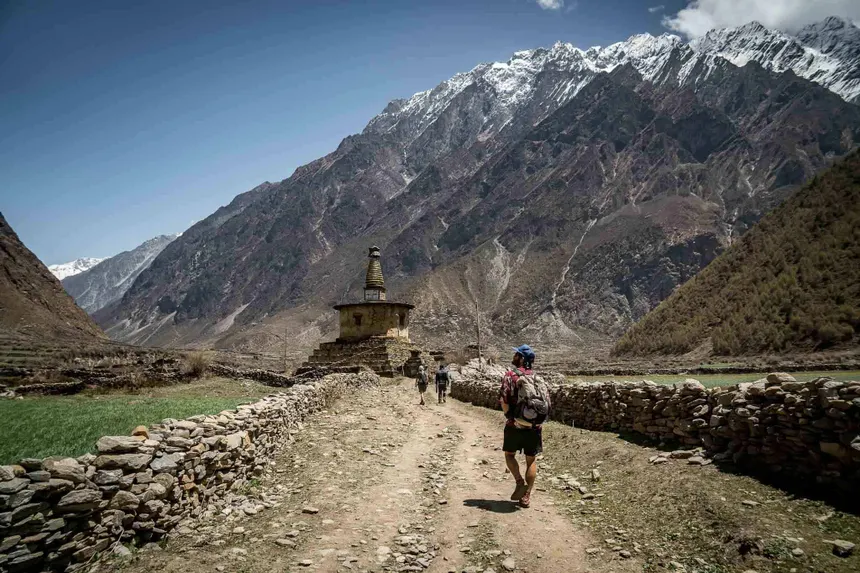
The road from Kathmandu climbs out of the valley through terraced fields and scattered villages, then drops again toward the rushing Budhi Gandaki River. Somewhere along that winding journey past the last roadhead, beyond the final teahouse with WiFi, after the trail narrows to footpaths carved into cliff faces, the modern world begins to dissolve. You are entering the country around Manaslu, the world’s eighth-highest mountain, and if you turn north into the side valley called Tsum, you will walk into one of the last truly hidden valleys of the Himalayas.
I have led this trek perhaps twenty times now, and each journey feels like the first. There is something about Tsum Valley that resists familiarity, that refuses to become routine. Perhaps it is the prayer wheels that spin in the wind, their copper cylinders catching the late afternoon light. Perhaps it is the way the old women chant mantras as they walk circuits around the mani walls, their fingers moving across wooden prayer beads worn smooth by decades of devotion. Or perhaps it is simply the silence to the vast, ringing silence of high altitudes and thin air, broken only by the distant tinkling of yak bells and the snap of prayer flags in the wind.
Manaslu takes its name from the Sanskrit word manasa, meaning “mountain of the spirit” or “intellect.” The Tibetan people who live in its shadow call it Kutang, but by any name, the mountain dominates the landscape. A massive pyramid of ice and rock that rises 8,163 meters into the sky. The Tsum Valley, which branches north from the main Manaslu circuit, derives its name from the Tibetan word Tsombo, meaning “vivid” or “vibrant.” The valley was a restricted area until 2008, closed to outsiders, and even now it remains one of Nepal’s least visited trekking regions. Fewer than two thousand trekkers walk through Tsum each year, compared to tens of thousands on the Annapurna Circuit or Everest Base Camp routes.
This isolation has preserved something increasingly rare in Nepal: an intact Tibetan Buddhist culture, largely unchanged by the currents of modernization that have swept through the more accessible valleys. Tsum is not a museum or a cultural performance for tourists. It is a living, breathing spiritual landscape where religion and daily life remain inseparable, where the monasteries still function as centers of learning and practice, where families still send their sons and daughters to take monastic vows, and where the ethical principle of ahimsa, non-violence toward all living beings, has been practiced for centuries. The people here do not hunt. They do not raise animals for slaughter. Even insects are moved gently aside rather than killed.
The trek I describe here combines the spiritual depths of Tsum Valley with the high-altitude challenge of the Manaslu Circuit, crossing the Larkya La pass at 5,160 meters. It is a journey of approximately three weeks from Kathmandu and back, though the distance you travel cannot be measured only in kilometers or vertical meters gained. This is a trek that changes people, leaving them quieter and more thoughtful than when they arrived. I have seen hardened mountaineers moved to tears at Mu Gompa, have watched cynical Western travelers sit for hours in monastery courtyards, reluctant to leave. There is something here that speaks to a hunger many of us carry, a hunger for silence, for meaning, for connection to something larger than our individual lives.
The Sacred Geography: Tsum as Beyul
To understand Tsum Valley, you must understand the Tibetan Buddhist concept of beyul, a hidden valley, a sacred refuge. The great Buddhist master Guru Rinpoche, who brought Buddhism to Tibet in the eighth century, is said to have blessed certain remote valleys as spiritual sanctuaries, places where the dharma could be preserved during times of persecution and where practitioners could progress rapidly on the path to enlightenment. Tsum is one of these beyuls, a valley that exists simultaneously in the physical world and in the realm of sacred geography.
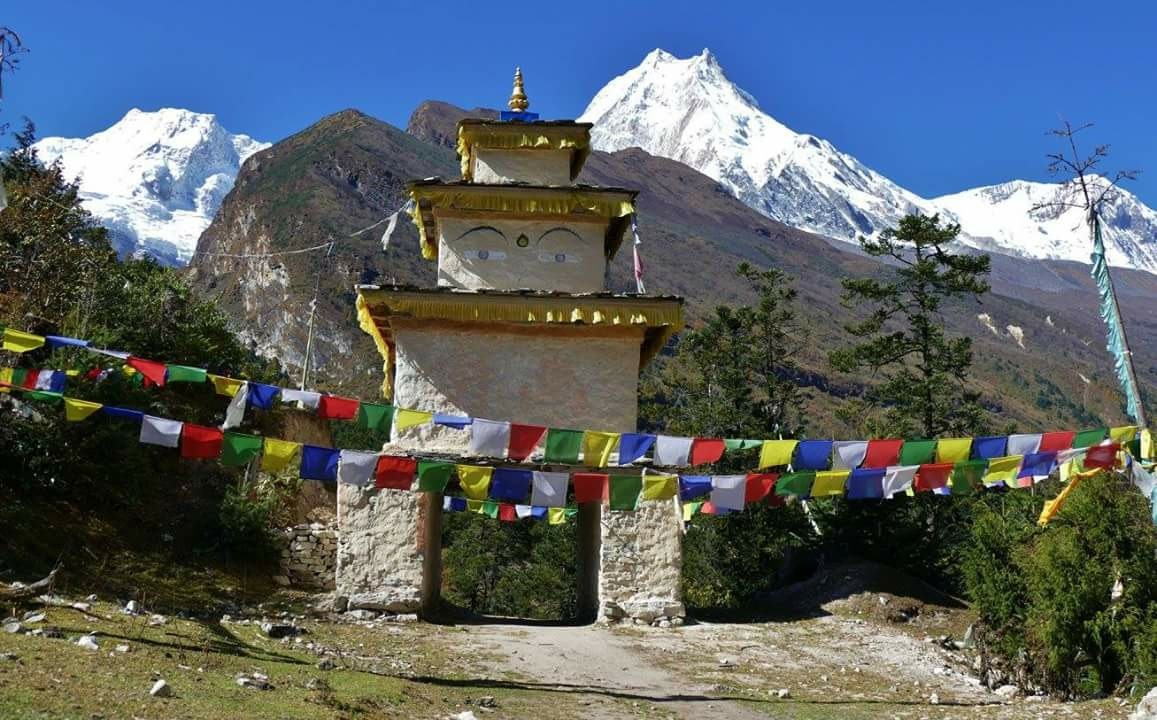
The valley is shaped like a cupped hand, enclosed on three sides by high ridges that connect to the Tibetan border. The Shiar Khola river runs down its center, fed by glaciers and snowmelt from the mountains that ring the valley like a crown. There are seven main villages, each with its monastery or retreat center, and between them stretch long walls of carved mani stones, some of them kilometers long, whose surfaces are inscribed with millions of repetitions of the mantra Om Mani Padme Hum. These walls are not decoration. They are prayers made physical, accumulated merit made visible, the devotional energy of generations crystallized in stone.
Monasteries and Spiritual Life
The monasteries themselves form a spiritual geography layered over the physical landscape. At the valley’s end, highest and most remote, sits Mu Gompa at 3,700 meters, home to several dozen monks and nuns. The monastery complex clings to a hillside above the village of Mu, its white walls bright against the brown slopes and the blue dome of sky. Below it, scattered through the valley, are Rachen Gompa, one of the largest nunneries in Nepal, with over seventy nuns in residence, and several smaller gompas, meditation caves, and retreat centers where practitioners complete three-year isolated retreats.
I remember the first time I approached Mu Gompa, climbing the steep path from the village as the afternoon light turned golden. A young monk was sitting outside the main prayer hall, memorizing texts, his voice rising and falling in the rhythmic chant of Tibetan scriptural recitation. Inside, butter lamps burned before images of Padmasambhava, Tara, and Milarepa. The walls were covered with thangka paintings, intricate depictions of Buddhist cosmology, with wheel of life diagrams, wrathful deities, and peaceful Buddhas arranged in mandala patterns. An old lama sat cross-legged on a raised platform, deep in meditation, his face weathered and calm. He did not acknowledge our arrival, and we did not disturb him. In that moment, I understood that we had entered a place where the primary reality was not tourism or economics or development, but something older and more enduring.
Rituals, Festivals, and Prayer Culture
The spiritual life of Tsum revolves around the monastery calendar of ceremonies and rituals. Throughout the year, monks and laypeople gather for pujas, prayer ceremonies that can last for days, involving elaborate offerings, ritual music played on long horns and drums, and the construction of sand mandalas that are carefully destroyed at the ceremony’s conclusion to demonstrate the impermanence of all things. During Losar, the Tibetan New Year, the valleys fill with the sound of celebration, but even these festivities are grounded in religious observance. Villagers make pilgrimages to the monasteries, receive blessings from the lamas, and renew their commitments to ethical living.
Prayer wheels are everywhere in Tsum: large wheels taller than a person housed in wooden shelters beside the trail, smaller wheels mounted on walls, and tiny handheld wheels carried by elderly pilgrims. Each wheel contains scrolls inscribed with mantras, and each rotation sends those prayers out into the world. The faithful spin them as they walk, their right hands moving in practiced arcs, their lips murmuring the words they have spoken since childhood. To walk the valley is to move through an environment saturated with devotion, where every natural feature has been woven into a sacred narrative.
People of the Hidden Valley
The Tsumba people who inhabit Tsum Valley are ethnically and culturally Tibetan, speaking a dialect closer to the Tibetan language than to Nepali. They are distinct from the Nubri people who live along the main Manaslu circuit, though both groups share Tibetan Buddhist heritage and maintain strong trade and cultural ties to Tibet. For centuries, Tsum was more connected to Tibet than to the rest of Nepal. The high passes to the north were the main trade routes, and marriages often linked Tsumba families to communities across the border.
That connection was severed in 1959 when China occupied Tibet and closed the borders. The Tsumba found themselves suddenly cut off from their traditional trade networks and cultural centers. The valley became isolated in a new way, neither fully part of Nepal’s mainstream culture nor able to maintain its old connections to the Tibetan plateau. In recent decades, as younger people have left for education and work in Kathmandu or abroad, the valley has faced the challenges of depopulation that affect many remote Himalayan regions. Yet the culture persists with remarkable vitality.
Daily Life and Traditions
Walk through the villages at dawn, and you will see smoke rising from kitchen chimneys as women prepare the morning meal, which is usually tsampa (roasted barley flour) mixed with butter tea, the staple food of Tibetan highlanders. The houses are built of stone with flat roofs, where firewood and fodder are stacked for winter. Many have small chapels on the upper floors, with altars and thangkas and windows that look out toward the mountains. In summer, when the weather is warm and the crops are growing, people work in the fields, planting barley and potatoes in terraces carved into the steep hillsides. In winter, they spin wool, repair tools, and make pilgrimages to the monasteries.
Culture, Clothing, and Social Structure
The clothing speaks to both practicality and cultural identity. Women wear long chubas, thick woolen robes tied with woven sashes, often in rich colors, striped or embroidered. Their hair is braided and wound with colorful ribbons, and married women traditionally wear elaborate turquoise and coral jewelry, family heirlooms passed down through generations. Men wear similar robes in darker colors, and both men and women favor heavy boots suitable for rocky trails and muddy fields.
The social structure centers on extended families and the concept of collective responsibility. Farming is cooperative, with neighbors helping each other plant and harvest, and the work is accompanied by singing and shared meals. Major decisions affecting the village are made collectively, with elders and respected lamas consulted. Children are raised communally to some extent, with aunts and uncles and grandparents all participating in their care and education.
Hospitality and Cultural Etiquette
Hospitality to visitors is a cultural value rooted in Buddhist ethics and practical mountain wisdom. In a place where the weather can change quickly, and trails can become impassable, helping travelers is both a moral duty and a practical necessity. Someday you might be the one needing help. When you enter a teahouse or home, you will be offered tea, and refusing is mildly offensive. The tea is salty, rich with yak butter, not sweet, and it takes some getting used to. I advise my trekkers to drink it graciously.
Certain customs should be respected. Remove your shoes before entering homes or monasteries. Walk clockwise around the mani walls and chortens. Do not point your feet toward altars or images of the Buddha. Ask permission before photographing people, especially monks and nuns. If invited to a home, bring a small gift like biscuits, tea, sugar, or sweets for children. Do not touch anyone’s head. Do not give money to begging children. If you want to contribute, donate to schools or monasteries, or buy handicrafts.
The Natural World: Landscapes of Stone and Sky
The Manaslu-Tsum region spans three major ecological zones, each with its characteristic flora, fauna, and climate. The lower valleys, below 2,000 meters, are subtropical, warm, humid, and dominated by broadleaf forests of oak and rhododendron. Here you might see langur monkeys swinging through the canopy, or hear the distinctive call of the hill partridge. The rhododendrons bloom in spring, covering the hillsides in red and pink.
Between 2,000 and 3,500 meters, you enter the temperate zone where blue pine, fir, and juniper predominate. This is the habitat of the Himalayan tahr, a wild goat with shaggy reddish coats, and the musk deer, though both are shy and rarely seen. The forests here are haunting, especially in mist, when the trees loom out of fog like giants.
Above 3,500 meters begins the alpine zone, where trees give way to hardy shrubs and grasses. Yaks graze these high pastures in summer. Blue sheep, relatives of both sheep and goats, live on the steep slopes above the tree line. And if you are extraordinarily lucky, you might glimpse a snow leopard, though these ghost cats are rarely seen; perhaps forty or fifty live in the entire Manaslu region, hunting blue sheep and surviving on the edge of the possible.
The weather is determined by the monsoon cycle. From June through September, moist air from the south brings heavy rains, turning the lower valleys green and lush but also making trails muddy and dangerous. Leeches are common in the forests during the monsoon. The passes are often closed by snow and fog. This is not the time to trek.
October and November are the best months after the monsoon but before deep winter. The skies are clear, the views spectacular, and the temperatures cold but manageable. March, April, and May are also good, though warmer in the lower valleys and with more afternoon clouds obscuring mountain views.
Winter, December through February, is possible but challenging. The high passes may be closed by snow, and the cold is severe as nighttime temperatures at Dharamsala can drop to minus twenty Celsius or lower. The advantage is solitude. You may have entire valleys to yourself.
Practical Considerations: Permits, Logistics, and Health
The bureaucracy of the Manaslu and Tsum trek is substantial but unavoidable. You need three separate permits: the Manaslu Restricted Area Permit (increasing in cost the longer you stay), the Tsum Valley Restricted Area Permit (similarly priced), and the Annapurna Conservation Area Permit (cheaper). These must be arranged through a registered trekking agency, as independent trekking is not permitted. You must also trek with a guide—not just recommended but legally required. Some agencies will try to minimize costs by hiring inexperienced guides. Resist this temptation. A good guide is worth their weight in gold.
Accommodation is in teahouses and lodges run by local families. The rooms are basic: a bed with a thin mattress, a pillow, and blankets. Bathrooms are shared and often have squat toilets. At higher altitudes, there is no running water, so you wash from a bucket. Showers, where available, are heated by solar panels or firewood and cost extra. Electricity is limited, often just a few hours in the evening, from solar panels or generators.
Food is simple and repetitive. Breakfast is porridge, toast, eggs, or Tibetan bread. Lunch and dinner are dal bhat, fried rice, noodle soup, or momos (dumplings). Fresh vegetables become scarce above 3,000 meters. Everything must be carried up by porters or yaks, so menus shrink with altitude. The food is usually safe, but stomach problems are common. Bring water purification tablets or a filter. Never drink untreated water from streams.
Altitude sickness is the primary health concern. Above 3,000 meters, everyone is at risk. Symptoms include headache, nausea, loss of appetite, and insomnia. More severe forms are High Altitude Pulmonary Edema (HAPE) and High Altitude Cerebral Edema (HACE), which are life-threatening. The keys to prevention are gradual ascent, adequate hydration, and listening to your body. Diamox (acetazolamide) can help, but is not a substitute for proper acclimatization. If symptoms are severe, the only treatment is descent.
Travel insurance is mandatory and should cover emergency helicopter evacuation. The nearest hospital is in Kathmandu, many days’ walk from the high valleys. If you become seriously ill or injured, a helicopter is the only option.
Moving Responsibly Through Sacred Space
To trek in Tsum Valley is to be a guest in someone’s home, someone’s church, someone’s entire world. This demands respect and humility. Some guidelines:
- Walk quietly past monasteries, especially during prayer times. Remove your hat. Do not smoke. Photography inside prayer halls requires permission and sometimes a small donation. Never photograph without asking, and accept a “no” gracefully.
- Dress modestly. Shoulders and knees should be covered in villages and monasteries. This applies to both men and women.
- Do not touch religious objects such as statues, prayer wheels, or offering bowls unless invited to do so. Do not step over someone’s legs or outstretched feet. Do not point the soles of your feet toward anyone.
- Buy local when possible. Purchase handicrafts directly from artisans. Eat at local teahouses rather than demanding Western food that must be imported. Tip guides and porters generously but appropriately; your guide can advise on standard amounts.
- Pack out all non-biodegradable waste. Burn toilet paper if possible, or pack it out. Do not leave batteries, plastic bottles, or packaging behind. The high villages have no waste management infrastructure. Everything you leave stays forever.
- Be conscious of water use. At high altitudes, water is scarce and precious. Take short showers or none at all. Do not wash clothes in streams where people collect drinking water.
- Respect the culture of nonviolence. Do not swat at flies or mosquitoes in front of your hosts. Do not ask for meat in villages where slaughter is forbidden. Accept that some places and some practices are not for outsiders. If a ceremony is closed to visitors, do not be offended.
The Weight You Carry: Physical and Mental Preparation
This is not a technical climb, but it is a serious high-altitude trek. You will walk for six to eight hours most days, gaining and losing thousands of meters, often on rough rocky trails, sometimes in thin air where every step requires conscious effort. Physical fitness is essential but not sufficient. You also need mental toughness: the ability to keep going when you are tired, cold, and uncomfortable, when your body is telling you to stop.
Train before you come. Walk with a loaded backpack. Do stair climbing or hill repeats. Build cardiovascular endurance. Strengthen your legs and core. Practice walking downhill, which is harder on the knees than climbing.
But also prepare your mind. Practice sitting with discomfort. Learn to distinguish between pain that signals injury and discomfort that is merely unpleasant. Develop the mental habit of focusing on the present step rather than the miles remaining.
Expect bad days. There will be mornings when you wake with a headache and nausea, when the thought of walking makes you want to cry. There will be afternoons when the trail seems endless, when every step is a negotiation with your protesting body. This is normal. This is part of the process. The difficulty is not a bug but a feature. It is the difficulty that makes the arrival meaningful.
And expect transcendent days. Mornings when you wake to see Manaslu glowing pink in the dawn light. Afternoons when you walk through valleys so beautiful they hurt. Evenings when you sit in a teahouse and share chang (millet beer) with locals and laugh even though you do not speak the same language. Moments when the wall between yourself and the world dissolves, and you are just walking, just breathing, just being alive in this particular place at this particular moment.
What You Bring Home: The Lasting Gift
Everyone who completes this trek brings home photos and memories. Some bring prayer flags, singing bowls, and other souvenirs. But the real gift is internal and harder to articulate. It is a change in perspective, a recalibration of values, a recognition that the life you left behind in the city—the meetings and deadlines and endless obligations—is not the only way to live.
In Tsum Valley, you have seen people who have very little by material standards but who seem, on some fundamental level, content. They work hard, certainly, but their work is meaningful. Growing food, raising children, maintaining their traditions. They have time for prayer and community, and simply sitting in the sun. They are embedded in a web of relationships and responsibilities that extends beyond the individual to the family, the village, the monastery, the valley, the mountain itself.
You have walked through a landscape where every rock and stream and mountain has been woven into a sacred story, where the physical and spiritual worlds interpenetrate, where religion is not a Sunday activity but the organizing principle of life. Whether you share their Buddhist faith or not, whether you believe in karma and reincarnation or not, you have felt the power of a culture that takes the inner life seriously, that makes space for silence and contemplation, and the pursuit of wisdom.
And you have learned something about your own capacity—your ability to endure, to adapt, to keep going. You have crossed a 5,000-meter pass. You have slept at 4,500 meters. You have walked for weeks with everything you need on your back. This knowledge is permanent. Whatever challenges you face in the future, you can remember: I did that. I am stronger than I thought.
The trek ends when you return to Kathmandu, but its effects linger. Months or years later, you will find yourself thinking about Tsum Valley: the prayer wheels spinning in the wind, the sound of chanting echoing across the valley, the face of the old woman in Lokpa spinning wool in the afternoon sun. These memories are not nostalgic but sustaining. They remind you that there are other ways to live, other values to honor, other meanings to pursue.
And perhaps, if you are very lucky, you will return someday. The valley will be there, the monasteries will be there, the mountains will be there. The people will greet you like an old friend. And you will walk those paths again, older perhaps, but walking into the same silence, the same beauty, the same mystery that drew you there the first time. This is the gift of Tsum: it offers not answers but questions, not certainty but wonder. And in a world that offers too many easy answers and too little genuine mystery, this is a gift beyond price.
 |
 |
 |
|
- The Manaslu-Tsum region covers three distinct ecological zones from subtropical forests to alpine meadows.
- Encounter diverse wildlife: langur monkeys, Himalayan tahr, musk deer, blue sheep, and possibly elusive snow leopards.
- Stunning rhododendron blooms in spring and breathtaking mountain views in autumn and spring.
- Experience authentic local culture in remote villages, monasteries, and traditional teahouses.
- Trek through sacred landscapes rich with spiritual and cultural significance.
Itinerary of Manaslu And Tsum Valley Trek
Day 1: Kathmandu—Anticipation in the City of Temples
The trek begins before you leave Kathmandu, in the organized chaos of the permit office where you queue with other trekkers, all of you clutching passport photos and wads of rupees. The restricted area permits for Manaslu and Tsum are not cheap together; they cost several hundred dollars, and they require that you trek with a registered guide and obtain approval from the Nepal Tourism Board. This bureaucracy is tedious but serves a purpose: it limits numbers and ensures that trekkers have local support, which is both a safety measure and an economic benefit for guide communities.
While the permits are processed, you spend a day in Kathmandu, and if you are wise, you use this time to visit Swayambhunath or Boudhanath, the great Buddhist stupas that will give you a first taste of the religious culture you are about to enter more deeply. Boudhanath is especially relevant. the massive mandala of the stupa, the shops selling singing bowls and prayer flags, the Tibetan refugees who circumambulate the monument morning and evening, spinning prayer wheels and prostrating. This is Tibetan Buddhism in its urban, commercialized form, but the devotion is real, and it prepares your mind for what lies ahead.
In the evening, your guide will brief you about the trek route, the villages, the altitude profile, and the challenges. You will discuss what to carry, what you can leave in Kathmandu, and what to expect from the teahouses. If you are lucky, your guide will be someone who grew up in the mountains, who speaks Tibetan and knows the monastery schedules, who can introduce you to families and translate conversations that would otherwise remain closed to you. A good guide is not just a navigator but a cultural interpreter, someone who opens doors.
That night, you sleep in a hotel bed with clean sheets and hot showers, knowing it may be your last such comfort for three weeks. There is always a strange feeling on these last nights before a long trek. A mix of excitement and nervousness, anticipation and doubt. Will my legs hold up? Will I manage the altitude? What will I find out there in the mountains? You cannot know the answers yet. You can only pack your bag and trust the journey.

Duration
Arrival
Activity
Arrival in Kathmandu
Accommodation
Hotel
Meals
DInner
Max Altitude
1400mDay 2: Kathmandu to Machha Khola—The Road and the River
The drive to Machha Khola takes seven or eight hours in a cramped bus or jeep, winding through the hills on roads that alternate between paved and dirt, smooth and rutted. You pass through villages where children wave from doorways, past terraced fields stepping down the hillsides in green and gold layers, across rivers on narrow bridges. The landscape gradually changes as you leave the Kathmandu valley, more rugged, less developed, the hills steeper and more forested.
At Soti Khola or Machha Khola, the road ends. You climb stiffly out of the vehicle, shouldering your pack, and immediately the world becomes more intimate. No more engine noise, no more dust clouds kicked up by passing trucks. Just the sound of the Budhi Gandaki River churning through its gorge, the wind in the trees, the calls of birds. The trail ahead is obviously a footpath worn smooth by centuries of use, following the river upstream.
Machha Khola means “fish river,” and the village sits at 870 meters, low enough that the air is warm and humid. The teahouse where you spend the night is simple. A lodge with wooden walls, shared bathrooms, and a dining room heated by a woodstove. Dinner is dal bhat, the Nepali staple of rice, lentil soup, curried vegetables, and pickles. You will eat dal bhat almost every night for the next three weeks, and if you are wise, you will learn to love it. It is hearty, nutritious, and perfectly suited to the demands of mountain trekking.
Duration
Drive to Soti KhlaDay 3: Machha Khola to Jagat—Into the Gorge
Day 4: Jagat to Lokpa—Entering the Hidden Valley
Day 5: Lokpa to Chumling—The Valley Opens
Day 6: Chumling to Chhokang Paro—Ascending the Sacred
Day 7: Chhokang Paro to Nile—The Valley Narrows
Day 8: Nile to Mu Gompa—At the Valley's End
Day 9: Acclimatization at Mu Gompa—Silence and Devotion
Day 10: Mu Gompa to Chhokang Paro—Descending
Day 11: Chhokang Paro to Lokpa—Returning
Day 12: Lokpa to Deng—Rejoining the Circuit
Day 13: Deng to Namrung—The Land Changes
Day 14: Namrung to Lho—Under the Mountain
Day 15: Lho to Samagaon—The High Valley
Day 16: Acclimatization at Samagaon—Side Trips and Views
Day 17: Samagaon to Samdo—The Last Village
Day 18: Samdo to Dharamsala—Into the High Cold
Day 19: Dharamsala to Larkya La to Bimthang—The Crossing
Day 20: Bimthang to Dharapani—Return to the World
Day 21: Dharapani to Kathmandu—Closure

- Day 1: Arrival in Kathmandu; check permits and trekking gear.
- Day 2: Drive to Soti Khola; easy walk to warm up, moderate altitude.
- Day 3: Trek through subtropical forest; expect leeches and muddy trails.
- Day 4: Continue through oak and rhododendron forests; hear hill partridges.
- Day 5: Enter temperate zone; blue pine and fir; watch for Himalayan tahr.
- Day 6: Moderate ascent; first views of high ridges; possible mist.
- Day 7: Trail along rivers; small village stops; cultural interaction.
- Day 8: Cross lower ridges; altitude slowly increases; check for fatigue.
- Day 9: Reach Tsum Valley entrance; cultural sensitivity required.
- Day 10: Explore Tsum villages and monasteries; observe local customs; no photography indoors without permission.
- Day 11: Rest/acclimatization day; optional short hike; meditation or prayer hall visit.
- Day 12: Gradual ascent; forests thinning; view snow-capped peaks.
- Day 13: Steep climb to a higher village; be alert for altitude sickness.
- Day 14: Enter alpine zone; shrubs and grasses; chance to see yaks and blue sheep.
- Day 15: High pass crossing (~5,000 m); carry warm clothing; slow pace.
- Day 16: Descend to lower alpine pasture; possible snow patches; scenic valley views.
- Day 17: Trek through mixed terrain, rivers, and rocky trails; stay hydrated.
- Day 18: Re-enter temperate zone; pine and juniper forests; mild altitude.
- Day 19: Trek through subtropical forests; easier day; spot langurs and rhododendrons.
- Day 20: Long trek to trailhead; prepare for vehicle transport; minor fatigue expected.
- Day 21: Drive back to Kathmandu; rest, reflection, and shopping; trek officially ends.
Includes/Excludes
What's included?
- Licensed guide and porters
- Manaslu and Tsum Valley are restricted areas; trekking here legally requires a registered guide.
- Independent trekking without a guide is not permitted by the Nepal Tourism Board.
- All trekking permits
- Required permits include:
• Manaslu Restricted Area Permit
• Tsum Valley Restricted Area Permit
• Annapurna Conservation Area Permit - These are mandatory and must be arranged before or during the early days of the trek through a licensed agency.
- Required permits include:
- Accommodation in teahouses/lodges
- The standard for high-altitude Nepal treks. These are family-run stays with basic rooms and shared facilities.
- Hot showers and electricity are limited, especially above ~3,000 m.
- All meals during the trek
- Teahouse trekking usually includes breakfast, lunch, and dinner.
- Dal bhat (rice & lentil dish) is the common staple provided.
- Trek planning and itinerary support
- Most licensed agencies prepare your daily plan, permits, transport, and liaise with local communities.
- Emergency evacuation support (if provided)
- Many agencies include this as part of your package or can arrange it.
- Helicopter evacuation is the only reliable way to evacuate from remote high-altitude zones.
- Yak/porter support
- Often included for cargo beyond your personal gear.
- Essential for higher sections where motorable access ends.
What's not included?
- International flights to/from Kathmandu
- Trek packages typically begin/end in Kathmandu; flights are booked separately.
- Travel insurance
- Must cover emergency evacuation (helicopter) and medical issues.
- This is strongly recommended (and often required by agencies).
- Personal expenses
- Snacks, drinks, souvenirs, and tips are your responsibility.
- Hot showers and charging devices at high-altitude teahouses usually cost extra.
- Trekking gear
- Items like sleeping bags, trekking poles, down jackets, gaiters, and water filters are usually rented or brought by trekkers.
- Beverages and alcohol
- Controlled and sold separately at teahouses; not included in meal plans.
- Hot showers
- At higher altitudes, hot water is often limited and not included without additional payment.
- Costs due to delays
- Weather conditions, altitude sickness, flight delays or emergencies can cause extra costs.
Trip Information - Good to Know
- Requires three permits: Manaslu Restricted Area, Tsum Valley Restricted Area, and Annapurna Conservation Area permits.
- Trekking independently is not allowed; a registered guide is legally required.
- Accommodation in basic teahouses; limited electricity and hot showers at higher altitudes.
- Best trekking seasons: October-November and March-May; monsoon season (June-September) is not recommended.
- Altitude sickness risk above 3,000 meters; acclimatization, hydration, and proper preparation essential.
- Travel insurance with emergency helicopter evacuation coverage is mandatory.
- Carry water purification tablets or filters; avoid untreated water.
- Respect local customs: modest dress, no photography inside prayer halls without permission, avoid touching religious objects.
Frequently Asked Questions
What is the best time to trek Manaslu and Tsum Valley?
The best time is October–November after the monsoon, or March–May before the heavy summer clouds. These months offer clear skies, spectacular mountain views, and manageable temperatures. Avoid the monsoon (June–September) due to rain, leeches, and slippery trails.
How long is the Manaslu–Tsum Valley trek?
The trek usually takes 21 days, covering subtropical, temperate, and alpine zones, including a 5,000-meter high pass.
What is the difficulty level of the trek?
It is a moderate to challenging high-altitude trek. Daily walks range from 6–8 hours, often on rocky trails and steep ascents/descents. Physical fitness and mental endurance are essential.
Do I need special permits for the Manaslu–Tsum trek?
Yes, you need three permits:
- Manaslu Restricted Area Permit
- Tsum Valley Restricted Area Permit
- Annapurna Conservation Area Permit
All permits must be arranged through a registered trekking agency. Independent trekking is not allowed.
What kind of accommodation can I expect on this trek?
Accommodations are teahouses and lodges run by local families. Rooms are basic, with shared bathrooms. Hot showers and electricity are limited, especially at higher altitudes.
What kind of food is available on the trek?
Meals are simple and include dal bhat, noodle soup, momos, fried rice, and Tibetan bread. Fresh vegetables are scarce above 3,000 meters. Carry water purification tablets or a filter.
Is altitude sickness a concern on this trek?
Yes, above 3,000 meters, everyone is at risk. Symptoms include headache, nausea, and insomnia. Severe forms (HAPE and HACE) are life-threatening. Gradual acclimatization, hydration, and listening to your body are essential.
Can I trek independently in Tsum Valley?
No, independent trekking is not permitted. You must trek with a licensed guide, as legally required.
What wildlife might I see in Manaslu and Tsum Valley?
You may spot langur monkeys, hill partridge, Himalayan tahr, musk deer, yaks, and blue sheep. Snow leopards are extremely rare, with only 40–50 in the region
How should I respect local culture during the trek?
- Walk quietly past monasteries, remove hats, and avoid smoking
- Dress modestly (shoulders and knees covered)
- Do not touch religious objects without invitation
- Purchase local handicrafts and eat at local teahouses
- Pack out all non-biodegradable waste
How can I prepare physically and mentally for this trek?
- Physical: Cardiovascular endurance, leg & core strength, stair/hill training, walking with a backpack
- Mental: Build tolerance for discomfort, focus on each step, accept challenging days as part of the experience
What makes the Manaslu–Tsum trek unique?
The trek offers a blend of pristine alpine landscapes, rich Buddhist culture, and remote villages. It is a journey of personal endurance, cultural immersion, and spiritual reflection.
Trip Reviews
 Write a Review








- Best Price Guarantee
- Secure & easy booking
- Easy trip date changes
- Discount for groups


How to book a trip?

make free inquiry

confirm the trip
