


Poonhill Trek Through Pokhara


Destination
Poonhill Trek Through Pokhara
Difficulty
Easy
Meals
- Breakfast
- Lunch
- Dinner
Overview of Poonhill Trek Through Pokhara
 |
 |
Your Gateway to the Annapurna Himalayas
Nestled in the heart of Nepal’s Annapurna region, the Ghorepani Poon Hill trek is one of the most rewarding short treks in the Himalayan range. This carefully crafted 5-night, 6-day adventure offers an extraordinary introduction to Nepal’s mountain landscapes, presenting trekkers with a perfect blend of natural grandeur, cultural immersion, and physical challenge that remains accessible to enthusiastic beginners and seasoned hikers alike.
What makes this trek truly special is its incredible diversity compressed into a relatively short timeframe. You’ll journey through landscapes that transform dramatically with each passing day, from the subtropical forests, thick with rhododendron, oak, and magnolia trees at lower elevations, to the alpine meadows and windswept ridges that offer unobstructed views of some of the world’s highest peaks. During spring (March to May), the hillsides explode in a riot of color as thousands of rhododendron bushes bloom in shades of crimson, pink, and white, creating natural tunnels of flowers that seem almost surreal in their beauty.
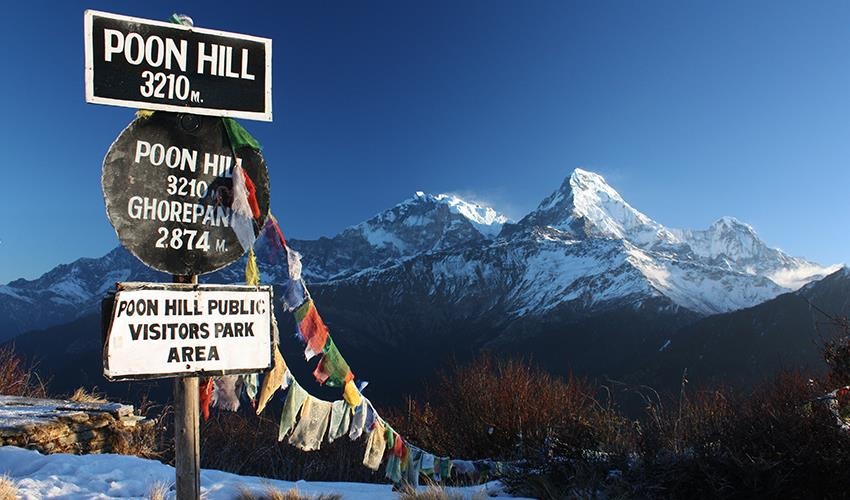
The crown jewel of this trek is undoubtedly the sunrise view from Poon Hill (3,210 meters). Standing on this vantage point in the pre-dawn darkness, watching as the first rays of sunlight paint the snow-clad peaks in shades of gold and rose, you’ll witness one of nature’s most spectacular light shows. The panorama encompasses over 20 major peaks, including the fishtail-shaped Machhapuchhre (6,993m), the mighty Dhaulagiri (8,167m), the world’s seventh-highest mountain, and the Annapurna massif, including Annapurna South (7,219m) and the formidable Annapurna I (8,091m), the tenth-highest peak on Earth.
Beyond the mountains, this trek offers genuine cultural encounters with the Gurung and Magen ethnic communities who have called these hills home for centuries. You’ll sleep in traditional teahouses, share meals with local families, and walk through villages where life continues much as it has for generations. The trail itself follows ancient trade routes, passing through terraced farmlands where farmers still plow with oxen, and stone-paved paths worn smooth by countless footsteps over hundreds of years.
The trek’s moderate difficulty makes it an ideal choice for those seeking a genuine Himalayan experience without the extreme altitudes and extended duration of more demanding routes. With maximum elevations staying below 3,300 meters, the risk of altitude sickness is minimal, allowing you to focus on enjoying the journey rather than worrying about acclimatization. The daily walking times range from 4 to 6 hours, providing a comfortable pace that allows for photography stops, tea breaks, and those spontaneous conversations with fellow trekkers and locals that often become the most treasured memories.
Starting and ending in Kathmandu, this itinerary has been designed to maximize your mountain experience while minimizing travel complications. We’ve built in comfortable transportation, carefully selected overnight stops at the best teahouse locations, and a rhythm that allows your body to adapt naturally to the changing altitudes. Whether this is your first trek or your fiftieth, the Ghorepani Poon Hill route promises an unforgettable journey into the heart of the Himalayas.
Understanding the Ghorepani Poon Hill Trek: Geography, Culture, and What Makes It Special
The Landscape and Location
The trek unfolds in the Annapurna Conservation Area, Nepal’s largest protected area spanning over 7,600 square kilometers. You’ll be walking through the southern approaches to the Annapurna massif, the world’s tenth-highest mountain, in a region where subtropical valleys give way to alpine forests within just a few days of walking.
The route sits at relatively moderate altitudes. You’ll sleep between 1,540 and 2,860 meters, with your highest point at Poon Hill reaching 3,210 meters. This altitude range means you avoid the serious altitude sickness risks of higher treks while still experiencing genuine high-altitude mountain environments. The oxygen at Poon Hill is about 68% of sea level—noticeable but manageable for most people with basic fitness.
Geologically, you’re walking through the Lesser Himalayas, the middle range of the three parallel mountain chains that make up the Himalayan system. The trails follow ancient trading routes that connected Tibet with the Indian plains, paths that have facilitated commerce, culture, and migration for centuries. The stone staircases you’ll climb weren’t built for tourists. Their infrastructure has supported mountain communities for generations.
The Cultural Tapestry
This trek passes through the traditional homeland of the Gurung and Magar peoples, two of Nepal’s many ethnic groups. The Gurungs in particular have shaped this region’s character. Known for their service in British and Indian Gurkha regiments, many Gurung families have members serving overseas, which brings both prosperity and unique cultural dynamics to these mountain villages.
Walk through Ghandruk or Ghorepani, and you’ll see evidence of this everywhere—well-maintained stone houses with slate roofs, children attending good schools, and solar panels alongside traditional architecture. The Gurung Museum in Ghandruk tells the story of how mountain communities have navigated modernity while preserving cultural identity.
The villages practice a blend of Tibetan Buddhism and Hinduism, with local animist traditions woven throughout. You’ll see prayer flags fluttering from high points, small shrines along the trail, and larger gompas (Buddhist monasteries) in major villages. Religion here isn’t separate from daily life. It’s integrated into the landscape itself.
|
 |
Essential Clothing and Gear
Clothing Layers (The Foundation)
Base Layers:
- 2-3 moisture-wicking t-shirts made up of synthetic or merino wool, avoid cotton.
- 2 pairs of trekking pants which are quick-dry, comfortable, with zip-off legs optional
- 1 pair of trekking shorts for lower elevations
- 3-4 pairs of trekking socks made up of wool or synthetic blend, no cotton
- 3-4 pairs of underwear of quick-dry material
- 1 set of thermal underwear top and bottom for cold mornings and evenings
Mid Layers:
- 1-2 fleece jackets or insulated mid-layers for warmth during rest stops and evenings.
- 1 down jacket or synthetic insulated jacket which is essential for Poon Hill sunrise and cold evenings
Outer Layers:
- 1 waterproof and windproof jacket of Gore-Tex or similar, this is non-negotiable
- 1 waterproof pants for rain protection, especially during monsoon season
- 1 warm hat or beanie because you lose most heat through your head
- 1 sun hat or cap with brim as sun protection is crucial at altitude
- 1 pair of warm gloves . it essential for Poon Hill sunrise.
- 1 buff or scarf which is versatile for warmth, sun protection, and dust
Footwear:
- 1 pair of broken-in trekking boots (ankle support, waterproof, this is your most important item)
- 1 pair of camp shoes or sandals (Crocs, flip-flops, or light sneakers for evenings at teahouses)
- Gaiters (optional but useful if trekking during or after rain)
Trekking Essentials
Backpack and Bags:
- 40-50L backpack with rain cover (comfortable hip belt and shoulder straps are essential)
- Daypack (20-30L) if using a porter service for your main bag
- Dry bags or large zip-lock bags (to keep electronics, documents, and clothing dry)
- Stuff sacks (for organizing clothes and gear inside your pack)
Sleeping:
- Sleeping bag rated to -10°C/14°F (teahouses provide blankets but can be cold in winter)
- Sleeping bag liner (adds warmth and keeps your sleeping bag clean)
- Pillow (small inflatable pillow if you’re particular about comfort)
Navigation and Safety:
- Detailed trekking map (even though trails are well-marked)
- Compass or GPS device (smartphone with downloaded offline maps)
- Headlamp or flashlight (with extra batteries, essential for Poon Hill sunrise)
- Whistle (for emergencies)
- Trekking poles (highly recommended for knee protection on descents)
Sun and Weather Protection:
- Sunglasses (100% UV protection, category 3 or 4)
- Sunscreen (SPF 50+, the mountain sun is intense)
- Lip balm with SPF (lips burn and crack easily at altitude)
- Umbrella (small, collapsible, useful for sun and rain)
Personal Items and Hygiene
- Quick-dry towel (microfiber, compact)
- Toiletries (toothbrush, toothpaste, biodegradable soap, shampoo in travel sizes)
- Wet wipes or baby wipes (showers aren’t always available)
- Hand sanitizer (essential before eating)
- Toilet paper (teahouses provide it, but bring backup)
- Feminine hygiene products (if applicable, bring enough for the entire trek)
- Personal medications (in original containers with prescriptions)
- Blister treatment kit (moleskin, blister plasters, tape)
- Nail clippers and tweezers
First Aid and Medical
- Basic first aid kit (bandages, antiseptic, pain relievers)
- Diamox/Acetazolamide (for altitude sickness prevention, consult your doctor)
- Anti-diarrheal medication (essential for Nepal)
- Oral rehydration salts
- Antihistamines (for allergies)
- Anti-inflammatory medication (ibuprofen or similar)
- Antibiotics (prescribed by your doctor for infections)
- Any personal prescription medications (bring enough for the entire trip plus extra)
Technology and Documentation
- Smartphone (with downloaded offline maps and translation apps)
- Camera (with extra batteries and memory cards)
- Portable power bank (10,000-20,000 mAh, charging can be expensive or unavailable)
- Universal adapter and charging cables
- Passport (keep in waterproof bag)
- Passport photocopies (carry separately from original)
- Trekking permits (TIMS card and ACAP permit)
- Travel insurance documents (including emergency contact numbers)
- Cash (Nepali rupees in small denominations, credit cards don’t work on the trail)
- Photos for permits (4 passport-sized photos)
Food and Hydration
- Water bottles (2 x 1 liter, wide-mouth Nalgene bottles are ideal)
- Water purification (tablets, drops, or a filter like SteriPEN or LifeStraw)
- Reusable insulated bottle (keeps drinks hot or cold)
- Snacks (energy bars, nuts, dried fruit, chocolate for quick energy)
- Electrolyte powder (for replacing salts lost through sweating)
Optional but Recommended
- Book or e-reader (for evenings at teahouses)
- Playing cards or travel games (great for meeting other trekkers)
- Journal and pen (for recording your experiences)
- Earplugs (teahouse walls are thin)
- Eye mask (if sensitive to light)
- Duct tape (wrapped around trekking poles) fixes almost anything.
- Zip ties (lightweight and surprisingly useful)
- Safety pins (for quick repairs)
- Sewing kit (for clothing repairs)
- Laundry detergent (small amount in a zip-lock bag)
- Lightweight trekking umbrella (dual purpose: sun and rain)
Packing Tips
Weight Management:
Keep your pack under 10-12kg if carrying it yourself. If it’s heavier, seriously consider hiring a porter. Remember, you’ll be carrying this every day for hours at altitude.
Layering Strategy:
The key to comfort in the mountains is layering. You’ll remove and add layers multiple times daily as you warm up during climbs and cool down during breaks. Pack your layers accessibly.
Test Everything:
Break in your boots on several long walks before the trek. Test your backpack with weight. Make sure your rain gear actually keeps you dry. The trail is not the place to discover equipment failures.
Leave at the hotel:
Pack items you’ll need before and after the trek in a separate bag that can be stored at your Kathmandu or Pokhara hotel. You don’t need city clothes on the mountain.
Plastic Bags:
Bring plenty of zip-lock bags in various sizes. They’re invaluable for keeping things organized and dry, separating dirty clothes, and protecting electronics.
Itinerary of Poonhill Trek Through Pokhara
Day 1: Kathmandu to Tikhedhunga (1,540m)
Your adventure begins early in Kathmandu, where you’ll board a private vehicle or tourist bus for the scenic drive to Pokhara. The journey takes you through winding mountain roads, passing terraced hillsides, rushing rivers, and traditional Nepali villages. You’ll catch glimpses of daily rural life. Women carrying impossibly large bundles of fodder, children in school uniforms walking along the roadside, and farmers tending their crops on impossibly steep hillsides.
After lunch in Pokhara, you continue driving to Nayapul (1,070m), the official starting point of your trek. Here, the real adventure begins. The trail initially follows the Modi Khola river, passing through small settlements and crossing suspension bridges that sway gently over turquoise waters. You’ll walk through Birethanti, a charming village where you’ll register your trekking permit, before beginning the gradual ascent to Tikhedhunga.
The final section involves a steady uphill walk, giving you your first taste of Himalayan trekking. By the time you reach your teahouse, you’ll have walked through subtropical forests, crossed several streams, and gained your first real sense of the mountain environment. The evening is yours to rest, enjoy a hearty dal bhat (the traditional Nepali meal that will fuel you throughout the trek), and perhaps chat with other trekkers around the dining room stove.

Duration
8-9 hours
Activity
trekking
Accommodation
Teahouse
Max Altitude
1540mDay 2: Tikhedhunga to Ghorepani (2,860m)
This is arguably the most challenging day of the trek, but also one of the most rewarding. You’ll start early, tackling the famous stone staircase that climbs steeply through the forest to Ulleri village (2,070m). This section involves ascending over 3,000 stone steps. A challenging start that tests your legs and your resolve. Take it slowly, breathe deeply, and remember that countless trekkers have conquered these steps before you.
After Ulleri, the trail’s character changes completely. The gradient eases as you enter a magnificent rhododendron forest. These ancient, gnarled trees create a mystical atmosphere, especially when morning mist weaves through their branches. During spring, the blooms are absolutely spectacular. You’ll pass through small settlements like Banthanti and Nangethanti, where teahouses offer welcome rest stops with hot tea and snacks.
As you climb higher, the vegetation gradually thins, and you’ll start getting tantalizing glimpses of snow-capped peaks through gaps in the trees. The air grows noticeably cooler and crisper. The final approach to Ghorepani takes you through the upper rhododendron zone, where the trees are draped with hanging moss and lichens. Evidence of the high moisture levels at this elevation.
Ghorepani itself is a substantial village by mountain standards, with numerous teahouses lining the main trail. The name literally means “horse water,” a reference to its historical role as a rest stop on the old trade route between India and Tibet. After checking into your teahouse, you can explore the village, enjoy the sunset views, and prepare for tomorrow’s early start to Poon Hill.
Duration
5-6 hours
Accommodation
Teahouse
Max Altitude
2859mDay 3: Poon Hill Sunrise (3,210m) and Trek to Tadapani (2,630m)
Your alarm will ring well before dawn usually around 4:30 AM for the climb to Poon Hill. Armed with headlamps or flashlights, you’ll join a procession of trekkers ascending the well-maintained trail in the darkness. The hour-long climb is steady but not difficult, and the anticipation builds with every step.
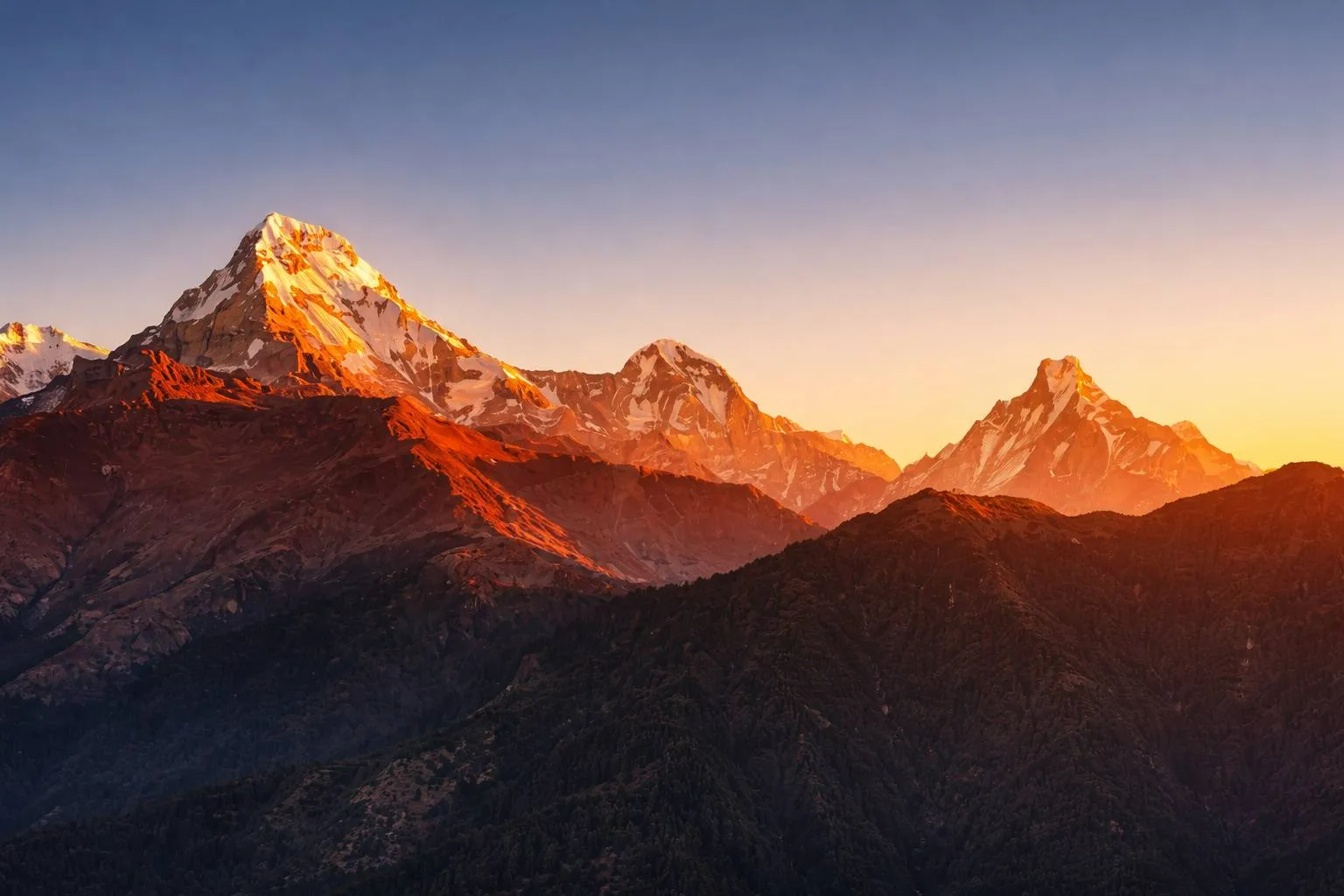
Reaching the summit viewpoint, you’ll find yourself among dozens of fellow adventurers, all waiting in the cold pre-dawn air for the sun to make its appearance. As the eastern sky begins to lighten, the massive wall of Himalayan peaks emerges from the darkness. First, they appear as dark silhouettes, then gradually the highest summits begin to glow with a faint golden light. As the sun breaks the horizon, the entire range ignites in shades of orange, pink, and gold—a phenomenon known as alpenglow that photographers dream about.
The view encompasses the Dhaulagiri range to the west, Annapurna South and the distinctive pyramid of Machhapuchhre directly in front, and the Annapurna massif stretching to the east. It’s a moment that feels almost sacred, and many trekkers find themselves moved to tears by the sheer majesty of the scene. Take your time here, absorb the view, and capture it not just with your camera but with your heart.
After descending back to Ghorepani for breakfast, you’ll pack up and head toward Tadapani. The trail initially climbs through rhododendron forest before traversing a beautiful ridge with continuous mountain views. You’ll pass through Deurali before descending into the forest again and climbing up to Tadapani, which means “far water” in Nepali. This charming settlement sits in a clearing surrounded by dense forest, offering excellent views of Annapurna South and Machhapuchhre, especially in the late afternoon light.
Duration
6-7 hours
Accommodation
Teahouse
Max Altitude
3210mDay 4: Tadapani to Ghandruk (1,940m)
Today offers a more relaxed pace, with a relatively short trek to one of the most beautiful and culturally rich villages in the Annapurna region. The trail descends through rhododendron and oak forests, crosses several small streams, and offers spectacular views of Annapurna South, Hiunchuli, and Machhapuchhre along the way.
As you approach Ghandruk, the forest opens up to reveal the village spread across a huge amphitheater-like hillside. This is one of the largest Gurung villages in Nepal, and its neat stone houses with slate roofs create a postcard-perfect scene against the backdrop of the Annapurna range. The Gurung people are renowned as warriors and many serve in the legendary Gurkha regiments of the British and Indian armies.
After settling into your teahouse, you have time to explore this fascinating village. Visit the Gurung Museum to learn about traditional culture, clothing, and lifestyle. Walk the stone-paved lanes, visit the monastery, and perhaps watch the village women weaving colorful fabrics or tending their fields. The hospitality of the Ghandruk people is legendary, and many teahouses are run by families who take genuine pride in welcoming guests to their village.
The evening views from Ghandruk are spectacular, with Machhapuchhre and Annapurna South dominating the skyline. As the sun sets, the peaks turn golden, then fade to purple, before the stars emerge in the crystal-clear mountain sky.
Duration
3-4 hours
Accommodation
Teahouse
Max Altitude
1940mDay 5: Ghandruk to Nayapul and Drive to Pokhara
Your final day of trekking begins with a descent from Ghandruk through terraced farmlands where local farmers grow rice, millet, corn, and vegetables using traditional methods. The trail is well-maintained and gradual, allowing you to enjoy the scenery without too much strain on your knees.
You’ll pass through Kimche and Syauli Bazaar before reaching Birethanti, where you first registered your permits. From here, it’s a short walk along the Modi Khola river back to Nayapul, where your vehicle will be waiting. As you drive away from the mountains, you’ll have time to reflect on the journey you’ve just completed and the memories you’ve created.
The drive to Pokhara takes about 1.5 hours. Once known simply as a lakeside village, Pokhara has grown into Nepal’s adventure tourism capital while retaining much of its relaxed charm. Check into your hotel, enjoy a hot shower (a luxury after days in teahouses), and celebrate your successful trek with dinner at one of the many excellent restaurants along Lakeside. You’ve earned it!
Duration
4 hours trek,1.5 hours drive
Accommodation
HotelDay 6: Pokhara to Kathmandu
Your final day offers a choice. You can take the scenic drive back to Kathmandu, enjoying the mountain landscapes one last time, or opt for a short flight that offers aerial views of the Himalayas and the Kathmandu Valley. Most trekkers choose the flight to maximize their time in Kathmandu for last-minute shopping, sightseeing, or simply relaxing before their international departure.
If you choose to drive, you’ll retrace your route through the hills, arriving in Kathmandu by mid-afternoon. The journey provides a nice transition from the mountains back to city life, and many trekkers appreciate this gradual re-entry to civilization.
Duration
6-7 hoursTrip Information - Good to Know
Important Preparation Notes
Trip Reviews
 Write a Review








- Best Price Guarantee
- Secure & easy booking
- Easy trip date changes
- Discount for groups


How to book a trip?

make free inquiry

confirm the trip
