


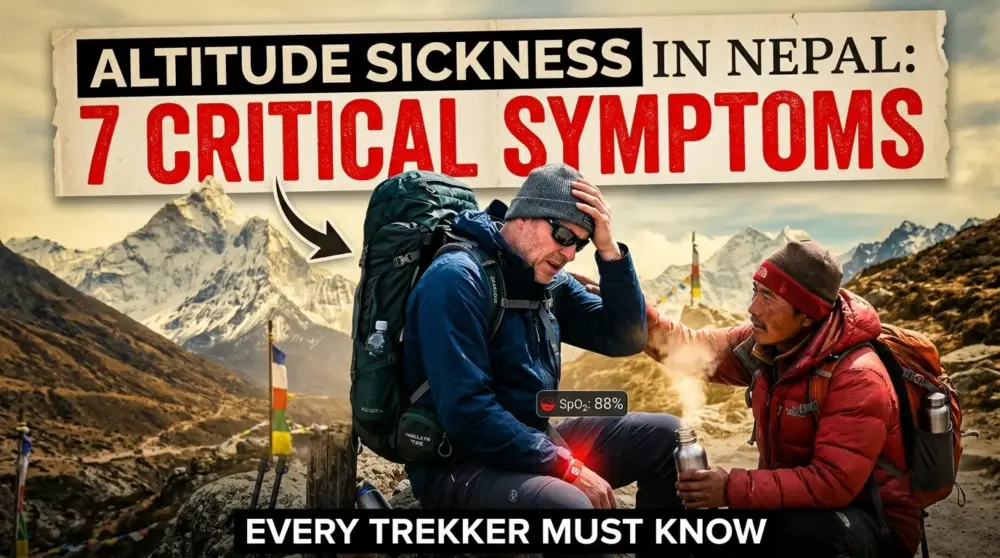
Altitude Sickness in Nepal is one of the most important health risks trekkers face while exploring the Himalayas. Every year, tens of thousands of trekkers from around the world set off into the mountains of Nepal. Routes like Everest Base Camp, the Annapurna Circuit, and the Manaslu Circuit challenge the trekkers’ fitness level and background. But no matter how well you are prepared, as the altitude increases, so does the risk of altitude sickness in Nepal.
Understanding what it is, how it affects your body, and what to do if it strikes is not optional knowledge for trekking in Nepal. It is essential.
What is Altitude Sickness?
Altitude sickness in Nepal, known as Acute Mountain Sickness (AMS), is a condition that occurs when you struggle to adjust to the reduced oxygen levels found at high elevations. It is not a disease, but your body’s reaction to an environment without adequate time to adapt.
As you climb higher, the atmospheric pressure drops, which means each breath you take contains fewer oxygen molecules. Above 2,500 meters (8,200 feet), the difference in altitude from sea level becomes significant enough to cause physiological stress. Above 3,500 meters, where many of Nepal’s most popular trekking routes travel, the risk of altitude sickness becomes very real.
What Happens to Your Body at High Altitude?
The moment you begin hiking above 2,500 meters, your body detects the drop in oxygen availability and immediately tries to adjust. In the rapid process of your body trying to adjust:
-
Your breathing rate increases as your lungs work harder to pull in more air.
-
Your heart rate rises to pump oxygen.
-
Your body produces more red blood cells, as more red blood cells mean more capacity to carry oxygen.
-
You may lose appetite and feel fatigued.
-
Your sleep is also significantly disrupted at altitude.
Symptoms of Altitude Sickness
Altitude sickness can range from mild to severe.
Mild Symptoms
-
Headache
-
Nausea
-
Dizziness
-
Loss of appetite
-
Fatigue
-
Difficulty in sleeping
These symptoms are your body’s early warning system, and they deserve your full attention. These symptoms, if treated early by rest, hydration, or a slow pace, usually have a quick recovery.
Moderate to Severe Symptoms
1. HAPE (High Altitude Pulmonary Edema)
This occurs when fluid floods the lungs.
Symptoms
-
Shortness of breath
-
Persistent cough
-
Chest tightness
-
Extreme weakness
HAPE can develop rapidly and become fatal within hours if descent and treatment are delayed.
2. HACE (High Altitude Cerebral Edema)
This happens due to swelling of the brain.
Symptoms
-
Severe headache
-
Confusion
-
Loss of coordination
-
Difficulty walking straight
-
Hallucinations
Every minute without descent and treatment worsens the outcome.
What Should You Do If You Get Altitude Sickness?
The moment you recognize any symptoms, the most important thing you need is to stop hiking.
Many trekkers dismiss early symptoms and keep climbing; that’s how it leads to HAPE or HACE.
-
Rest at the same altitude for about 24–48 hours.
-
Drink plenty of water, about 3–4 liters per day.
-
Eat a light, carbohydrate-rich meal even if you don’t feel hungry.
-
Avoid alcohol and sleeping pills, as they suppress your breathing and accelerate fluid loss.
-
Take appropriate medication.
-
Inform your guide so they can monitor your AMS.
-
Call for helicopter evacuation if necessary.
-
Descend immediately if your symptoms worsen.
How to Prevent Altitude Sickness?
Prevention is always more effective than treatment when it comes to altitude sickness. To reduce your risk:
-
Ascend gradually; the most recommended way is to hike only about 300 to 500 meters per day once you are above 3,000 meters.
-
Take acclimatization days as an investment.
-
Rest at the same altitude for about 24–48 hours to get your body adjusted.
-
Stay hydrated. Aim to drink consistently throughout the day rather than waiting until you feel thirsty.
-
Avoid alcohol and heavy meals at altitude because they disrupt breathing patterns and can worsen nausea.
-
Arrive at altitude gradually before your trek begins. Spend an extra night in a lower-altitude town before hiking or flying into the mountains so your body can adjust to the altitude.
-
Choose an experienced guide and trekking company so they can recognize the early signs of altitude sickness and know the correct protocols for responding to it.
Is Altitude Sickness Common in Nepal?
Yes, altitude sickness is common among trekkers in Nepal, and understanding how to prevent it and what to do in those conditions is most important for every trekker.
With Nepal’s geography, many popular treks gain elevation quickly. The Everest Base Camp route climbs from Lukla at 2,860 meters to Base Camp at 5,364 meters. The Annapurna Circuit crosses the Thorong La Pass at 5,416 meters. These are serious elevations that demand serious respect.
Hundreds of cases of altitude illness are seen every trekking season. Doctors and volunteers provide free altitude sickness consultation along major trekking routes in Nepal through the Himalayan Rescue Association (HRA) in Manang and Pheriche.
Deaths from altitude sickness in Nepal are relatively rare. These tragedies are common because trekkers notice symptoms but ignore them, or the decision to descend is delayed too long.
A Final Word
Trekking in Nepal is one of the most extraordinary experiences. The landscapes are unlike anything else on earth. The mountain views, culture, ancient history and tradition, teahouses, hospitality of Nepali people, prayer flags, and more bring experiences and stories that stay with you for a lifetime.
But your health and your life are more important.
Altitude sickness in Nepal is not something to fear if you approach it with knowledge and preparation. It is important to know the symptoms, know what to do, and know that descending is never a failure.
The Himalayas are patient and will be there next season too. Prioritize your health and go slow.


