


Can ChatGPT Plan Your Everest Trek? Honest Guide for Modern Trekkers(2026)
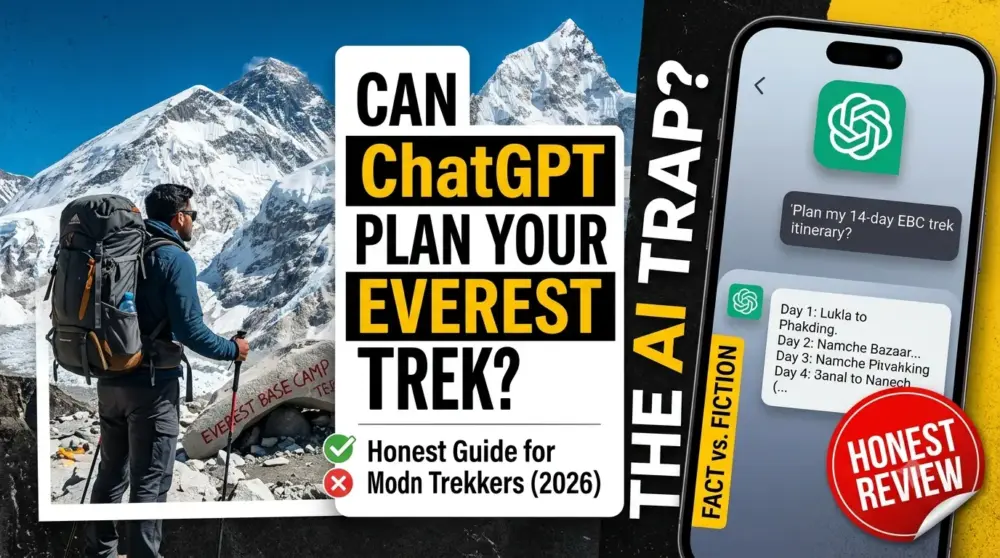
Can ChatGPT Plan Your Everest Trek?
Planning an Everest Base Camp (EBC) Trek has never been easier. With AI tools like ChatGPT, travelers can get instant answers about trekking routes, packing lists, fitness plans, budgets, and even personalized itineraries within seconds. Instead of spending hours searching through blogs and forums, many people now ask ChatGPT to create a complete trekking plan.
But here’s the real question: Can ChatGPT actually plan your Everest trek?
The short answer is yes—to an extent.
ChatGPT can be an excellent planning assistant. It can explain trekking routes, recommend gear, estimate costs, and answer hundreds of questions before your trip. However, no AI can replace real-time local knowledge, experienced guides, or on-the-ground decision-making in the Himalayas.
Everest is one of the world’s most iconic trekking destinations, but it is also one of the most challenging. Weather changes rapidly, flights to Lukla are frequently delayed, and altitude affects every trekker differently. While AI provides valuable information, a successful trek depends on combining smart planning with expert local support.
In this guide, we’ll explore what ChatGPT can help you with, where its limitations lie, and how to use AI wisely while planning your dream trek to Everest Base Camp.
Why Are Travelers Using ChatGPT for Trip Planning?
Artificial intelligence has transformed the way people research travel. Instead of opening dozens of browser tabs, travelers can ask one question and receive a detailed response in seconds.
For Everest trekking, ChatGPT can quickly provide:
- Suggested trekking itineraries
- Packing checklists
- Altitude sickness information
- Budget estimates
- Fitness preparation advice
- Seasonal recommendations
- Cultural etiquette
- Food and accommodation information
This convenience saves time and helps travelers organize their plans more efficiently.
For first-time trekkers, AI also makes complex information easier to understand by presenting it in a simple, conversational way.
What ChatGPT Can Help You With
While ChatGPT cannot book your trek or predict mountain weather, it can be an incredibly useful planning companion.
1. Choosing the Right Everest Trek
Many trekkers don’t realize that the Everest region offers several different routes.
ChatGPT can explain the differences between:
- Everest Base Camp Trek
- Gokyo Lakes Trek
- Everest Three Passes Trek
- Everest Panorama Trek
- Luxury Everest Trek
By understanding the difficulty, duration, scenery, and altitude of each route, you can choose the trek that best matches your experience and fitness level.
2. Creating a Trekking Itinerary
One of ChatGPT’s greatest strengths is itinerary planning.
For example, if you’re planning a 14-day Everest Base Camp trek, ChatGPT can recommend a day-by-day schedule that includes:
- Arrival in Kathmandu
- Flight to Lukla
- Trekking distances
- Acclimatization days
- Return journey
It can also explain why acclimatization days are essential and suggest places where additional rest may be beneficial.
However, remember that actual trekking schedules often change due to weather, health, or trail conditions.
3. Building a Packing List
Packing for Everest is one of the biggest concerns for first-time trekkers.
ChatGPT can generate customized packing lists based on:
- Trekking season
- Duration
- Personal preferences
- Budget
- Photography equipment
Typical recommendations include:
- Down jacket
- Waterproof shell
- Trekking boots
- Sleeping bag
- Thermal clothing
- Trekking poles
- Water purification tablets
- First-aid kit
- Headlamp
- Sunscreen
Having a well-organized checklist helps prevent last-minute stress.
4. Explaining Altitude Sickness
Altitude sickness is one of the most important topics for Everest trekkers.
ChatGPT can explain:
- Symptoms of Acute Mountain Sickness (AMS)
- Prevention strategies
- Importance of hydration
- Safe acclimatization practices
- Emergency descent procedures
Learning about altitude before arriving in Nepal allows trekkers to recognize symptoms early and make safer decisions during the journey.
5. Budget Planning
Many travelers ask ChatGPT questions such as:
- How much does the Everest Base Camp trek cost?
- How much money should I carry?
- What are daily expenses?
AI can provide estimated costs for:
- Flights
- Accommodation
- Meals
- Trekking permits
- Equipment rental
- Tips
- Travel insurance
Although prices may change over time, these estimates help travelers prepare financially.
Where ChatGPT Has Limitations
Despite its usefulness, ChatGPT has limitations that every traveler should understand.
It Doesn’t Know Today’s Mountain Conditions
The Himalayas change constantly.
A trail that was open yesterday may be blocked today due to:
- Heavy snowfall
- Landslides
- Flooding
- Avalanches
- Bridge damage
Local guides receive updated information from villages, trekking agencies, and park authorities that AI may not have.
It Can’t Predict Lukla Flight Delays
Flights between Kathmandu (or Ramechhap) and Lukla are highly dependent on weather.
Even experienced airlines cannot predict mountain weather with complete accuracy.
ChatGPT can explain why delays happen, but it cannot tell you whether tomorrow’s flight will depart on time.
It Cannot Monitor Your Health
Every trekker responds differently to altitude.
Two people following the same itinerary may have completely different experiences.
A professional guide can recognize early signs of altitude sickness, adjust your pace, recommend extra acclimatization, or arrange emergency evacuation if necessary.
AI cannot replace this real-time judgment.
It Cannot Replace Local Experience
Experienced trekking guides know details that are difficult to find online.
They can recommend:
- Better tea houses
- Scenic viewpoints
- Local cultural experiences
- Alternative trails
- Weather adjustments
- Hidden photo locations
These insights often make the journey far more memorable.
A Sample Everest Trek Plan
A typical Everest Base Camp itinerary includes:
Day 1: Arrive in Kathmandu
Day 2: Fly to Lukla and trek to Phakding
Day 3: Namche Bazaar
Day 4: Acclimatization day
Day 5: Tengboche
Day 6: Dingboche
Day 7: Acclimatization
Day 8: Lobuche
Day 9: Everest Base Camp and Gorak Shep
Day 10: Kala Patthar and descend
Day 11–13: Return to Lukla
Day 14: Fly back to Kathmandu
This itinerary works well for many trekkers but may need adjustments depending on weather, fitness, and acclimatization.
Why Local Guides Still Matter
AI can answer questions, but it cannot replace the reassurance of having an experienced guide walking beside you.
Local guides provide:
- Navigation
- Safety monitoring
- Cultural interpretation
- Emergency support
- Communication with tea houses
- Weather updates
- Trail advice
They also enrich the journey by sharing stories about Sherpa traditions, Buddhism, mountain history, and local customs—experiences that no AI can fully replicate.
Best Questions to Ask ChatGPT Before Your Trek
To get the most useful information, ask specific questions such as:
- What should I pack for Everest Base Camp in October?
- How can I train for high-altitude trekking?
- What’s the difference between Everest Base Camp and Gokyo Lakes?
- What foods are available on the trail?
- How much cash should I carry?
- What permits do I need?
- How do I prevent altitude sickness?
- What camera gear is best for Everest?
The more specific your question, the more tailored the response will be.
Combining AI With Local Expertise
The smartest way to use ChatGPT is as a planning assistant—not as your only source of information.
A balanced approach looks like this:
Use ChatGPT for:
- Research
- Comparing trekking routes
- Packing advice
- Fitness preparation
- Budget planning
- Learning about altitude
- Creating checklists
Rely on Local Experts for:
- Current trail conditions
- Permit updates
- Flight information
- Emergency planning
- Accommodation bookings
- Trek logistics
- Safety decisions
This combination gives you the convenience of AI alongside the confidence of experienced local support.
Frequently Asked Questions
No. ChatGPT can provide information and planning support, but it cannot guide you on the trail, monitor your health, or respond to changing conditions.
Yes. It’s a great tool for learning about trekking routes, gear, fitness, and budgeting before your trip.
Not reliably. Always check recent updates from local trekking agencies, guides, or official weather services before starting your trek.
Yes. It can suggest training routines, cardio exercises, strength workouts, and hiking preparation based on your fitness level.
No. AI is best used alongside experienced local advice, especially for logistics, permits, and safety.
Final Thoughts
So, can ChatGPT plan your Everest trek? The answer is yes—but only as part of the process.
ChatGPT is an excellent tool for organizing ideas, learning about trekking routes, building packing lists, understanding altitude sickness, and preparing for the adventure ahead. It can save time, answer questions, and help you feel more confident before you arrive in Nepal.
However, the Himalayas are dynamic. Weather changes quickly, flights can be delayed, and every trekker’s experience at high altitude is unique. These are situations where local knowledge, experienced guides, and responsible trekking companies make a real difference.
The best Everest adventures combine modern technology with human expertise. Use AI to prepare, ask better questions, and build confidence—but rely on experienced local professionals to help you navigate the realities of the mountains.
With thoughtful planning and the right support, your Everest trek can become more than just a journey to Base Camp—it can be one of the most rewarding experiences of your life.


How to book a trip?

make free inquiry

confirm the trip
