


Wildlife You May Spot While Trekking: 18 Amazing Himalayan Species
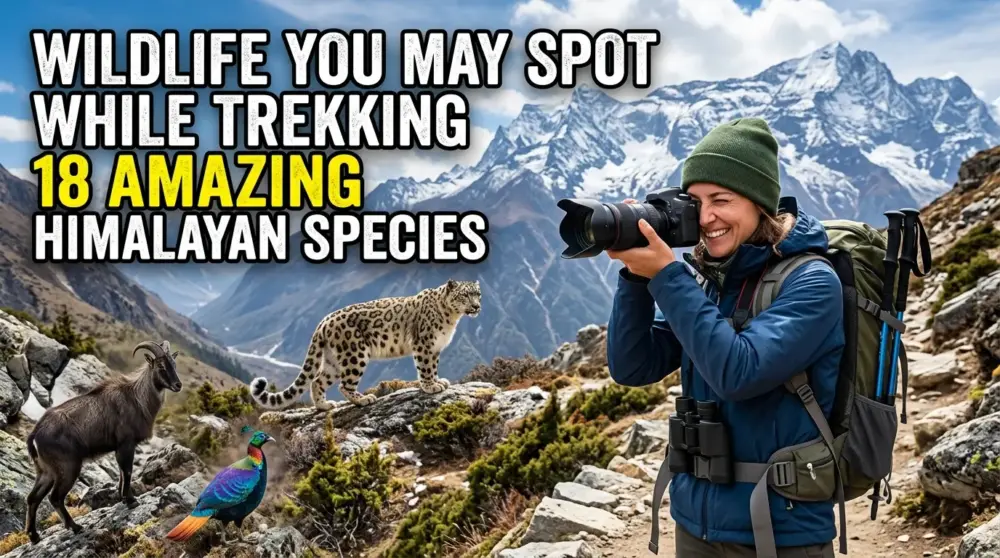
Wildlife You May Spot While Trekking in Nepal
When people think about trekking in Nepal, towering Himalayan peaks, colorful prayer flags, and remote mountain villages usually come to mind. While these breathtaking landscapes are undoubtedly the main attraction, Nepal’s trekking trails also pass through some of the richest wildlife habitats in Asia.
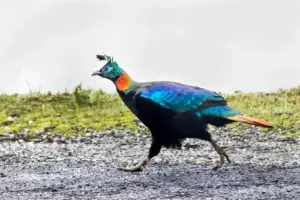
From the dense rhododendron forests of Langtang to the rocky cliffs of Upper Mustang and the alpine meadows of the Everest region, Nepal is home to an incredible variety of wildlife. Trekkers may encounter graceful Himalayan tahrs climbing cliffs, colorful Himalayan monals flying through forests, playful langur monkeys swinging between trees, or even signs left behind by the elusive snow leopard.
With over 200 mammal species, 900 bird species, hundreds of butterflies, and countless reptiles and insects, Nepal offers much more than mountain adventures. Many trekking routes pass through protected national parks and conservation areas where wildlife thrives alongside local communities.
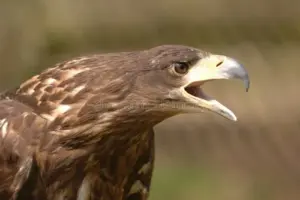
Although spotting rare animals often requires patience and a little luck, every trek offers the possibility of witnessing nature in its purest form. Even a brief glimpse of a soaring eagle or a shy musk deer can become one of the most memorable moments of your journey.
Whether you’re a wildlife enthusiast, photographer, birdwatcher, or simply someone who enjoys nature, Nepal’s trekking routes provide countless opportunities to experience the country’s extraordinary biodiversity.
Why Nepal Is a Wildlife Paradise
Nepal occupies less than 0.1% of the Earth’s land area, yet it contains an astonishing diversity of ecosystems. Within a relatively short distance, the landscape rises from subtropical forests at around 60 meters above sea level to the world’s highest mountain, Mount Everest, at 8,848.86 meters.
This dramatic change in altitude creates habitats for an extraordinary range of wildlife.
Many of Nepal’s most famous trekking routes pass through protected areas such as:
- Sagarmatha National Park
- Langtang National Park
- Makalu Barun National Park
- Shey Phoksundo National Park
- Annapurna Conservation Area
- Manaslu Conservation Area
- Kanchenjunga Conservation Area
These protected landscapes safeguard endangered mammals, rare birds, medicinal plants, and unique alpine ecosystems.
Unlike traditional wildlife safaris, trekking allows visitors to experience animals in their natural mountain habitats. While sightings are never guaranteed, the excitement of discovering wildlife unexpectedly is part of what makes trekking in Nepal so rewarding.
1. Snow Leopard – The Ghost of the Himalayas
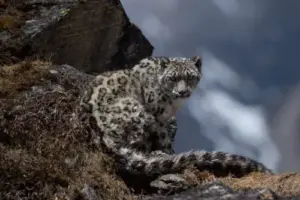
Among all Himalayan wildlife, no animal captures the imagination quite like the snow leopard.
Often called the “Ghost of the Mountains,” this magnificent big cat is one of the world’s most elusive predators. Its thick, smoky-gray fur provides perfect camouflage against rocky mountain landscapes, making it incredibly difficult to spot even when it is nearby.
Snow leopards live at elevations between 3,000 and 5,500 meters, inhabiting rugged cliffs and remote alpine valleys. In Nepal, they are found primarily in Upper Mustang, Dolpo, Manaslu, Kanchenjunga, and parts of the Everest region.
Although most trekkers will never actually see a snow leopard, many encounter footprints, scratch marks, or hear fascinating stories from local guides who have occasionally spotted them.
Snow leopards play a vital role in maintaining the balance of Himalayan ecosystems by controlling populations of blue sheep and other mountain herbivores.
Interesting Facts
- Can leap more than 15 meters.
- Their tails help maintain balance on cliffs.
- They cannot roar like lions or tigers.
- Mostly active during dawn and dusk.
Best Trekking Areas
- Upper Mustang
- Dolpo
- Manaslu Circuit
- Kanchenjunga Conservation Area
2. Himalayan Tahr – Master of the Cliffs
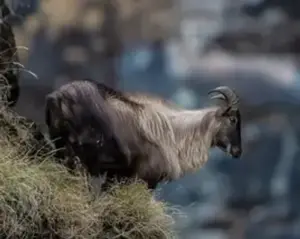
One of the most commonly spotted mammals during Himalayan treks is the Himalayan Tahr.
These sure-footed wild goats are perfectly adapted to Nepal’s rugged mountain terrain. Their muscular bodies and specialized hooves allow them to climb nearly vertical cliffs with remarkable agility.
Male tahrs are easily recognized by their long reddish-brown coats and impressive curved horns, while females are generally smaller and lighter in color.
Trekkers on the Everest Base Camp, Annapurna Circuit, and Langtang Valley routes often see small groups grazing on alpine slopes during the early morning or late afternoon.
Although they appear calm, Himalayan tahrs remain constantly alert for predators such as snow leopards.
Best Places to Spot Himalayan Tahr
- Sagarmatha National Park
- Annapurna Conservation Area
- Langtang National Park
- Manaslu Conservation Area
Photography Tip
Bring binoculars or a telephoto lens, as tahrs often remain on cliffs that are difficult to approach.
3. Blue Sheep (Bharal) – The Mountain Survivor
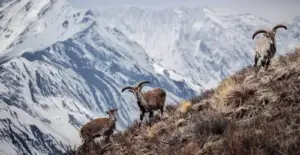
Despite their name, Blue Sheep, also known as Bharal, are neither completely blue nor true sheep. They are closely related to both sheep and goats and have evolved perfectly for life in Nepal’s high-altitude landscapes.
Their bluish-gray coat blends seamlessly with rocky cliffs, making them difficult to detect until they move.
Blue sheep are among the primary prey of snow leopards, and where healthy populations of bharal exist, snow leopards are often nearby.
Trekkers hiking in Upper Mustang, Dolpo, and Manaslu frequently observe herds grazing peacefully on steep mountain slopes.
Watching dozens of bharal effortlessly navigate cliffs that seem impossible to climb is one of the most fascinating wildlife experiences in the Himalayas.
Best Trekking Areas
- Upper Mustang
- Dolpo
- Manaslu Circuit
- Kanchenjunga
4. Red Panda – Nepal’s Adorable Forest Treasure
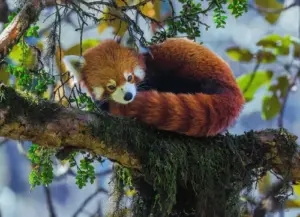
Few animals generate as much excitement as the Red Panda.
With its reddish-brown fur, bushy striped tail, and curious face, the red panda is often described as one of the cutest mammals in the world.
Unlike giant pandas, red pandas spend much of their lives in temperate forests filled with bamboo.
They are incredibly shy and usually active during early morning and evening, making sightings rare but unforgettable.
In Nepal, red pandas inhabit forests within:
- Langtang National Park
- Kanchenjunga Conservation Area
- Makalu Barun National Park
- Eastern Himalayan forests
Because their populations continue to decline due to habitat loss, conservation programs work closely with local communities to protect these remarkable animals.
Even if you don’t see one during your trek, knowing that these beautiful creatures inhabit the forests around you adds a sense of wonder to the journey.
5. Musk Deer – The Silent Forest Wanderer
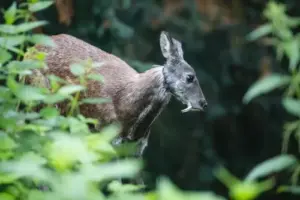
The Himalayan Musk Deer is another elusive resident of Nepal’s mountain forests.
Unlike deer with impressive antlers, male musk deer possess long, fang-like canine teeth that give them a unique appearance.
These shy animals prefer dense forests between 2,500 and 4,500 meters, where they feed on leaves, mosses, lichens, and shrubs.
Unfortunately, musk deer have long been hunted illegally for the valuable musk gland used in traditional perfumes and medicines. Today, they are protected under Nepal’s wildlife conservation laws.
Trekkers who begin walking before sunrise occasionally spot musk deer quietly moving through forests before retreating into dense vegetation.
6. Himalayan Black Bear – The Forest Giant
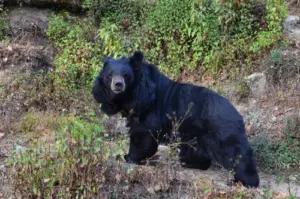
Although sightings are uncommon, the Himalayan Black Bear inhabits many of Nepal’s forested trekking regions.
Recognizable by its black fur and distinctive white crescent-shaped patch on its chest, this bear spends much of its time foraging for berries, roots, insects, and fruits.
Most bears avoid human contact and quickly disappear into the forest when they hear approaching trekkers.
They are most commonly found in:
- Langtang National Park
- Makalu Barun National Park
- Kanchenjunga Conservation Area
- Manaslu Conservation Area
If you encounter a bear, remain calm, keep your distance, and follow your guide’s instructions. Fortunately, such encounters are extremely rare.
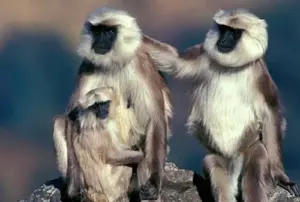
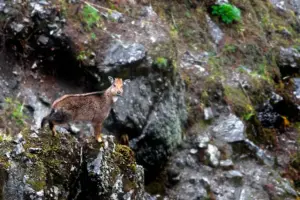
17. Butterflies That Add Color to Himalayan Trails

While Nepal’s large mammals often steal the spotlight, its butterflies are equally remarkable. With more than 650 recorded butterfly species, Nepal is one of South Asia’s top destinations for butterfly enthusiasts. During spring and early summer, trekking trails burst into color as butterflies flutter among blooming rhododendrons, wild orchids, and alpine flowers.
One of the most beautiful species is the Kaiser-i-Hind, a rare emerald-green butterfly found in the forests of eastern Nepal. Other commonly spotted species include the Common Peacock, Blue Apollo, and Red Lacewing.
Butterflies play an important role in pollinating mountain plants and maintaining healthy ecosystems. Trekkers who slow down and observe the forests closely are often rewarded with beautiful sightings that many hikers overlook.
Best Places for Butterfly Watching
- Langtang National Park
- Annapurna Conservation Area
- Shivapuri National Park
- Kanchenjunga Conservation Area
18. Himalayan Honeybee – The World’s Largest Honeybee
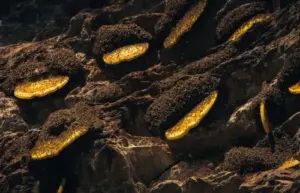
High on Nepal’s cliffs lives one of nature’s most fascinating insects—the Himalayan Giant Honeybee (Apis laboriosa), the largest honeybee species in the world.
These bees build enormous hives on vertical rock faces, sometimes hundreds of feet above the ground. Their honey has been harvested for centuries by local communities using traditional rope ladders in a practice known as honey hunting.
Honey hunting is especially famous in the hills of Lamjung, Gorkha, and parts of central Nepal. During the harvest, experienced hunters climb dangerous cliffs while chanting prayers, collecting honey that has both cultural and medicinal significance.
For trekkers, seeing these giant honeybee colonies from a safe distance offers a fascinating glimpse into one of Nepal’s oldest traditions.
Best Trekking Routes for Wildlife Spotting
Not every trekking route offers the same wildlife experience. If seeing animals and birds is one of your goals, these trails stand out.
| Trekking Route | Wildlife You May Spot |
|---|---|
| Everest Base Camp Trek | Himalayan Tahr, Danphe, Musk Deer, Griffon Vulture |
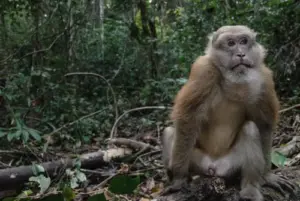
| Langtang Valley Trek | Red Panda, Langur, Black Bear, Danphe |
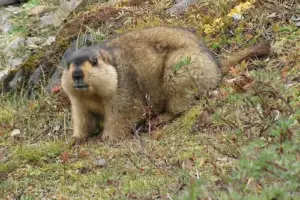
| Annapurna Circuit Trek | Himalayan Tahr, Monal, Marmot, Goral |
| Manaslu Circuit Trek | Blue Sheep, Snow Leopard (rare), Griffon Vulture |
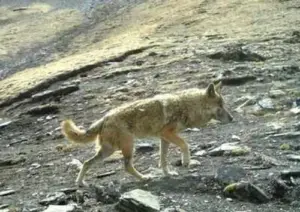
| Upper Mustang Trek | Blue Sheep, Marmot, Golden Eagle, Himalayan Wolf |
| Kanchenjunga Trek | Red Panda, Snow Leopard (rare), Musk Deer |
| Makalu Base Camp Trek | Rare Birds, Black Bear, Langur |
Each route offers a unique combination of landscapes and wildlife, making Nepal an exceptional destination for both trekkers and nature lovers.
Wildlife Photography Tips for Trekkers
Photographing wildlife requires patience, preparation, and respect for nature. Here are a few tips to help you capture memorable images without disturbing the animals.
Carry the Right Equipment
A camera with a telephoto lens or a pair of binoculars can help you observe animals from a safe distance. If you’re using a smartphone, consider a compact zoom attachment for better detail.
Be Patient
Wildlife rarely appears on schedule. Sometimes the best moments happen when you pause quietly instead of rushing to the next destination.
Use Natural Light
Early morning and late afternoon provide soft lighting that’s ideal for wildlife photography. These are also the times when many animals are most active.
Keep Your Distance
Never chase animals for a better photo. Respecting their space reduces stress and results in more natural behavior.
Avoid Flash Photography
Flash can disturb birds and nocturnal animals. Rely on natural light whenever possible.
Responsible Wildlife Watching
Seeing wildlife in the Himalayas is a privilege, and responsible behavior helps protect these fragile ecosystems.
When trekking:
- Stay on marked trails.
- Never feed wild animals.
- Keep noise to a minimum.
- Dispose of waste properly.
- Avoid picking flowers or disturbing plants.
- Respect breeding seasons and nesting sites.
- Follow your guide’s advice when encountering wildlife.
Sustainable tourism benefits both local communities and the animals that make Nepal such a unique destination.
Best Time for Wildlife Spotting in Nepal
Spring (March–May)
Spring is one of the best seasons for wildlife watching. Rhododendron forests are in bloom, birds become more active, and mammals are easier to spot as temperatures rise.
Autumn (September–November)
After the monsoon, clear skies and pleasant weather make autumn ideal for trekking and birdwatching. Wildlife is active, and mountain visibility is at its best.
Winter (December–February)
Although temperatures are colder, winter offers excellent opportunities to spot animals descending to lower elevations in search of food. Birdwatchers often enjoy excellent sightings during this season.
Monsoon (June–August)
Heavy rain makes trekking more challenging, but lush forests attract butterflies, amphibians, and insects in large numbers.
Frequently Asked Questions
Snow leopards are extremely elusive, so sightings are very rare. However, they inhabit regions such as Upper Mustang, Manaslu, Dolpo, and Kanchenjunga, making these treks the best places for a chance encounter.
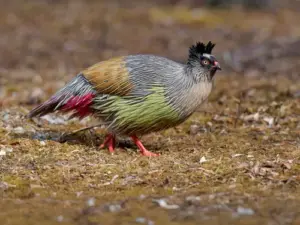
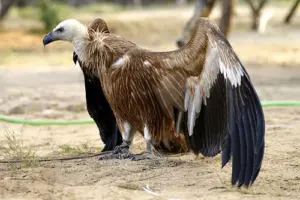
Yes. Nepal is home to more than 900 bird species, making it one of Asia’s top birdwatching destinations. The Himalayas provide habitats for colorful pheasants, vultures, eagles, and many migratory birds.
Are wild animals dangerous?
Most Himalayan wildlife avoids human contact. By maintaining a respectful distance and following your guide’s instructions, wildlife encounters are generally safe.
For mammals, the Langtang Valley Trek and Manaslu Circuit Trek are excellent choices. For birdwatching, the Annapurna and Everest regions are particularly rewarding.
Yes. A lightweight pair of binoculars significantly improves your chances of spotting birds, mountain mammals, and distant wildlife without disturbing them.
Protecting Nepal’s Wildlife for Future Generations
Nepal’s wildlife is one of its greatest natural treasures. From elusive snow leopards roaming high mountain ridges to colorful monals hidden among rhododendron forests, every species plays a vital role in maintaining healthy Himalayan ecosystems.
Conservation efforts led by national parks, local communities, and responsible tourism operators have helped protect many endangered species. As travelers, we also have a role to play by respecting wildlife, minimizing our environmental impact, and supporting sustainable tourism initiatives.
Every responsible trek contributes to preserving these incredible habitats for future generations.
Final Thoughts
Nepal’s mountains are famous around the world, but their wildlife is just as extraordinary. Every trekking trail offers the chance to witness nature in its purest form, whether it’s a Himalayan tahr balancing on a cliff, a Danphe flashing its brilliant colors, or a troop of langurs moving gracefully through ancient forests.
Wildlife sightings often happen when you least expect them. Sometimes it’s a soaring eagle above a mountain pass; other times it’s the quiet rustle of a musk deer disappearing into the trees. These moments remind us that trekking in Nepal is about more than reaching a destination—it’s about experiencing the incredible diversity of life that calls the Himalayas home.
As you explore Nepal’s trails, walk with curiosity, respect the natural world, and take time to appreciate the wildlife that makes every journey truly unforgettable.


How to book a trip?

make free inquiry

confirm the trip
