


Upper Mustang Trek Guide (2026): Cost, Route, Permits & Best Time
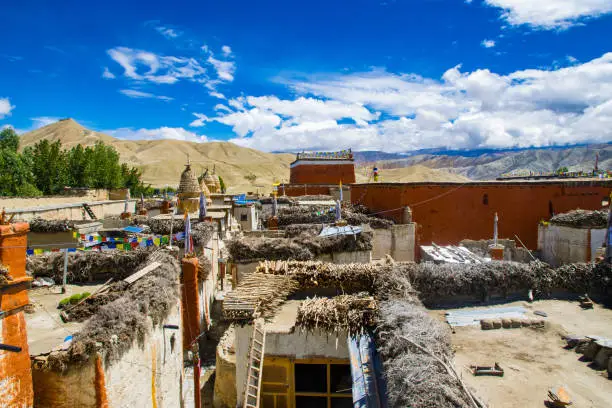
Nobody warned me the cliffs would be red.
I’d spent weeks reading about Upper Mustang before I went, looking at permit costs, checking itineraries, and watching whatever footage existed online. And somehow, standing in the Kali Gandaki valley with those copper-red canyon walls rising on both sides of me, I was still not prepared for what the place actually looked like.
That’s Upper Mustang. It does that to people.
If you’re trying to figure out whether this trek is worth the planning and the cost, you’re in the right place. I’ll go through everything, permits, route, seasons, packing, the works. This Upper Mustang trek guide will help you understand the full journey. This Upper Mustang trek guide covers everything you need to know before you go. But I’ll also be straight with you about the things other guides skip over, because there are a few.
Why the Upper Mustang Trek Guide Is Nepal’s Most Mysterious Adventure
Here’s something worth knowing upfront. Upper Mustang is not the Nepal that most people picture. The green hills, the terraced fields, the thick jungle mist, none of that exists up here.
What you get instead is high desert. Bone dry, wind-blasted, otherworldly in a way that makes first-time visitors go quiet for a bit.
The reason for that is geography. The Annapurna and Dhaulagiri ranges sit just south, and they block the monsoon almost entirely. Upper Mustang sits in its rain shadow, which means it stays dry when the rest of Nepal is soaked, and it looks more like the Tibetan Plateau it borders than the Nepal most trekkers know.
The whole region was its own kingdom for centuries. Called Lo. Ruled by the same royal dynasty for 25 generations, based out of the walled city of Lo Manthang, running on trade revenue from the salt routes between Tibet and India. When China closed Tibet in the 1950s, the salt trade died. The economy collapsed. CIA-backed Tibetan resistance fighters used the valley as their base through the 1960s. Nepal sealed the whole region off in the late 1970s and kept it sealed until 1992.
That history matters because it’s why the place still looks the way it does. Active monasteries with murals painted in the 1400s. A walled city where the former royal palace still stands. Roughly 3,500 trekkers per year. Compare that to the 40,000-plus who walk the Annapurna Circuit, and you start to understand what the restrictions actually protect.
People call it the Last Forbidden Kingdom, and for once, that is not marketing. It earned the name honestly.
Upper Mustang Trek at a Glance
| Duration | 10 to 14 days trekking / 7 to 9 days by jeep |
| Difficulty | Moderate |
| Highest Point | Lo Manthang at 3,840m, passes up to 4,200m |
| Starting Point | Jomsom, flight from Pokhara |
| RAP Permit Cost | USD 50 per person per day |
| ACAP Permit | USD 30 per person |
| Best Season | March through November |
| Guide Required | Yes, legally mandatory |
Upper Mustang Trek Route Overview
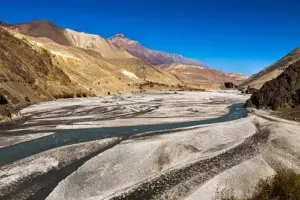
The flight from Pokhara to Jomsom takes around 20 minutes. Book the earliest available departure, because the Kali Gandaki wind picks up by mid-morning and later flights get cancelled more often than not.
From Jomsom, the trail moves north. Kagbeni is the first real stop and also where the Restricted Area Permit checkpoint sits. Officers check your paperwork here before you can continue north into Upper Mustang. Past that checkpoint, the landscape shifts noticeably. Less green, more dust, cliffs that keep changing colour as the light changes through the day.
The route goes through Chele, Syangboche, Ghami, Tsarang, and then Lo Manthang. On the way back, most itineraries take a slightly different path through Drakmar and Ghiling, so you’re not walking the same ground twice. It makes the return feel like a different trek rather than a reversal.
Major Villages on the Upper Mustang Trek
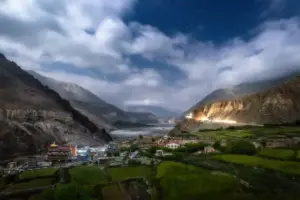
Kagbeni feels medieval because, structurally, it mostly is. Buildings pressed tight against each other, stone underfoot, a large monastery visible from the trail as you approach. The restricted zone checkpoint is here, and it is staffed properly.
Chele is usually the first overnight inside Upper Mustang, sitting in a canyon with rock walls close enough on both sides to make the sky look like a strip.
Ghami has a mani wall that stretches for hundreds of metres, one of the longest in Nepal, with prayer carvings added to it generation after generation.
Tsarang sits below a ridge monastery that earns more photographs than any single building on the route.
Lo Manthang is what the whole trek is about: four active temples, a royal palace, alleys narrow enough to brush both walls with your arms, and views from the city walls that take a moment to fully believe.
The Fascinating History of Upper Mustang
The Kingdom of Lo was founded in the 14th century. Ame Pal, the founding king, built Lo Manthang and established a dynasty that ran the region for six centuries. The salt trade between Tibet and the Indian lowlands kept the kingdom solvent. Lo controlled key points along that route and taxed the traffic.
When China moved into Tibet in the 1950s, the trade stopped. Just stopped. The economic foundation of the kingdom disappeared in a few years. Then came the CIA operation, which used the remote Mustang valleys to support Tibetan resistance fighters from the early 1960s until the operation was wound down in the early 1970s when the US and China normalised relations.
Nepal closed Upper Mustang to foreigners shortly after and kept it closed until 1992.
Nepal abolished its monarchy in 2008 when the country became a republic. The Kingdom of Lo went with it officially, though the last king, Jigme Dorje Palbar Bista, was treated as a living cultural institution by locals until he died in 2016. His portrait still appears inside homes in Lo Manthang. People speak about him with an ease and warmth that does not feel like nostalgia for a political institution. It feels more personal than that.
What six centuries of relative isolation and then a few decades of carefully managed tourism have produced is a place where the old ways are not performed for visitors. They are still the actual ways. That distinction is rarer than people realise, and it is the reason to go.
Best Seasons to Trek Upper Mustang
Spring, between March and May, is the most popular window. The weather is predictable, temperatures are manageable at altitude, and visibility is generally good. May specifically is worth timing around if possible because the Tiji Festival falls in this month. The Tiji Festival is a three-day ceremony in Lo Manthang involving masked dances and religious rituals that have been performed for centuries. In 2026, the dates are May 13 to 15. The community participates in it as something that matters, not as a cultural demonstration for arriving trekkers. The difference shows, and it changes what the experience feels like.
Monsoon between June and August is Upper Mustang’s best-kept secret, and most guides barely mention it. The Annapurna and Dhaulagiri ranges block almost all monsoon rainfall from entering the region. Pokhara is grey and wet, the Annapurna trails are slippery and crowded with people who didn’t know how to avoid them, and Upper Mustang sits in dry sunshine with barely any other trekkers on the route. Photographers specifically seek out this window for the quality of light after rare, brief showers.
Autumn, from September through November, gives the clearest mountain views of the year. Peak trekking season across Nepal, but Upper Mustang still sees a fraction of the numbers that Everest and Annapurna attract.
Winter, from December through February, is cold enough at higher elevations to require proper gear and commitment. The lower sections of the route are walkable. Most people leave this window to the ones who specifically want near-total solitude and have tested their cold-weather kit before.
How Much Does the Upper Mustang Trek Cost?
The permit structure changed significantly in late 2025, and most blogs I’ve read haven’t caught up to it yet, so I’ll be clear about what the current situation actually is.
The old system charged a flat USD 500 for ten days regardless of how long you spent inside the restricted zone. If you were in Upper Mustang for two days or nine, same price. That structure was abolished. The current rate is USD 50 per person per day, counted from when you cross the Kagbeni checkpoint heading north.
A five-day restricted zone itinerary now costs USD 250. Ten days cost USD 500. Twelve days cost USD 600. You pay for the actual days you’re there.
Upper Mustang Restricted Area Permit Cost
| Expense | 2026 Cost |
|---|---|
| Restricted Area Permit (RAP) | USD 50 per person per day |
| Annapurna Conservation Area Permit (ACAP) | USD 30 per person |
| Licensed guide | USD 20 to 30 per day |
| Teahouse accommodation and meals | USD 15 to 30 per day |
| Pokhara to Jomsom return flights | USD 150 to 200 per person |
A complete 12-day guided package from a reputable agency usually runs between USD 1,800 and USD 3,000 per person. The gap is real and comes down to group size, accommodation standard, and what the agency bundles into the package price.
Why is the Upper Mustang expensive compared to most treks in Nepal? The RAP is the straightforward answer. Government-set, non-negotiable, no agency can discount it. Add mandatory guide fees, the Jomsom flights, and the reality that teahouse infrastructure here is thinner than on the Everest or Annapurna corridors, and the total adds up quickly. The cost structure is also what keeps this place from being overrun—worth understanding before resenting it.
Permits Required for Upper Mustang Trek
Two permits, both arranged through a registered Nepali trekking agency. There is no way to apply for either independently, full stop.
The Restricted Area Permit goes through the Department of Immigration in Kathmandu or Pokhara. Processing takes two to three working days once documents are submitted. You need a passport valid for at least six months, a copy of your Nepal visa, passport photos, and travel insurance documentation. Your agency handles the submission.
The Annapurna Conservation Area Permit covers the lower sections of the route at USD 30 per foreign national, processed alongside the RAP by the same agency.
March 2026 brought one rule change worth knowing. The requirement for a minimum group of two foreign trekkers was officially removed. Solo travellers can now enter Upper Mustang accompanied only by a licensed guide. The mandatory licensed guide requirement stays exactly as it was. That part has not changed and will not.
How Difficult Is the Upper Mustang Trek?
Moderate is the honest answer, though two things catch people who’ve done other moderate Nepal treks by surprise.
The altitude is the obvious one. Passes reach around 4,200 metres, and Lo Manthang sits at 3,840 metres. These are real numbers where altitude sickness is a genuine possibility, particularly if you’re pushing the itinerary and skipping the acclimatisation days because you feel fine. Don’t skip the acclimatisation days. Feeling fine at 3,500 metres in the morning does not always predict feeling fine at 4,200 metres in the afternoon.
The wind is the less obvious one and in some ways the harder one. The Kali Gandaki corridor channels some of the strongest sustained afternoon winds in the Himalayas through a relatively narrow valley. It picks up by midday and keeps going. After a full day of walking into it, your legs feel fine, but the rest of you is worn down in a way that doesn’t happen on a calm mountain trail. Ask your guide about early starts. Getting to your overnight village before the wind peaks makes a real difference to how the afternoon feels.
Can beginners do the Upper Mustang Trek? Yes. People complete this route in their 50s and 60s regularly. Walk a lot in the months before you come. Take the acclimatisation days. Start early. That’s most of it.
Top Highlights of the Upper Mustang Trek
Lo Manthang is the reason most people come, and it delivers more than expected, which is unusual. Two full days is the minimum that does it justice. The four temples inside the walled city each have their own character. Jampa Gompa is the oldest, built in the 1400s, small and dark and serious. Thubchen Gompa has clay sculptures and restored murals that have been there since before the printing press existed in Europe. Walking the city walls in late afternoon with the Himalayan ridgeline sitting above the desert plateau behind it is the kind of view that people describe years later when asked what they remember most about Nepal.
The sky caves cut into the cliff faces throughout Upper Mustang don’t exist anywhere else in Nepal. Ancient chambers hollowed into rock walls at heights that seem impossible without modern equipment, used for burial and meditation by people who lived in this valley thousands of years before the current villages were built. Some are still being studied. Dozens are visible from the trail on a clear day.
The Kali Gandaki gorge runs between Annapurna to the east and Dhaulagiri to the west. Two of the world’s ten highest mountains. One of the deepest gorges on earth. On a clear morning, walking the valley floor with both peaks fully visible, the scale is hard to take in all at once.
And the quiet on the trail. Six hours of walking and you see maybe four other trekkers. No music from a chai shop, no group photos being organised at every viewpoint. Just you, the guide, the wind, and the red cliffs.
What to Pack for the Upper Mustang Trek?
Wind protection over rain protection. It barely rains here, but the wind is relentless and cold. A buff or light scarf for the dusty lower valley sections. Strong sunscreen and lip balm every day without exception, the altitude and dry air accelerate sunburn badly, and most people don’t bring enough. A two-litre water bottle, the gaps between villages can be longer than expected.
Trekking poles for the rocky descents toward Jomsom on the return. Proper trekking boots with ankle support rather than trail runners, the uneven rocky trail sections earn the boot weight. A sleeping bag rated to at least minus five Celsius because remote teahouse blankets in shoulder season will not do the job alone. Warm layers for evenings even in May because 3,800 metres cools down fast after sunset, regardless of how warm the afternoon was.
One thing most packing lists don’t mention: bring more cash in Nepali Rupees than you think you need. ATMs exist in Jomsom. After Jomsom, they largely stop existing.
Frequently Asked Questions About Upper Mustang Trek
Is Upper Mustang worth it?
Yes. Not worth it at any price for any traveller in any situation, but worth it for what it actually is. A place where Tibetan Buddhist culture has survived genuinely intact rather than been reconstructed for tourism. A landscape unlike anything else in Nepal. Solitude on the trail is increasingly rare anywhere in the Himalayas. The permit fees fund conservation and community programs in a region with very limited other income sources. Understanding that before the trip changes how the cost feels.
Can beginners do the Upper Mustang Trek?
Yes. No technical skills required, no prior high-altitude experience necessary. The things that matter are building real acclimatisation days into the itinerary and not treating them as optional, walking regularly for a few months before you come, and going with a guide who knows the signs of altitude sickness and takes them seriously.
Why is Upper Mustang expensive?
The Restricted Area Permit at USD 50 per person per day is the primary driver and is set by the Nepal government. No agency can reduce it. Mandatory guide fees, the Jomsom flights, and limited teahouse infrastructure compared to other Nepal trekking corridors all add to the total. The cost structure keeps annual visitor numbers low and is largely why the place still looks the way it does.
How many days do you need for the Upper Mustang Trek?
Ten days is achievable for fit trekkers who’ve already acclimatised to altitude. Twelve is more realistic for most people. Fourteen gives you room for side valleys and extra time in Lo Manthang without feeling like you’re always trying to cover ground. The time in Lo Manthang specifically is worth protecting. One day is not enough, and most people who do one day say so afterward.
Is the Upper Mustang Trek Worth It?
There’s a kind of travel where you spend the whole time checking the place against the version of it you built in your head beforehand.
Upper Mustang breaks that habit because the place is better than the version you built.
The photographs don’t capture what Lo Manthang feels like from inside it. The quiet on the trail is something a photograph cannot communicate. Standing in front of murals in Thubchen Gompa that were painted before Columbus sailed is an experience that no other Nepal trek offers. The red cliffs in the late afternoon light. The Tiji Festival, if your timing works out. This Upper Mustang trek guide is designed to help you plan better. The way the desert opens up past Kagbeni into something that feels more like Central Asia than South Asia.
The permits, the guide requirements, and the agency paperwork. None of that is an obstacle. That is what keeps this place from becoming what every other popular trek in Nepal eventually became.
Go. Plan it properly. Take the two days in Lo Manthang. Start your days early before the wind comes up.
Visit greenhorizontour.com to explore our Upper Mustang Trek packages or get in touch to build a custom itinerary around your actual dates.


How to book a trip?

make free inquiry

confirm the trip
