


Annapurna Circuit Trek


Trip Duration
19 Days
Group Sizes
0-15 People
Transportation
Ground and Flight
Destination
Annapurna Circuit Trek
Max. Altitude
5416m
Nature of Trip
Trekking
Best Season
Spring and Autumn
Activities
- City tour
- Trekking

Difficulty
Moderate
Meals
- Breakfast
- Lunch
- Dinner

Start & End Point
Kathmandu
Accommodation
- Tea Houses
- 4 star
Overview of Annapurna Circuit Trek
 |
 |
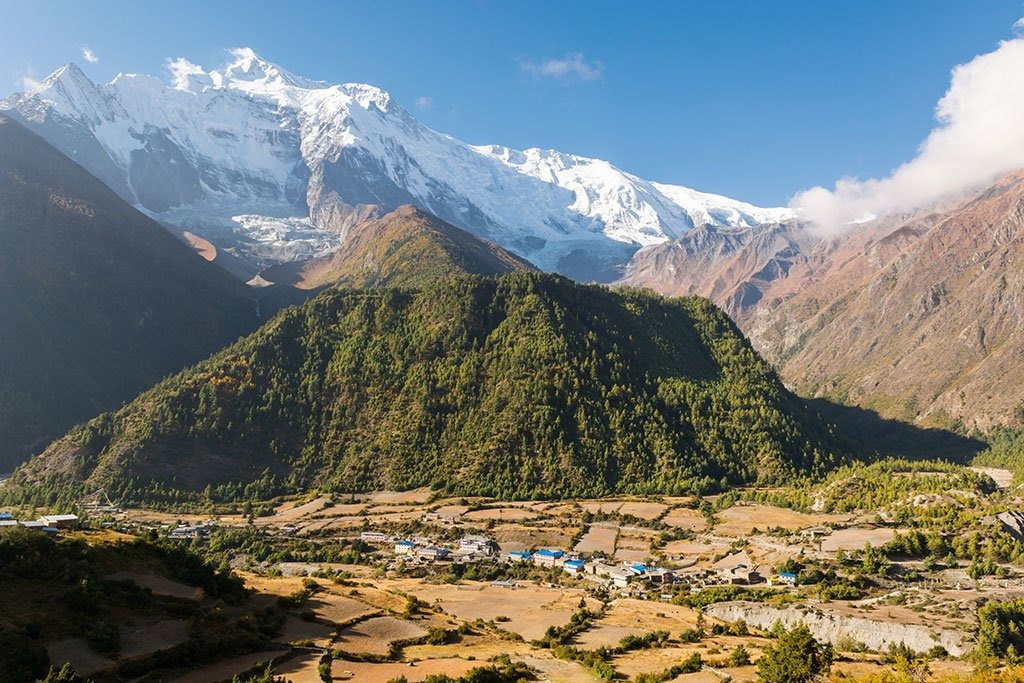
The Annapurna Circuit Trek is considered one of the most diverse and beautiful trekking routes in Nepal. This journey offers trekkers an unparalleled adventure through varied landscapes, from lush subtropical forests and terraced fields to alpine meadows and arid deserts. The highlight of the trek is crossing the formidable Thorong La Pass at 5,416 meters, which offers breathtaking panoramic views of the Annapurna and Dhaulagiri mountain ranges. Along the way, trekkers experience the rich cultural tapestry of the region, passing through traditional villages inhabited by Gurung, Manangi, and Thakali communities. The Annapurna Circuit Trek is a true adventure, providing a mix of natural beauty, cultural encounters, and physical challenge.
The Annapurna Circuit Trek typically starts from Besisahar, a bustling town that serves as the gateway to the Annapurna region. Trekkers gradually ascend through a diverse range of climates and terrains, starting from subtropical forests and terraced fields. As you progress, you’ll pass through traditional villages, each offering unique cultural experiences and stunning views of the surrounding mountains.
The trail to Manang is a journey through time, where trekkers witness the gradual transition from lush greenery to arid landscapes. Manang, situated at 3,540 meters, is a critical acclimatization stop. This charming village offers trekkers a chance to explore local monasteries, enjoy panoramic views, and acclimatize before tackling the high-altitude Thorong La Pass.
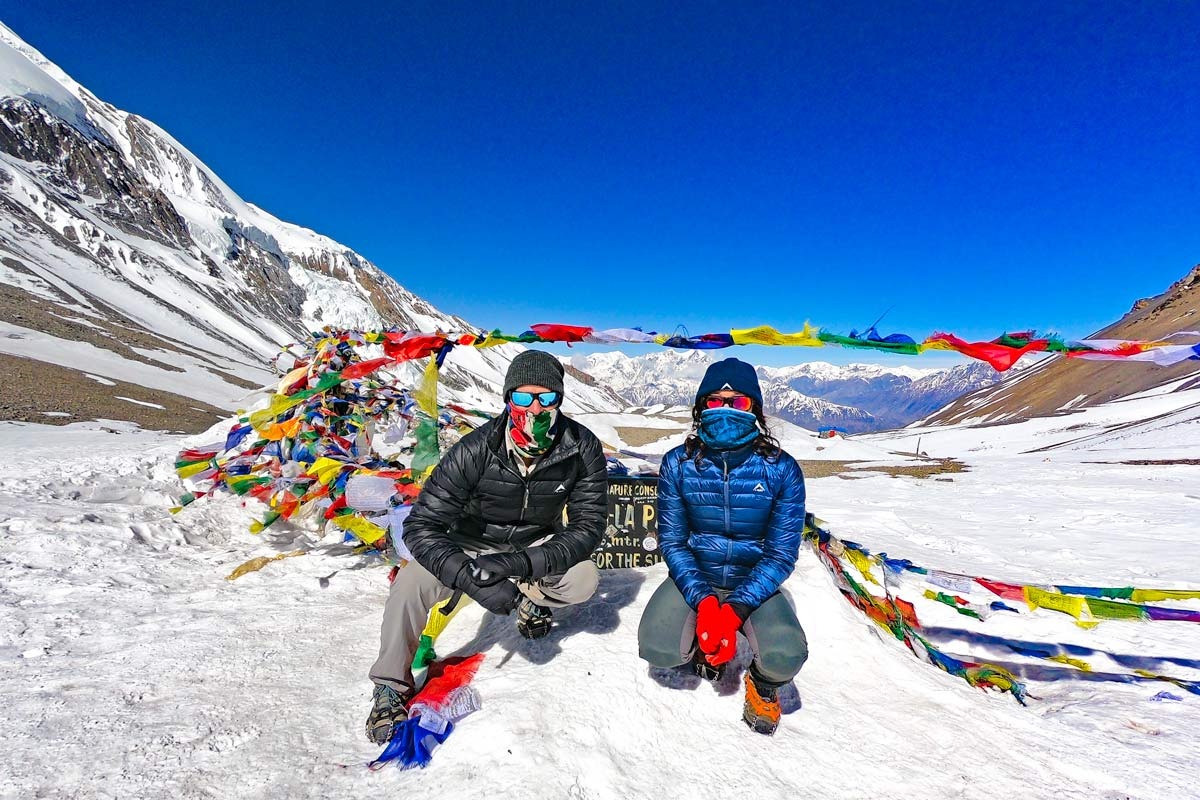
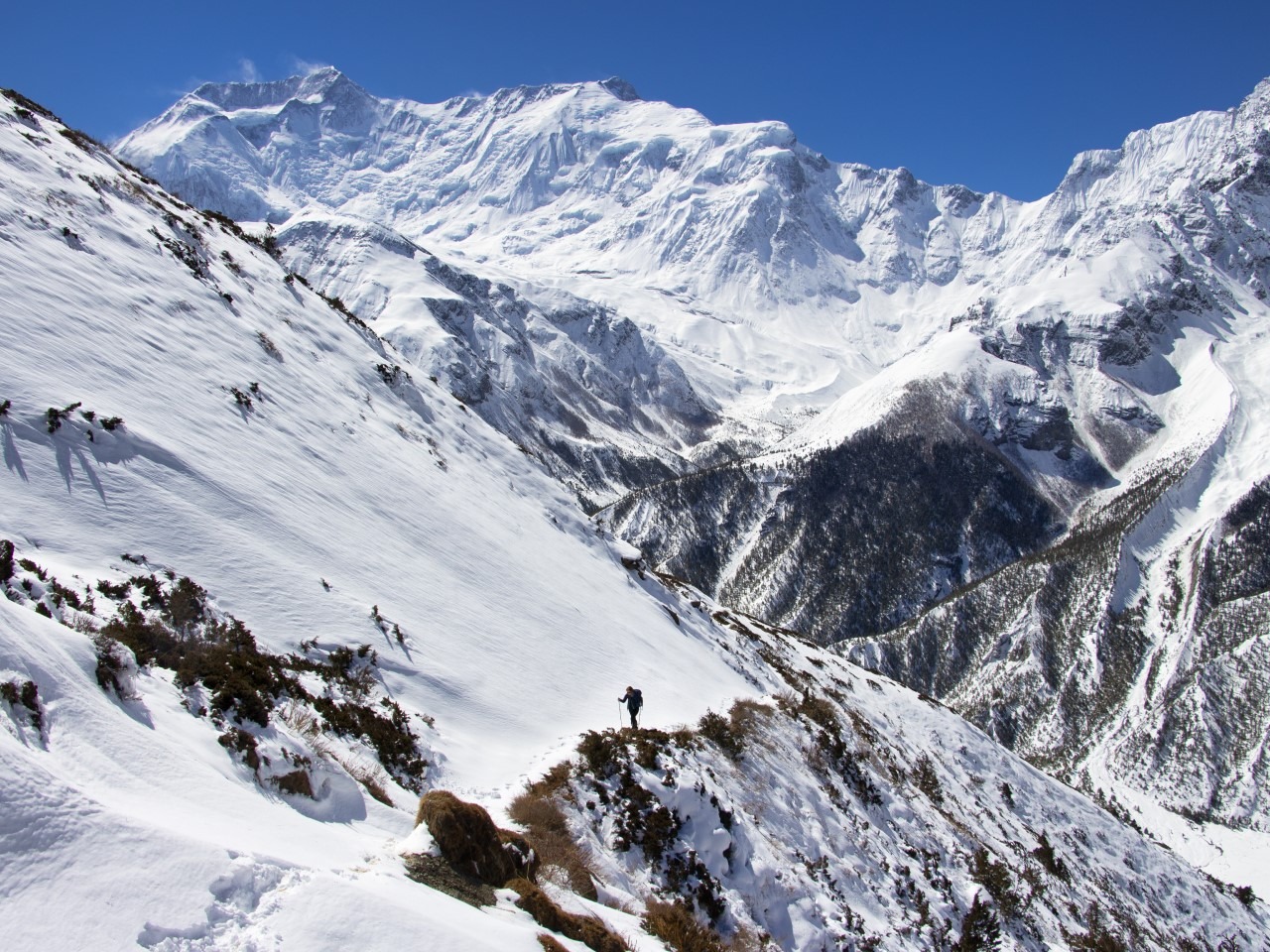
The Thorong La Pass, standing at 5,416 meters, is the highest point of the trek and the most challenging part. The climb is steep and strenuous, but the reward is unparalleled views of the Annapurna and Dhaulagiri mountain ranges. Descending from the pass, trekkers enter the sacred region of Muktinath, a pilgrimage site revered by both Hindus and Buddhists.
From Muktinath, the trail descends into the Kali Gandaki Valley, passing through the village of Kagbeni and eventually reaching Jomsom. This segment of the trek offers a unique experience as trekkers walk along the world’s deepest gorge, with towering peaks on either side. The trek continues to Tatopani, known for its natural hot springs, providing a perfect spot for relaxation and rejuvenation.
The final segment of the trek takes you to Poon Hill, a renowned vantage point for sunrise views over the Annapurna and Dhaulagiri ranges. The trek concludes with a descent to Nayapul, from where a short drive brings you to the picturesque city of Pokhara, offering a serene lakeside setting to reflect on the incredible journey.
Best Time for Annapurna Circuit Trek
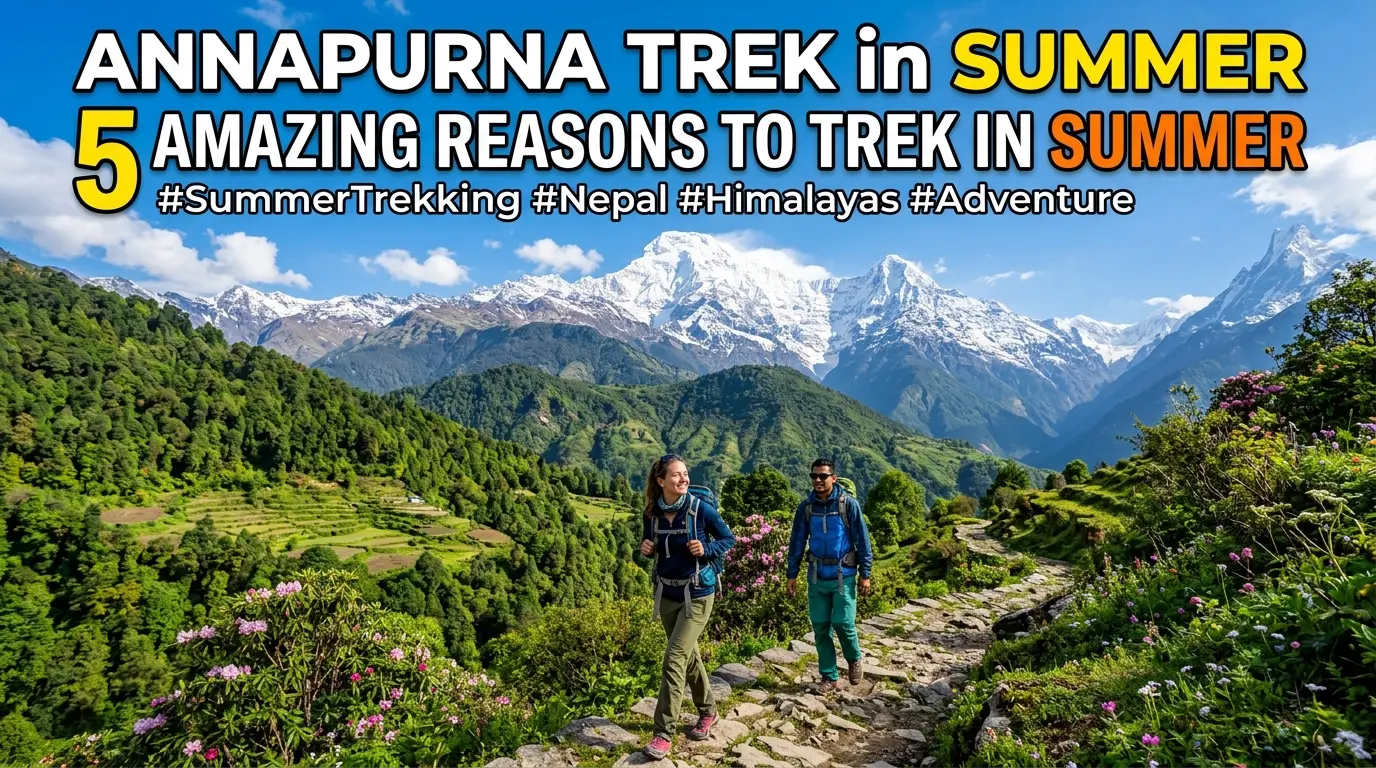
The best time for the Annapurna Circuit Trek is during the spring (March to May) and autumn (September to November) seasons. Spring offers trekkers the opportunity to experience the region’s vibrant blooming rhododendrons, which color the trails with shades of red, pink, and white against lush green forests and terraced fields.
The weather during this period is mild, with temperatures ranging from 10°C to 20°C at lower elevations and dropping below freezing at higher altitudes, providing stable and safe trekking conditions. Additionally, the melting snow brings the forests to life, offering a chance to spot diverse wildlife and enjoy longer daylight hours for trekking. Also, autumn provides trekkers with some of the best conditions of the year, characterized by clear skies and excellent visibility, perfect for panoramic views of the Annapurna and Dhaulagiri mountain ranges. The dry, stable weather minimizes the risk of rain and slippery trails, making for a safer trek. Autumn also coincides with major Nepalese festivals such as Dashain and Tihar, allowing trekkers to immerse themselves in local culture and festivities. The temperatures are comfortable for trekking, though the nights can be quite cold, especially at higher altitudes, necessitating layered clothing.
Difficulty of the Annapurna Circuit Trek
The Annapurna Circuit Trek is moderately challenging, demanding a good level of physical fitness due to the long days of walking, steep ascents and descents, and the significant elevation changes, including crossing the high-altitude Thorong La Pass at 5,416 meters. Trekkers should be prepared for sustained physical activity over several weeks, with trekking days often ranging from 5 to 8 hours.
The trail includes numerous steep climbs, especially the challenging ascent to Thorong La Pass, requiring both stamina and determination. High altitude poses a significant challenge, increasing the risk of altitude sickness as trekkers ascend above 3,000 meters.
Proper acclimatization is crucial, involving a gradual ascent, rest days, hydration, and avoiding overexertion. Additionally, the weather can be unpredictable, with cold temperatures, strong winds, and occasional snow or rain, especially at higher altitudes. Trekkers need to pack appropriate gear, including warm clothing, a quality sleeping bag, and waterproof equipment.
Accommodations along the trek are basic teahouses with limited amenities, providing essential shelter and meals but requiring trekkers to be prepared for simple living conditions and potential overcrowding during peak seasons.
Annapurna Circuit Trek Distance and Time Requirement
The Annapurna Circuit Trek covers approximately 160-230 kilometers (100-145 miles), depending on the starting and ending points, as well as any side trips taken. The trek typically takes 14 to 21 days to complete. This duration includes several acclimatization days, which are essential for preparing the body for high-altitude conditions, especially before crossing the Thorong La Pass at 5,416 meters. Trekkers should be prepared for long days of walking, often ranging from 5 to 8 hours per day, with some days involving more strenuous ascents and descents.
 |
 |
Highlights of Annapurna Circuit Trek
- Experience diverse landscapes, from subtropical forests and terraced fields to alpine meadows and arid deserts.
- Cross the iconic Thorong La Pass (5,416 m) with breathtaking views of the Annapurna and Dhaulagiri ranges.
- Explore traditional villages and experience the rich culture of the Gurung, Manangi, and Thakali communities.
- Visit the sacred pilgrimage site of Muktinath, revered by both Hindus and Buddhists.
- Relax in the natural hot springs of Tatopani and enjoy the serene lakeside setting of Pokhara.
- Witness the sunrise over the Himalayas from Poon Hill, offering one of the best panoramic views in Nepal.
Itinerary of Annapurna Circuit Trek
Day 1: Arrival in Kathmandu (1,400 m)
Upon arrival at Tribhuvan International Airport in Kathmandu, you will be warmly welcomed and transferred to your hotel. The rest of the day is free for you to explore the vibrant streets of Thamel, Kathmandu’s main tourist hub. Here, you can browse local markets, sample Nepali cuisine, and visit cultural landmarks such as the Garden of Dreams or the historic Durbar Square. This day is essential for final preparations and briefing for the trek ahead.

Max Altitude
1399mDay 2: Drive to Besisahar (760 m)
A scenic drive takes you from Kathmandu to Besisahar, the starting point of the Annapurna Circuit Trek. The journey offers stunning views of the Trishuli River, lush valleys, and rural Nepalese life. Once you reach Besisahar, you will check into a local guesthouse and meet your trekking crew. This day is spent preparing for the trek, organizing gear, and getting acquainted with your fellow trekkers.
Max Altitude
760mDay 3: Trek to Bahundanda (1,310 m)
The trek begins with a gradual ascent through terraced fields and lush forests, passing through traditional Gurung villages. You will cross suspension bridges over rushing rivers and enjoy the picturesque landscape of cascading waterfalls and green hills. The trail to Bahundanda is relatively gentle, allowing you to ease into the trek. Bahundanda is a charming village perched on a hill, offering stunning views of the surrounding valleys.
Max Altitude
1310mDay 4: Trek to Chamje (1,430 m)
The journey continues through dense forests and picturesque landscapes, with the Marsyangdi River accompanying you. The trail involves steep climbs and descents, leading to the village of Chamje. Along the way, you will pass through beautiful waterfalls, rocky paths, and terraced farms. Chamje is a small village surrounded by lush greenery, providing a peaceful setting for the night.
Max Altitude
1430mDay 5: Trek to Bagarchhap (2,160 m)
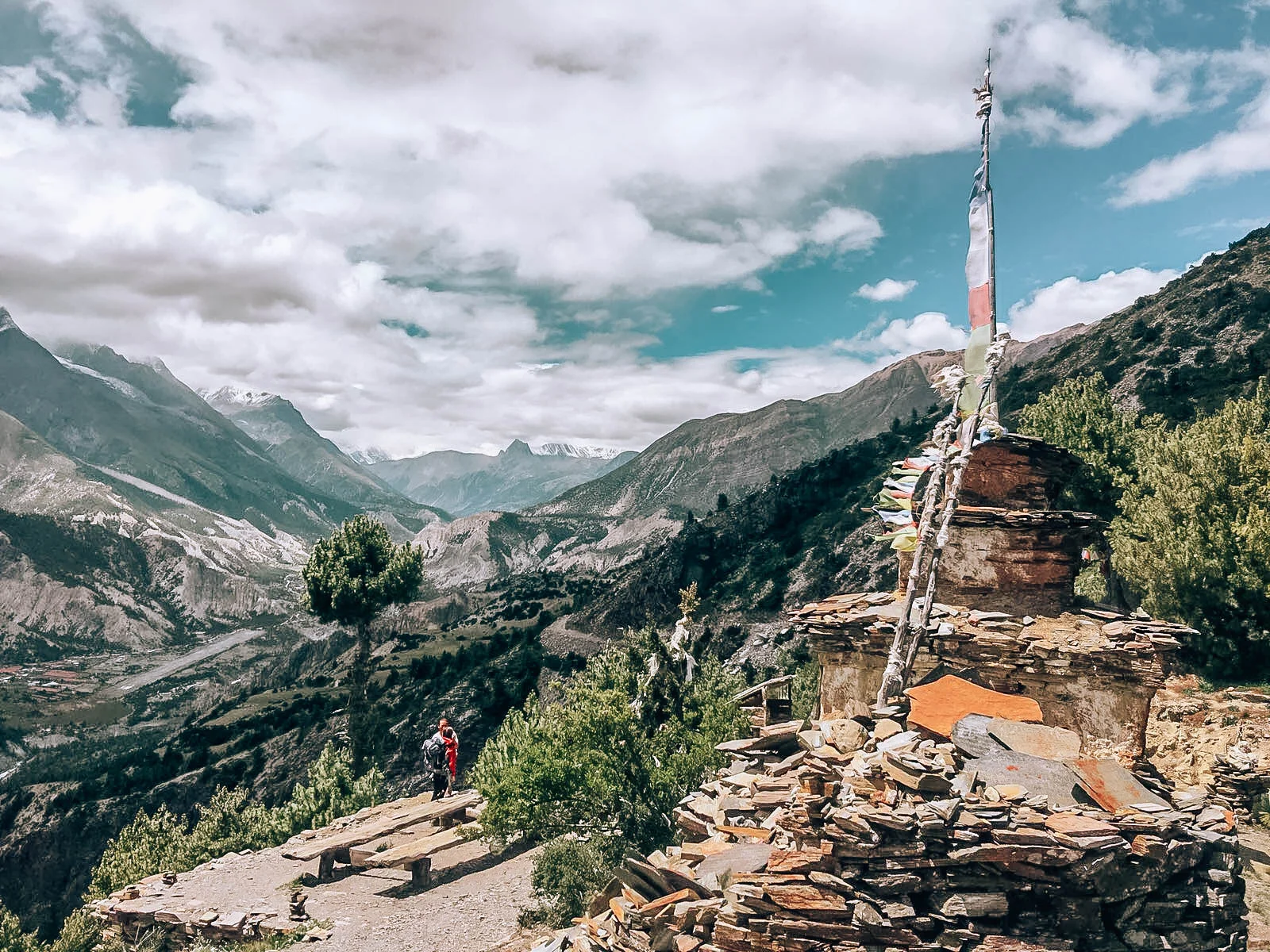
The trail ascends through forests and across rocky paths, offering views of stunning waterfalls and the changing landscape. You will pass through the village of Tal, where the valley opens up, and you can enjoy the sight of terraced farmlands. The path then continues to Bagarchhap, a village with Tibetan influence, marked by its stone houses and prayer flags. This part of the trek introduces you to the unique cultural and architectural elements of the region.
Max Altitude
2160mDay 6: Trek to Chame (2,670 m)
The trek continues through pine forests and along the Marsyangdi River, with views of Annapurna II and Lamjung Himal. You will cross several suspension bridges and walk through the villages of Timang and Koto. The trail gradually ascends to Chame, the district headquarters of Manang. Chame offers modern amenities, including internet cafes and hot showers, providing a comfortable respite after a day’s trek.
Max Altitude
2670mDay 7: Trek to Pisang (3,300 m)
The trail ascends to higher altitudes, passing through narrow gorges and pine forests. The views of the mountains become more prominent as you climb higher. You will pass through the village of Bhratang, known for its apple orchards, and continue to the Tibetan-style village of Pisang. Pisang offers stunning views of Annapurna and other peaks, marking the transition to more arid landscapes. You can explore Upper Pisang, which provides a panoramic view of the Annapurna range.
Max Altitude
3300mDay 8: Trek to Manang (3,540 m)
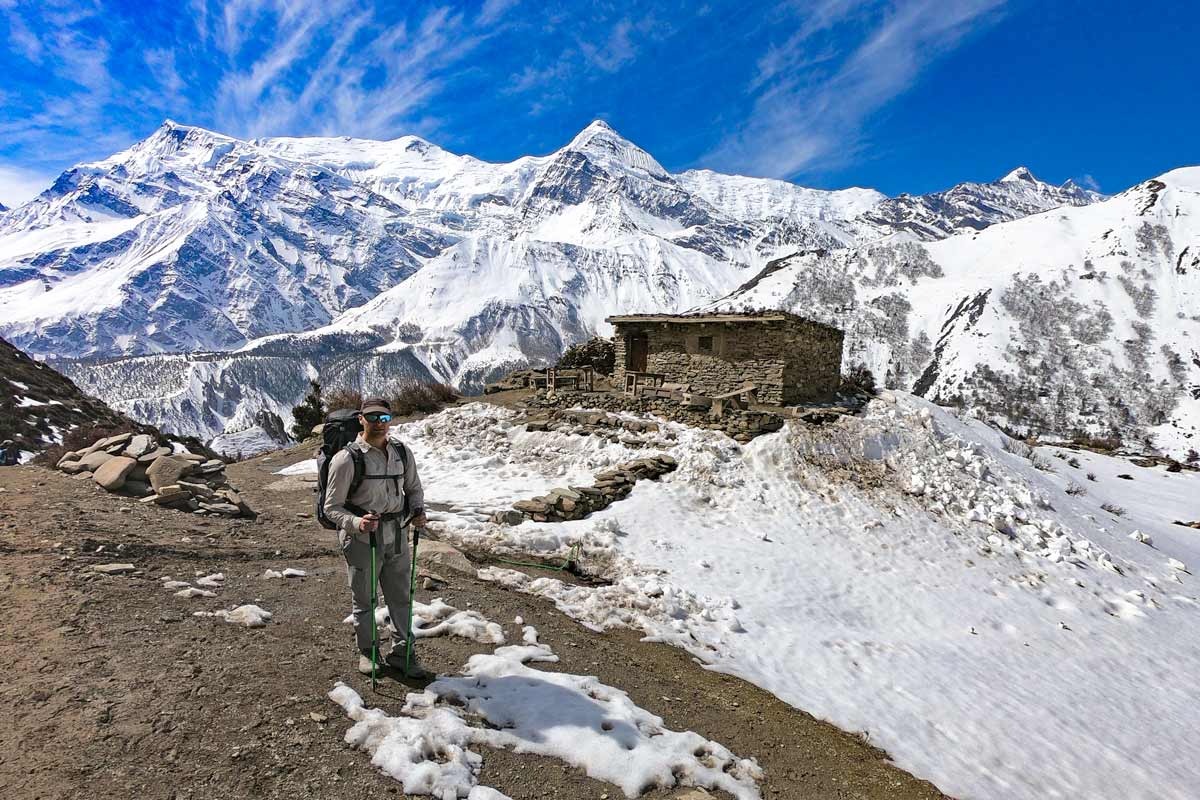
The trek to Manang offers a gradual ascent with panoramic views of the Annapurna range. The trail splits into two routes: the lower trail, which is easier and shorter, and the upper trail, which is more challenging but offers better views. Both routes lead to Manang, a vital acclimatization stop. Manang is a picturesque village with traditional stone houses and narrow streets. You can visit local monasteries, bakeries, and shops, and enjoy the warm hospitality of the Manangi people.
Max Altitude
3540mDay 9: Acclimatization Day in Manang
Spend the day exploring Manang, visiting local monasteries, and hiking to nearby viewpoints. Acclimatization is crucial for preparing for the high-altitude Thorong La Pass. You can take a hike to the Gangapurna Lake or the viewpoint above Manang for breathtaking views of the Annapurna range. Another popular option is a visit to the ancient Braga Monastery, which houses a collection of old Buddhist relics and offers stunning views of the surrounding mountains.
Max Altitude
3540mDay 10: Trek to Yak Kharka (4,020 m)
The trail gradually ascends to Yak Kharka, passing through alpine meadows and offering views of the Annapurna range. You will pass through the village of Gunsang, which offers a great spot for a tea break and acclimatization. The landscape becomes more barren and the air thinner as you climb higher. Yak Kharka is a small settlement with basic lodges, providing a resting place before the final push to Thorong Phedi
Max Altitude
4020mDay 11: Trek to Thorong Phedi (4,450 m)
Continue the ascent to Thorong Phedi, the base camp for crossing Thorong La Pass. The trail involves steep climbs and offers stunning views of the surrounding peaks. You will cross the suspension bridge over the Kone Khola and follow the trail that gradually ascends to Thorong Phedi. This part of the trek requires careful pacing and hydration to prevent altitude sickness. Thorong Phedi has basic accommodations and is a critical acclimatization stop before the challenging pass.
Max Altitude
4448mDay 12: Cross Thorong La Pass (5,416 m) to Muktinath (3,800 m)
The most challenging day of the trek involves crossing the high-altitude Thorong La Pass. The ascent is steep and strenuous, starting early in the morning to avoid strong winds and possible weather changes. Reaching the top of the pass is a significant achievement, with panoramic views of the Annapurna and Dhaulagiri ranges. After celebrating at the summit, you will descend to Muktinath, a sacred pilgrimage site for Hindus and Buddhists. Muktinath offers basic accommodations and a chance to explore the temple complex.
Max Altitude
5415mDay 13: Day 13: Trek to Jomsom (2,720 m)
The trail descends into the Kali Gandaki Valley, passing through Kagbeni and reaching Jomsom. This segment offers unique landscapes, with a blend of arid desert-like terrain and the fertile valley floor. Kagbeni is a picturesque village with traditional Tibetan houses and narrow alleyways. Jomsom is a larger town with an airport, providing modern amenities and a bustling market. The trek to Jomsom is relatively easy, allowing you to recover from the strenuous pass crossing.
Max Altitude
2720mDay 14: Trek to Tatopani (1,190 m)
The trek continues to Tatopani, known for its natural hot springs. This is a perfect spot for relaxation and rejuvenation after days of trekking. The trail descends further into the Kali Gandaki Valley, passing through the village of Marpha, famous for its apple orchards and apple products. Tatopani is a welcoming village with guesthouses and soothing hot springs, where you can soak away the fatigue and enjoy the surrounding scenery.
Max Altitude
1190mDay 15: Trek to Ghorepani (2,850 m)
The trail ascends through rhododendron forests to Ghorepani, a charming village offering panoramic views of the Annapurna and Dhaulagiri ranges. This part of the trek involves a significant climb, but the lush forests and occasional wildlife sightings make it enjoyable. Ghorepani is a bustling village with comfortable accommodations and a vibrant atmosphere. It is also the gateway to the popular Poon Hill viewpoint.
Max Altitude
2850mDay 16: Hike to Poon Hill (3,210 m) and Trek to Nayapul; Drive to Pokhara (820 m)
An early morning hike to Poon Hill provides stunning sunrise views over the Himalayas. The ascent is short but steep, and the panoramic views from the top are worth the effort. You can see the sun rising over the peaks of Annapurna, Dhaulagiri, and Machhapuchhre. After descending to Ghorepani for breakfast, you will continue the trek to Nayapul, passing through the villages of Ulleri and Tikhedhunga. From Nayapul, a short drive brings you to Pokhara, a picturesque city by the lake, where you can relax and celebrate the completion of your trek.
Max Altitude
3209mDay 17: Rest and Explore Pokhara
Spend the day exploring Pokhara, visiting attractions like the Peace Pagoda, Devi’s Fall, and boating on Phewa Lake. Pokhara offers a serene lakeside setting and a range of activities, including paragliding, cycling, and visiting the International Mountain Museum. You can also relax at one of the lakeside cafes or take a stroll along the waterfront, enjoying the stunning views of the surrounding mountains.
Max Altitude
819mDay 18: Drive back to Kathmandu
Day 19: Departure
Includes/Excludes
What's included?
- Airport pick up and drop in a private vehicle
- Kathmandu Sightseeing
- 2 nights accommodation at a 3 star hotel in Kathmandu
- Breakfast and Welcome Dinner in Kathmandu
- Best accommodation options during the trek
- Government licensed trekking guide and a porter
- All the permits and entry fees required for the trek
- Trip completion certificate
What's not included?
- Foods during the trek
- Nepal Visa and Travel Insurance
- Tips for drivers, guides and porters
- Any soft or alcoholic beverages consumed during the trek
- Personal trekking gears
- Other expenses that are not mentioned in the inclusive
Trip Information - Good to Know
Trip Reviews
 Write a Review








- Best Price Guarantee
- Secure & easy booking
- Easy trip date changes
- Discount for groups


How to book a trip?

make free inquiry

confirm the trip
