


Everest Gokyo Lakes Trek


Trip Duration
18 Days Days
Group Sizes
0-15 People
Transportation
Ground and Flight
Destination
Everest Gokyo Lakes Trek
Max. Altitude
5357m
Best Season
Spring and Autumn
Activities
- City Tour
- Trekking

Difficulty
Moderate
Meals
- Breakfast
- Lunch
- Dinner

Start & End Point
Kathmandu
Accommodation
- Tea Houses, 4 star
Overview of Everest Gokyo Lakes Trek
 |
 |
Nepal, a nation cradled within the grandeur of the Himalayas, beckons adventurers from around the globe with its majestic peaks, vibrant cultures, and unparalleled trekking opportunities. Among the countless trekking trails that wind through this picturesque landscape, the Everest Gokyo Lake Trek stands out as a remarkable journey that transcends the ordinary and plunges trekkers into the heart of the world’s tallest mountains.
At an altitude of about 5,000 meters above sea level, the Everest Gokyo Lake Trek is a mesmerizing tapestry of challenges and rewards, where each step is a testament to both the tenacity of the human spirit and the unforgiving yet awe-inspiring embrace of the Himalayas. This 18-day trekking journey unfolds with the arrival in Kathmandu, a city that pulsates with the energy of a rich cultural heritage dating back centuries.
The journey begins in Kathmandu, a city that includes the contrast of ancient and modern architecture, where the echoes of centuries-old traditions resonate amidst bustling markets and historic monuments. A city tour on the second day provides a glimpse into the rich cultural tapestry of Nepal, with visits to ancient temples and vibrant markets setting the stage for the adventure that lies ahead.
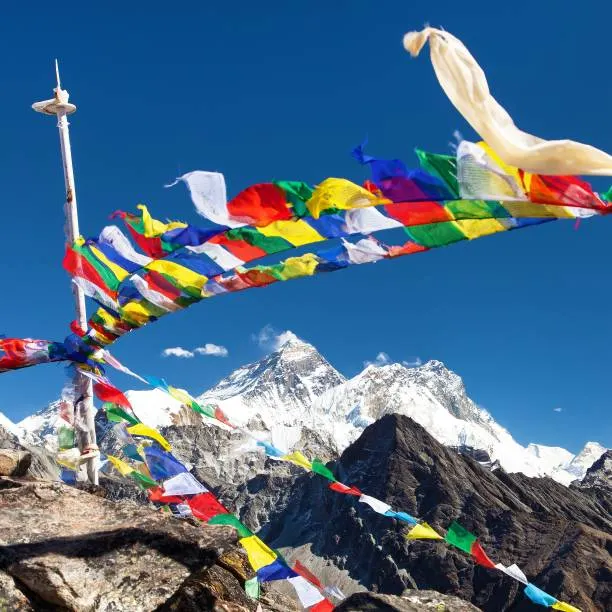
The real adventure begins with a thrilling flight to Lukla, a small runway perched on the edge of the Himalayas. From there, the trek unfolds like a story, each step revealing a new chapter of breathtaking landscapes and cultural encounters. The descent to Phakding, along the Dudh Koshi River, introduces trekkers to the rhythm of Sherpa life in charming villages, where prayer flags flutter in the mountain breeze.
Namche Bazaar, nestled in a natural amphitheater, becomes a gateway to the wonders of the Everest region. Acclimatization in this lively Sherpa town provides an opportunity to explore local markets and forge connections with the resilient Sherpa community. As the trail winds higher, the landscape transforms into a rugged yet ethereal terrain, offering glimpses of Everest and neighboring peaks.
Debuche, Dingboche, and Lobuche Village unfold like chapters in a captivating novel, each revealing the raw beauty of the Himalayas. Acclimatization stops become moments of self observation, allowing trekkers to appreciate the magnitude of the journey and the challenges that lie ahead.
The culmination of the trek brings trekkers to Everest Base Camp via Gorakshep, a village standing at the foot of the world’s tallest mountain. The ascent to Kala Patthar, a beautiful viewpoint bathed in the golden hues of sunrise, offers an unparalleled panorama that etches itself into the memory of every adventurer.
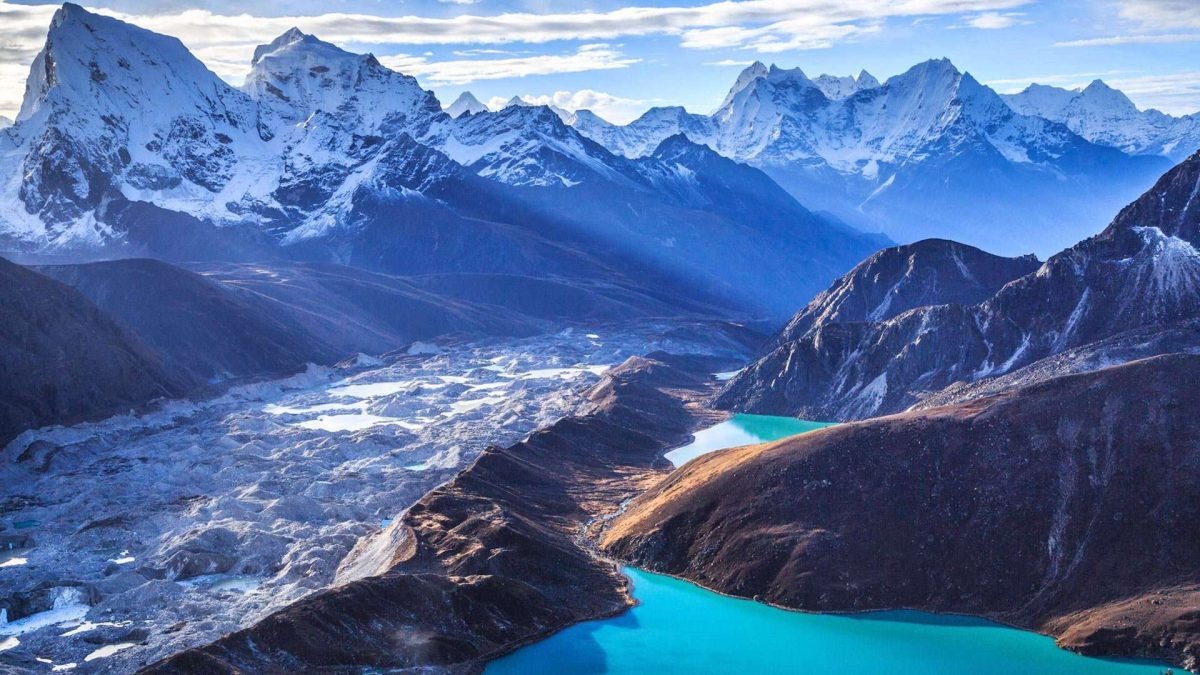
The journey takes a turn as trekkers cross the challenging Chola Pass, leading to Dzongla, a segment marked by towering peaks and awe-inspiring glaciers. The serene Gokyo Lakes, with their turquoise waters reflecting the surrounding peaks, offer a tranquil interlude amidst the rugged Himalayan landscape.
The ascent of Gokyo Ri provides a panoramic masterpiece of Everest, Lhotse, Makalu, and Cho Oyu, a visual feast that transcends the limits of imagination. The descent, retracing steps through Machhermo Village and Namche Bazaar, becomes a reflective journey through familiar landscapes transformed by the experiences of the trek.
The return to Lukla and a scenic flight back to Kathmandu mark the climax of this Himalayan odyssey. The transition from the serene solitude of the mountains to the vibrant chaos of urban life becomes a metaphorical bridge between two worlds.
Looking back, the Everest Gokyo Lake Trek is more than a physical journey; it is a spiritual journey that unfolds against the backdrop of the world’s highest peaks. It is a celebration of resilience, a dance with nature’s grandeur, and an exploration of the human spirit. Undertaking this odyssey during the pre-monsoon (spring) and post-monsoon (autumn) seasons reveals the Himalayas at their most enchanting, with stable weather, clear skies, and breathtaking views.
In conclusion, the Everest Gokyo Lake Trek is an invitation to embark on a transformative adventure, where every step becomes a brushstroke in a masterpiece painted by the Himalayan landscape. It is a narrative of personal triumph, cultural discovery, and natural splendor that lingers in the soul long after the trek is complete. This journey beckons to those who desire to stand in the shadows of giants and be humbled by the majesty of the world’s tallest mountains.
Best time for Everest Gokyo Lake Trek
The Everest Gokyo Lake Trek is most rewarding during the spring (March to May) and autumn (September to November) seasons. In spring, the weather is mild and stable, offering clear skies for unparalleled views of the towering peaks. The landscape comes alive with vibrant rhododendron blooms, adding a colorful touch to the journey. While spring is popular, the trails are generally less crowded than in autumn.
Autumn is another best times of the year, marked by clear skies, mild temperatures, and stable weather conditions. The crisp days and cool nights provide excellent trekking conditions, with post-monsoon clarity revealing the mesmerizing snow-capped peaks. This season also aligns with cultural festivals in Nepal, contributing to a festive atmosphere along the trekking route. However, autumn is the high trekking season, attracting a larger number of adventurers, leading to busier trails and teahouses.
Both seasons offer a captivating blend of favorable weather, clear views, and a vibrant landscape. The choice between spring and autumn depends on personal preferences, whether one is drawn to the blossoming flora of spring or the festive ambiance and crystal-clear views of autumn. It’s important to note that the winter and monsoon seasons are less recommended due to harsh weather conditions, including cold temperatures, heavy snowfall, and monsoonal rains. Planning the trek during the prime seasons ensures an optimal and unforgettable experience in the breathtaking Everest region.
Everest Gokyo Lake Trek Difficulty
The Everest Gokyo Lake Trek presents a moderately to strenuously challenging adventure due to factors such as high altitude, diverse terrain, unpredictable weather, and the overall duration of the trek. Trekkers face altitudes above 5,000 meters, requiring careful acclimatization to prevent altitude-related issues. The varied terrain includes ascents, descents, rocky paths, and glacial moraines. Unpredictable weather, with the potential for snowfall and freezing temperatures, adds to the difficulty. The trek spans approximately 18 days, demanding stamina and endurance.
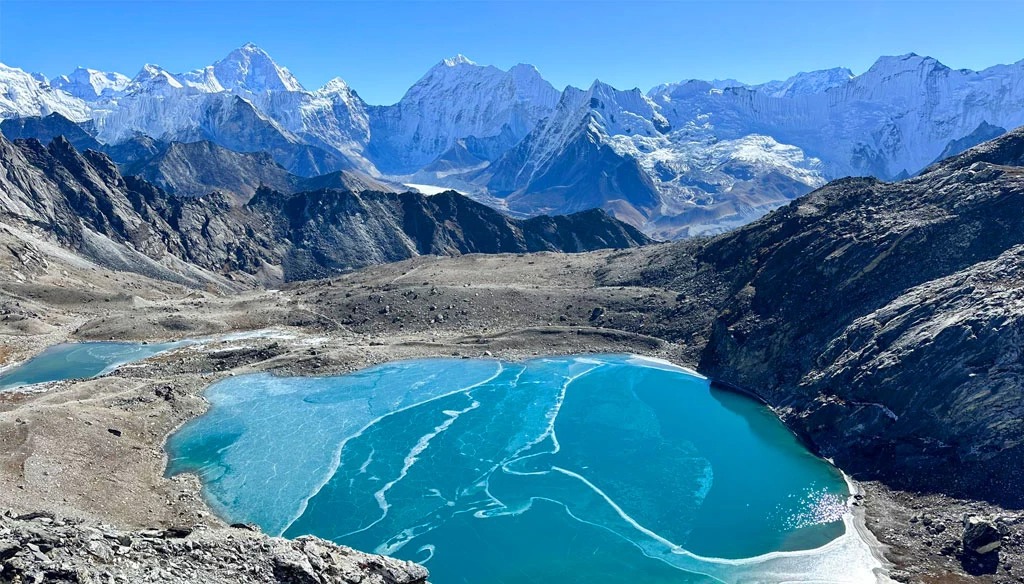
Despite the challenges, the trek offers unparalleled views of Everest, Lhotse, and Makalu, as well as the serene Gokyo Lakes, making it a rewarding and unforgettable experience for those prepared for the physical demands and environmental conditions.
 |
|
Highlights of Everest Gokyo Lake Trek
- Explore ancient temples, bustling markets, and historic monuments in the vibrant capital of Nepal
- Experience a thrilling flight to Lukla, the gateway to the Everest Gokyo trek, perched on the edge of the Himalayas.
- Wind through lush landscapes, crossing suspension bridges and Sherpa villages along the Dudh Koshi River.
- Reach the lively Sherpa town, Namche Bazaar, nestled in a natural amphitheater, offering stunning views of Everest.
- Acclimatize in Namche Bazaar to the altitude, explore local markets, and connect with the Sherpa community.
- Traverse changing landscapes to Lobuche Village, a vantage point for panoramic views of the Khumbu Glacier.
- Conquer challenges and stand at Everest Base Camp via Gorakshep Village, marking a triumphant achievement.
- Ascend to Kala Patthar for a sunrise panorama, revealing Everest and neighboring peaks bathed in golden hues.
- Navigate the formidable Chola Pass, adding an extra layer of adventure to the expedition.
- Discover the serenity of Gokyo Lakes, glacial pools reflecting turquoise shades amid the rugged landscape.
- Summit Gokyo Ri for a visual feast – a panoramic masterpiece of Everest, Lhotse, Makalu, and Cho Oyu.
- Descend through Machhermo Village and Namche Bazaar, retracing landscapes transformed by trek experiences.
Itinerary of Everest Gokyo Lakes Trek
Day 1: Arrive at Kathmandu’s Tribhuvan International Airport (TIA).
Day 2: Kathmandu Sightseeing Tour
Day 3: Fly to Lukla, then hike to Phakding (2652 m/8699 ft). Duration: 3 hours.
Day 4: Trek to Namche (3440m/11283 ft) Duration: 5–6 hours.
Day 5: Acclimatization Day: Hike to Everest View Hotel (3865m/12680ft) Duration: 3 hours.
Day 6: Trek to Tengboche (3860m/12660ft) Duration: 5–6 hours.
Day 7: Trek to Dingboche (4410m/14464 ft) – Duration: 5–6 hours
Day 8: Acclimatization Day: Hike to Nagerjun (5100m/16728ft) – Duration: 6-7 hours
Day 9: Trek to Lobuche (4910m/16105ft) – Duration: 5 hours
Day 10: Trek to Everest Base Camp via Gorakshep Village
Day 11: Hike to Kala Patthar & trek to Dzongla
Day 12: Trek to Thagnak via crossing Chola Pass
Day 13: Trek to Gokyo Lakes
Day 14: Hike to Gokyo Ri & trek back to Machhermo Village
Day 15: Trek to Namche Bazaar
Day 16: Trek to Lukla
Day 17: Fly back to Kathmandu
Day 18: Departure Day
Includes/Excludes
What's included?
- Airport pick up and drop in a private vehicle
- Kathmandu Sightseeing
- 2 nights accommodation at a 3 star hotel in Kathmandu
- Breakfast and Welcome Dinner in Kathmandu
- Best accommodation options during the trek
- Government licensed trekking guide and a porter
- All the permits and entry fees required for the trek
- Trip completion certificate
What's not included?
- Foods during the trek
- Nepal Visa and Travel Insurance
- Tips for drivers, guides and porters
- Any soft or alcoholic beverages consumed during the trek
- Personal trekking gears
- Other expenses that are not mentioned in the inclusive
Trip Information - Good to Know
Frequently Asked Questions
Do I need a permit for Gokyo Lakes and Renjo La Pass Trek?
Yes, you do need trekking permits for the Gokyo Lakes and Renjo La Pass Trek, as the region falls within the Everest region of Nepal, which is designated as a UNESCO Heritage site and protected by the Sagarmatha Conservation Area Project. There are three specific permits that you are required to obtain to trek in this region:
- Sagarmatha National Park Permit: Rs. 3,000 per person
- Pasang Lampu Rural Municipality Permit: Rs. 2,000 per person
How physically demanding is the Gokyo Lake and Renjo La Pass Trek?
Preparing for the Gokyo Lakes and Renjo La Pass Trek demands both physical and mental readiness.
- Cardiovascular exercises like jogging and cycling enhance your ability to handle high altitudes, while long hikes build stamina.
- Leg strength exercises such as lunges and squats are vital for steep ascents and descents, and core workouts improve stability on rocky trails.
- Full-body strength training, flexibility exercises, and mental resilience training contribute to a well-rounded preparation.
- Consultation with a healthcare professional is advised, and gradual intensity increments in workouts help prevent injuries.
- Adequate hydration, nutrition, and practicing trekking with a backpack further ensure a successful and enjoyable trekking experience.
When is the best time for Everest Gokyo Lake Trek?
For the Everest Gokyo Lake Trek, the best times are spring (March to May) and autumn (September to November). In spring, enjoy mild temperatures, clear skies, and blooming rhododendrons. Autumn offers stable weather, crisp days, and festivals in Nepal, though it’s a busier trekking season. Both seasons promise breathtaking views and a vibrant landscape. Avoid winter and monsoon due to challenging weather conditions. Ultimately, the choice between spring and autumn depends on personal preferences, providing optimal conditions for an unforgettable journey in the Everest region.
Is it possible for me to customize the Gokyo Lakes and Renjo la Pass Trek itinerary?
Yes, you can customize the itinerary for the Gokyo Lakes and Renjo La Pass Trek to suit your preferences and needs.
Are there altitude-related risks, and how is acclimatization managed?
Altitude-related risks, particularly Acute Mountain Sickness (AMS), are inherent to the Everest Gokyo Lake Trek due to the substantial elevations reached.
To manage acclimatization, the trek itinerary is strategically designed for a gradual ascent, incorporating essential acclimatization days at key points along the route. Trekkers are encouraged to stay well-hydrated, and guides are trained to monitor for AMS symptoms.
In cases of severe symptoms, immediate descent to lower altitudes is prioritized. The trekking group typically includes guides trained in basic first aid and altitude-related issues, ensuring preparedness for potential challenges. Trekkers are urged to maintain personal awareness and communicate promptly with guides regarding any discomfort or symptoms, fostering a collaborative approach to safety and a more rewarding trekking experience.
Trip Reviews
 Write a Review








- Best Price Guarantee
- Secure & easy booking
- Easy trip date changes
- Discount for groups


How to book a trip?

make free inquiry

confirm the trip
