


Helambu Trek: 8-Day Memorable Teahouse Trek in Nepal

Trip Duration
8 Days Days
Group Sizes
2-16 People People
Transportation
Drive/Walk
Destination
Helambu Trek
Max. Altitude
3600
Nature of Trip
Trekking,Cultural
Best Season
Jan-Dec
Activities
- Trekking
- Cultural
- Village

Difficulty
Easy
Meals
- Teahouse Breakfast
- Teahouse Lunch
- Teahouse Dinner

Start & End Point
Kathmandu
Accommodation
- Teahouse
- Lodge
Overview of Helambu Trek: 8-Day Memorable Teahouse Trek in Nepal
Introduction
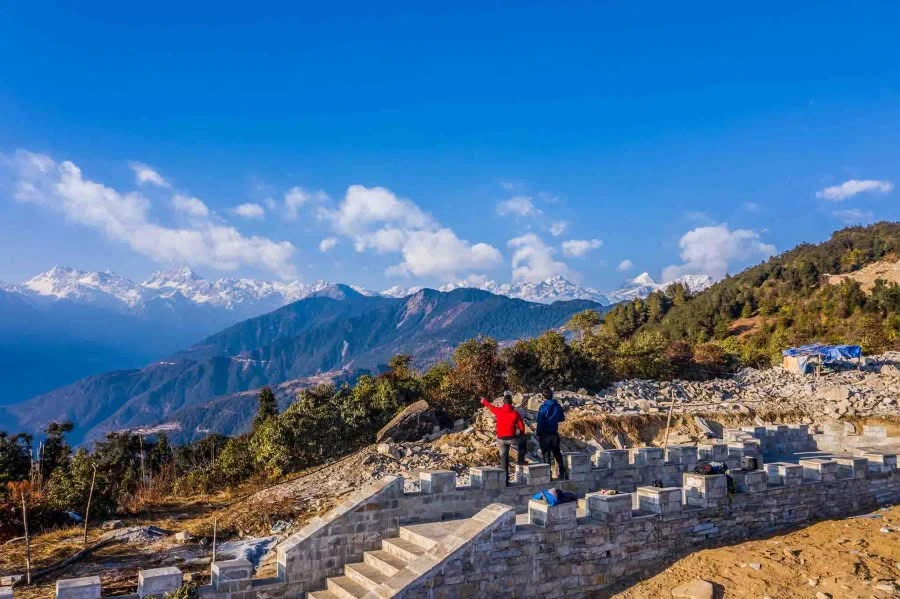
The Helambu Trek is one of Nepal’s most accessible mountain treks — a classic 8-day circuit through the Helambu highlands north of Kathmandu that can be started and finished with a short drive from the capital. The Hyolmo (Yolmo) people of Helambu are a distinct Tibetan-Buddhist community with a unique language, culture, and monastery tradition. The trail winds through terraced farmlands, traditional stone villages, and rhododendron-draped ridges with views of Langtang, Jugal, and Rolwaling Himalayan ranges. No high altitude or technical skill required.
There is something about the Helambu Circuit that gets under your skin long before you even lace up your boots. Maybe it is the fact that you are stepping out of Kathmandu one morning and by late afternoon you are standing on a ridge at Chisapani, watching the sun sink behind the Ganesh Himal as if time itself has slowed down. Or maybe it is the simple pleasure of knowing this trail has not been overrun, that the teahouse owners still greet you like a guest rather than a transaction.
The Helambu Circuit is one of those rare treks in Nepal where everything comes together in just the right measure. You get mountain views without the brutality of high altitude. You get rich Tamang and Sherpa culture without the tourist circus. You get dense rhododendron forests, open ridgelines, ancient monasteries, and quiet Himalayan villages, all within a week’s walk from Nepal’s capital. It is a complete experience in a compact package, and for many trekkers, it ends up being the most memorable thing they do in Nepal.
Route Overview
Starting from Sundarijal on the northeastern edge of Kathmandu, the trail climbs through Shivapuri National Park and follows a spectacular ridgeline north through Chisapani, Kutumsang, and up to Tharepati at 3,600 meters, the highest point on this route. From there, the path drops into the warm valleys of the Helambu region proper, weaving through the culturally rich villages of Tarkeghyang and Sermathang before a final descent to Melamchi Pul Bazar and the drive back to Kathmandu.
The full circuit covers roughly 60 to 70 kilometers on foot and can be completed comfortably in six days of trekking with two travel days on either end.
Why Choose the Helambu Circuit?
What sets Helambu apart from Nepal’s more famous trails is the quality of the silence. The Annapurna Circuit and the Everest Base Camp trek are extraordinary, but they are also busy. Helambu is not. You will share your teahouse evenings with a handful of other trekkers at most, and on some days, the only footsteps you hear on the trail are your own. That kind of quiet is worth a great deal in today’s world, and here you can have it without flying to a remote airstrip or spending a fortune on special permits.
Important Notes
Itinerary Flexibility
The day-by-day schedule outlined in this document is designed to offer a balanced and enjoyable experience, but mountain travel inherently involves variables beyond anyone’s control. Weather, trail conditions, group pace, and individual health can all influence the day’s plan.
Your guide has the experience and authority to adjust the itinerary in the best interests of the group’s safety and enjoyment, and any such changes will always be communicated clearly.
Environmental Responsibility
The Helambu region is a protected area, and keeping it that way depends on how we all behave while passing through it. Please carry out any waste that cannot be composted or burned, stay on marked trails, respect the wildlife and vegetation, and support the local economy by purchasing food, lodging, and products from local businesses.
The communities along this trail have maintained their forests and their way of life for generations, and thoughtful trekkers leave both better than they found them.
Cultural Respect
Many of the villages on this trek are active centres of Tamang and Sherpa Buddhist culture. Monasteries are sacred places.
Please dress modestly when entering religious sites, remove your shoes when asked, walk clockwise around mani walls and stupas, and ask permission before photographing people or ceremonies.
A few words of Nepali, even just namaste, make an impression that goes a long way.
Responsible Trekking
Please do not leave food scraps, plastic, or any waste on the trail. Carry a small bag for your own rubbish and dispose of it properly at lodges or collection points.
Avoid purchasing single-use plastic bottles by carrying a reusable bottle and using a filtration system. These are small habits that add up to something meaningful when multiplied across every trekker who walks these hills.
Ready to Walk the Helambu Circuit?
Contact us to customize your dates, group size, or route. We are here to make this trek exactly what you need it to be.
- Trekking circuit accessible directly from Kathmandu — no domestic flight needed
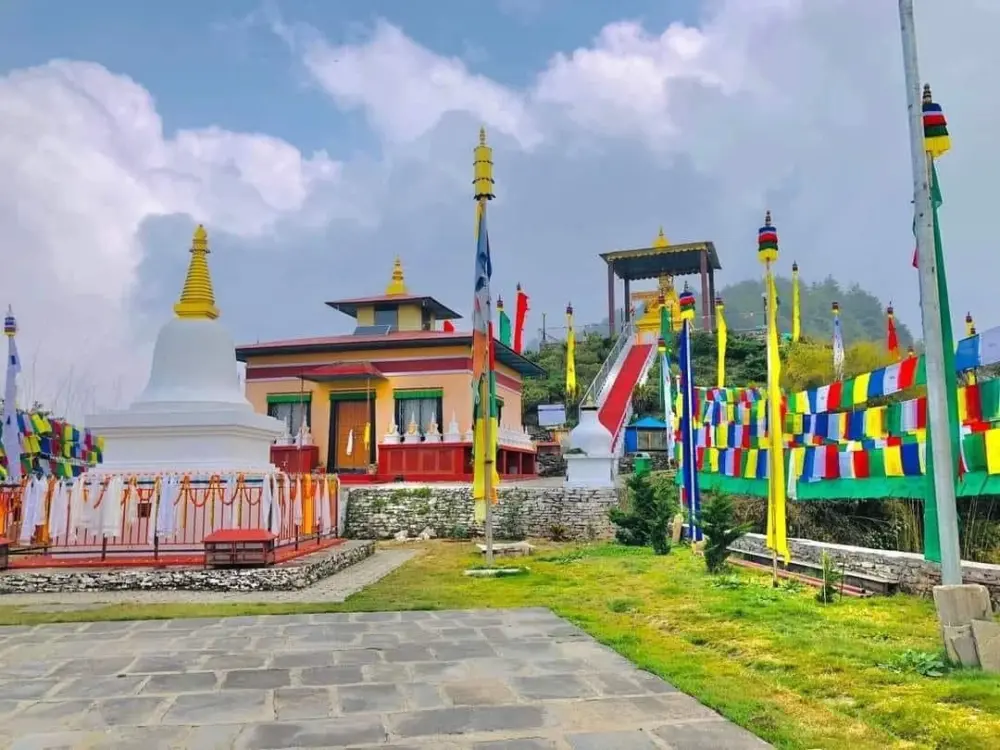
- Experience the unique Hyolmo (Yolmo) Tibetan-Buddhist culture in traditional highland villages
- Visit beautifully painted gompas in Tarkeghyang and Sermathang
- Year-round trekking destination — even feasible in winter with good weather
- Lush rhododendron and oak forests on the Helambu ridge
- Shorter and gentler than Langtang — ideal for first-time trekkers or as a warm-up
Itinerary of Helambu Trek: 8-Day Memorable Teahouse Trek in Nepal
Day 1: Drive Kathmandu to Sundarijal — Trek to Chisapani (2,194m)
The day starts early, and there is something quietly exciting about loading into a vehicle while Kathmandu is still waking up. The drive to Sundarijal takes about an hour along roads that gradually thin out from city traffic to quieter lanes lined with houses, temples, and vegetable gardens.
Sundarijal itself sits at roughly 1,460 meters on the northeastern rim of the Kathmandu Valley and is best known as the point where the Bagmati River begins its long journey south. On weekends, Kathmandu families come here for picnics beside the waterfall, but on a trekking morning, the place has a fresher, more purposeful feel.
You check in at the Shivapuri National Park entrance gate, where permits are verified and registered, and then the real walk begins. The trail climbs steadily from the outset, passing through a small hydro facility before entering the forest. This is Shivapuri National Park, and the transformation from city edge to dense woodland happens faster than you might expect. Within thirty minutes, the noise of Kathmandu has vanished completely. The path winds upward through thick oak, pine, and rhododendron trees, following sections of the old water pipeline that carries Sundarijal’s water to the city below.
The ascent gains around 700 meters over four to five hours, which is a solid day’s work without being punishing. You pass through a small Tamang settlement along the way, and the occasional open section offers previews of the ridgeline ahead. By the time you reach Chisapani, usually in the early afternoon, the reward is immediate. The teahouses here sit right on the ridge at 2,194 meters, and the views to the north are extraordinary. On a clear day, the entire Langtang range is laid out in front of you like a wall of white, with Ganesh Himal to the west and, if the air is cooperative, the faint silhouette of Everest far to the east.
Chisapani means “cold water” in Nepali, and the name fits. The evenings cool down quickly once the sun drops, so this is a good time to pull on a layer and sit outside with a cup of tea while the light changes. Dinner in the teahouse is simple and satisfying, typically dal bhat, noodle soup, or fried rice.
The sky here at night is something else entirely if the weather cooperates. Sleep comes easily after the first day’s climb.

Duration
Drive + 4-5 hrs
Activity
Trekking
Accommodation
Teahouse
Meals
L/D
Max Altitude
2194mDay 2: Chisapani to Kutumsang (2,470m)
Wake up before breakfast if you can manage it. Chisapani’s sunrise is one of those things you hear about and then experience and realize the description was underselling it. The Himalayas turn shades of pink and gold as the light arrives, and for ten or fifteen minutes, the whole ridgeline glows. It is worth every minute of the early alarm.
After breakfast, the trail heads north along the ridge, descending first to Pati Bhanjyang at around 1,770 meters, a village where you can find a cup of tea and rest your knees on the downhill. From Pati Bhanjyang, the route climbs again, passing through Thakune Bhanjyang, Chipling, and Golphu Bhanjyang before the final push to Kutumsang. This up-and-down rhythm is characteristic of the Helambu trail, and it is useful to settle into it mentally rather than fighting it.
The forests along this stretch are lovely, mixing rhododendron with oak and moss-covered boulders that suggest how much rain this area gets during the monsoon. In spring, the rhododendrons are in full bloom, and the effect is almost theatrical: great splashes of red, pink, and white against the green. In autumn, the air is crystal clear, and the views from the ridge sections are exceptional.
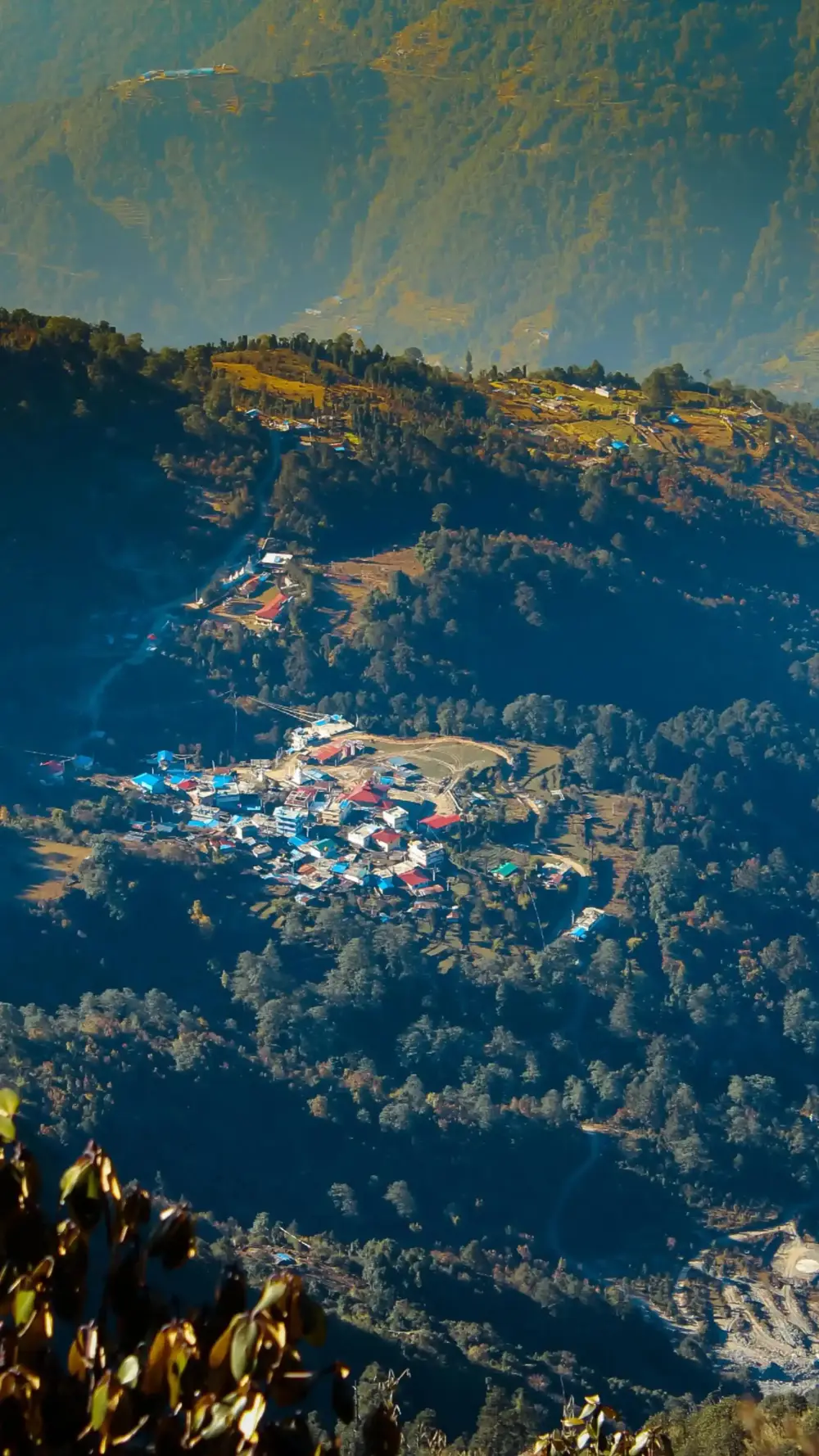
Kutumsang at 2,470 meters is a friendly cluster of lodges and teahouses on the ridge. It is a Tamang village with a small gompa and the kind of unhurried pace that reminds you why you came trekking in the first place. The people here are warm and curious, and if you have time before dinner, a short wander around the village is time well spent. The mountains visible from Kutumsang include portions of the Langtang range, and on particularly clear evenings, the views rival Chisapani’s.
Duration
5-6 hrs
Activity
Trekking
Accommodation
Teahouse
Meals
B/L/D
Max Altitude
2470mDay 3: Kutumsang to Tharepati (3,600m)
Today is the biggest day of the trek in terms of altitude gain, and it is also the one that most trekkers remember most vividly. From Kutumsang, the trail climbs consistently northward along the Danda Ridge, passing through Magen Goth and Mangengoth before the final approach to Tharepati. The elevation gain is significant, around 1,100 meters from start to finish, and the landscape changes noticeably as you go higher.
The lower sections are still forested, with mossy trees and occasional clearings that offer views east and west. As you climb higher, the vegetation gradually thins. The rhododendrons become shorter and more gnarled. The air becomes noticeably cooler and thinner, and by the time you are in the final approach to Tharepati, you are walking through open alpine meadows with panoramic views in every direction.
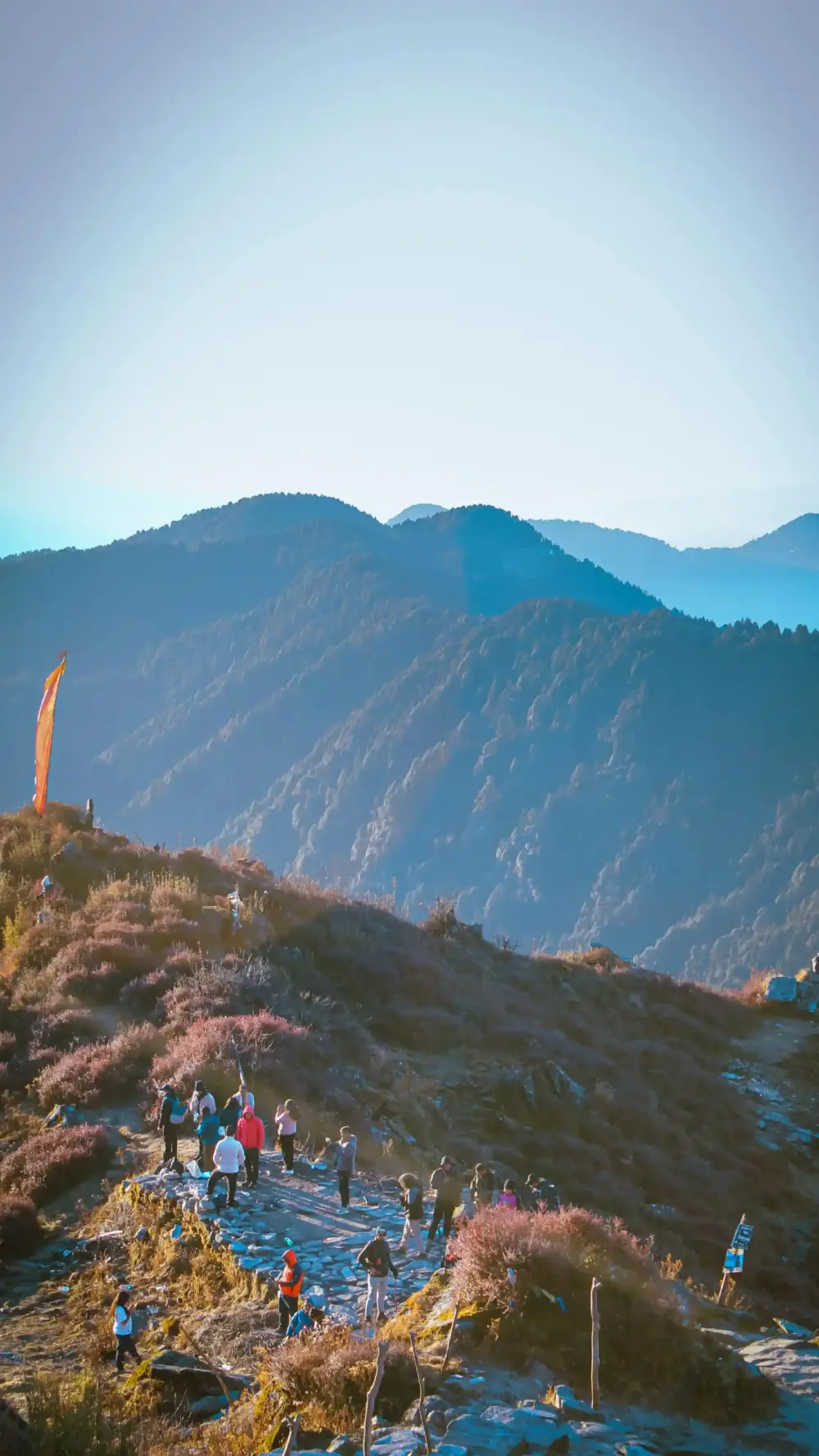
Tharepati sits at 3,600 meters and marks the high point of this entire circuit. The views from here are among the finest on the trek: Langtang Lirung, Ganesh Himal, Jugal Himal, and on a clear day, the distant presence of the Everest group far to the east. This is also a junction point on the wider trail network. The path from Gosaikunda comes in from the west here, and you can see the higher ridgelines continuing in that direction if the sky is clear.
A word about the cold: Tharepati gets genuinely cold at night, and even in the warmer trekking seasons, temperatures can drop well below freezing after sunset. The teahouses here are basic but functional, and most provide extra blankets on request. A good sleeping bag liner makes a real difference. Drink plenty of water this evening, eat something warm, and get to bed early. The altitude is noticeable but manageable for anyone who has been walking steadily for two days.
Duration
5-6 hrs
Activity
Trekking
Accommodation
Teahouse
Meals
B/L/D
Max Altitude
3600mDay 4: Tharepati to Tarkeghyang (2,590m)
Today, the trek tilts downward, and the character of the landscape shifts completely. You are leaving the high ridge country and dropping into the Helambu valley proper, and the difference is immediate and wonderful. The descent from Tharepati is steep in places, moving through forest and then gradually into more open terrain as the elevation drops. The trees here are different from the upper ridge: larger, leafier, the kind of forest that suggests lower altitude and more moisture.
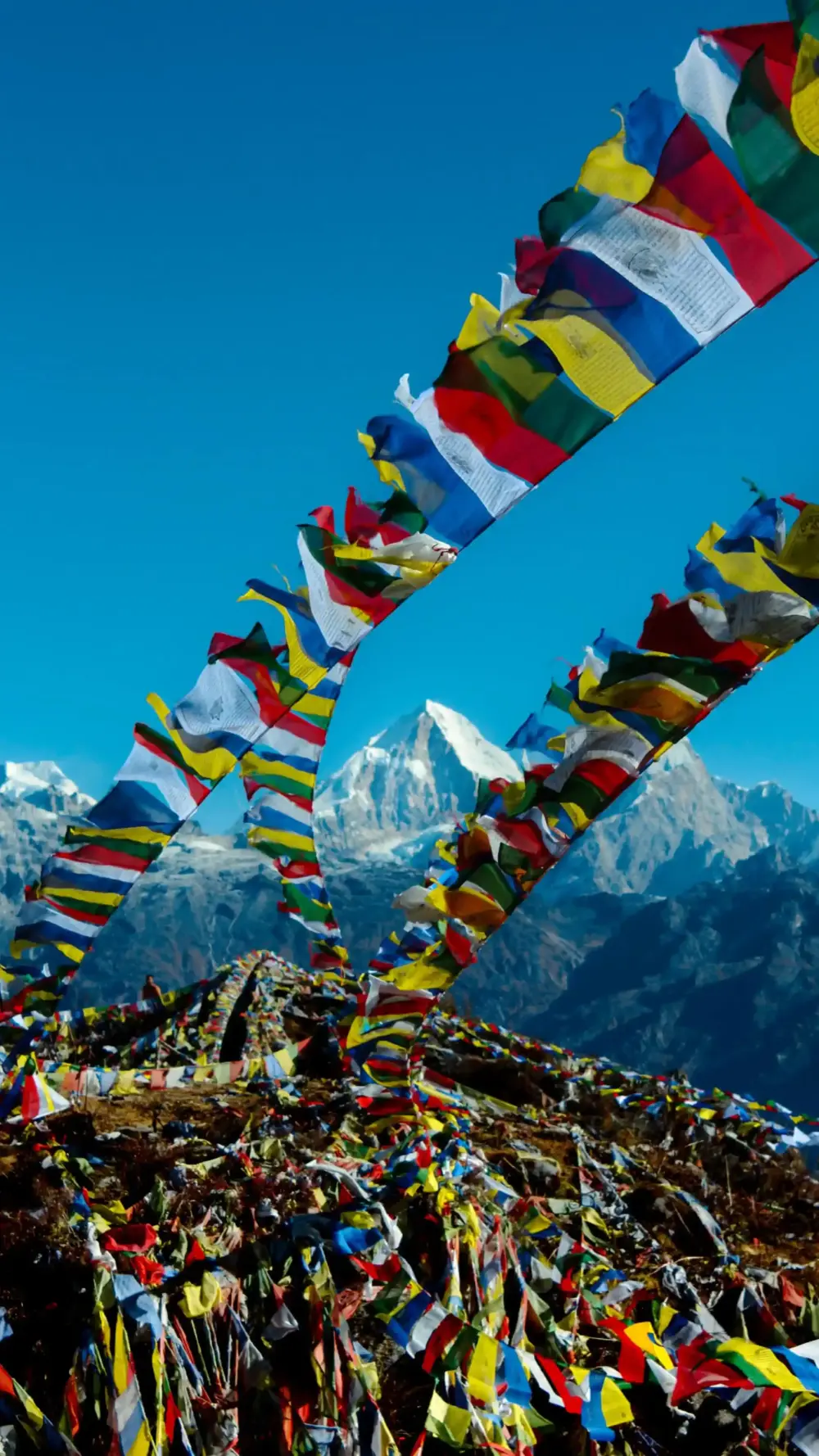
Tarkeghyang, also written as Tarke Ghyang, sits at 2,590 meters and is one of the most significant villages in the Helambu region. It has been a centre of Sherpa and Tibetan-influenced culture for centuries, and the evidence is everywhere: prayer flags strung between houses, mani walls along the path, and above all, the ancient monastery that sits at the high end of the village. The Tarkeghyang Monastery, also called Ganden Tashi Choling, is said to be several hundred years old and remains an active place of worship and community life.
Arriving at the monastery in the afternoon, when the light is golden, and the monks may be conducting prayers, is one of those experiences that is difficult to put into words properly. The sound of drums and horns, the smell of juniper smoke, the worn stone courtyard: all of it lands differently when you have walked for three days to get there. Take your time here. Walk around the village slowly. Talk to people if the opportunity arises. This is what the Helambu trek is really about.
The village has several comfortable teahouses with good food and, in most seasons, a reliable phone signal. The apple orchards on the lower slopes of the village produce fruit that ends up in the local brew and on the teahouse menu. Dinner here is often a step up from the higher lodges, with more options and fresher ingredients brought up from the valley.
Duration
4-5 hrs
Activity
Trekking
Accommodation
Teahouse
Meals
B/L/D
Max Altitude
2590mDay 5: Tarkeghyang to Sermathang (2,620m)
This is the gentlest day of the trek, and by this point, you will probably appreciate that. The trail from Tarkeghyang to Sermathang follows a mostly level or gently rolling path, covering around 11 kilometers through forest, past streams, and through the small settlement of Gangyul, where lunch is typically taken. The elevation change is minimal, which allows you to walk at a relaxed pace and actually look around rather than stare at the ground.
The forest between Tarkeghyang and Sermathang is beautiful in a quieter, more intimate way than the dramatic ridgelines of the earlier days. Streams cross the path regularly, and in the right season, wildflowers appear in the clearings. The birding here is excellent: Nepal’s mid-hills are home to a remarkable range of species, and with fewer people on the trail and a slower pace, you have a better chance of actually spotting them.
Sermathang arrives with a feeling of warmth and gentleness. The village sits at 2,620 meters surrounded by apple orchards, and its monastery, perched at the highest point of the settlement, looks out across the valley with a kind of quiet authority. The people of Sermathang are predominantly Sherpa, and their hospitality is genuine. The local apple wine and apple brandy are a Sermathang specialty, and sharing a small glass with your teahouse host in the evening is one of those small pleasures that sticks in the memory long after the trip ends.
This is your last night on the trail, and it is worth pausing to sit outside after dinner and let the day and the whole trek settle. You have walked from the edge of Kathmandu to this quiet hillside village, passing through forests, over high ridges, and through communities that feel genuinely connected to their land and their history. That is no small thing.
Duration
4-5 hrs
Activity
Trekking
Accommodation
Teahouse
Meals
B/L/D
Max Altitude
2620mDay 6: Sermathang to Melamchi Pul Bazar (860m)
The final day of walking is a long descent, dropping from Sermathang’s comfortable mid-altitude warmth all the way down to Melamchi Pul Bazar at 860 meters. The difference in temperature and vegetation between the start and end of this day is remarkable: you begin the morning in cool mountain air with views across Helambu’s ridges and finish in the river valley heat of the Melamchi Khola, surrounded by terraced paddy fields and banana trees.
The trail descends steeply in the upper section, easing as it enters the lower village land. You pass through several small settlements along the way, each with its own character: a tea stall, a few houses, children on their way to school, farmers working the terraced fields. This lower section of the Helambu region is predominantly Tamang, and the shift in culture from the Sherpa villages of the upper valley is subtle but noticeable in the architecture and in the faces.
Melamchi Pul Bazar is a proper market town, larger and noisier than anything you have encountered on the trail. Its name literally means “Melamchi Bridge Bazaar,” and it sits at the junction of the Melamchi Khola river. The town has shops, restaurants, and the comfortable chaos of a working Nepali trading hub. Lunch here typically involves something heartier than teahouse fare: the town has options ranging from local Nepali food to basic continental menus. After five days in the mountains, even a simple plate of food in a proper restaurant feels like a small luxury.
You stay the night here before the drive back to Kathmandu the following morning. It is worth taking an easy walk along the river in the evening if the energy is there. The Melamchi Khola is the source of Kathmandu’s water supply, a fact that connects this remote valley to the city you left a week ago in a quietly satisfying way.
Duration
5-6 hrs
Activity
Trekking
Accommodation
Teahouse
Meals
B/L/D
Max Altitude
860mDay 7: Drive Melamchi to Kathmandu
After a week in the mountains, the drive back to Kathmandu carries its own particular feeling. The road from Melamchi follows the Indrawati River valley before joining the main highway, and the journey takes roughly three to four hours, depending on traffic and road conditions. The scenery along the way is pleasant, passing through market towns, terraced farmland, and river valleys before the road climbs up to the rim of the Kathmandu Valley and the city comes into view.
Back in Kathmandu, the afternoon is yours. The contrast between the quiet mountain trails and the city’s noise and energy is striking, and most people find they need a little time to readjust. A long shower, a good meal, and a walk through Thamel or the old city at your own pace is usually the right prescription. If the timing works out, a visit to the World Heritage Sites of Pashupatinath or Boudhanath is a meaningful way to close out an experience that has been, in large part, about Nepal’s spiritual and cultural landscape.
You are staying in Kathmandu tonight, in a proper hotel bed, which will feel extraordinary. Your guide will typically join you for a farewell dinner, and it is the right occasion to share notes on the trek, ask questions about Nepal that may have come up along the way, and raise a glass to a week well spent in the hills.
Duration
Drive
Activity
Travel
Accommodation
Hotel
Meals
B
Max Altitude
1400mDay 8: Final Departure
The last morning in Kathmandu is a quiet one. Breakfast at the hotel, a final pack of your bag, and a check of your passport, boarding pass, and souvenirs. Your transfer to Tribhuvan International Airport will be arranged according to your flight time, typically allowing at least three hours before departure to account for Kathmandu’s unpredictable traffic.
The airport itself is a study in controlled chaos: busy, a little loud, and full of trekkers and travelers in various states of post-adventure contentment. The security and immigration process is usually straightforward, and once you are through, there is time to browse the duty-free shops, pick up last-minute pashmina or Himalayan tea, or simply sit and let the trip settle.
What you take home from Helambu is harder to pack than any souvenir. It is the memory of the ridge at dusk with the mountains catching the last light. The sound of monks at prayer in an old monastery. The smell of pine and rhododendron after rain. The kindness of a teahouse owner who brought you an extra blanket without being asked. Nepal has a way of giving you those things if you go slowly enough to receive them, and the Helambu Circuit is exactly the kind of trek that creates that space.
Duration
Departure
Activity
Transfer
Accommodation
Hotel
Meals
B
Max Altitude
1400mIncludes/Excludes
What's included?
- 7 nights accommodation (1 hotel Kathmandu, 6 teahouse)
- All ground transport Kathmandu–Sundarijal–Kathmandu
- All meals on trek
- Licensed English-speaking guide and porter
- Shivapuri Nagarjun National Park fee and TIMS card
- First-aid kit
What's not included?
- International airfare and Nepal visa fees
- Travel and medical insurance (recommended)
- Personal gear and clothing
- Tips for guide and porter
- Beverages and personal snacks
Helambu Trek: 8-Day Memorable Teahouse Trek in Nepal Altitude Chart
Trip Information - Good to Know
Permits Required
The Helambu Circuit passes through two protected areas, and all trekkers are required to carry valid permits at all times. Permit checks are conducted at multiple army and park checkpoints along the route, so these are non-negotiable. Your agency will arrange all permits on your behalf before the trek begins.
Permit Requirements
| Permit | Where Obtained | Approx. Cost (Foreign National) |
|---|---|---|
| Langtang National Park Entry Permit | Nepal Tourism Board, Kathmandu | USD 30 / NPR 3,000 |
| Shivapuri National Park Entry Permit | Park entrance at Sundarijal | USD 10 / NPR 500 |
| TIMS Card (Trekkers’ Information Management System) | Nepal Tourism Board, Kathmandu | USD 20 / NPR 2,000 |
Best Time to Trek
Spring (March to May) and autumn (September to November) are the two seasons that consistently deliver the best conditions on the Helambu Circuit. Spring brings the rhododendron bloom, which transforms the forest sections into something genuinely spectacular, and the days are warm enough to walk comfortably at altitude without heavy layering. Autumn offers the clearest mountain views of the year, with skies washed clean by the monsoon and temperatures that are cool but never harsh.
Winter trekking from December to February is possible and has its own appeal: fewer people on the trail and a pristine, cold beauty at the higher elevations. However, Tharepati and the upper ridge sections can see snow and genuinely cold nights, and some teahouses reduce services or close entirely. A good sleeping bag and proper cold-weather gear are essential.
Monsoon trekking from June to August is not generally recommended due to slippery trails, reduced visibility, and the high possibility of leeches in the forest sections.
Fitness and Difficulty
The Helambu Circuit is rated as a moderate trek, which in practical terms means it is suitable for any reasonably healthy adult who is comfortable walking five to six hours a day over varied terrain. You do not need prior trekking experience in the Himalayas, but some preparation helps. Walking or hiking regularly in the weeks before the trek, particularly on hills or stairs, will make the first two days significantly more comfortable.
The maximum altitude of 3,600 meters at Tharepati is high enough to feel but not so high as to present serious acclimatization risks for most trekkers. Altitude sickness is uncommon on this route, but it is not impossible. Drinking at least three to four liters of water per day, walking at a measured pace, and not skipping meals are the most effective preventive measures. Anyone with a history of altitude-related issues should consult a doctor before the trek.
Accommodation
Throughout the trek, accommodation is in teahouses, the traditional Nepali mountain lodge that forms the backbone of Himalayan trekking culture. Rooms are simple: a bed, a mattress, and usually a shared bathroom down the hall. Blankets are provided, but bringing a sleeping bag liner adds warmth and hygiene.
The teahouses along the Helambu Circuit are generally well-maintained, and in the lower-altitude villages of Tarkeghyang and Sermathang, some lodges offer reasonably comfortable rooms with attached bathrooms.
At Tharepati, the highest camp, facilities are more basic. Shared toilets, no hot showers, and cold evenings are the norm. This is not a complaint: it is simply part of the experience at altitude, and the mountain views from your teahouse window make the trade-off entirely worthwhile.
Food and Water
The teahouse menu in Nepal is one of the great joys of trekking here. Dal bhat, the classic lentil soup with rice, vegetables, and pickles, is available everywhere and is genuinely excellent: filling, nutritious, and usually unlimited on refills.
Beyond dal bhat, menus typically offer:
- Fried rice
- Noodle soups
- Pasta
- Omelettes
- Porridge
- Momo dumplings
- Pancakes
- Various seasonal items
The further into the mountains you go, the simpler the options become, but there is always enough to eat well.
Water from taps and streams along the trail should be treated before drinking. A good water filter, purification tablets, or a UV pen is strongly recommended and will save you both money and plastic waste compared to buying bottled water at every stop. Boiled water is available at all teahouses for a small fee.
Packing List Essentials
Clothing and Footwear
- Sturdy, broken-in hiking boots with ankle support
- Lightweight trail runners or camp shoes
- Moisture-wicking base layers (2 sets)
- Insulating mid-layer (fleece or down jacket)
- Waterproof outer shell jacket and trousers
- Warm hat and gloves (essential for Tharepati nights)
- Sun hat and sunglasses with UV protection
- Quick-dry trekking trousers and shorts
- Thick wool or synthetic trekking socks (4 pairs)
- Gaiters (optional but useful in wet conditions)
Gear and Accessories
- Rucksack (35 to 50L for main bag, 15 to 20L daypack)
- Sleeping bag or quality liner rated to 0°C
- Trekking poles (highly recommended for descents)
- Headlamp with extra batteries or USB charging capability
- Water bottles or hydration bladder (2L capacity minimum)
- Water filter, UV pen, or purification tablets
- Personal first-aid kit and any prescription medications
- High-SPF sunscreen and lip balm
- Insect repellent
- A camera or phone with sufficient storage and backup batteries
Frequently Asked Questions
Who are the Hyolmo (Yolmo) people?
The Hyolmo are a distinct Tibetan-Buddhist ethnic group native to the Helambu highlands. They speak the Hyolmo language (related to Tibetan), maintain their own monastery tradition, and have a unique artistic style visible in the gompas of Tarkeghyang and Sermathang.
Is the Helambu Trek suitable for beginners?
Yes — it’s one of Nepal’s best beginner treks. Maximum altitude is 3,600m, trails are well-maintained, teahouse infrastructure is good, and no previous trekking experience is necessary.
Can I trek Helambu in winter?
Yes — winter days are cool and clear, and the altitude is low enough to avoid serious snow. December–February sees excellent visibility and very few other trekkers.
Can I extend Helambu to Gosaikunda?
Yes — from Tharepati, a trail leads to the sacred Gosaikunda lakes (4,380m). Green Horizon Tours can add 3 days for Gosaikunda as an extension, weather and season permitting.
How does Helambu compare to Langtang Trek?
Helambu is shorter, lower, gentler, and better suited to first-timers. Langtang offers higher altitude, bigger mountain views, and a longer wilderness experience. Both can be combined in a single 2-week journey.
What is Tarkeghyang like?
Tarkeghyang is the cultural heart of Helambu — a large traditional stone village with beautifully painted Tibetan-style houses, the region’s most important gompa, and a warm community that hosts many trekkers annually.
Trip Reviews
 Write a Review
- Best Price Guarantee
- Secure & easy booking
- Easy trip date changes
- Discount for groups


How to book a trip?

make free inquiry

confirm the trip
