


Makalu Base Camp Trek

Trip Duration
20 Days Days
Group Sizes
2-12 People People
Transportation
Flight/Walk
Destination
Makalu Base Camp Trek
Max. Altitude
5000
Nature of Trip
Trekking
Best Season
Mar-May, Oct-Nov
Activities
- Trekking
- Wilderness
- High Altitude

Difficulty
Challenging
Meals
- Hotel/Teahouse Breakfast
- Teahouse/Camp Lunch
- Teahouse/Camp Dinner

Start & End Point
Kathmandu
Accommodation
- Teahouse
- Camping
- Hotel
Overview of Makalu Base Camp Trek
Makalu Base Camp Trek Overview
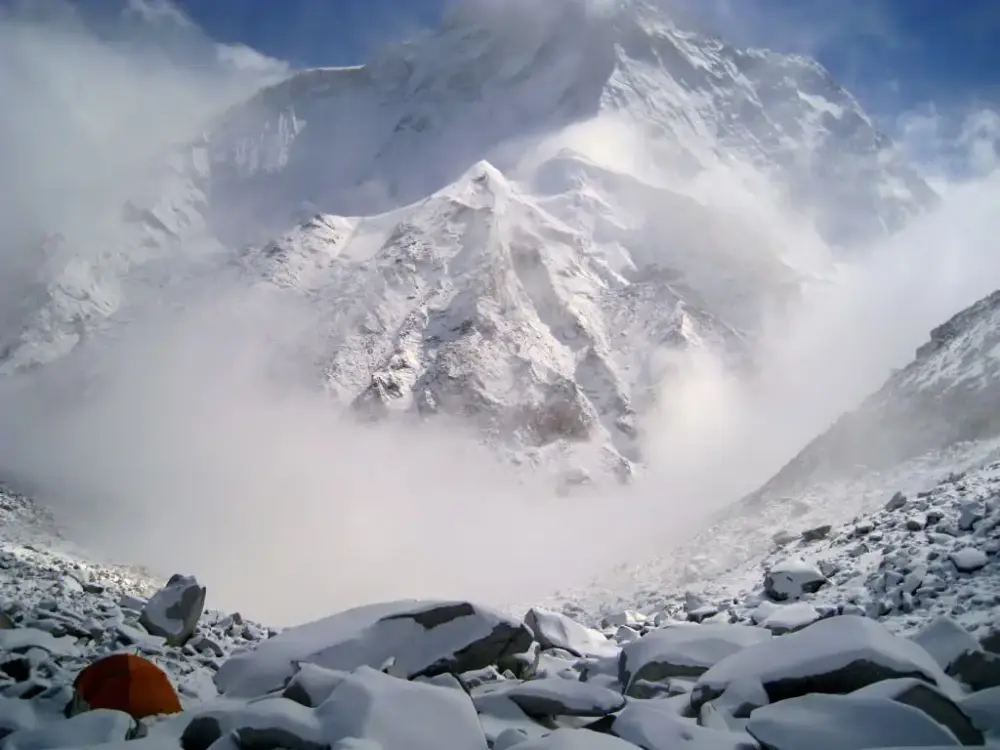
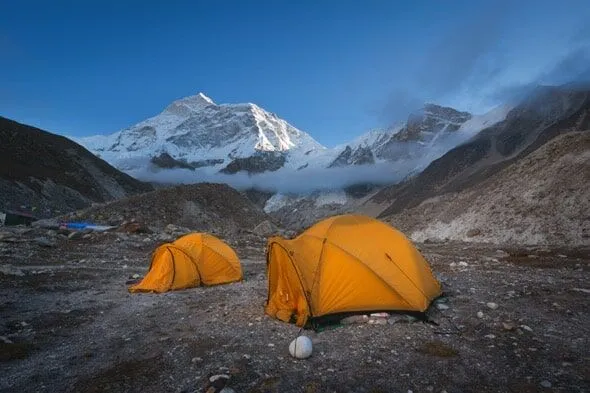
The Makalu Base Camp Trek journeys deep into the Makalu-Barun National Park in eastern Nepal to reach the base camp of Makalu (8,485m) — the world’s fifth-highest mountain — at approximately 5,000m. The route traverses extraordinary ecological diversity: subtropical river valleys, pristine temperate forests, high alpine meadows, and glacial terrain on an approach that is considered one of the most scenically beautiful in all the Himalayas. Trekker numbers are very limited by the remote location and park entry requirements, preserving an authentic wilderness experience.
There’s a very specific kind of silence in the upper Barun Valley. You honestly won’t find it anywhere else on earth. No helicopters are buzzing overhead, no massive lines of trekkers bottlenecking at a bridge, and absolutely no teahouses with Wi-Fi passwords scribbled on chalkboards. It’s just the wind ripping through the ridges, the distant, hollow crack of a glacier shifting, and the overwhelming presence of Mount Makalu towering above you. It feels like stepping into another era.
The Makalu Base Camp Trek is one of the very last truly remote journeys in the Himalayas that a well-prepared hiker can actually still pull off. Makalu is the fifth-highest mountain on the planet (8,485 meters), yet surprisingly few people ever bother to venture to its base. Tucked away in the eastern corner of Nepal between the Arun Valley and the Tibetan border, the trail is completely sheltered from the massive tourism rush you see over in Everest or Annapurna. You’ll be walking through terrain that looks pretty much identical to when mountaineering legends Eric Shipton and Edmund Hillary explored it back in the 1950s.
We didn’t just throw this 20-day itinerary together. It’s been built meticulously to respect the altitude. It builds in crucial acclimatization days at Khongma Danda and Yangle Kharka, and accounts for the often-chaotic realities of domestic Nepali flights and rough dirt roads. It gives you time to actually breathe. Time to absorb the landscape, sit outside a stone lodge with a cup of hot butter tea, and not feel like you’re racing a clock. Shorter itineraries on a trek this demanding simply don’t give you that luxury.
The route drags you through rhododendron forests that explode in reds and pinks during the spring. You’ll cross two massive mountain passes, follow the freezing Barun River, and pass through isolated farming villages where life follows the seasons, not a watch. Honestly? You’re going to see more yaks than other tourists. And the wildlife in the Makalu Barun National Park is no joke—we’re talking red pandas, Himalayan tahr, and an insane variety of birds. If you’re incredibly lucky, you might even spot a snow leopard.
Make no mistake, this isn’t an easy trip. The days drag on, the passes are brutal, the lodges are bare-bones, and the altitude will punish you if you try to rush. But if you’ve already done Everest Base Camp or the Annapurna Circuit and you’re hungry for whatever comes next, the answer is Makalu. It’s the kind of place that sticks with you long after you leave.
Trip at a Glance
| Detail | Information |
|---|---|
| Duration | 20 Days |
| Trek Grade | Strenuous / Challenging |
| Maximum Elevation | Makalu Base Camp (4,870m) / Upper viewpoint (approx. 5,100m) |
| Start/End Point | Kathmandu, Nepal |
| Trek Region | Makalu Barun National Park, Sankhuwasabha District, Eastern Nepal |
| Best Season | Spring (March–May) & Autumn (Late Sept–Nov) |
| Total Trekking Distance | Roughly 110 to 120 km (68 to 75 miles) round trip |
| Accommodation | 3-star hotel in Kathmandu; basic tea houses/lodges on the trail |
| Meals | All meals covered during the trek; Breakfast only in Kathmandu |
| Group Size | 2 to 10 people (private departures available) |
| Permits Required | Makalu Barun National Park Permit + Makalu Rural Municipality Permit |
Trek Highlights
It’s never just one moment that makes this trek special; it’s the pile-up of crazy experiences. Here’s what you have to look forward to:
- Standing at the foot of the world’s fifth-highest peak in a landscape that feels completely feral and untouched.
- Grinding over the iconic Shipton La Pass (4,170m) and Keke La Pass.
- Hiking through the Makalu Barun National Park, easily one of the most ecologically diverse protected areas in Asia.
- Spotting rare wildlife. Keep your eyes peeled for red pandas and musk deer.
- Walking through oceans of blooming crimson and pink rhododendrons, if you trek in the spring.
- Experiencing the day-to-day lives of the Rai and Sherpa people who have lived in these steep valleys for centuries.
- Catching mind-blowing panoramic views of Everest, Lhotse, Baruntse, and Chamlang.
- Exploring the ancient ice of the Barun Glacier and the crystal-clear Barun Pokhari lake up near base camp.
- Finally getting off the crowded tourist circuits and finding some genuine, quiet solitude.
When to Go
Spring (Late March – May)
Spring is pure visual chaos in the best way possible. The rhododendron forests explode in red and pink, contrasting heavily against the grey rock and white snow. The lower elevations are warm, though you should still expect freezing temperatures and possible snow up on Shipton La.
Mornings are usually crystal clear for mountain views, but clouds often roll in during the afternoons. Expect a bit of rain toward late May.
Autumn (Late September – November)
If you want the best, sharpest views of the mountains, go in the autumn. The monsoon rains have just washed all the dust out of the sky, offering mind-bending clarity. The forests turn gold and brown.
However, the temperatures drop significantly faster in the fall. By November, the nights at Khongma Danda and base camp are bone-chillingly cold. Early November is usually the sweet spot before the heavy winter snows hit the passes.
Seasons to Avoid
- June through August (Monsoon Season): Brings leeches, landslides, and near-zero mountain views
- Winter (December through February): The passes get completely choked with snow, and many lodges close for the season
 |
 |
- Reach Makalu Base Camp (~5,000m) beneath the world’s 5th highest mountain
- Trek through Makalu-Barun National Park — one of Nepal’s most pristine wilderness areas
- Exceptional biodiversity: over 400 bird species, red pandas, snow leopards, and 3,000+ plant species
- Dramatic ecological transition from subtropical forest to glacial terrain in a single route
- Spectacular views of Makalu, Lhotse, Baruntse, and Chamlang peaks
- Very remote — minimal trekker traffic ensures genuine wilderness
Itinerary of Makalu Base Camp Trek
Day 1: Fly Kathmandu to Tumlingtar (526m) — Drive to Num (1,560m)
This morning’s flight sets the mood for the whole expedition. It’s a tiny plane, the flight takes about an hour, and if you grab a seat on the correct side, the Himalayan wall dominates the window. You’ll see Kanchenjunga, Makalu, and Chamlang roll by. Keep your camera out.
You land in Tumlingtar, a humid little river town at 860 meters that feels lightyears away from the freezing alpine zones you’re heading toward. We hop into private jeeps and start the rough, bumpy drive toward Num. The dirt road hugs the cliffs and offers massive views of the Arun Valley. Four or five hours later, we pull into Num (1,560m). It’s a tiny cluster of stone houses where the road dies and the walking begins.

Duration
Flight + Drive
Activity
Travel
Accommodation
Teahouse
Meals
L/D
Max Altitude
1560mDay 2: Num to Seduwa (1,500m)
Time to hit the trail. Right out of the gate, the path takes a massive dive down into the Arun River gorge, dropping hundreds of meters through hot, subtropical jungle. You’ll cross a swaying suspension bridge with the river roaring cold and heavy right below you.
What goes down must come up. The climb up the opposite side of the gorge is steep, sweaty, and unrelenting. It gives you a pretty brutal, honest preview of what your legs are in for over the next two weeks. You’ll pass through scattered Rai villages where kids will stare at you with total curiosity. The Rai are indigenous to eastern Nepal, and their culture is deeply tied to these hills. We end the day in Seduwa. Drink water, rest up, and enjoy the sunset over the valley.
Duration
5-6 hrs
Activity
Trekking
Accommodation
Teahouse
Meals
B/L/D
Max Altitude
1500mDay 3: Seduwa to Tashigaon (2,100m)
The vibe changes today. We leave the sticky tropical heat and rice terraces behind as the forest thickens. You can start to smell the altitude in the air. The trail pushes uphill out of Seduwa, cutting through dense green vegetation, hopping over streams, and passing little hamlets draped in faded prayer flags.
Tashigaon is our stop for the night. Sitting at 2,100 meters, it’s a Sherpa village and the last permanent settlement you’ll see before we head into the absolute wild. The locals here are incredibly welcoming; they’ve been hosting climbers heading to Makalu for decades. Look at your phone tonight—this is the last place you’ll have a reliable signal. Send your texts, update the family, and get ready to go off the grid.
Duration
4-5 hrs
Activity
Trekking
Accommodation
Teahouse
Meals
B/L/D
Max Altitude
2100mDay 4: Tashigaon to Khongma Danda (3,550m)
Today, the trek really shows its teeth. You’re gaining over 1,400 meters of elevation in a fairly short distance. It’s easily one of the most grueling days on the whole itinerary. You’ll hike up through broadleaf forests that eventually morph into thick rhododendron woodlands, finally popping out onto an exposed ridgeline.
The stretch above the little rest stop of Dhara involves endless stone staircases carved right into the mountain. They feel like they’ll never end. But if you’re here in the spring, the rhododendrons blooming in deep scarlets and pure whites make the pain totally worth it. We bed down at Khongma Danda (3,500m). It’s exposed, the wind bites hard, and the lodges are super basic. But the views? Unbelievable.
Duration
6-7 hrs
Activity
Trekking
Accommodation
Camp/Teahouse
Meals
B/L/D
Max Altitude
3550mDay 5: Trek to Dobate via Shipton La
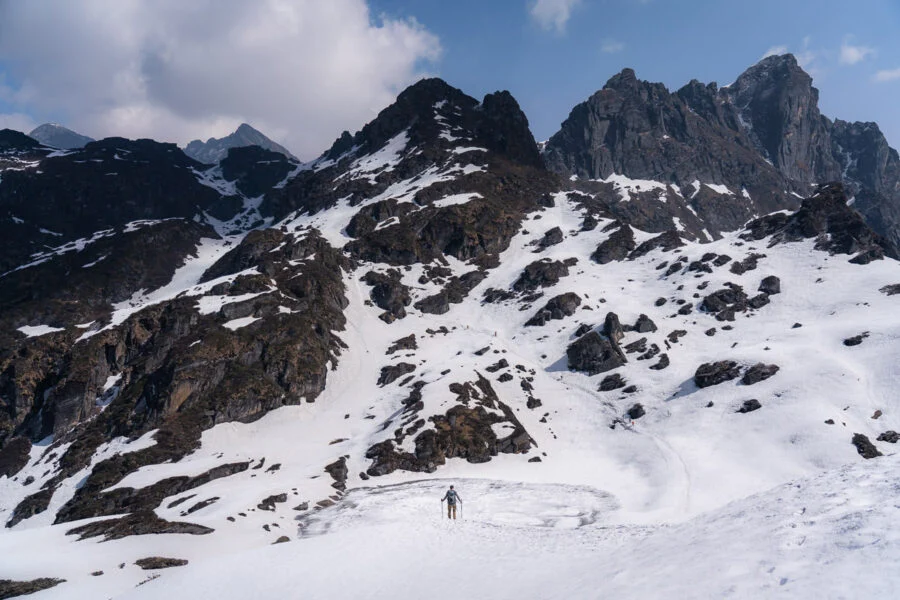
This is the big one. For most groups, this day starts before the sun even comes up. Crossing the Shipton La pass (4,170m) and then dipping and re-ascending over Keke La is going to test your mental grit, especially if there’s ice on the ground or the wind is howling.
Eric Shipton crossed this exact spot in 1952. The landscape doesn’t care about history, though—it’s just as wild and wind-blasted now as it was back then. When you crest the pass and Makalu’s steep, violent pyramid comes into view for the first time, it’ll stop you dead in your tracks. From there, it’s a steep, careful descent down to Dobate (3,650m). The lodges here are glorified stone shelters with wooden bunks. It’s cold and basic, but after a day like today, it feels like a five-star hotel.
Duration
6-7 hrs
Activity
Trekking
Accommodation
Teahouse
Meals
B/L/D
Max Altitude
3649mDay 6: Trek from Dobate to Yangri Kharka
After yesterday’s high-altitude drama, today is a bit of a breather. We drop from Dobate straight into the Barun Valley proper. The landscape turns radically alpine. The trees vanish, replaced by wide meadows, massive granite boulders, and the freezing, crystal-clear Barun River.
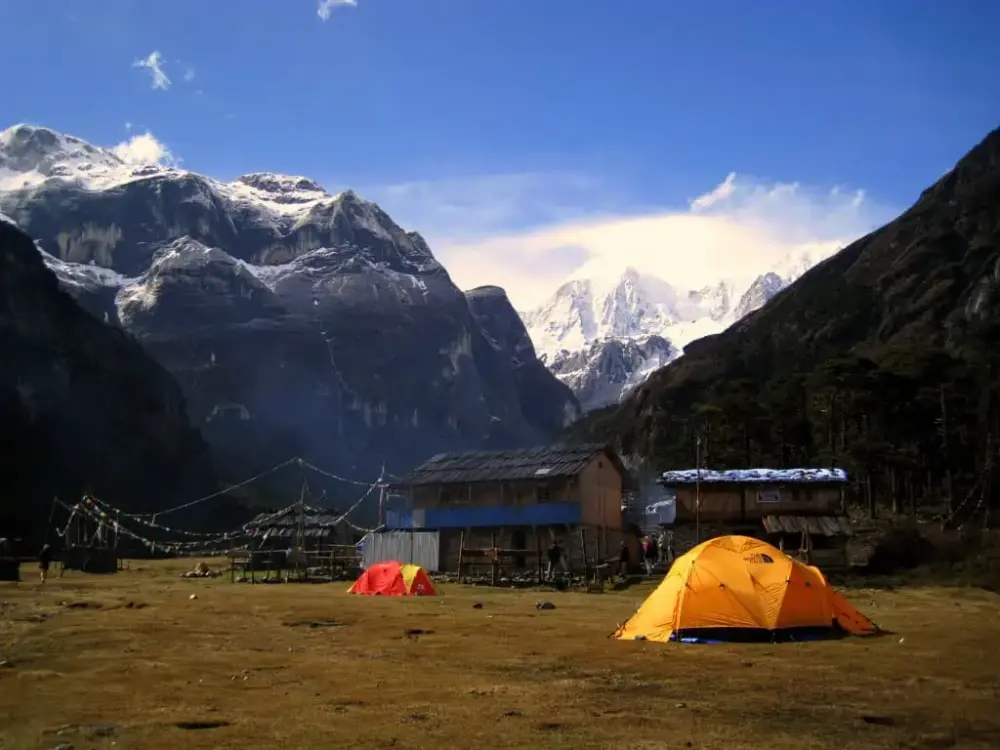
Yangle Kharka sits in a wide, flat section of the valley at 3,557 meters. It’s a high-grazing pasture, meaning you’re going to see massive, shaggy yaks wandering around. If the sky is clear in the afternoon, the towering peaks at the head of the valley—including Makalu—finally reveal themselves. The sheer scale of the rock and ice ahead of you becomes viscerally real today. Bundle up tonight; the stargazing is world-class, but the temperature plummets.
Duration
4-5 hrs
Distance
10 km
Activity
Trekking
Accommodation
Teahouse
Meals
B/L/D
Max Altitude
3557mDay 7: Trek from Yangri Kharka to Langmale Kharka
Every single kilometer we walk today gets more dramatic. We follow the river upstream, hopping across crude stone bridges as the valley pinches together and the trail gets steeper. Plants are basically gone at this point. It’s just raw, naked rock, glacial dirt, and maybe a few tough alpine weeds clinging to life.
Langmale Kharka (4,410m) is a desolate, high-altitude staging camp. Look up, and the monstrous south face of Makalu dominates the skyline. The air is undeniably thin here. Everything—tying your boots, walking to the dining hall—takes twice as much effort. Dress incredibly warm tonight. Tomorrow is base camp day.
Duration
3-4 hrs
Distance
7 km
Activity
Trekking
Accommodation
Teahouse
Meals
B/L/D
Max Altitude
4410mDay 8: Acclimatisation Walk to Sherson
Another rest day that you will desperately need. You pushed over 4,000 meters at Shipton La, and your body is working in overdrive to adapt.
We aren’t just sitting around, though. A slow walk further up the valley toward the Barun Glacier is incredible for acclimatization. The valley walls shoot straight up on either side of you, looking almost impossibly tall. You might spot massive Himalayan griffon vultures riding the thermals above. The whole place has this eerie, end-of-the-world vibe to it. Spend the afternoon drinking ridiculous amounts of water, eating whatever you can stomach, and resting.
Duration
Rest/Explore
Activity
Rest
Accommodation
Teahouse
Meals
B/L/D
Max Altitude
3558mDay 9: Trek to Makalu Base Camp
You’ll probably wake up before your alarm even goes off. The anticipation is just too heavy to sleep through. We push up the valley, navigating the rocky lateral moraine of the Barun Glacier. There is zero softness left in the landscape here. It’s just rock, ice, deep blue sky, and mountains.
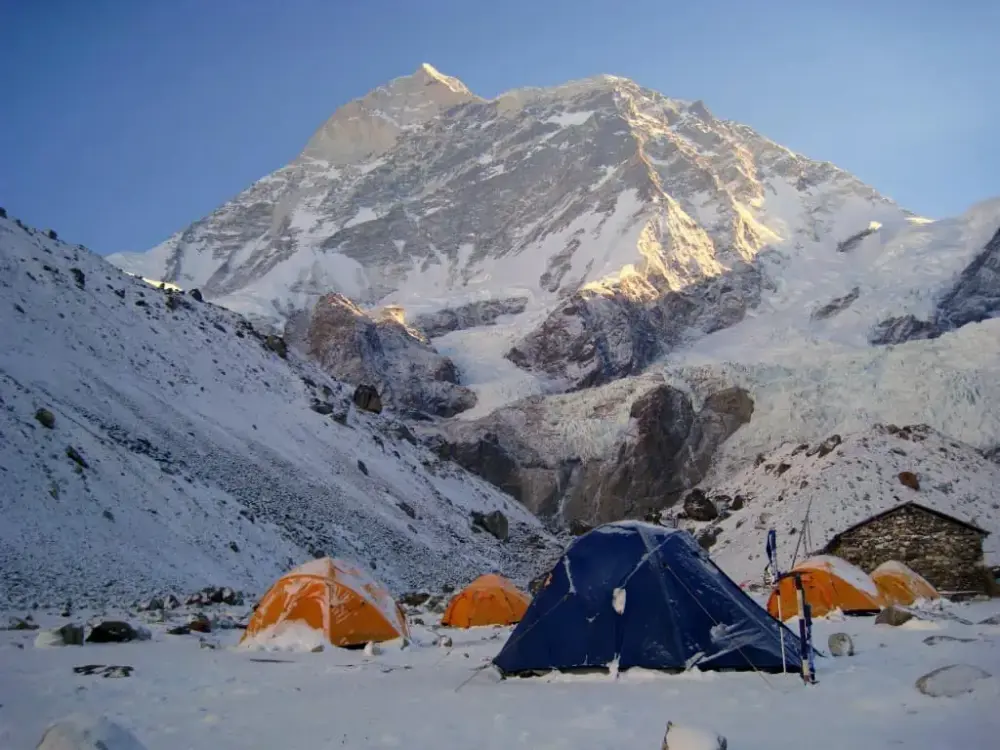
Makalu Base Camp sits at roughly 4,870 meters. Approaching it is one of those raw, emotional moments you can’t really put into words. The south face of Makalu eventually reveals itself in full, and the size of it will humble you instantly. Spend the afternoon resting. Listen to the glaciers crack. Notice the aggressive, profound silence. This exact feeling is why we hike.
Duration
3-4 hrs
Distance
6 km
Activity
Trekking
Accommodation
Teahouse
Meals
B/L/D
Max Altitude
4870mDay 10: Rest and Explore at Makalu Base Camp
You have a full day at the base of the world’s fifth-highest peak. If you’re feeling strong, there’s a hike up to a viewpoint above the camp (around 5,100 meters). The views from up there? Completely absurd. You’ll see Makalu, Baruntse, Chamlang, and on a really good day, the summit of Everest way off to the northwest.
Walk alongside the Barun Glacier. It’s a massive river of dirty ice that glows neon blue down inside the crevasses. Check out Barun Pokhari, the glacial lake near camp that reflects the mountains perfectly when the wind dies down. Put the camera away for a bit and just exist here. It’s the emotional peak of the trip. You earned every aching muscle to stand in this spot.
Duration
5-6 hrs
Activity
Trekking
Accommodation
Teahouse
Meals
B/L/D
Max Altitude
5100mDay 11: Makalu Base Camp to Langmale Kharka
Heading back down carries a totally different vibe. The pressure of hitting the objective is completely gone. You’re trading it for this massive sense of relief and pride, which makes your backpack feel ten pounds lighter.
It’s a long descent back to Yangle Kharka, following the river through the rocks and meadows you climbed a few days ago. Because you’re facing the opposite direction, the valley looks entirely different. It’s stunning in its own right.
Duration
5-6 hrs
Distance
13km
Activity
Trekking
Accommodation
Camp/Teahouse
Meals
B/L/D
Max Altitude
3557mDay 12: Langmale Kharka to Dobate
We retrace our steps down the Barun Valley and make the steady climb back up to Dobate. The physical effort is actually much easier this time around—your body is fully adapted to the thin air, and your legs have built up some serious mountain stamina.
Keep looking over your shoulder today. The morning skies are usually crystal clear, and watching the summit of Makalu slowly recede behind you carries a weird, quiet emotional weight. The basic stone huts at Dobate won’t seem nearly as harsh tonight now that you know you’re heading home.
Duration
4-5 hrs
Distance
10 km
Activity
Trekking
Accommodation
Teahouse
Meals
B/L/D
Max Altitude
3650mDay 13: Dobate to Tashigaon via Shipton La
We have to cross Shipton La one last time, but it’s a totally different beast on the way back. You’re acclimatized, you’re mountain-fit, and you know exactly what the climb is going to demand of you.
At the top of the pass, take one last look deep into the Barun Valley. For a lot of trekkers, this is the exact moment the sheer scale of what they just accomplished finally sinks in. The steep hike down the other side back to Khongma Danda will burn your knees, but the lodge owners waiting at the bottom will welcome you back like old friends.
Duration
6-7 hrs
Distance
11 km
Activity
Trekking
Accommodation
Teahouse
Meals
B/L/D
Max Altitude
3499mDay 14: Trek from Tashigaon through Seduwa to Num
The final push. We cover the remaining ground through Seduwa, drop back down into the sticky heat of the Arun Valley, cross the suspension bridge one last time, and grind up the final hill into Num.
Walking into Num, you’ll feel a mix of exhaustion, massive pride, and that weird, quiet sadness that always hits when a huge adventure comes to an end. We spend our last night on the trail here. Tomorrow, we catch the jeeps.
Duration
5-6 hrs
Distance
18 km
Activity
Travel+Trek
Accommodation
Teahouse
Meals
B/L/D
Max Altitude
1560mDay 15: Drive Num to Tumlingtar, Fly to Kathmandu
We pile into the jeeps for the bumpy, dusty ride back down the mountain road to Tumlingtar’s tiny airstrip. If the weather holds, we’ll catch a morning flight back to Kathmandu. Watching the mountains disappear out the airplane window feels incredibly surreal.
Once we land in the chaotic sprawl of the city, we’ll drop you at the hotel. Go take a long, proper shower. Eat something that isn’t lentils. Sleeping at a low altitude in a room that isn’t the temperature of a refrigerator is going to feel amazing. Tonight, the team grabs a massive dinner to celebrate and trade stories.
Activity
Drive+Flight
Accommodation
Hotel
Meals
B/L/D
Max Altitude
1400mDay 16: Rest Day in Kathmandu
It’s the final morning. If your flight schedule allows, grab a coffee and wander through Thamel one last time to pick up some souvenirs.
We’ll get you to the airport with plenty of time to spare. As you fly home, you’re going to find that Makalu stays with you. You’ll be sitting at a desk on a random Tuesday, and the memory of that sheer ice face above the Barun Valley will flash into your head perfectly clear. That’s the real gift of a trip like this. Safe travels.
Duration
Rest
Activity
Rest
Accommodation
Hotel
Meals
B/L/D
Max Altitude
1400mDay 17: Buffer Day 1
First buffer day.
The trip starts the second your plane drops through the clouds, revealing the Kathmandu Valley. It’s a massive, ancient city completely boxed in by green hills, with the white teeth of the Himalayas poking out on the horizon if the sky is clear. Once you clear customs and grab your bags, our team will be there to pick you up and drive you to your hotel in Thamel.
Take the afternoon to shake off the jet lag. Thamel is loud, chaotic, and incredibly colorful—it lets you know right away that you aren’t at home anymore. The narrow streets are packed with gear shops, spice vendors, and motorbikes weaving through traffic. Grab a rooftop dinner and just take it all in. We’ll meet up in the evening for a quick briefing to check gear and talk about the weeks ahead. Get some sleep. The mountains are waiting
Duration
Buffer
Activity
Rest
Accommodation
Hotel
Meals
B
Max Altitude
1400mDay 18: Buffer Day 2
Seconf buffer day.
Kathmandu is a city that rewards people who wander. Today is all about checking out the city’s heavy-hitting cultural sites. We’ll hit Pashupatinath Temple on the Bagmati River—one of the holiest Hindu sites globally, where you’ll see both open-air cremations and sadhus meditating in vibrant saffron robes. After that, we’ll head to the massive white dome of Boudhanath Stupa. Buy a butter lamp, spin the prayer wheels, and just sit for a minute. It’s one of the calmest spots in the city.
The afternoon is strictly for prep. We’ll double-check your kit, rent any last-minute gear, and finalize your Makalu restricted permits. Tonight, we’re having our first group dinner. Get used to Dal Bhat (lentil soup, rice, and curry)—you’re going to be eating a lot of it over the next three weeks, and trust me, you’ll learn to love it.
Duration
Buffer
Activity
Rest
Accommodation
Hotel
Meals
B
Max Altitude
1400mDay 19: Buffer Day 3
Third buffer day — extended buffer for remote route contingencies.
Do not skip this rest day. Altitude sickness doesn’t care how fit or experienced you are. The golden rule of high-altitude trekking is “climb high, sleep low,” and that’s exactly what we’re doing today to let your red blood cells catch up.
After a slow breakfast, we highly recommend taking the day hike up to Khongma La (3,890m). The trail winds through the last of the bushes and opens onto a windy pass covered in prayer flags. On a clear day, the view down into the Barun Valley is staggering. You’ll take some photos, eat a snack, and then drop back down to Khongma Danda to sleep. Spend the afternoon reading, writing, or just staring at the clouds.
Duration
Buffer
Activity
Rest
Accommodation
Hotel
Meals
B
Max Altitude
1400mDay 20: Final Departure
Today is a massive descent. As we drop back down through the rhododendron forests, the temperature skyrockets and the air gets noticeably thicker. Your lungs will absolutely love the extra oxygen. The dead silence of the high alpine is replaced by the sounds of birds and insects in the canopy.
Taking those endless stone stairs downhill is strangely satisfying. By the time we roll into Tashigaon, your cell phone will start buzzing with delayed messages. After weeks in the wild, getting a basic hot shower here feels like the greatest luxury on earth.
Duration
Departure
Activity
Transfer
Accommodation
Hotel
Meals
B
Max Altitude
1400mIncludes/Excludes
What's included?
- 19 nights accommodation (2 hotel Kathmandu, 17 teahouse/camping)
- Domestic flights Kathmandu–Tumlingtar and return
- All meals on trek
- Senior guide, assistant guide, and porter team
- Makalu-Barun National Park permit, conservation area fee, TIMS card
- Full camping equipment for high sections above Dobhan
- First-aid kit, pulse oximeter, emergency communication
What's not included?
- International airfare and Nepal visa fees
- Travel, medical, and helicopter evacuation insurance (mandatory)
- Personal gear and high-altitude equipment
- Tips for guide and porter team
- Beverages and personal snacks
Makalu Base Camp Trek Altitude Chart
Trip Information - Good to Know
Permits and Entry Requirements
You need two specific pieces of paper to hike this route, and the good news is, there’s no TIMS card required here.
| Permit | Cost |
|---|---|
| Makalu Barun National Park Entry Permit | ~$30 USD |
| Makalu Rural Municipality Permit | ~$20 USD |
Note: We handle all the legwork for these permits in Kathmandu before we leave. You don’t have to stress about it.
Essential Packing List
Let’s be clear: Base Camp gets bitterly cold. You can’t just buy a new jacket on the trail if yours isn’t cutting it. Pack smart, but pack ruthlessly—you don’t want to carry unnecessary weight.
Clothing
- A heavy, insulated down jacket (rated for well below freezing)
- Hard-shell waterproof and windproof jacket and pants
- At least two fleece mid-layers
- Merino wool or synthetic base layers (top and bottom)
- Lightweight trekking pants
- A warm beanie, a buff/balaclava, and a wide-brimmed sun hat
- Light gloves for the lower valleys, and heavy, insulated mittens for the mountain passes
- 3–4 pairs of high-quality merino wool trekking socks
Footwear
- Waterproof trekking boots with solid ankle support. Do not bring brand-new boots. Break them in at home, or you will be miserable.
- Camp shoes (Crocs or sandals) to give your feet a break at night
- Gaiters to keep snow out of your boots on the passes
Gear
- A sleeping bag rated to at least -20°C (-4°F), plus a fleece liner
- A 25–35L daypack for your water and layers (the porters carry the rest)
- Adjustable trekking poles (an absolute lifesaver for your knees on the descents)
- Headlamp with extra batteries
- High-UV protection sunglasses
- Sunscreen (SPF 50+) and heavy-duty lip balm
- Two 1-liter reusable water bottles and purification tablets
Medications and First Aid
- A personal blister and first-aid kit (Ibuprofen, Pepto, Band-Aids)
- Diamox for altitude sickness (talk to your doctor before flying)
- Broad-spectrum antibiotics for stomach bugs
Altitude, Health, and Acclimatisation
Let’s talk about the elephant in the room: altitude sickness. The trail gains elevation aggressively, especially between Tashigaon and Khongma Danda. Acute Mountain Sickness (AMS) is a very real threat here.
We’ve structured this itinerary to follow the golden rules of high-altitude medicine, which is why we force those rest days on you. Mild symptoms like a headache, bad sleep, or loss of appetite are normal. But if you start losing coordination, getting confused, or can’t catch your breath while resting, we are going down immediately. Descent is the only cure. Be honest with your guide.
Drink 3 to 4 liters of water every single day. Force yourself to eat even if you aren’t hungry. Avoid alcohol completely once we go up high. The mountain isn’t going anywhere—your health is the priority.
Important Notes and Practical Tips
The Weight of Your Pack
Our porters are absolute machines, but they are human beings, and we strictly enforce a 15kg weight limit for your duffel bag to protect their health. Pack ruthlessly. We promise you won’t need half the clothes you think you do. If you pack a luxury item, just remember you or someone else has to haul it up a mountain.
Leave No Trace
Because Makalu is so remote, the environment is much cleaner than the main Everest trails. Let’s keep it that way. Pack out all your non-biodegradable trash. Don’t buy single-use plastic water bottles—use iodine tablets or a UV purifier instead.
Respecting Local Culture
These mountains are not an amusement park; they are people’s homes. Be polite. Ask before you shove a camera in someone’s face. Take your boots off before you walk into a temple or a home.
Learning just how to say “Namaste” (Hello) and “Dhanyabad” (Thank you) goes an incredibly long way out here.
Frequently Asked Questions
How remote is the Makalu Base Camp Trek?
Very remote. Above Tashigaon, the route enters true wilderness with no villages, no shops, and limited emergency options. A fully equipped team with camping gear and food is mandatory.
Is it possible to see Makalu clearly from base camp?
Yes — Makalu’s southeast face towers directly above the base camp area. The view is dramatic and unobstructed on clear days.
What wildlife can I expect?
Makalu-Barun has 400+ bird species and is one of Nepal’s best birding destinations. Red pandas are present in the rhododendron forests. Snow leopards inhabit the upper valley but are rarely seen.
Why is the trek 20 days?
The remote location requires domestic flights to Tumlingtar and multiple days just to reach the park boundary. Multiple buffer days are built in for the common flight delays on the Tumlingtar route.
How does Makalu compare to EBC as a trek?
Makalu Base Camp is far more remote and sees a fraction of EBC’s trekker traffic. The ecological diversity is superior. The approach is harder and longer. The mountain views are equally dramatic but less photographed.
Is helicopter rescue possible?
Helicopters can reach the Barun valley in clear weather. Travel insurance with helicopter evacuation cover is mandatory — rescue costs without insurance are very high.
Trip Reviews
 Write a Review








- Best Price Guarantee
- Secure & easy booking
- Easy trip date changes
- Discount for groups


How to book a trip?

make free inquiry

confirm the trip
