


Khopra Danda Ridge Trek


Trip Duration
10 Days Days
Group Sizes
2-16 People People
Transportation
Drive/Walk
Destination
Khopra Danda Ridge Trek
Max. Altitude
4900
Nature of Trip
Trekking,Viewpoint
Best Season
Mar-May, Oct-Nov
Activities
- Trekking
- Sunrise Viewpoint
- Cultural

Difficulty
Moderate
Meals
- Teahouse Breakfast
- Teahouse Lunch
- Teahouse Dinner

Start & End Point
Pokhara
Accommodation
- Teahouse
- Community Lodge
Overview of Khopra Danda Ridge Trek
|
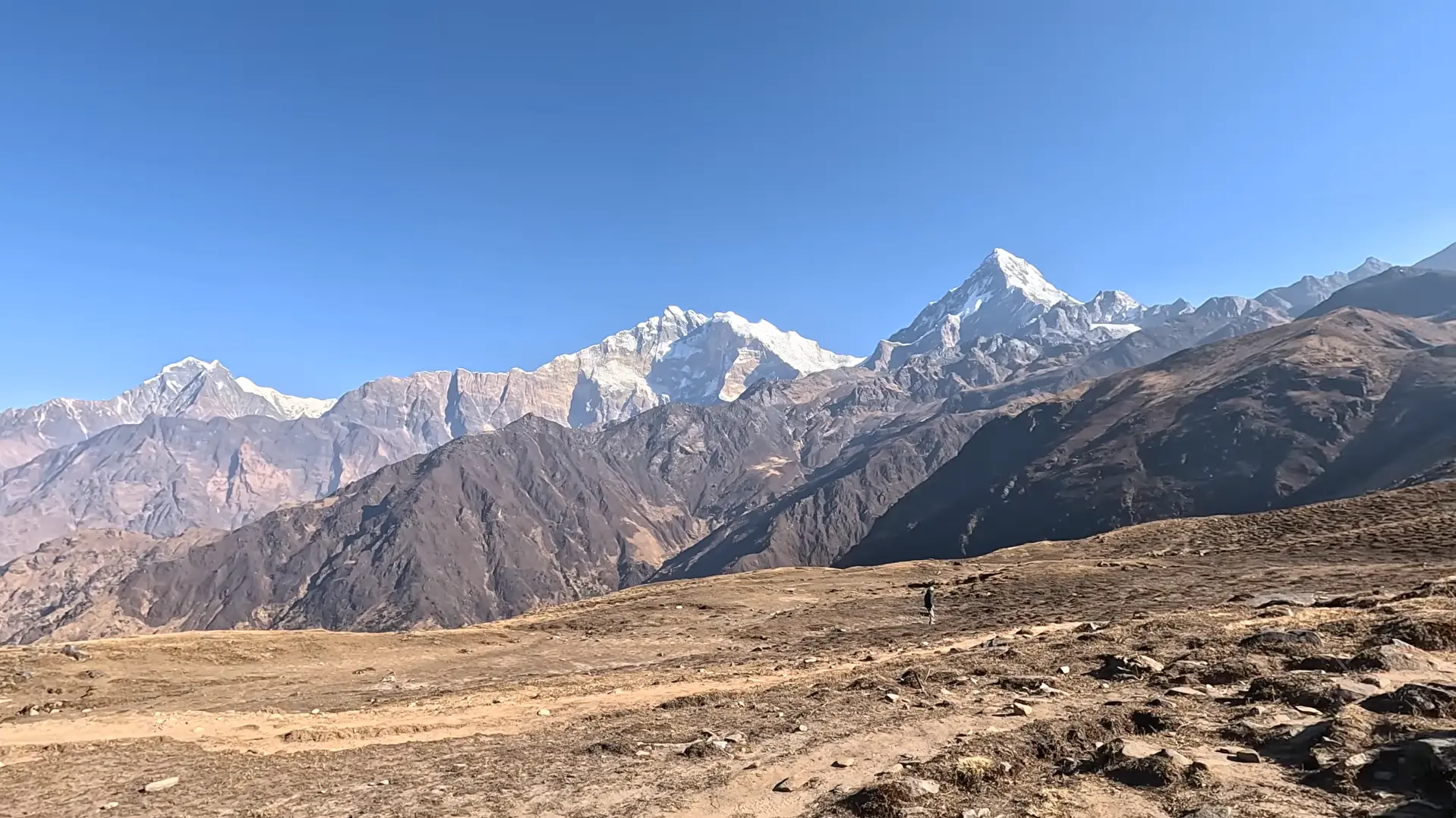 |
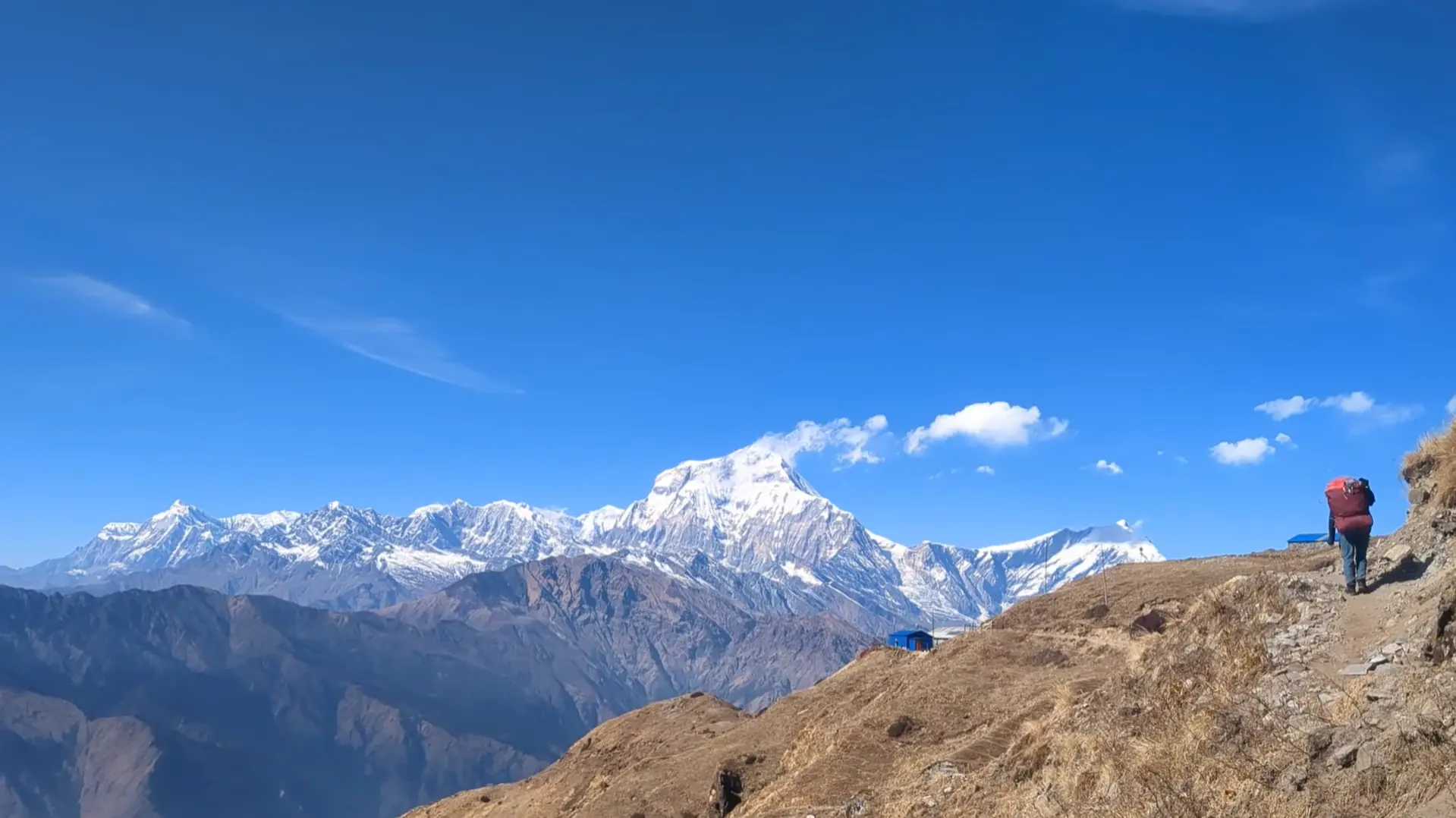
The Khopra Danda Trek climbs to the Khopra Ridge (4,900m) on the southern flank of the Dhaulagiri-Annapurna corridor for one of the finest close-range mountain panoramas available on any non-technical Himalayan trek. The ridge sits between Dhaulagiri I (8,167m) and Annapurna South (7,219m), offering intimate views of both massifs plus a side hike to Khayer Lake — a glacial sacred lake at 4,650m. The route is newly developed, community-managed, and much quieter than the Annapurna Base Camp or Poon Hill trails; it surpasses them for viewpoint quality.
The trek is managed as a community enterprise by the Khopra Danda Community Lodge Trekking program, meaning teahouse profits flow directly to local Magar and Gurung villages rather than to outside operators. The community lodges on this route are genuinely owned, operated, and staffed by local families, making this one of Nepal’s most impactful sustainable tourism initiatives. Your trekking fees directly fund local schools, health posts, and trail maintenance.
From Khopra Danda, the optional day hike to Khayer Lake (4,500m) — a sacred Hindu and Buddhist pilgrimage site — is among the most rewarding in the Annapurna region, with a 360° panorama that rivals Poon Hill but at a greater altitude and with far fewer visitors. The descent via Tadapani and Ghandruk introduces the trek’s cultural highlight: Ghandruk village, one of the most photogenic Gurung communities in Nepal.
Khopra Danda is one of Nepal’s best-kept secrets. While the rest of the trekking world rushes toward Annapurna Base Camp or jostles for space on the Poon Hill sunrise platform, this ridge sits quietly above it all, offering views that are arguably more dramatic and a trail experience that feels genuinely intimate.
The trek follows a community-led route originally pioneered by social innovator Mahabir Pun with the explicit goal of channeling trekking revenue into local villages like Nangi and Tikot. When you stay at a teahouse here, the money helps fund local schools and health clinics. That context changes how the trail feels underfoot.
Over ten days, you will walk from the lakeside city of Pokhara up through terraced farmland, dense rhododendron forest, traditional Gurung and Magar villages, and alpine meadows, before arriving at Khopra Ridge at 3,660 meters. From that vantage point, Annapurna South looms just six kilometers to the east, and the Dhaulagiri Himal dominates the entire western horizon. Very few trails anywhere in the Himalayas place you between two eight-thousand-meter massifs quite like this one.
A highlight most trekkers remember for life is the optional hike to Khayer Lake at 4,660 meters, a sacred alpine lake held holy by both Hindus and Buddhists. The trail ends with a sunrise walk up Poon Hill before descending back to civilization. Ten days, roughly 70 kilometers, and an elevation gain that tests without punishing.
For more context on the region, see our guides to Annapurna Circuit Trek, Mardi Himal Base Camp Trek, and Annapurna Base Camp Short Trek.
At a Glance
| Detail | Information | Notes |
|---|---|---|
| Duration | 10 Days | Including travel days |
| Trek Difficulty | Moderate | Good fitness required |
| Max Altitude | 4,660 m (Khayer Lake) | Optional side hike |
| Base Point | Khopra Danda Ridge (3,660 m) | Main viewpoint |
| Starting Point | Nayapul (2 hrs from Pokhara) | Via jeep or taxi |
| Total Distance | Approx. 65 to 70 km | Full circuit |
| Best Season | March to May / Sept to Nov | Spring and Autumn |
| Daily Walking | 4 to 7 hours per day | Varies by stage |
| Accommodation | Community Teahouses | Twin sharing rooms |
| Meals on Trek | Full board (B + L + D) | Organic local food |
| Permits Required | ACAP + TIMS | Obtainable in Pokhara |
| Group Size | 1 to 15+ persons | Private or group |
Practical Tips for a Better Trek
Before You Go
- Train for the trek with regular cardio exercise for at least two months beforehand; stair climbing is particularly relevant
- Break in your trekking boots at home over several weeks; new boots on day one of a Himalayan trek is a painful mistake
- Visit your doctor for a pre-trek health check and discuss altitude sickness medication (Diamox) if you have any concerns about altitude tolerance
- Purchase comprehensive travel insurance that explicitly covers high-altitude trekking and helicopter evacuation
- Notify your bank that you will be using your card in Nepal to avoid fraud blocks
During the Trek
- Drink at least three to four liters of water daily at altitude; dehydration accelerates altitude sickness
- Walk slowly and steadily; arriving at your destination exhausted serves no one
- Eat your full meals even when altitude suppresses appetite; your body needs the fuel
- Respect the rest day structure; it is not laziness, it is physiology
- Ask your guide questions; their knowledge of the landscape, culture, and communities along the route will significantly enrich your experience
- Turn your phone to airplane mode during the trek to conserve battery; portable chargers are invaluable
- Dispose of all waste responsibly; the teahouses in the Khopra community area take environmental responsibility seriously, and you should match that
Money and Tipping
- Settle the teahouse bills each morning before departing; this is standard practice on this route
- Tip your guide and porter at the end of the trek in Pokhara; USD 10 to 15 per day for a guide, USD 8 to 12 for a porter, is widely considered fair and appropriate
- The tip genuinely matters to your crew; it typically represents a significant portion of their annual income from trekking work.
Best Time to Visit
Timing your Khopra Danda trek correctly makes a significant difference to the quality of what you experience. Nepal’s trekking calendar divides into four rough seasons, and not all of them treat this particular route the same way.
Spring Season: March, April, May
Most trekkers who have done this route in spring describe it as the more beautiful of the two optimal seasons. The rhododendron forests along the lower and mid-altitude sections bloom between late March and mid-April, creating one of the most visually spectacular trekking environments in the Himalayan region. Morning views are generally clear, afternoon cloud builds are common, and temperatures are pleasant at all elevations. Nights at altitude remain cold throughout.
Autumn Season: September, October, November
Autumn is the more popular choice globally, and for good reason. The monsoon scrubs the atmosphere clean, and September through November delivers some of the sharpest mountain visibility of the year. October in particular is close to perfect: stable weather, clear skies, moderate temperatures, and the knowledge that the rhododendrons will bloom again in spring keeps the crowds manageable. November gets colder and the days shorter, but the clarity is excellent.
Monsoon Season: June, July, August
Trekking during the monsoon is possible but genuinely difficult. The trails become slippery and leech-infested, views are frequently obscured by cloud and mist for days at a stretch, and the teahouses on the upper route see very few visitors, meaning some may not be fully operational. Experienced trekkers who are comfortable with the conditions sometimes find the monsoon version of this landscape hauntingly beautiful, but it is not recommended for first-timers.
Winter Season: December, January, February
Winter brings snowfall above 2,500 meters and temperatures that drop well below freezing at Khopra Ridge and the Khayer Lake trail. The route is not technically closed, but the combination of snow-covered trails, limited teahouse availability, and extreme cold makes it a serious undertaking. December can be workable for confident cold-weather trekkers. January and February are best avoided unless you have specific experience with winter high-altitude trekking
|
 |
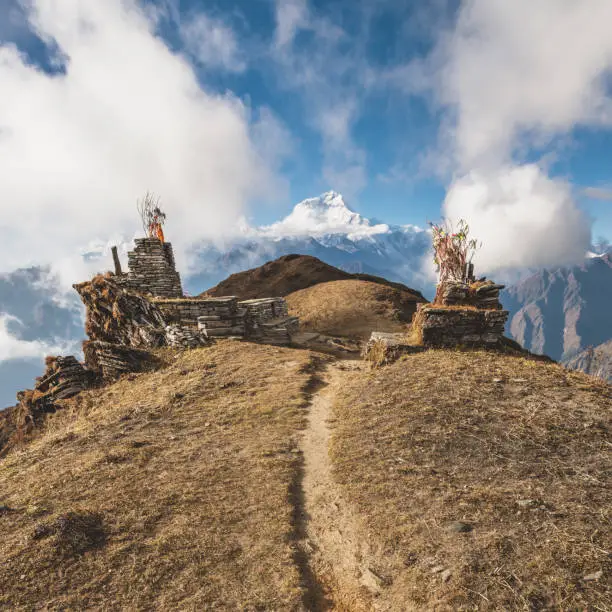
- Khopra Ridge (4,900m) — intimate panorama between Dhaulagiri and Annapurna ranges
- Khayer Lake (4,650m) — sacred glacial lake with close-up views of Annapurna South
- Community-managed teahouses on a newly developed trail with almost no crowds
- Better mountain views than the famous Poon Hill at higher altitude
- Authentic Magar villages rarely visited by tourists on the main Annapurna routes
- Optional extension to Annapurna Base Camp for a longer journey
Itinerary of Khopra Danda Ridge Trek
Day 1: Drive Pokhara to Nayapul — Trek to Tikhedhunga (1,540m)
Drive 1.5 hrs to Nayapul then begin the classic Annapurna approach through Birethanti. Overnight at Tikhedhunga.

Duration
Drive + 3 hrs
Activity
Trekking
Accommodation
Teahouse
Meals
L/D
Max Altitude
1540mDay 2: Tikhedhunga to Ghorepani (2,860m)
Classic Ghorepani climb through Ulleri and rhododendron forest. Ghorepani is the Poon Hill base.
Duration
5-6 hrs
Activity
Trekking
Accommodation
Teahouse
Meals
B/L/D
Max Altitude
2860mDay 3: Ghorepani to Poon Hill (3,210m) Sunrise — Trek to Swanta (2,200m)
Pre-dawn Poon Hill sunrise then descend off the main Annapurna trail to the quiet village of Swanta — start of the Khopra Danda community route.
Duration
5-6 hrs
Activity
Trekking
Accommodation
Community Lodge
Meals
B/L/D
Max Altitude
2200mDay 4: Swanta to Bayeli (3,480m)
Climb through Magar villages and rhododendron forest to Bayeli community lodge — first views of the Dhaulagiri range to the west.
Duration
5-6 hrs
Activity
Trekking
Accommodation
Community Lodge
Meals
B/L/D
Max Altitude
3480mDay 5: Bayeli to Khopra Danda (4,900m)
Steep final climb to the Khopra ridge. At the top: the full Dhaulagiri and Annapurna massifs spread from east to west in extraordinary proximity. One of Nepal’s finest viewpoints.
Duration
5-6 hrs
Activity
Trekking
Accommodation
Community Lodge
Meals
B/L/D
Max Altitude
4900mDay 6: Khopra Danda — Day Hike to Khayer Lake (4,650m)
Side hike to the sacred Khayer Lake beneath Annapurna South. The lake is visited by Hindu pilgrims and sits in a glacial bowl beneath a permanent snow couloir. Return to Khopra Lodge.
Duration
4-5 hrs
Activity
Trekking
Accommodation
Community Lodge
Meals
B/L/D
Max Altitude
4650mDay 7: Khopra Danda to Dobang (2,520m)
Descend from the ridge through Magar settlements on the south slope toward the Kali Gandaki.
Duration
5-6 hrs
Activity
Trekking
Accommodation
Community Lodge
Meals
B/L/D
Max Altitude
2520mDay 8: Dobang to Tatopani (1,190m)
Continue down to Tatopani on the Kali Gandaki — famous for its hot springs. Evening soak in the thermal pools.
Duration
5-6 hrs
Activity
Trekking
Accommodation
Teahouse
Meals
B/L/D
Max Altitude
1190mDay 9: Tatopani to Beni — Drive to Pokhara
Trek or jeep to Beni then drive 3 hrs to Pokhara.
Duration
3 hrs + Drive
Activity
Trekking
Accommodation
Hotel
Meals
B
Max Altitude
820mDay 10: Final Departure — Fly or Drive Pokhara to Kathmandu
Return to Kathmandu for international departure.
Duration
Departure
Activity
Travel
Accommodation
Hotel
Meals
B
Max Altitude
1400mIncludes/Excludes
What's included?
- 9 nights accommodation (1 hotel Pokhara, 8 community teahouse)
- All ground transport Pokhara–Nayapul–Pokhara
- All meals on trek
- Licensed English-speaking guide and porter
- ACAP permit and TIMS card
- First-aid kit
What's not included?
- International airfare and Nepal visa fees
- Travel and medical insurance (recommended)
- Personal gear and clothing
- Tips for guide and porter
- Beverages and personal snacks
Khopra Danda Ridge Trek Altitude Chart
Trip Information - Good to Know
Permits and Documents
Khopra Danda Trek falls within the Annapurna Conservation Area, which means two permits are legally required before you start trekking. Both are straightforward to obtain and can be sorted in Pokhara on the day before your trek begins.
Annapurna Conservation Area Permit (ACAP)
This permit covers entry into the Annapurna Conservation Area and funds conservation and community development programs throughout the region. It is issued by the Nepal Tourism Board and must be carried throughout the trek. The permit includes a photograph, so bring passport-sized photos or plan for digital processing.
- Cost: NPR 3,000 per person (SAARC nations NPR 1,000)
- Obtain from Nepal Tourism Board offices in Kathmandu or Pokhara
- Also available at the Birethanti check post at the start of the trek (confirm this is still operational before relying on it)
- Valid for one entry into the conservation area
Trekkers Information Management System (TIMS) Card
The TIMS card registers your presence along the trekking route and is part of Nepal’s effort to track trekkers’ movements for safety. It is issued alongside the ACAP permit at the same offices.
- Cost: NPR 2,000 per person (individual trekkers), NPR 1,000 (organized group)
- Requires two passport-sized photos and a copy of your passport
- Keep this card accessible, as it is checked at multiple points along the route
What to Carry
- Your original passport (checks happen regularly on this route)
- Both permits are in a waterproof document holder
- Two or more passport-sized photographs
- Travel insurance documents (for emergency evacuation coverage)
What to Pack
Packing for Khopra Danda requires honesty about two things: the range of weather you will encounter (from 20 degrees Celsius in Pokhara to well below zero at Khopra Ridge on a cold night) and the fact that whatever you pack, you or your porter will carry every single day. Less is almost always more.
Clothing
- Moisture-wicking base layer set (top and bottom) for trekking and sleeping
- Mid-layer fleece or light down jacket for evenings above 2,500 meters
- Waterproof and windproof shell jacket; Gore-Tex or equivalent
- Waterproof shell trousers for rain or wind on exposed ridges
- Insulated down jacket for ridge nights and Khayer Lake hike
- Two or three pairs of trekking trousers or convertible pants
- Four to five pairs of trekking socks; merino wool holds up best
- Thermal underwear for high-altitude sleeping
- Warm hat and sun hat; both will be used
- Light gloves for wind and cold, heavier gloves for Khayer Lake day
- Buff or neck gaiter for dusty lower sections and cold upper sections
Footwear
- Broken-in waterproof trekking boots with good ankle support; this is non-negotiable
- Camp sandals or lightweight shoes for teahouse evenings
- Gaiters for snow or mud on upper sections (optional but useful in spring and autumn)
Gear and Equipment
- Trekking poles are essential for the steep descents from Khopra Ridge and Poon Hill
- Sleeping bag rated to minus 10 degrees Celsius; teahouses provide blankets, but not always enough
- Daypack (20 to 25 liters) for your daily essentials if using a porter
- Headlamp with fresh batteries; the Poon Hill predawn walk requires it
- Water purification tablets or a filter; do not rely solely on bottled water
- Sunscreen SPF 50+ and lip balm; UV intensity at altitude is severe
- Sunglasses with UV protection
- First aid kit including blister treatment, pain relief, and altitude sickness medication
- Portable battery pack for recharging devices between villages
- A camera or smartphone with sufficient storage
Documents and Money
- Passport, permits, and travel insurance in a waterproof sleeve
- Sufficient Nepali Rupees in cash; there are no ATMs beyond Pokhara on this route
- Budget approximately NPR 500 to 1,500 per day for extras: hot showers, charging fees, bottled drinks
Frequently Asked Questions
How does Khopra Danda compare to Poon Hill?
Khopra Danda is significantly better as a viewpoint — at 4,900m vs 3,210m (Poon Hill), it sits level with the mid-section of Dhaulagiri and Annapurna South, giving a far more dramatic and intimate perspective. It’s also far less crowded.
What is Khayer Lake?
Khayer Lake (4,650m) is a glacial sacred lake beneath Annapurna South. Hindu pilgrims visit during the Janai Purnima festival. The setting — turquoise water beneath permanent ice — is spectacular.
Are the community lodges comfortable?
Community lodges are basic by international standards but clean and warm with mattresses and blankets. They are significantly better than camping and provide income directly to local Magar families.
Can I combine Khopra Danda with Annapurna Base Camp?
Yes — continuing from Khopra Danda north to Chhomrong and then ABC is a logical extension. Green Horizon Tours can arrange the combined 16–18 day itinerary.
Is this trek suitable for families?
Khopra Danda is suitable for families with children aged 12+ who have reasonable fitness. The key challenge is the altitude on day 5 (4,900m) which requires careful acclimatisation.
Why visit Tatopani hot springs?
Tatopani (‘hot water’ in Nepali) has natural thermal pools beside the Kali Gandaki river. After 5–6 days of hard trekking, a soak in the hot springs is one of the most enjoyable experiences on the Annapurna circuit.
Trip Reviews
 Write a Review
- Best Price Guarantee
- Secure & easy booking
- Easy trip date changes
- Discount for groups


How to book a trip?

make free inquiry

confirm the trip
