


Lobuche Peak Climbing: Complete Guide, Cost, Difficulty, Itinerary & Preparation(2026)
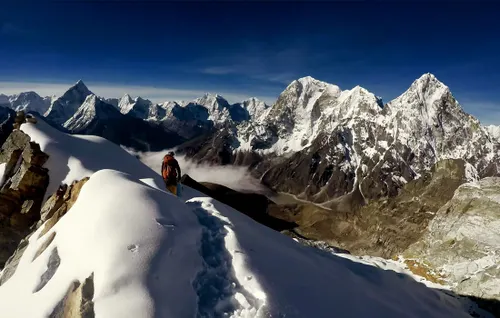
Lobuche Peak Climbing is one of the most rewarding high-altitude adventures in Nepal, combining technical mountaineering, Himalayan trekking, and breathtaking views of Everest. There’s a moment somewhere above 5,500 meters where your brain stops arguing with your legs and everything just gets quiet. You’re not thinking about work or your phone or whatever was stressing you out back home. You’re just walking. Breathing. Putting one crampon in front of the other on a frozen slope at 3 am while Everest sits in the dark above you like it’s been waiting.
That’s Lobuche East. And no, I’m not overselling it.
At 6,119 meters, Lobuche East is one of the most satisfying climbs you can do in Nepal without needing a lifetime of mountaineering experience. It’s technical enough to feel real — fixed ropes, crampons, an ice axe, a proper summit push in the cold. But it’s not so far beyond reach that a fit, determined, well-prepared person can’t stand on top of it. Thousands of people do every year.
Most of them are regular people who trained hard and took it seriously.
This guide is everything I wish someone had handed me before I started planning. Cost, permits, how hard it actually is, what the itinerary looks like, and how to get your body ready without losing your mind in the process.
Quick Facts
| Detail | Info |
|---|---|
| Location | Khumbu Region, Sagarmatha National Park, Nepal |
| Summit Height | 6,119 m / 20,075 ft (Lobuche East) |
| Trip Duration | 16 to 18 days from Kathmandu |
| Difficulty | Moderate to Challenging |
| Best Seasons | March to May and September to November |
| Permits Required | NMA Permit, Sagarmatha National Park, Khumbu Municipality |
What Is Lobuche Peak?
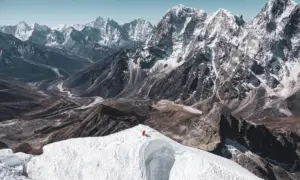
Lobuche is technically two peaks.
There’s Lobuche West at 6,145 meters — rarely climbed, genuinely technical, not what most people mean when they say “Lobuche.”
And then there’s Lobuche East at 6,119 meters, which is on Nepal’s official trekking peaks list and the one this entire guide is about.
It’s located inside Sagarmatha National Park, about 10 kilometers from Everest Base Camp. Close enough that you’ll pass within sight of EBC on the standard itinerary. Some people do both. Honestly, if you’ve already come that far, you probably should.
The reason people choose Lobuche over other trekking peaks in Nepal is the combination of things it gives you. Real mountaineering technique — not just walking at altitude but actual climbing with gear. A route through the most iconic trekking valley in the world. And a summit view that puts Everest, Lhotse, Nuptse, Ama Dablam, and the full sweep of the Khumbu Glacier directly in front of you.
On a clear morning in October, that view does something to people. It’s hard to describe without sounding dramatic so I’ll just say: bring more memory cards than you think you need.
Okay, But How Hard Is It Really?
This is the question everyone asks, and nobody answers honestly enough.
Here’s the truth.
The trekking portion is genuinely demanding. You’re walking six to eight hours a day, often uphill, at elevations where your body is quietly running on reduced oxygen the entire time. Things feel harder than they should. A gentle slope at 4,800 meters feels like a hill you’d normally jog up. That’s not a fitness failure, that’s just altitude.
The climbing portion above base camp is where it gets technical. Steep fixed rope sections on rock and mixed terrain, an exposed ridge, and a final snow push to the summit before sunrise. You need to know how to use crampons and an ice axe — your guide will run a session at base camp, but it helps enormously if you’ve touched that gear at least once before arriving.
Where people struggle isn’t always the technical parts. It’s the summit day cumulative exhaustion — two weeks of altitude living, cold nights in teahouses, big days on your legs — and then being asked to wake up at 2 am and climb in the dark.
Your body is tired before you even start.
The people who make the summit are usually the ones who respect the acclimatization schedule and show up physically prepared.
How Lobuche Compares to Other Trekking Peaks
| Peak | Height | Difficulty | What You Actually Need |
|---|---|---|---|
| Island Peak | 6,189 m | Moderate | Basic crampon use |
| Lobuche East | 6,119 m | Moderate to Hard | Crampons, ice axe, rope work |
| Mera Peak | 6,476 m | Moderate | Mostly glacier terrain |
| Pisang Peak | 6,091 m | Hard | More exposed and technical |
Never done a trekking peak before?
Island Peak or Mera first.
Done one of those and survived?
Lobuche is the next logical step.
When to Go
Spring (March to May)
Spring is the main season. Stable weather, longer summit windows, warmer than you’d expect on the approach. The NMA permit costs USD 300 in spring, which is more than in other seasons. There’s a reason for that. Conditions in April and early May are often exceptional.
Autumn (September to November)
Autumn is what a lot of experienced Himalayan trekkers actually prefer. The monsoon clears everything out — air is clean, skies are sharp, the views are ridiculous. Trails are slightly quieter than in the spring. NMA permit drops to USD 175. If your schedule allows it, October is a special time to be in the Khumbu.
Winter
Winter is cold in a way that’s hard to fully communicate until you’ve experienced it. High camp temperatures can hit minus 25 or lower. Some teams do it. Most don’t. If you’re even asking about winter climbing, you probably already know whether you’re prepared for it.
Monsoon (June to August)
Just don’t.
Serious snowfall, visibility that makes summit attempts essentially impossible, and conditions on the upper mountain that reputable operators won’t take clients into.
This isn’t being overly cautious; it’s just what the mountain is like in those months.
The Route
You fly into Lukla from Kathmandu — 35 minutes, mountain airstrip, dramatic landing. Everyone talks about the Lukla airport. It’s fine. You’ll probably still grip the armrest. From Lukla, the route follows the Everest Base Camp trail all the way through the valley.
Phakding
Phakding on the first day.
Namche Bazaar
Then the long climb up to Namche Bazaar, where you’ll spend two nights acclimatizing. Namche is a proper mountain town — good food, gear shops, a bakery that becomes surprisingly important after a few days on the trail.
Tengboche
From Namche, you continue through Tengboche, past the monastery that every Nepal trekking photo seems to include.
Dingboche
Then to Dingboche, where another acclimatization day happens. These rest days feel boring when you’re doing them, and essential when you look back.
Lobuche Village
Lobuche village sits at around 4,940 meters and is where the character of the trip starts shifting. The landscape gets starker. Teahouses get simpler. Everest appears in the distance.
Base Camp and High Camp
From the village, you move to Base Camp, do crampon training, then push up to High Camp for one night before the summit attempt.
The summit push starts before 3 am. Cold, dark, headlamp on, ice axe in hand. The fixed ropes guide you through the technical sections. By the time you reach the summit ridge, the sun is usually beginning to touch Everest. That moment is the whole point.
Itinerary — 16 to 18 Days
Day 1
Arrive Kathmandu, team briefing, gear check
Day 2
Fly to Lukla (2,840 m), trek to Phakding (2,610 m)
Day 3
Trek to Namche Bazaar (3,440 m)
Days 4 and 5
Acclimatization in Namche, short hikes up, sleep down
Day 6
Trek to Tengboche (3,860 m), visit the monastery
Day 7
Trek to Dingboche (4,360 m)
Day 8
Rest day in Dingboche. Read a book. Your lungs are busy.
Day 9
Trek to Lobuche village (4,940 m)
Day 10
Excursion to Everest Base Camp. You’re already there. Go.
Day 11
Kala Patthar at sunrise (5,550 m). The best Everest view you can get on foot.
Day 12
Move to Lobuche Base Camp, crampon and rope training
Day 13
Climb to High Camp (5,600 m), rest in the afternoon
Day 14
Summit day. Up at 2 am, summit Lobuche East (6,119 m), descend
Days 15 to 17
Return trek to Lukla
Day 18
Fly to Kathmandu. Hot shower. Proper meal. Tell everyone.
What Does Lobuche Peak Climbing Cost?
Packages from licensed Nepal operators run roughly USD 2,000 to USD 3,500 per person for a group expedition.
Solo expeditions cost more — usually USD 2,500 to USD 4,000, depending on the company and what’s actually included.
That price gap between operators is not random.
A USD 1,900 package that doesn’t cover domestic flights, high camp accommodation, or gear rental will cost you more in the end than a USD 2,800 package that covers everything.
Always read the inclusions before you compare numbers.
Rough Cost Breakdown
| What | Approx. Cost |
|---|---|
| Group expedition package | USD 2,000 to USD 3,500 |
| NMA climbing permit (spring) | USD 300 |
| NMA climbing permit (autumn) | USD 175 |
| Sagarmatha National Park permit | USD 22 to 30 |
| Khumbu Municipality permit | USD 20 to 22 |
| Kathmandu to Lukla flights (return) | USD 450 |
| Gear rental | USD 100 to 300 |
| Guide and porter tips | USD 100 to 200 |
A solid package covers airport transfers, teahouse accommodation the whole way, all meals, a certified climbing guide, porter support, all three permits, and a tented camp at base camp and high camp.
If the listing you’re looking at doesn’t mention permits or high camp, ask specifically.
Permits — What You Need and What It Costs
Three permits. All mandatory. No exceptions.
Nepal Mountaineering Association (NMA) Climbing Permit
This is the main one. Your agency applies on your behalf; you can’t do it alone. USD 300 in spring, USD 175 in autumn and winter.
Sagarmatha National Park Entry Permit
Everyone entering the Khumbu region needs this. Around USD 22 to 30 for foreign nationals.
Khumbu Pasang Lhamu Municipality Permit
Local government requirement. Roughly USD 20 to 22 per person. All three should be included in your package cost. Get that confirmed in writing.
How to Actually Prepare Your Body
Start four months out if you can. Three months minimum. Running is the foundation. Not casual jogging — real running, with effort, four or five days a week. Build up to sessions over an hour. You are preparing for consecutive days of six to eight hours of uphill walking at altitude, and the only way your cardiovascular system gets ready for that is by being stressed repeatedly before the trip.
Strength Training
Legs and core are next. Weighted squats, lunges, step-ups with a loaded pack. Pay special attention to your quads. The descent from high camp on tired legs is steep and technical, and that’s where injuries happen to people who have only trained on flat ground.
Pack Training
Once a week, go out with a 10 to 15 kilogram pack for a long hike. Three hours minimum. This isn’t about suffering — it’s about teaching your body what the approach days feel like so they don’t come as a shock at 4,500 meters.
Diamox
Talk to your doctor about Diamox before you leave. Most climbers in the Khumbu use it as a preventive measure, and it genuinely helps.
Altitude Sickness — Take This Part Seriously
Mild symptoms above 3,500 meters are normal. Headache, bad sleep, reduced appetite, feeling a bit flat. Your body is adjusting. That’s expected.
Warning Signs
What’s not normal:
- A headache that keeps worsening even after rest
- Confusion
- Loss of coordination
- Breathlessness while sitting still
- Any chest symptoms
These mean descend now, not in the morning, not after one more sleep — now. The acclimatization days in Namche and Dingboche are not optional rest days that confident people skip. They’re the mechanism that keeps you alive and functional on summit day. Trekkers who rush the schedule because they feel fine are statistically the ones who end up turning back early or getting evacuated. The mountain doesn’t reward impatience. Your Sherpa guide has seen altitude illness more times than you want to think about. If they say you’re not going up, you’re not going up.
Lobuche vs Island Peak vs Mera Peak
| Feature | Lobuche East | Island Peak | Mera Peak |
|---|---|---|---|
| Height | 6,119 m | 6,189 m | 6,476 m |
| Difficulty | Moderate to Hard | Moderate | Moderate |
| Technical Skills | Yes — ropes and ice axe | Basic crampons only | Minimal |
| Best For | Those ready for a real climb | First-time peak baggers | High altitude without technicality |
There’s no wrong choice here — just the right mountain for where you are right now.
Frequently Asked Questions (FAQ)
Is Lobuche harder than Island Peak?
Yes, noticeably. The fixed rope sections and summit ridge on Lobuche are a step up from anything Island Peak asks of you.
How many days does the full trip take?
16 to 18 days from Kathmandu. Don’t try to compress it.
What’s the summit success rate?
On well-organised expeditions with proper acclimatisation, around 70 to 80 percent. Weather and fitness are the two variables that move that number up or down.
Can someone with no climbing experience do this?
A strong trekker with serious high-altitude experience and months of preparation — possibly. Someone who’s never been above 4,000 meters — not yet. Do EBC or Island Peak first.
What permits do I need?
NMA climbing permit, Sagarmatha National Park permit, and Khumbu Municipality permit. All three are mandatory.
Final Thought
Lobuche East will ask more of you than most things in your life ask of you. The preparation takes months. The days are long and cold and sometimes miserable. The summit push in the dark is genuinely hard. And then you’re standing on top of it. Everest right there. The sun is coming up. Everything quiet. Worth it doesn’t cover it.


How to book a trip?

make free inquiry

confirm the trip
