


Mad Honey Hunting in Nepal: Complete Guide Near Pokhara(2026)
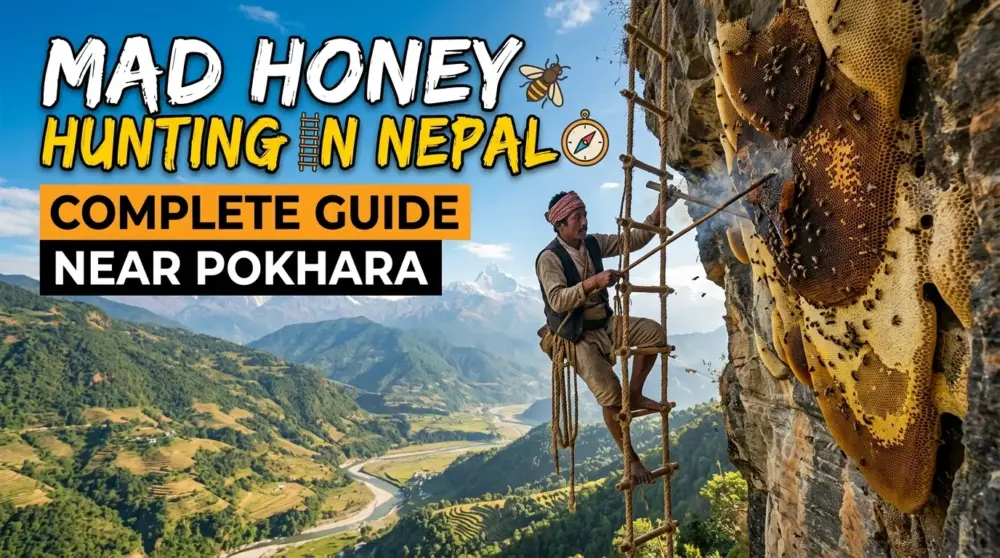
Mad honey is a wild, reddish honey pulled off cliffs in Nepal’s mid hills, and yes, it really does give you a bit of a buzz. That’s half the reason people come looking for it. The other half, honestly, the bigger half for most of our guests, is the hunt itself. You sort of have to see it to believe it. Gurung climbers go up rope ladders the same way their grandfathers did, no harnesses, no nets, just years of knowing exactly where to put their feet next.
We’ve taken guests out to watch this more times than I can count now, and people are still quiet for a good minute afterward, just taking it in. The hunting happens in the Lamjung hills, a day or two’s trek out from Pokhara. Here’s what’s actually worth knowing before you book.
What Is Mad Honey?
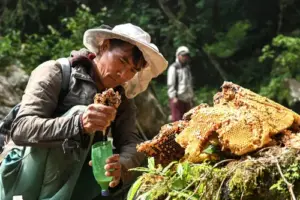
The “mad” bit comes from grayanotoxin, a compound that turns up in rhododendron nectar around Nepal’s mid hills. A small spoonful and you’ll feel a mild, warm sort of buzz, nothing dramatic. Overdo it, though, and you’re looking at nausea, dizziness, and your blood pressure dropping in a way that’s no fun at all. So this isn’t honey you drizzle on toast every morning.
You’ll spot it by colour before anything else. Darker, redder, almost like weak tea next to the pale stuff you buy at the supermarket. Hunters bring it down twice a year, spring and autumn, whenever the rhododendrons are flowering, and the bees are out in force.
Why Nepal Is Famous for Mad Honey Hunting
There are really only two ingredients here. Cliffs steep enough that even a determined bear gives up halfway, and a culture that figured out a workaround anyway, generation after generation, none of it written down anywhere.
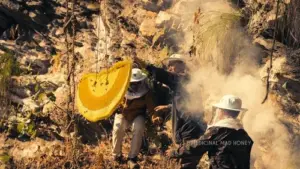
It’s about the last honey hunting tradition left on earth that’s still done the old way. Rope, bamboo, smoke. No bee suits, no machinery, nothing borrowed from a hardware store.
Where Does Mad Honey Hunting Take Place Near Pokhara?
Pokhara is where the trip starts, not where any of it actually happens, and that’s a distinction worth getting straight before you arrive. The real cliffs are in Lamjung district, a few hours by road and then a day or so on foot, in villages where particular families hold the rights to particular cliffs, sometimes going back generations.
Agencies advertise it as “near Pokhara” because that’s the airport you’ll land at and the town where you’ll buy your last bottle of water before heading up. Just don’t expect to see a hunt from a Pokhara rooftop café.
The Gurung Honey Hunters
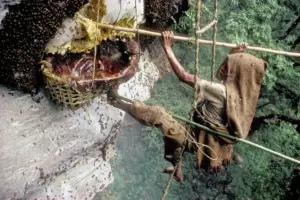
None of this is staged for visitors, which is part of what makes it worth watching. For Gurung families, it’s tied to who they are, passed down from father to son, with specific cliffs belonging to specific households by a custom that’s older than anyone can quite date. Before a climb, there’s usually a small ritual, an offering, a few quiet words, the kind of moment that tells you everyone there knows exactly what’s at stake.
Spend one afternoon watching this, and you’ll come away understanding more about Gurung life than a week of reading would give you. One of our regular guides, who’s been arranging these trips for years now, still calls it the most nerve-wracking thing he watches every season, even though he’s seen it dozens of times.
Meet the Himalayan Giant Honey Bee
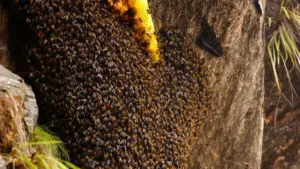
Apis laboriosa, the Himalayan giant honey bee, is the largest honey bee species on the planet, and frankly, the whole tradition exists because of it. These bees build huge, crescent-shaped combs out in the open on cliff overhangs, sometimes 60 feet up or more, exactly where nothing with paws can reach.
They don’t take kindly to being disturbed either. A riled colony stings as a group, which is why hunters smoke the hive heavily before getting anywhere close.
How Mad Honey Hunting Works
Preparing equipment. Hunters weave their own bamboo ladders and ropes, check every knot twice, and put together bundles of dried leaves for smoking the hive.
Climbing the cliffs. One or two climbers go up while the rest of the team braces the ladder from below, calling instructions back and forth.
Smoking the bees. Thick smoke is aimed at the comb to settle the bees before anyone gets close enough to touch it.
Harvesting the honey. A long bamboo pole, fitted with a blade or basket, cuts sections of comb free and lowers them down.
Bringing it down. The comb goes back to the village, where it’s hand-strung and stored.
Can Tourists Join Mad Honey Hunting?
You can come along, just not in the way people sometimes imagine. You’re not climbing the cliff yourself. You’ll watch from solid ground while local hunters do the actual work, then spend the rest of the day in the village, talking with families, learning how the whole thing fits together, tasting the honey once it’s down.
Most trips pair this with a short trek, a homestay, and plenty of time for photos, both of the hunt and the hills around it.
Mad Honey Hunting Trek Itinerary
Most trips run three to five days, depending on which village you’re headed to and how the trek connects up.
| Day |
Activity |
| Day 1 | Drive or fly to Pokhara, transfer to Lamjung, short trek to the village |
| Day 2 | Honey hunting day, watch the harvest with local guides |
| Day 3 | Village exploration, Gurung culture, optional short hikes |
| Day 4 | Trek and drive back to Pokhara |
The schedule shifts depending on when a village’s harvest lines up with your dates, so it’s worth confirming timing before you lock anything in.
Got dates in mind? Message us on WhatsApp, and we’ll tell you if they work →
Best Time for Mad Honey Hunting in Nepal
| Season | Months | What to Expect |
| Spring | April to May | Rhododendrons in bloom, peak hunting season, clearer mountain views |
| Autumn | October to November | Second harvest window, stable weather, good visibility |
Outside those two windows, hunts mostly don’t happen at all. The bees and the bloom set the schedule, not a tour brochure, so there’s no point trying to book one for, say, August.
How Difficult Is the Trek?
You’re on village trails and short hill paths here, not climbing anything yourself, so call it moderate rather than technical. Figure three to five hours of walking on the busier days, dirt and stone underfoot, some uphill stretches. Reasonable fitness helps. Prior trekking experience really doesn’t matter much.
Is Mad Honey Hunting Safe?
For visitors, yes, as long as the trip is run by someone who keeps the group a sensible distance from both the cliff and the bees. The actual risk here belongs to the hunters on the ropes, not to anyone watching from the ground.
Travel insurance that covers trekking is still worth having, just as on any hill trek in Nepal. And if you’ve got blood pressure issues, do mention it to your guide before tasting the honey. We’ve had a guest or two get a little woozy after a slightly too generous spoonful, nothing serious, but better to say something first.
Cost of a Mad Honey Hunting Tour
Costs move around depending on group size, season, and how much trekking gets folded into the trip. Roughly:
| Package | Duration | Typically Includes |
| Short trip | 3 days | Transport from Pokhara, guide, one homestay night, hunting day |
| Standard trip | 4 to 5 days | Transport, guide, homestay or guesthouse, extra village days |
Ask for a proper, line-by-line quote rather than trusting a number you saw floating around online. Prices shift with the season and group size more than people expect.
What to Pack
- Sturdy trekking shoes
- Light rain jacket
- Camera with a zoom lens
- Reusable water bottle
- Personal medication
- Power bank
- Sun protection
- Small cash for the village
Wildlife and Nature Around the Honey Hunting Area
It’s not just bees out here. Terraced farmland, patches of forest, mountain views on a clear day, small Gurung villages where life carries on much as it always has. Quieter and more rural than the busier trekking trails most visitors stick to.
Responsible Tourism
A few things worth keeping in mind. Don’t wander near the cliff or hive unless your guide says it’s fine. Don’t pressure hunters into climbing outside the natural season just for a photo. Buy your honey and souvenirs in the village itself when you can, so the money actually stays there. And if an operator tells you a hunt is available “any time of year,” it’s worth asking whether that’s a real harvest or something staged for the camera.
Why Choose a Guided Mad Honey Tour Near Pokhara?
A local guide handles the permits, the transport, and the relationship with the village, none of which is easy to sort out on your own from abroad. They’ll also know the difference between a genuine harvest and one put on for tourists, which matters if you’d rather see the real thing than a reenactment.
Frequently Asked Questions
What is mad honey?
Mad honey is a wild, reddish honey containing grayanotoxin from rhododendron nectar, known for a mild buzz in small doses and harvested in Nepal’s mid hills each spring and autumn.
Why is it called mad honey?
The name comes from its effects, anywhere from a mild buzz to dizziness or nausea if you eat too much.
Where is mad honey hunting in Nepal?
The most accessible sites for visitors sit in Lamjung district, reached by a short trek out from Pokhara.
Is mad honey legal?
Yes. It’s legal to harvest, sell, and eat in Nepal, though it should only ever be tasted in small amounts.
Can tourists buy mad honey?
Yes, you’ll find it sold in villages and around Pokhara. Buying it directly from the hunting village puts the money where it actually helps.
Is mad honey dangerous?
In large doses, it can bring on nausea, dizziness, and a drop in blood pressure. Stick to a small taste, especially if you’ve got heart or blood pressure concerns.
How much does a Mad Honey tour cost?
It depends on group size and trip length. Ask your operator for a proper, itemised quote rather than going off an advertised flat number.
How many days do you need?
Most trips run three to five days, counting travel from Pokhara, the hunting day, and time in the village.
Can beginners join?
Yes. The trek is moderate, not technical, and no climbing experience is needed since you’re watching rather than climbing.
What is the best season?
Spring (April to May) and autumn (October to November), both tied to the rhododendron bloom and peak bee activity.
Quick Facts
| Information | Details |
| Location | Lamjung region, accessed from Pokhara |
| Duration | 3 to 5 days |
| Difficulty | Easy to moderate |
| Best season | Spring and autumn |
| Starting point | Pokhara |
| Accommodation | Homestay or guesthouse |
| Guide required | Yes |
Why This Experience Is Unique
Not many places left on earth let you watch a tradition this old, carried out by the same families, on the same cliffs, with tools they made with their own hands. Part adventure, part cultural exchange, and honestly, a pretty humbling reminder of just how much skill it takes to get food down from a place most of us wouldn’t go near.
Final Thoughts
Mad honey hunting near Pokhara isn’t a show staged for cameras. It’s a real tradition that happens to let a few visitors in during its natural season, and honestly, that’s what makes it worth the trip out from Pokhara. Pick the right operator, keep a respectful distance, and let the village set the pace rather than the other way round.
We’ve been running trips into these hills since 1989, long enough to know most of the families who still climb. Get in touch, and we’ll put together an honest itinerary built around whatever season you’re traveling in, not a generic one pulled off a template.


How to book a trip?

make free inquiry

confirm the trip
