


Mani Stones in Nepal: Meaning, History & Spiritual Significance (Guide 2026)
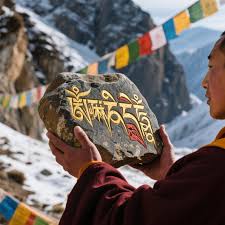
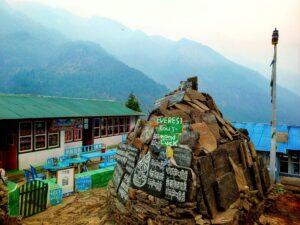
When you travel through the Himalayas of Nepal and Tibet, you are sure to encounter flat stones carved with divine inscriptions. These prayer walls are called “Mani Stone”, and they hold deep spiritual and cultural importance in Himalayan Buddhist traditions. If you are trekking to Annapurna Base Camp or Everest Base Camp, you will frequently see mani stone walls along the trail.
Here, we’ll explore the meaning of Mani Stones, their history, symbolism, and why they are important.
What Do “Mani Stones” Actually Mean?
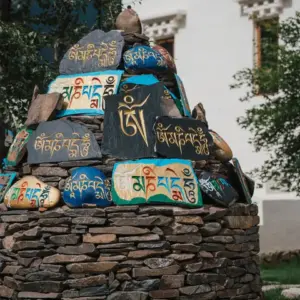
The word “Mani” comes from the sacred Buddhist mantra, “Om Mani Padme Hum”.
This mantra is associated with the Bodhisattva of Compassion in Tibetan Buddhism. “Om Mani Padme Hum” means:
-
Om – Universal sound
-
Mani – Jewel
-
Padme – Lotus
-
Hum – Unity of wisdom and compassion
So, in short, it means “Hail to the Jewel in the Lotus”, and this writing is the form of prayer and meditation. Mani Stone is a stone carved with this powerful mantra that shows the act of devotion.
History of Mani Stones
Mani Stones are found in Nepal, Tibet, Bhutan, India, etc, and these stones are deeply connected to Tibetan Buddhism. They began appearing around the 15th century and spread widely over time as Buddhist teachings spread through the Himalayan regions.
This mantra is craved as:
-
Acts of devotion
-
Memorials for loved ones
-
Spiritual offerings
-
Way for good karma
Where are Mani Stones Usually Placed?
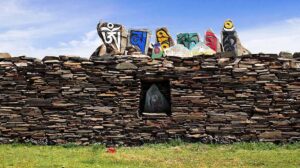
Mani Stones are arranged in long walls called Mani walls along village pathways, mountain trekking routes, monasteries, and stupas. In Kathmandu, near Boudhanath Stupa and Swayambhunath, the Mani Stone can be found and seen, which people show a sign of respect and spiritual practice by walking clockwise.
Spiritual Significance of Mani Stones
1. Compassion
When devotees carve or pass by Mani Stones, they are reminded to act with kindness, show empathy, and reduce harm in thoughts and actions. In Buddhist belief, compassion is also the wish to relieve the suffering of all living beings. Therefore, it is the heart of Mani Stones, and guides human behaviour. Mani Stones becomes a teacher of moral and spiritual values.
2. Protection
The Mani Stones are usually placed at village entrances, crossroads, mountain passes, or near monasteries and stupas. It is because Mani Stones are believed to act as spiritual protectors that protect us from Negative forces, misfortune, illness, etc. These are seen as the sources of spiritual protection, believing that the carved mantra purifies the surroundings and carries blessings into the world.
3. Spiritual Merit
In Buddhism, the act of carving a Mani Stone is considered a highly meritorious act because it spreads sacred teachings, spiritual peace, and honours compassion. Buddhism believes actions create karma; the person who carves Mani Stone is believed to have favourable rebirth, spiritual growth, removal of obstacles, etc.
4. Mindfulness
Because of the frequently placed Mani Stone, it acts as a daily gentle reminder to people or devotees to pause, reflect, and reconnect with spiritual peace and compassionate intention.
Mani Stone, in a sense act as the tool for mindful awareness that supports emotional balance and inner peace.
Materials and Artistic Style of Mani Stones
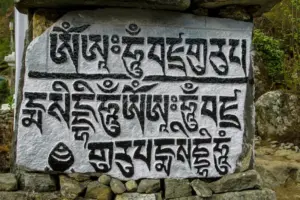
Mani Stones are made from: Slate, Flat stone slabs, and River stones.
These are carefully crafted from natural materials found in Himalayan landscapes. These stones are carved and painted in vibrant spiritual colours, such as white, which signifies purity; red, which signifies strength and compassion; blue, which signifies wisdom; and many more. These colours reflect symbolic elements of the Tibetan Buddhist tradition, which reflect its centuries-old spiritual tradition.
Mani Stone is entirely hand-carved, which means no two stones are exactly alike, making them a spiritual offering and a unique piece of religious art.
Travellers and Trekkers in Nepal experience these stones along mountain trails, offering a glimpse of Buddhist culture and the spiritual craftsmanship of Himalayan communities.
Why Mani Stones Still Matter Today?
Mani Stones are active expressions of Himalayan spiritual life. Even in today’s modern world, Mani Stones are powerful living symbols of faith and devotion.
Along trekking trails in Nepal, these stones silently accompany travellers, reminding them to slow down, connect with culture, reflect on themselves, and take the opportunity to experience spiritual Nepal.
When travellers walk past a Mani wall in the Himalayas, surrounded by flags, they feel a sense of peace that goes beyond adventure. A respectful traveller should remember:
-
Always walk Mani walls clockwise (left side).
-
Never step or sit on Mani Stones.
-
Avoid touching the craving.
-
Treat them as sacred religious objects.


How to book a trip?

make free inquiry

confirm the trip
