


Nepal Trekking Packing List: What You Actually Need
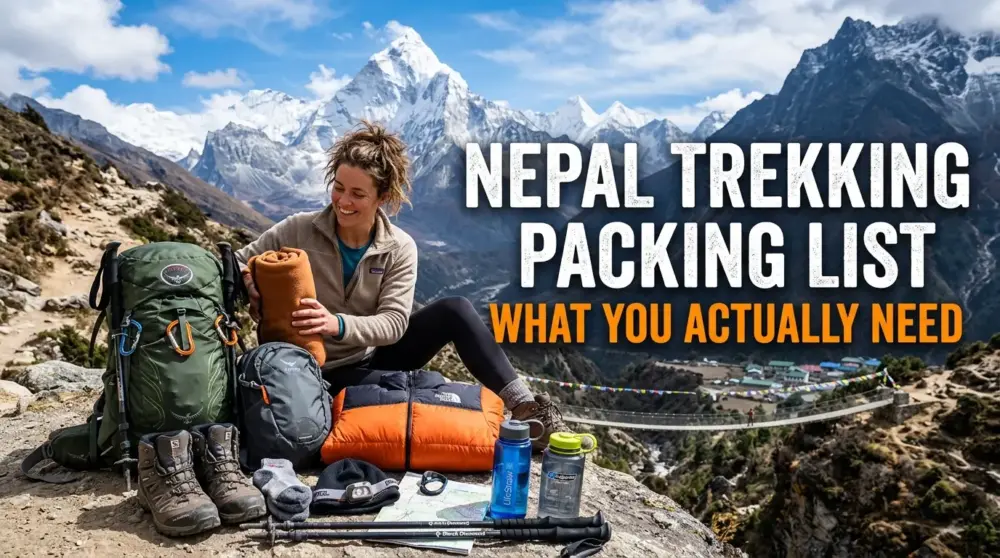
Nepal Trekking Packing List: Wondering what to pack for your Himalayan adventure? This guide covers the clothing, gear, footwear, sleeping bag, and essential equipment you actually need for trekking in Nepal. Whether you’re heading to Everest Base Camp, Annapurna, or Langtang, packing smart will make your trek safer, lighter, and more comfortable.
Short version, if you’re in a hurry. Base layers, a proper down jacket, a waterproof shell, boots you’ve already broken in, a sleeping bag rated to at least minus 10°C, a headlamp, water purification tablets, and altitude medication you’ve cleared with a doctor first. Rent the bulky stuff in Kathmandu rather than dragging it from home. That covers the essentials. The rest is detail worth reading before you zip your bag shut.
First-time trekkers tend to make the same two mistakes over and over. They pack too much, and somehow still pack the wrong things. You end up with a duffel your porter didn’t sign up for, half full of clothes you never touch, and you’re still missing the one item you actually needed when the weather turned on day four.
None of this is copied off a gear catalogue. It’s what guides actually tell clients before heading out the door. Adjust it to your season and route, and you’ll be walking lighter than most people you pass on the trail.
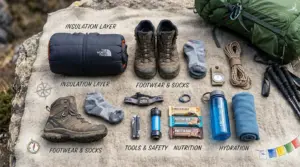
Clothing: Layer, Don’t Bulk Up
Nepal doesn’t do gentle temperature changes. Morning starts around 5°C, you’re sweating by 10 am, and the second the sun drops behind a ridge in the afternoon, you’re cold again. Layers handle that swing. A single bulky jacket doesn’t.
Start close to the skin with a thermal base layer, top and bottom, something that wicks moisture away rather than holding onto it. Leave the cotton at home. It soaks up sweat and takes forever to dry once you’re above 3,000m.
A fleece or light insulated jacket goes over that for the actual walking hours.
Then comes the piece people underestimate: a real down jacket for evenings and the higher camps. This stops being optional above roughly 3,500m. The cold hits differently the moment you stop moving, even if the day felt mild.
Add a waterproof, windproof shell on top of everything. Weather shifts quickly here, spring especially, and during the monsoon window it’s practically guaranteed.
For legs, one or two pairs of trekking pants plus thermal leggings for cold nights covers it. Zip-off pants are convenient, but nobody’s trek has failed for lack of them.
Pack more wool socks than feels reasonable, because you’ll use every pair. Add a warm hat, a sun hat, gloves, and a buff or neck gaiter for wind and trail dust.
Footwear That Won’t Ruin Your Trip
Boots matter more than everything else on this list combined. Get a pair with real ankle support and break them in weeks before you fly, not the week you land. New boots on day one is more or less an invitation for blisters that end a trek early.
Bring something light too, camp shoes or sandals, for after eight hours in trekking boots. Your feet will want the change.
Backpack and Duffel
Most tea house treks run with a porter, which changes how you split your gear. You’ll carry a daypack yourself, somewhere around 30 to 40 litres, holding water, layers, camera, snacks. Your porter carries the duffel, usually 60 to 70 litres, with everything else packed inside dry bags or cubes so it stays organized and dry.
If you’re going without a porter, that setup doesn’t work. You’ll need a proper trekking backpack instead, closer to 50 to 65 litres, with a hip belt that genuinely takes weight off your shoulders. You’ll feel the difference by day three either way.
Sleeping Gear
Tea houses give you a bed and a blanket, usually a thin one, in a room that isn’t heated. Guides across Everest, Annapurna, and Langtang all say roughly the same thing: bring or rent a bag rated to at least minus 10°C to minus 15°C, depending on your route and the month you’re traveling.
You don’t need to own one for this. Along with down jackets, sleeping bags are the item most trekkers rent instead of pack.
Rent It or Bring It
Kathmandu, especially the streets around Thamel, is full of gear rental shops, and prices are low enough that buying gear for a single trip rarely makes sense.
Sleeping bags, down jackets, trekking poles, and gaiters are all fine to rent on arrival. Boots are the exception. Fit matters too much there to leave to chance, so bring your own, already broken in. Base layers, socks, and any personal medication should come from home too, simply because you already know they work for you.
Whatever you rent, check the down fill and test the zippers before you walk out of the shop. Takes two minutes, saves a genuinely cold night.
First Aid and Medication
Don’t lean entirely on what your guide carries. A small personal kit should include blister plasters, basic pain relief, any prescription medication you take regularly, rehydration salts, and something for an upset stomach. Above 3,000m, talk to a doctor about altitude medication before you leave home, and actually read up on acclimatization schedules rather than treating pills as a substitute for pacing yourself.
Electronics and Documents
A power bank isn’t optional. Charging costs money at most tea houses past the lower villages, and outlets get less reliable the higher you climb. Bring charging cables, a universal adapter, and spare batteries if you’re carrying a camera.
Keep your passport, permits, insurance details, and cash on you at all times, not buried in the bottom of the duffel. A dry bag or ziplock inside your daypack works, somewhere you can actually reach without digging.
What to Leave at Home
The hair dryer stays home. So does the extra pair of jeans and the hardback novel. Large toiletry bottles too, just decant into smaller containers or buy travel sizes after landing. Every extra kilo lands on your back or your porter’s, and neither of you is asking for it.
Still figuring out your route? Our Everest Base Camp trek page covers the day-by-day itinerary, and our Nepal trek cost guide breaks down what’s usually included in a package versus what you pay for separately, gear rental being one example. Planning this trek? Get a tailored quote from our team.
Nepal Trekking Packing List by Season
Spring and autumn, roughly March through May and September through November, are the busiest windows on the calendar for good reason. Skies clear up and the cold stays moderate, so the layering system above covers both without much adjustment.
Winter runs colder across the board, December through February, and calls for a warmer sleeping bag plus a heavier down jacket, particularly on the higher routes.
Monsoon, June through August, sees far fewer treks running. If you’re on a rain shadow route where treks still go, waterproofing matters more than warmth. Pack cover, dry bags, all of it.
Frequently Asked Questions
Do you actually need to bring your own sleeping bag?
Not really. They’re easy to rent in Kathmandu, and it’s one of the most commonly rented items among trekkers heading out.
How many clothes should you pack?
Fewer than most people guess on their first trip. Two or three trekking shirts, one insulation layer, one shell, enough socks and underwear for about a week. Lower altitude tea houses often offer laundry, so you’re not stuck rewearing everything.
Can gear just be bought once you land in Nepal?
Sure, Kathmandu has a large market for both new and rental gear, though quality shifts from shop to shop. Boots remain the one thing worth bringing already broken in rather than gambling on fit.
Is hiring a porter worth the cost?
For most first timers, yes. Carrying only a daypack instead of a full pack makes a real difference by the third or fourth day at altitude.
What should a daypack weigh?
Somewhere around 5 to 7 kg, including water, is the target. Go much heavier, and it starts dragging on the longer days.
Final Word
Pack for the mountain, not for comfort back home. Rent whatever you’ll only use once. Bring only what genuinely needs to fit you personally. And keep the daypack light enough that you forget it’s there by hour three.
Green Horizon has been running treks out of Kathmandu since 1989, registered with NATTA (member 416/09), NTB, and TAAN. Our guides know what each route demands in each season because they’ve walked it more times than most people could count. Trek Nepal with the operator that’s been doing this since 1989. Get a quote in 24 hours, or message us on WhatsApp.




How to book a trip?

make free inquiry

confirm the trip
