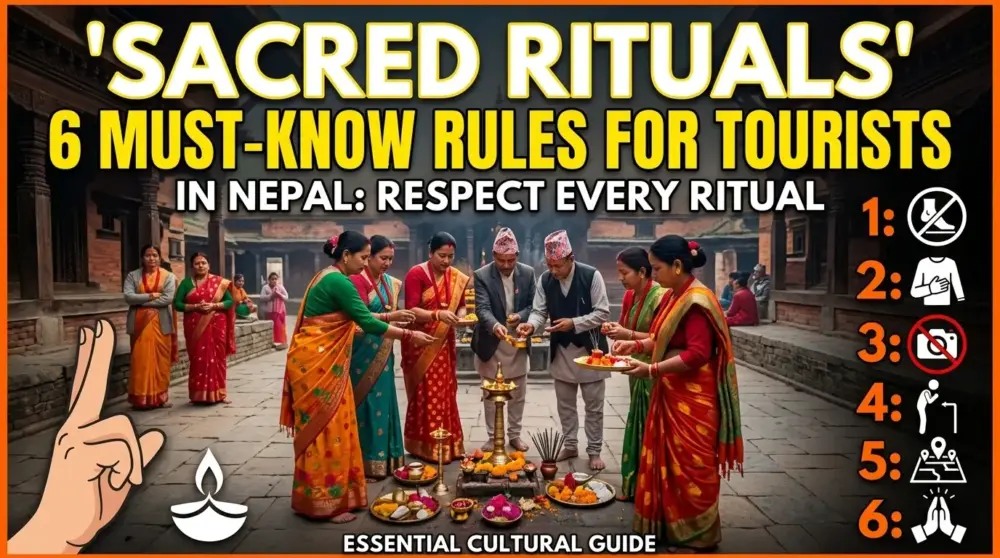
Sacred Rituals tourists should respect in Nepal are an important part of the country’s spiritual culture. Nepal is known not just for its breathtaking mountains, but also for its ancient temples and vibrant spiritual tradition. Religion plays an important role in the everyday life of Nepal, and sacred rituals are practiced across temples, monasteries, and holy sites throughout the country. Witnessing these rituals can be a beautiful and meaningful experience for everyone. However, many visitors unknowingly break certain cultural norms simply because they are unfamiliar with local customs. Understanding and respecting these traditions helps travelers avoid misunderstandings and shows appreciation for Nepal’s deep spiritual heritage. Understanding the Sacred Rituals Tourists Should Respect in Nepal helps travelers avoid cultural misunderstandings when visiting temples and monasteries.
1. Walking Around Temples the Wrong Way
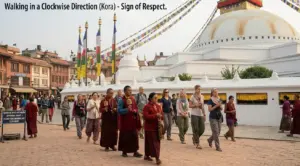
In both Buddhism and Hinduism, the act of walking around a sacred structure is a devotional practice known as kora. Stupas and monasteries such as Boudhanath Stupa or Swayambhunath Stupa, and temples like Pashupatinath Temple or Muktinath Temple, devotees are to walk clockwise as a sign of respect and devotion.
Tourists who walk counterclockwise or cut through these paths may unintentionally interrupt people performing their prayers or rituals.
2. Touching Religious Objects Without Permission
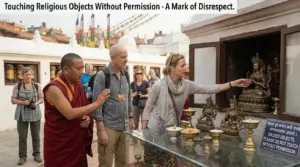
Sacred objects like statues, offerings, ritual items, shrines, or holy items are often used in active worship; it is best to avoid touching them. They carry the collected intention of generations of ritual use. Some visitors touch or pose with them for photos without realizing they are scared.
This can feel disrespectful to locals who view these objects as holy. Therefore, avoid touching religious items unless a guide or monk invites you to do so.
3. Entering Temples with Shoes On
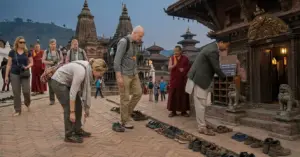
Shoes are considered impure in sacred spaces. In Nepal, removing shoes before entering temples and monasteries is a common practice. Removing shoes is a universal sign of respect in both Hindu and Buddhist sites.
Many tourists simply forget or do not notice the rule when entering temple courtyards or shrines. So, look for shoe racks or follow what locals are doing before entering a temple.
4. Sacred Rituals Tourists Should Respect in Nepal When Taking Photos During Rituals
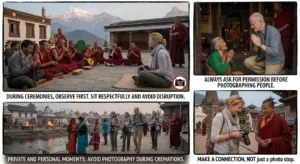
During prayers, ceremonies, or when photographing people (monks, worshippers, or elders), flash photography or intrusive shots can disrupt sacred moments. Nepal’s ceremonies and rituals are visually fascinating, but not every moment is appropriate for photography, as some are deeply personal and spiritual.
Taking photos during cremation ceremonies or private prayers can be especially insensitive. Therefore, it is always more appropriate to ask permission before photographing people, monks, or religious ceremonies.
5. Ignoring Dress Etiquette
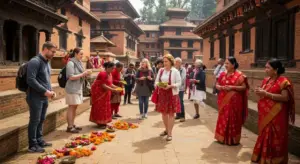
Nepal is welcoming to travelers, but modest clothing is appreciated when visiting sacred places. Wearing very revealing clothing at temples or monasteries may make locals uncomfortable. Dressing modestly shows respect for the deity being worshipped and the community gathered in that space.
Don’t enter temples or gompas in sleeveless tops or short shorts; instead, consider carrying a shawl or scarf as a default travel item to cover yourself.
6. Treating Mountain Monasteries as Photo Stops
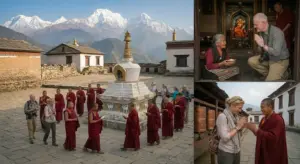
Many monasteries in the Himalayan region are active places of worship where monks live, study, and meditate. Some tourists visit only for quick photos and may talk loudly or disturb the peaceful environment. These monasteries are spiritual sanctuaries rather than tourist attractions.
Monasteries are places for meditation and devotion. Speak quietly, avoid loud behavior, don’t interrupt prayers or monks, and maintain a respectful distance.
Respect Makes the Journey More Meaningful
Travelling in Nepal offers more than stunning landscapes. It provides a chance to experience a culture deeply rooted in spirituality and tradition. By respecting sacred rituals and local customs, travelers can build genuine connections with the places they visit. A little cultural awareness goes a long way in making travel more respectful, enriching, and memorable. Understanding the sacred rituals tourists should respect in Nepal and connect more deeply with local traditions.