


Staying Connected in the Himalayas: Sim Cards, Wi-Fi, and Charging on Nepal’s Trekking Trails
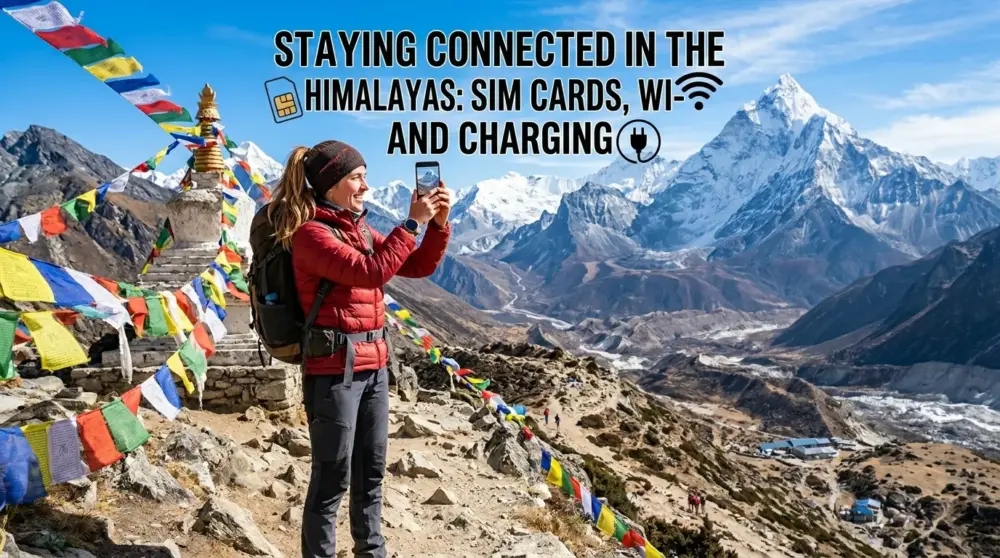
Imagine this: You’ve just spent six grueling hours trekking up a rocky, wind-swept trail. Your legs are like lead, but as you round a final bend, the clouds part to reveal the glowing, snow-capped peak of Mount Ama Dablam or Annapurna South. It is a moment of pure, jaw-dropping magic. Naturally, your first instinct is to pull out your phone, snap a photo, and share it with your loved ones back home—or perhaps verify the local weather forecast for tomorrow’s high-altitude pass.
But then you look at the top corner of your screen: No Service. Trekking in Nepal is an unforgettable journey into the wild, but it shouldn’t mean dropping completely off the grid unless you want to. Whether you need to check in with your family, manage a remote work project from a high-altitude tea house, or post your daily milestones on Instagram, staying connected in the Himalayas is entirely possible. However, the digital landscape changes dramatically the higher you climb.
From choosing the right local SIM card to navigating prepaid mountain Wi-Fi networks and avoiding exorbitant device-charging fees, this comprehensive guide covers everything you need to know about staying connected on Nepal’s premier trekking routes.
1. Local SIM Cards in Nepal: Ncell vs. NTC (Nepal Telecom)
For the vast majority of your journey, your primary line of communication will be a local Nepalese SIM card. International roaming packages from Western carriers are not only incredibly expensive, but they also rarely clear the technical hurdles required to ping off local mountain towers effectively.
In Nepal, the telecommunications market is dominated by two primary networks: NTC (Nepal Telecom), the state-owned provider often locally referred to as Namaste, and Ncell, a private telecommunications giant. Choosing between them depends heavily on where you are going.
| Feature | NTC (Nepal Telecom) | Ncell |
|---|---|---|
| Best For | High-altitude & remote routes | Cities, towns, and lower elevations |
| 4G Speed in Cities | Good / Stable | Lightning Fast / Excellent |
| High Altitude Signals (>4,000m) | Best chance of 3G/4G connectivity | Rapidly drops to No Service |
| Tourist Packages Availability | Simple, budget-friendly data bundles | Highly flexible, massive data plans |
| eSIM Support | Yes | Yes |
NTC (Nepal Telecom): The King of Remote Coverage
This comprehensive guide serves to enhance your trekking experience in Nepal’s Himalayas by outlining essential information regarding SIM cards, Wi-Fi availability, and charging options. It highlights the advantages of NTC SIM cards for high-altitude regions and Ncell for urban areas and lower valleys, ensuring optimal connectivity. Furthermore, it addresses the purchase process for SIM cards, necessary documentation, and the limitations of eSIMs, while providing insights into network coverage for popular trekking routes such as Everest, Annapurna, and Langtang. Additional considerations include Wi-Fi options in teahouses, charging costs, and practical tips for battery maintenance in cold conditions.
If your trekking itinerary takes you deep into the mountains—such as the upper stretches of the Everest Base Camp route, the Manaslu Circuit, or the restricted valleys of Mustang—NTC is your best option. Because it is backed by the government, NTC prioritizes infrastructure in rural and geographically challenging terrains.
While its 4G speeds in bustling cities like Kathmandu or Pokhara might feel slightly slower than Ncell’s, NTC shines when the altitude climbs past 3,500 meters (11,480 feet). When Ncell towers completely vanish into thin air, you will often find an NTC signal quietly blinking with a usable 3G or 2G connection, allowing text messages and basic WhatsApp notifications to pass through.
Ncell: The Speed Daemon of Lower Elevations
Ncell is the private alternative, immensely popular for its slick marketing, user-friendly mobile app, and blistering 4G/LTE speeds across urban regions. If you are doing a lower-altitude or highly developed trek—such as the Ghorepani Poon Hill trek or the lower stretches of the Annapurna Base Camp route—Ncell works flawlessly.
Ncell data plans are incredibly cheap and easy to configure. However, once you push past major mountain trading hubs like Namche Bazaar (Everest region) or Manang (Annapurna Circuit), Ncell’s infrastructure tapers off significantly. It is the perfect choice for digital nomads who plan to work intensively from a café in Pokhara or a comfortable lodge in Thamel, but it shouldn’t be your sole lifeline in the deep backcountry.
The Pro-Tip: The Dual-SIM Strategy
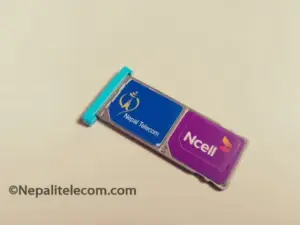
If your smartphone supports dual physical SIM cards or a combination of a physical SIM and an eSIM, the smartest strategy is to buy both.
Load a primary data package onto an Ncell SIM for high-speed internet in the valleys and lower towns. Keep an NTC SIM as your backup option for when you cross high-altitude thresholds. This hybrid setup ensures you have the absolute best coverage footprint available in the country.
2. Where and How to Buy a SIM Card (and eSIMs)
Getting your hands on a local SIM card in Nepal is a straightforward process, provided you have the correct documentation ready.
Buying at Tribhuvan International Airport (TIA)
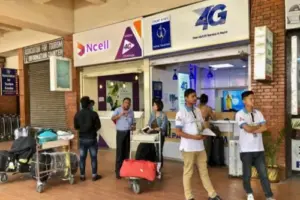
The absolute easiest place to secure your SIM card is immediately after landing at the arrivals hall of Kathmandu’s Tribhuvan International Airport. Both NTC and Ncell maintain brightly lit, dedicated kiosks specifically designed to handle arriving international travelers.
The staff at these airport counters are incredibly efficient. They will help you select a tourist data plan, scan your passport, and even physically install and test the SIM card in your device to ensure it is functioning before you step into a taxi.
Buying in Thamel, Kathmandu, or Lakeside, Pokhara
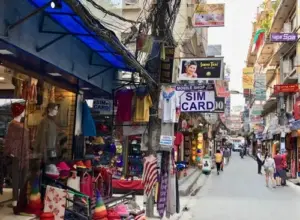
If your flight lands late at night when the airport kiosks are closed, do not stress. You can easily purchase a SIM card the next morning at any authorized telecommunications outlet or local electronics shop in tourist hubs like Thamel in Kathmandu or Lakeside in Pokhara. Look for the official blue signs for NTC or purple signs for Ncell.
Documents You Must Bring
To comply with Nepalese telecommunications regulations, you cannot simply buy a SIM card over the counter without registration. You must present the following:
-
A physical copy of your passport.
-
A copy of your valid Nepalese tourist visa.
-
One passport-sized photograph (though many modern shops can now take a digital photo of you using a smartphone on the spot).
-
Cash in Nepalese Rupees (NPR) to pay for the starter kit and data package.
What About Travel eSIMs?
The digital travel world has shifted heavily toward global eSIM providers like Airalo, Nomad, or Holafly. While these services offer unparalleled convenience—allowing you to install a data profile via a QR code before your flight even takes off—they come with a massive catch in Nepal.
Global travel eSIMs do not own physical infrastructure; they lease data roaming rights from local networks (typically Ncell). Consequently, a travel eSIM will suffer from the exact same geographic limitations as a standard Ncell card at high altitudes, but at a significantly higher price point. If your phone relies strictly on eSIM technology, your best bet is to visit the official NTC or Ncell websites or their brick-and-mortar stores in Kathmandu to purchase a localized, native Nepalese eSIM rather than a generic international roaming profile.
3. Trail-by-Trail Connectivity Breakdown
To give you an accurate picture of what to expect while walking, let’s look closely at how mobile data behaves across the three most popular trekking regions in Nepal.
| Trekking Region | NTC Mobile Data | Ncell Mobile Data | Alternative Wi-Fi Availability |
|---|---|---|---|
| Everest Base Camp (EBC) | Stable up to Tengboche | Stable up to Namche | Excellent via Everest Link Ecosystem |
| Annapurna Circuit / ABC | Widespread in valleys | Excellent up to Manang | Good (Teahouse Wi-Fi networks) |
| Langtang Valley Trek | Reliable up to Kyanjin | Drops past Langtang | Moderate (Local satellite internet) |
1. The Everest Base Camp (EBC) Route
The Khumbu region is one of the most technologically advanced mountain regions in the world, thanks to decades of heavy mountaineering investments.
-
Lukla to Namche Bazaar (2,860m – 3,440m): Both NTC and Ncell offer rock-solid 4G coverage. You can easily make crystal-clear video calls, stream videos, and upload high-resolution image galleries. Namche Bazaar acts as the digital capital of the trail; enjoy the high-speed data here, as it represents the peak of mobile internet quality.
-
Tengboche to Dingboche (3,860m – 4,410m): Beyond Namche, Ncell’s infrastructure drops off significantly, frequently showing a weak 3G or 2G signal. NTC maintains an intermittent but functional 4G and 3G signal along the valley floor, sufficient for texts, emails, and basic browsing.
-
Lobuche, Gorak Shep, and EBC (>4,900m): Mobile data becomes incredibly scarce and erratic. NTC may occasionally pick up a weak signal near Gorak Shep, but it cannot be relied upon for data. In this upper alpine zone, mobile data is practically useless, and you must transition to localized satellite networks.
2. The Annapurna Region (Circuit & Base Camp)
The Annapurna region benefits from a lower average altitude and closer proximity to major highways and towns, making mobile signals more reliable throughout the valleys.
-
Annapurna Circuit: Ncell and NTC offer excellent coverage through the lower villages. As you climb toward Manang (3,540m), Ncell remains surprisingly stable. However, once you leave Manang to tackle the grueling ascent toward Thorong Phedi and the Thorong La Pass (5,416m), both networks completely disappear. Coverage stays dead until you drop down the other side into the holy settlement of Muktinath and the windy hub of Jomsom, where high-speed 4G returns instantly.
-
Annapurna Base Camp (ABC): Mobile towers track cleanly along the Modi Khola river valley. You will have decent coverage through Chomrong and Dovan. However, as you enter the deep, rocky amphitheater of the Annapurna Sanctuary (Machapuchare Base Camp and ABC), the towering stone walls block out transmission signals, resulting in highly spotty coverage.
3. The Langtang Valley Trek
Langtang is a shorter, deeply rewarding trek, but its narrow, steep canyon topography creates unique challenges for cellular tower positioning.
-
Syabrubesi to Lama Hotel: Cellular coverage is decent but can drop unexpectedly depending on whether your trail is shielded by a cliffside.
-
Langtang Village to Kyanjin Gompa (3,430m – 3,870m): Following extensive reconstruction efforts, NTC has established a stable presence in Langtang Village. At Kyanjin Gompa, the final overnight stop, NTC data works intermittently. Ncell data is highly unreliable here, meaning NTC is the undisputed choice for the Langtang corridor.
4. Mountain Wi-Fi: Teahouse Networks & Prepaid Data Cards
When mobile towers inevitably fade into the mountain mist, your next option for connectivity is local Wi-Fi. Almost every modern tea house along major routes features some form of internet access. However, do not expect a standard, free residential fiber connection. Mountain Wi-Fi relies on line-of-sight radio links or satellite dishes, and access comes with distinct terms.
Standard Teahouse Wi-Fi
In lower-altitude villages, tea houses will often sell you their local Wi-Fi password for a small, flat fee ranging from NPR 300 to NPR 800 (approximately $2 to $6 USD) per device for the duration of your overnight stay.
While convenient, these networks suffer heavily from a phenomenon known as “bandwidth choking.” Imagine thirty cold, tired trekkers all entering the communal dining hall at 5:00 PM after a long walk. The moment everyone simultaneously connects to post photos and text their families, the local router becomes completely overwhelmed. The speed drops to a crawl, and even sending a simple text message can take minutes.
The Strategy: If you must use the teahouse Wi-Fi, try waking up an hour before breakfast or waiting until late at night after the dining hall empties. With fewer users actively draining the bandwidth, you can browse at a much more reasonable speed.
The Premium Option: Everest Link & Air Jalma
To bypass unreliable teahouse routers, private internet service providers have built dedicated, region-wide wireless networks across major trekking trails. The most famous of these is Everest Link, which blankets the Khumbu/Everest trail, while Air Jalma services portions of the Annapurna and Langtang zones.
Instead of paying a single tea house for a password, you purchase a prepaid scratch card or a digital data pack at a local shop or your lodge. These cards provide a unique login code that grants you access to specialized wireless hotspots broadcasting across almost every village on the trail.
| Trekking Region | NTC Mobile Data | Ncell Mobile Data | Alternative Wi-Fi Availability |
|---|---|---|---|
| Everest Base Camp (EBC) | Stable up to Tengboche | Stable up to Namche | Excellent via Everest Link Ecosystem |
| Annapurna Circuit / ABC | Widespread in valleys | Excellent up to Manang | Good (Teahouse Wi-Fi networks) |
| Langtang Valley Trek | Reliable up to Kyanjin | Drops past Langtang | Moderate (Local satellite internet) |
-
Pros: Everest Link is significantly faster and more reliable than generic teahouse routers. It operates independently of the lodge’s internal network, allowing you to maintain a stable connection even in high-altitude zones like Lobuche and Gorak Shep.
-
Cons: The data is capped, meaning background updates can burn through your balance quickly. Additionally, it only functions while you are within range of a participating village or lodge; the service does not work while you are actively hiking on the trail between settlements.
5. Powering Your Journey: The Reality of Charging Electronics
All the internet data in the world won’t help you if your smartphone battery dies from the biting alpine cold. Managing your power consumption is arguably more critical than managing your connectivity.
Why Charging Costs Money in the Mountains
In Kathmandu and Pokhara, you can plug your devices into wall outlets for free. In the mountains, however, electricity is a scarce, precious commodity. Lower villages operate on small, community-run micro-hydroelectric plants, while high-altitude settlements rely exclusively on solar panels mounted to tea house roofs.
Because keeping the lights on and running kitchen appliances strains these fragile systems, tea houses charge a tiered fee to power your electronic accessories.
-
Lower Altitudes: Charging costs between NPR 200 and NPR 400 ($1.50 to $3 USD) per full device charge.
-
High Altitudes (>4,000m): As power storage becomes scarcer, fees rise to NPR 500 to NPR 800 ($4 to $6 USD) per device.
-
The Power Bank Premium: Charging a large, high-capacity power bank can cost double or triple the price of a standard smartphone because it draws significantly more current from the lodge’s batteries.
Outlets: A Rare Commodity
Do not expect to find an electrical outlet inside your private bedroom. In ninety percent of Himalayan tea houses, the only available plugs are located on a single charging strip mounted in the communal dining hall.
In peak trekking seasons, these charging stations turn into a competitive battleground. Dozens of trekkers vie for a handful of slots to plug in phones, cameras, and power banks. If the weather is cloudy for multiple days in a row, solar generation plummets, and lodge owners may shut down the charging station entirely to preserve power for essential lighting.
6. Practical Packing & Technical Survival Guide
To avoid unexpected costs and keep your devices safe from the elements, implement these tactical tech habits on your trek.
1. Invest in a High-Capacity Power Bank
The absolute best financial and logistical investment you can make is to purchase a high-quality 20,000mAh power bank (such as an Anker or Baseus unit) before leaving for Nepal.
Make sure to charge this power bank completely to one hundred percent while you are still in Namche Bazaar or Manang, where electricity is still cheap and abundant. A full 20,000mAh bank can recharge a standard smartphone four to five times. By relying entirely on your personal power reserve during the upper four to five days of your ascent, you can completely avoid the steep, high-altitude charging fees levied by the topmost tea houses.
2. Protect Batteries from Extreme Cold
Lithium-ion batteries hate the cold. When temperatures drop below freezing, the chemical reactions inside your battery slow down dramatically, causing its charge level to drop rapidly from 60% down to 5% in mere minutes.
-
During the day, do not keep your phone inside your backpack or an exposed exterior pocket. Keep it stored in an inner jacket pocket close to your chest, allowing your natural body heat to insulate the battery.
-
During the Night: Never leave your phone, camera batteries, or power bank sitting on a nightstand or on the floor of your unheated bedroom. Tuck all your electronics securely inside the bottom of your sleeping bag before you go to sleep. Your body heat will prevent the batteries from draining overnight.
3. Stop Your Phone from Burning Through Data Backgrounds
Because mountain internet data is metered and expensive, you must prevent your smartphone from silently draining your megabytes via hidden background processes. Before you head out on the trail, adjust your settings:
-
Turn off Automatic App Updates.
-
Disable Cloud Photo Backups (such as iCloud or Google Photos syncing). Wait until you return to Kathmandu to upload your trip galleries.
-
Set your messaging applications to not download media automatically (preventing large videos or photos sent in group chats from draining your data allowance).
-
Download your navigation aids, such as Google Maps or Maps.me, for complete offline use so you can navigate via GPS without requiring an active cellular connection.
Summary: Your Checklist for Connected Trekking
To ensure you stay connected seamlessly without any surprises, follow this quick, step-by-step digital roadmap:
-
[ ] Before Arrival: Purchase a heavy-duty 20,000mAh power bank and download all regional maps for offline use.
-
[ ] At Kathmandu Airport: Stop by the arrival kiosks and secure an NTC or Ncell physical SIM card or localized tourist eSIM.
-
[ ] In the Lower Valleys: Use your mobile data freely for heavy tasks while speeds are high and signals are strong.
-
[ ] At Mountain Hubs (Namche/Manang): Top up your phone data plans and charge every power bank to maximum capacity before electricity costs rise.
-
[ ] In the Upper Alpine Zone: Turn off your cellular roaming data to preserve battery, buy an Everest Link or Air Jalma card if you need internet access, and sleep with your electronics inside your sleeping bag.
By planning your digital setup ahead of time, you can document your incredible Himalayan adventure, stay safe on the trail, and keep in touch with the world—all while immersing yourself fully in the pristine beauty of Nepal’s mountain landscapes. Safe travels, and enjoy every single step of your journey with Green Horizon Tours!
Realistic Connectivity Expectations by Altitude
For example:
| Altitude | Typical Connectivity |
|---|---|
| Below 3,000m | Excellent 4G |
| 3,000–4,000m | Mixed 3G/4G |
| 4,000–5,000m | Weak/intermittent |
| Above 5,000m | Mostly Wi-Fi only |
Frequently Asked Questions (FAQs)
Can I trek solo in Nepal without a guide or internet access?
No. Under Nepal’s strict “No Guide, No Trek” safety policy, independent or solo trekking without a government-licensed guide is prohibited across all major national parks, conservation areas, and restricted regions (including Everest, Annapurna, and Langtang). You must book your trek through a registered agency like Green Horizon Tours, which will handle your E-TIMS registration and pair you with an authorized guide. Your guide will also serve as your primary safety link if you lose personal cellular service.
Which is better for trekking in Nepal: Ncell or NTC?
For high-altitude, remote trekking routes, NTC (Nepal Telecom) is the clear winner because its state-backed infrastructure provides better coverage above 3,500 meters. However, Ncell offers faster 4G/LTE data speeds in cities like Kathmandu and Pokhara, as well as lower-elevation valleys. For the safest and most reliable setup, we recommend utilizing a dual-SIM smartphone with both networks.
Does Wi-Fi work at Everest Base Camp (EBC)?
Mobile data networks (NTC and Ncell) do not work at Everest Base Camp or Gorak Shep. Instead, connectivity in this high-altitude alpine zone relies entirely on satellite internet. You can purchase a prepaid wireless data pass from Everest Link, a private hotspot provider with networks installed in the tea houses throughout the Khumbu region.
How much do Everest Link Wi-Fi cards cost?
Everest Link packages generally cost around NPR 2,000 (~$15 USD) for a 10 GB data pack and NPR 3,000 (~$22 USD) for a 20 GB heavy data pack, typically valid for 30 days. You can easily buy these scratch cards at local shops and lodges in Namche Bazaar, Dingboche, or Lukla.
How much cash should I bring to pay for device charging?
You should budget approximately NPR 300 to NPR 800 ($2.50 to $6 USD) per individual device charging session. Prices increase with altitude because high-altitude tea houses rely on limited solar energy systems. To completely avoid these fees, invest in a high-capacity 20,000mAh power bank and charge it fully in lower towns where electricity is still cheap and abundant.
Can I use an international eSIM in the mountains of Nepal?
While international travel eSIMs (like Airalo or Holafly) are convenient for your arrival in Kathmandu, they lease network space from Ncell. This means an international eSIM will face the exact same coverage drops as a standard Ncell card once you ascend past 3,500 meters. For reliable mountain coverage, it is much better to purchase a physical or native tourist eSIM directly from an NTC or Ncell kiosk at the airport.


How to book a trip?

make free inquiry

confirm the trip
