


Annapurna Trek in Summer: 5 Amazing Reason To Trek in Summer(2026)
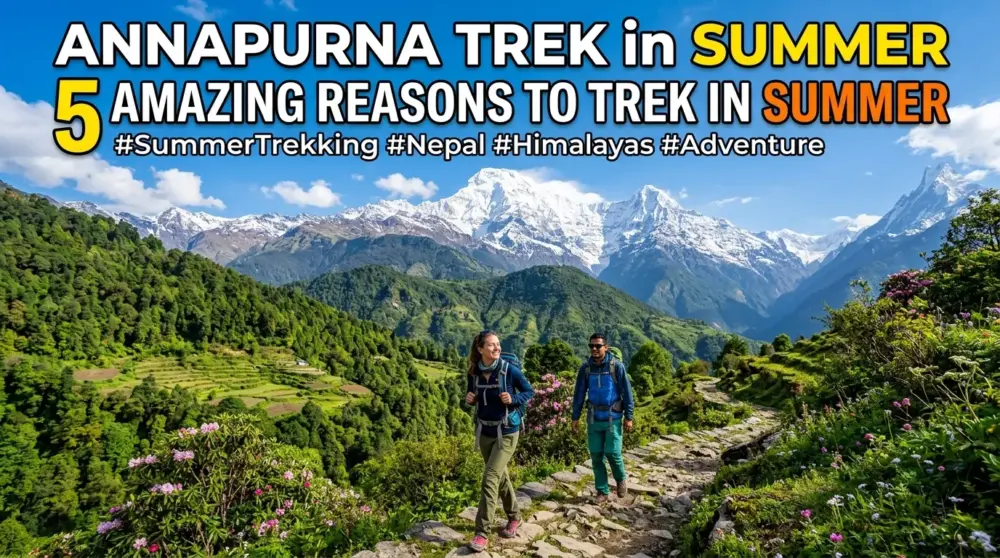
Annapurna Trek in Summer offers a unique and peaceful trekking experience in Nepal’s Himalayan region. Nepal’s Annapurna region is a trekker’s paradise, boasting some of the most breathtaking scenery on the planet. Think of it: verdant subtropical forests, towering Himalayan peaks, and high altitude passes. Summer, spanning June to August, presents a different kind of adventure. Trekking in Annapurna during these months provides a more intimate, less crowded experience.
The monsoon season of Nepal overlaps with summer, which brings warm water temperatures and frequent rainfall, especially in lower elevations. Autumn and Spring are the most popular seasons for trekking, but if you don’t mind occasional rain and love lush green landscapes, trekking during the monsoon can be incredibly rewarding.
Weather in the Annapurna Region During Summer
The typical summer daytime temperature is 15°C – 25°C in mid elevations. Humidity level is higher, and in the afternoon or evening, there are rain showers.
In summer, cloud-covered mountains are visible on some days; however, mornings are often clearer, and trekkers who start early can still enjoy stunning Himalayan views.
Why Choose the Annapurna Trek in Summer?
Some key advantages of the Annapurna Trek in summer are the following:
1. Fewer Crowds
One of the biggest benefits of trekking in summer is the smaller number of trekkers on the trails. Annapurna Base Camp trek is usually crowded during peak seasons such as spring and autumn. Therefore, during summer, the trails are quieter, which allows trekkers to enjoy nature at a slower pace.
Teahouses are also less crowded, which gives travellers a more relaxed and comfortable trekking experience.
2. Beautiful Green Landscapes
The monsoon season of Nepal brings fresh rain, which brings a vibrant natural paradise. Forests, rice terraces, and hills bring greenery, and waterfalls appear along many trekking trails.
Trekkers can enjoy stunning views of lush valleys and dramatic landscapes surrounding the majestic Annapurna Massif.
3. Rich Cultural Encounters
Since tourists during summer are fewer, travellers often have more opportunities to interact with locals, learn about their culture, and observe traditional farming activities during the monsoon season.
Villages in the Annapurna region are home to ethnic groups such as Gurung and Magar. Summer trekking allows visitors to experience the daily life of local communities more closely.
4. Budget-Friendly Off-Season Perks
Since summer is considered an off-season for trekking in Nepal, it can make the trip more affordable. Many trekking agencies, lodges, and hotels offer discounted prices during this time.
Trekkers may find better deals on accommodation, guides, and transportation while still enjoying the beauty of the Annapurna region.
5. Unique Atmosphere & Personal Challenge
Annapurna trekking in the monsoon season offers a sense of adventure and personal achievement due to its challenging and deeply rewarding experience.
Misty mountain views, flowing rivers, and dramatic cloud formations create a magical and mysterious atmosphere in the Himalayas.
Essential Tips for a Safe Summer Trek
-
Hire an experienced local guide/porter for real-time route and weather updates.
-
Build flexibility — add buffer days for rain delays and start early each day.
-
Monitor conditions — check forecasts, local updates, and agency reports before and during the trek.
-
Altitude awareness — acclimatise properly and take proper rest.
-
Health preparation — purify water, carry salt for leeches, and monitor for infections.
-
Insurance & permits — get comprehensive high-altitude coverage and secure TIMS and ACAP permits.
What to Pack for Summer
For trekking in the Annapurna region in the summer, prioritise waterproofing, quick-drying items, and leech protection.
Clothing & Layers
-
Quick-dry trekking shirts and pants
-
Waterproof jacket and rain pants
-
Poncho or lightweight rain cover
-
Moisture-wicking underwear and socks
-
Hat, buff, and gloves for variable temperatures
Footwear & Protection
-
Waterproof hiking boots with excellent grip
-
Camp shoes or sandals
-
Leech socks with salt or tobacco
-
Trekking poles
Gear Essentials
-
A 50–65 L backpack with a rain cover
-
Dry bags for electronics and clothes
-
Headlamps, power banks, and water purification tools
-
First-aid kit
-
Insect repellent, sunscreen, and toiletries
Extra for Comfort
-
Quick-dry towel
-
Snacks
-
Reusable water bottles
-
Sleeping bag liner
Important Reality Check for Trekkers
Summer brings heavy rain, which can make lower trails slippery and muddy. Leeches and insects are common, visibility is often poor, and risks such as landslides exist. Therefore, summer trekking is not for everyone, especially for beginners. Annapurna trek in summer requires strong fitness, waterproof gear, flexibility, and ideally a local guide.
But for the right person who is experienced, can adapt, nature-loving, and crowd-averse, this Annapurna trek in summer offers a rarer, greener, quieter side of the Himalayas that post-monsoon crowds never see. If you are planning a summer trip, share more about your experience level or preferred route, and we can help you tailor advice or connect you with guides who specialise in monsoon treks.


How to book a trip?

make free inquiry

confirm the trip
