Okay, so I’ll be honest with you.
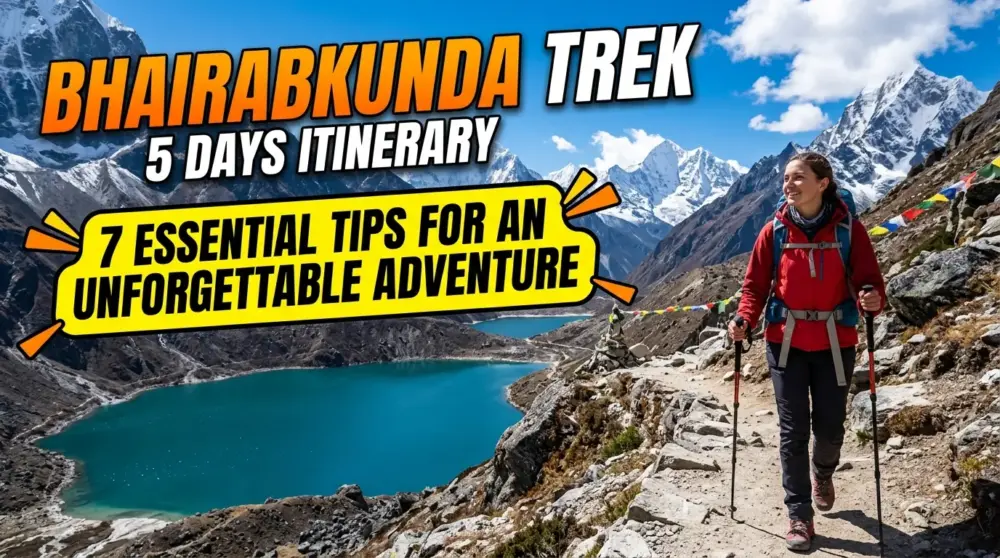
I almost didn’t do this trek. A friend mentioned it over dinner in Thamel one night, and I half-listened because I was already mentally committed to Langtang. Then he pulled up a photo on his phone of this dark, glassy lake sitting inside a ring of snow peaks, and I just stared at it for a while.
“Where is that?”
“Bhairabkunda. Four hours from here. Nobody goes.”
I went three weeks later, and I’ve been telling people about it ever since.
So here’s everything. The real stuff, not the copy-paste version you’ll find on a dozen other travel blogs that all seem to have been written by the same person who’s never actually left Thamel.
The Bhairabkunda trek is a short offbeat trekking route in Sindhupalchok district, northeast of Kathmandu, near the Nepal-Tibet border. It takes 4 to 5 days, reaches a sacred alpine lake at 4,250 metres, passes through Tamang villages and rhododendron forest, and sees almost no tourist traffic compared to the popular routes. If you’re looking for hidden treks in Nepal that actually deliver, this one’s it.
Where Exactly Is Bhairabkunda?
Sindhupalchok district, Bagmati Province. Northeast of Kathmandu, right up against the Tibetan border. That border proximity is part of why the upper section of the trek feels so different from the lush green lower valleys. The landscape shifts. Gets more stark and open. Almost Tibetan in character.
Trailhead is a village called Jalbire. About 85 to 94 kilometres from Kathmandu, depending on which road you take. Four hours in a private jeep, five or six by local bus. The lake sits at 4,250 metres above sea level, and that’s where you’re headed.
Why This Trek and Not One of the Famous Ones
I get this question a lot, actually.
And look, I love Langtang. Poon Hill at sunrise is genuinely beautiful. I’m not trying to talk anyone out of anything.
But here’s what nobody tells you about the really popular Nepal treks. By peak season, they’re packed. Like, properly packed. Poon Hill viewpoint on a clear October morning has elbow room roughly equivalent to a rush hour train. Everybody’s there. Everybody’s got the same camera angle. There’s a guy somewhere behind you with a Bluetooth speaker, and he’s not going to turn it down.
Bhairabkunda isn’t that. We walked for half a day once without seeing another trekker. The villages we passed through were actual villages, not tourism operations wearing the costume of a village. And when we got to the lake, there were maybe six other people there, all of them Nepali pilgrims who’d climbed up to pray.
That’s the other thing that makes this trek special. The lake isn’t just a pretty alpine lake; it’s a sacred site. Named after Bhairav, the fierce form of Lord Shiva. Pilgrims have been making this climb for centuries, and every August during the full moon, thousands of them come up to bathe in the water. If your timing lines up with that festival, what you witness there isn’t really a trekking experience anymore. It’s something harder to categorise.
Mountain views from the lake include Dorje Lakpa at 6,966 metres, Langtang Lirung at 7,227 metres, and the whole Jugal Himal range. On a clear morning, you can see deep into Tibet. Wildlife in the forests below includes red pandas and Himalayan black bears. Snow leopards have been spotted up high, though I personally haven’t seen one, and I’m not going to pretend otherwise.
The trek just delivers more than it promises. That’s genuinely rare.
Day by Day: Bhairabkunda Trek Itinerary
Quick note before we get into this. Bhairabkunda is a camping trek. No teahouses. No dorm beds. Your company brings the tents and a cook, or you bring your own gear. I know some people hear “camping” and immediately look for an alternative, but trust me on this one, the camping is actually part of what makes the experience.
Day 1: Drive to Jalbire, Trek to Chanaute (1,350 m)
Leave Kathmandu after breakfast. Araniko Highway heads northeast past Dhulikhel and down through the Bhotekoshi gorge, which is stunning even from the road, honestly. Jalbire is where the walking starts. The first day is easy, four to five hours, through Tamang villages and past a waterfall before reaching Chanaute. Good intro day. Sleep early.
Day 2: Chanaute to Khani Gaon (2,000 m)
Steeper today. The path climbs through terraced farmland, then into oak forest as you start gaining proper altitude. Khani Gaon is a Newari village at 2,000 metres with mountain views that kind of catch you off guard for the elevation. Six to seven hours of walking. Honest day on the legs.
Day 3: Khani Gaon to Forest Camp (3,150 m)
This is where the whole character of the trek changes. You’re into thick rhododendron and pine forest now, and in spring, the hillsides are just covered in red and pink blooms. Hard to describe properly, one of those things a photo doesn’t fully hold. Temperature drops noticeably. Wildlife gets more active. Forest Camp at 3,150 metres is a clearing in the trees, and it gets cold at night, properly cold, and lying there in a sleeping bag with the forest completely quiet around you is the kind of thing you came to Nepal for, whether you knew it or not.
Day 4: Forest Camp to Bhairabkunda Lake (4,250 m)
The day the whole trek is about.
Trail climbs past Pati with wide open Tibetan plateau views, then makes a steep final push to the lake. And then it just appears. No big dramatic moment. Dark still water sitting in a granite bowl, snow peaks rising up on every side, prayer flags at the edge, a small ancient Shiva temple by the shore.
You stop walking. You look at it. Don’t rush that part.
Camp at the lake. Get up before dawn the next morning for the sunrise over Jugal Himal. Do not skip this.
Day 5: Back to Kathmandu
Descend the same route to Jalbire, and drive back. Some itineraries split the return into two days, which your knees might prefer. Worth asking about when you book.
The Numbers: Distance, Duration, Altitude
The total trekking distance is roughly 40 to 50 kilometres round trip. Five days comfortable pace. Maximum altitude 4,250 metres at the lake. No glacier crossings, no technical terrain, no summit push. Just a proper mountain trek that earns its destination.
How Hard Is This Trek, Honestly?
Easy to moderate. That’s the real answer, not the one designed to sell you something.
No ropes, no crampons, no climbing. What makes it moderate rather than easy is the altitude gain on days three and four, and the fact that trail markings aren’t as clear as on the commercial routes. You can’t just follow the crowd here because there usually isn’t one.
For a beginner with decent walking fitness, this is absolutely doable. The things that matter above 3,500 metres are pace, water, and honesty with yourself. Walk slower than you think you need to. Drink more water than feels necessary. If you get a headache, don’t pretend it’ll go away. Those three things cover most altitude problems before they become serious.
When to Actually Go
Spring (March to May)
That’s the best window, and I’ll stop hedging and just say it directly. Rhododendrons blooming, weather stable, mountain views clear, temperatures manageable during the day. If you can only go once, go in the spring.
Autumn (September to November)
Equally good for the weather. Post-monsoon clarity is genuinely stunning, and the trails are dry. Slightly cooler than spring but excellent for trekking.
Monsoon (June to August)
Rough. Leeches in the lower forest aren’t a minor inconvenience; they’re a real thing. Trails get slippery. The one exception is the August full moon pilgrimage at the lake, which some people think is worth the conditions. Each to their own on that one.
Winter
Possible, but harsh. Minus 15°C at the lake overnight is not a bluff. Only experienced and properly equipped trekkers should attempt this in winter.
What Does Bhairabkunda Trek Cost
Real numbers. No ranges so wide they’re useless.
- Local bus Kathmandu to Jalbire: NPR 500 to 700 per person
- Private jeep hire: NPR 8,000 to 12,000 for the vehicle
- Licensed guide: USD 25 to 35 per day
- Porter: USD 18 to 25 per day
- TIMS permit: USD 10
- Local area permit: USD 10 to 20
- Camping gear rental: NPR 500 to 1,500 per item per day
- Food through camp cook package: NPR 800 to 1,500 per person per day
All-in cost (guided, 5 days): USD 300 to 600 per person, depending on group size
Getting to the Trailhead
Araniko Highway from Thamel northeast. Through Dhulikhel and the Bhotekoshi gorge to Jalbire, about 94 kilometres from the city. Local bus from Kathmandu main bus park leaves in the morning, takes five to six hours. Private jeep is four hours and considerably more comfortable on mountain roads. Most trekking companies include transport in the package price, worth confirming before you book.
Food and Accommodation on the Trail
No teahouses on this route past the first couple of villages. Camping is the arrangement. In Chanaute and Khani Gaon, there are basic homestay options if a tent really isn’t your thing. Higher than that are tents, sleeping bags, and camp kitchen cooking.
Food is simple and exactly right after a long day. Dal bhat, fried rice, noodle soup, eggs, and porridge. A good camp cook makes a bigger difference than most people expect. It’s worth asking your company directly who handles food before you commit.
Packing List for Bhairabkunda Trek
Clothing
- Thermal base layers (top and bottom)
- Fleece mid-layer
- Waterproof shell
- Warm trekking trousers
- Gloves and a wool hat
Gear
- Broken-in ankle-support trekking boots
- Trekking poles (especially helpful on descent)
- Sleeping bag rated to at least -10°C
- Headlamp with spare batteries
Essentials
- Water purification tablets or a filter bottle
- SPF 50 sunscreen
- Altitude meds (if prescribed)
- Trail snacks
- Powerbank
Bhairabkunda vs Other Short Treks Near Kathmandu
| Trek |
Duration |
Max Altitude |
Crowd Level |
Style |
| Bhairabkunda |
4–5 days |
4,250 m |
Very Low |
Camping |
| Poon Hill |
4–5 days |
3,210 m |
Very High |
Teahouse |
| Nagarkot Day Hike |
1 day |
2,175 m |
Moderate |
Day Trip |
| Langtang Valley |
7–10 days |
3,870 m |
Moderate |
Teahouse |
Higher altitude than Poon Hill, a fraction of the crowds, and longer commitment than a day hike. That combination is genuinely hard to find on a short trek near Kathmandu.
Is it Worth It?
Yes. Clearly yes.
But worth being specific about who it’s for. If a hot shower and a real bed at the end of each day are a requirement, this isn’t your trek. Book Poon Hill and enjoy it, nothing wrong with that at all.
But if you want the kind of trekking experience that you’re still describing to people three years later, if you want a sacred lake near Tibet with almost nobody else there and mountain views that make everything back home feel temporarily irrelevant, then Bhairabkunda is exactly that thing.
People come back different from this one. Quieter. More settled. Hard to explain unless you’ve done it.
Go Before Everyone Else Finds It
Here’s the thing about places like Bhairabkunda.
They don’t stay hidden forever. Someone writes about them, a few photos get shared, a travel magazine picks it up, and then slowly the teahouses appear, and the signs go up, and the trail starts to look like everywhere else.
That hasn’t happened here yet. Right now, Bhairabkunda is still that thing, a trail that feels like a genuine find, a lake that feels genuinely sacred and genuinely remote, even though it’s four hours from the capital.
Go while that’s still true.
Green Horizon Tour runs guided Bhairabkunda treks with experienced local guides and a full camping setup. We know this trail properly. We’d like to take you there.
FAQs
How long is the Bhairabkunda trek?
Five days standard, including transport from Kathmandu. Some people do it in three with private transport and a fast pace, though five days is the right way to experience it properly.
Is the Bhairabkunda trek difficult?
Easy to moderate. No technical climbing. A beginner who walks regularly and takes altitude seriously can absolutely do this.
Do I need a guide for the Bhairabkunda trek?
Yes, genuinely. Trail markings are inconsistent beyond the lower villages, and altitude above 3,500 metres isn’t where you want to be figuring out navigation for the first time.
What is Bhairabkunda Lake famous for?
It’s one of Nepal’s most sacred Hindu pilgrimage sites, dedicated to Bhairav, the fierce form of Lord Shiva. Thousands of pilgrims climb to bathe in the lake each August during the full moon festival. It’s been a pilgrimage destination for centuries.
Can beginners do the Bhairabkunda trek?
Yes. Prepare properly, get the right gear, hire a guide, and go at your own pace. Beginners do this trek regularly and come back glad they did.