


What Green Horizon Knows That the Internet or Your Guidebook Doesn’t?

Local trekking companies like Green Horizon carry real-time knowledge, unwritten trail secrets, cultural relationships, and flexible support that no guidebook or Google search can replicate. Their on-ground experience is the difference between a trip that works and one that doesn’t.
There’s this thing travelers do before visiting Nepal. They spend weeks on it. Tabs open everywhere. Lonely Planet bookmarked. Reddit threads saved. YouTube videos watched at 1.5x speed. They build what feels like a solid plan. Then they land in Kathmandu, and within 48 hours, half of what they prepared turns out to be either outdated, wrong, or just… not how things actually work here.
Not their fault. The internet isn’t lying to them. It’s just not local.
That’s the gap. And it’s bigger than most people realize before they get here.
Why the Green Horizon Trekking Guide Beats Google and Guidebooks?
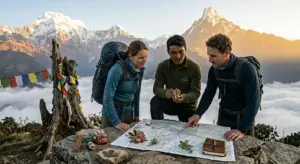
Guidebooks go to print and then sit. The Lonely Planet edition someone’s carrying might reference a teahouse that burned down two seasons ago, or a trail that got rerouted after a landslide, or a festival date that shifted because the lunar calendar moved it again. Guidebooks are not wrong exactly. They’re just frozen in time.
The internet is faster, sure, but it has its own problems. Most trekking content online is written by someone who did one trip, once, and now considers themselves an authority on Nepal. Or worse, it’s SEO content written by someone who’s never left their desk. You can feel it in the writing. Vague, generic, no specifics that only come from actually being there.
Neither of these gives you what a local company gives you. Which is someone who was on that trail last week?
What Local Expertise Actually Means in Nepal?
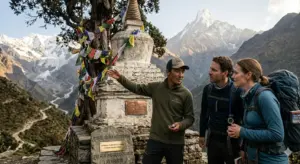
This isn’t just a feel-good phrase. Local knowledge in Nepal is genuinely operational. It changes decisions. It changes days.
Green Horizon’s guides grew up in these regions. Some of them have been walking these trails since before they were labeled on any map. They know which pass has been icy since October, which teahouse switched owners and dropped in quality, and which village is hosting a Tamang festival the week your group walks through. That last one doesn’t appear on any itinerary you’d find online. It just happens, and a local guide knows how to walk you into it.
They also speak the language. Not just Nepali generally, but the dialects, the village rhythms, the way to greet an elder in a Gurung household versus a Sherpa one. Those small things open doors that money can’t, and that no booking platform can arrange for you from the outside.
7 Things Green Horizon Knows That Others Simply Don’t:
1. The trails nobody publishes
The popular routes are popular because they have been written up. That’s circular, and it means the most interesting paths in Nepal often aren’t in any guidebook. Green Horizon knows the side trail from Ghorepani that cuts through a rhododendron forest most trekkers walk straight past. The village above Langtang Valley, where three families still make the kind of yak cheese nobody exports. These aren’t dramatic secrets. They’re just the things you learn from years of walking, not from reading.
2. Weather that’s actually current
A forecast on your phone gives you a regional picture. A guide who talked to the teahouse owner in Deurali yesterday gives you something more useful: the pass was frozen at 5 am this morning, wait until 9. That level of real-time detail is the difference between a safe crossing and a miserable, dangerous one. No app has it.
3. Cultural access that can’t be scheduled
Nepal’s festivals run on lunar calendars. Some of the best ones aren’t listed anywhere tourists look. Green Horizon’s team knows what’s coming up, what’s worth adjusting your itinerary for, and more importantly, how to enter those spaces respectfully. Showing up to a monastery ceremony uninvited is very different from walking in with someone the monks already know.
4. Itineraries that bend without breaking
Online booking platforms sell fixed packages. Day one here, day two there, this many kilometers, this teahouse. Life doesn’t work that way in the mountains. Someone in the group needs an extra rest day. The weather closes a route. A completely unexpected opportunity presents itself. A local company doesn’t panic when the plan changes. They just make a new one, because they know enough to do that confidently.
5. Where to actually eat and sleep
Not every teahouse is equal. Not close. Green Horizon knows which ones have genuinely clean kitchens, which ones have the hot water they advertise, which family-run lodge on the Langtang trail makes a dal bhat worth sitting down for. That knowledge comes from repeat visits, from relationships, from guides who stay in these places off-season, too. No review on TripAdvisor tells you what a local already knows by instinct.
6. How to spend less without losing anything
Booking through an international operator typically adds 30 to 60 percent to the cost. That markup pays for offices in London or Sydney, marketing teams, and booking platforms. It does not make your trek better. Booking directly with Green Horizon cuts that middleman completely. The guide quality is identical. The mountain doesn’t change price based on who arranged the booking.
7. Emergency response that works
This one matters most. When something goes wrong at altitude, and sometimes something does, response time is everything. Green Horizon has contacts at rescue coordination centers, relationships with helicopter evacuation services, and guides trained in altitude sickness recognition. They’re not escalating your problem through a foreign office in a different time zone. They’re handling it, in Nepali, on the ground, right now.
Local Company vs Online Planning: The Real Comparison
| What You Need | Internet Research | Green Horizon |
|---|---|---|
| Current trail conditions | Outdated or generic | Updated weekly from guides on the trail |
| Flexible itinerary | Fixed package, no changes | Adjusted in real time as needed |
| Cultural access | What tourists are shown | What locals actually share |
| Cost | International markup added | Direct local pricing |
| Emergency support | Find a number, call, and wait | On-ground response immediately |
| Hidden routes | Whatever got published | What guides have walked for years |
The Real Problems That Happen Without Local Help
Travelers who plan entirely from the internet tend to run into the same categories of trouble. They book teahouses that don’t exist anymore. They underestimate trail time because the blog they read was written by a fast solo trekker, not a family of four. They miss the permit requirements that have changed since the article was published. They overpay at Trailhead shops because nobody told them the going price. They walk past a monastery at exactly the wrong time to enter and don’t know why.
None of this is catastrophic. But it compounds. And it makes a trip that should have been extraordinary feel like it was just fine.
When do you especially need local experts?
- First-time Nepal trekkers, always. You don’t know what you don’t know yet, and that’s precisely when local knowledge protects you most.
- Families and anyone traveling with children or older adults. The stakes are different. The flexibility requirement is higher. A local company adjusts without drama.
- Anyone going off the main routes. Popular trails have enough other trekkers that you can figure things out as you go. Remote areas don’t work that way. In Dolpo or far western Nepal, if something goes wrong, you need someone who is already prepared for it.
How to Choose the Right Local Company?
Check for Nepal Tourism Board registration and TAAN membership. Any legitimate company has both and shows them without being asked. Read reviews on TripAdvisor and Google, but look past the star rating. Read what people actually say about their guide by name, about what happened when something went wrong, and about whether the company communicated honestly. Those details matter more than a 4.9 average.
Ask questions before you book. How long have your guides been working these routes? Who specifically would lead our trek? What’s your emergency protocol above 4,000 meters? A good company answers all of that clearly. A bad one gets vague.
Green Horizon has been operating in Nepal long enough that their guides know these mountains personally, not professionally. That’s a different thing. And it’s exactly the thing no guidebook can give you.
Travel Smarter. Travel Local.
Most people who come to Nepal want more than a completed checklist. They want the thing that stays with them afterward. The unscheduled moment. The family who invited them in. The trail nobody else was on that morning. The guide who knew exactly when to push and when to stop.
That’s not in any guidebook. It lives in the people who know this place for real.
Green Horizon Tour is built on that. Local, licensed, genuinely knowledgeable. Reach out and tell them what you’re planning. The conversation alone will already tell you more than three hours of internet research.
FAQs
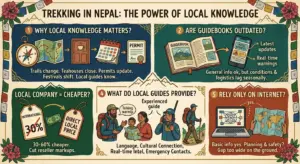
Why is local knowledge important for trekking in Nepal?
Trails change. Teahouses close. Permits update. Festivals shift dates. Local companies track all of it continuously. Guidebooks and websites can’t keep up.
Are guidebooks outdated for Nepal travel?
Partially, yes. They’re useful for general orientation but regularly lag on trail conditions, permit requirements, and practical logistics that change seasonally.
Is it cheaper to book with a local company?
Usually 30 to 60 percent cheaper than international operators for equivalent or better service, because you’re cutting out the reseller markup entirely.
What do local guides provide that others can’t?
Language, cultural relationships, real-time trail intelligence, emergency contacts, and a decade of walking the exact routes you’ll be on.
Can I rely only on internet research for trekking in Nepal?
For basic orientation, fine. For actual planning and safety, no. The gap between what’s published and what’s current on the ground is too wide to risk it.




How to book a trip?

make free inquiry

confirm the trip
