


Khumjung Village in Everest
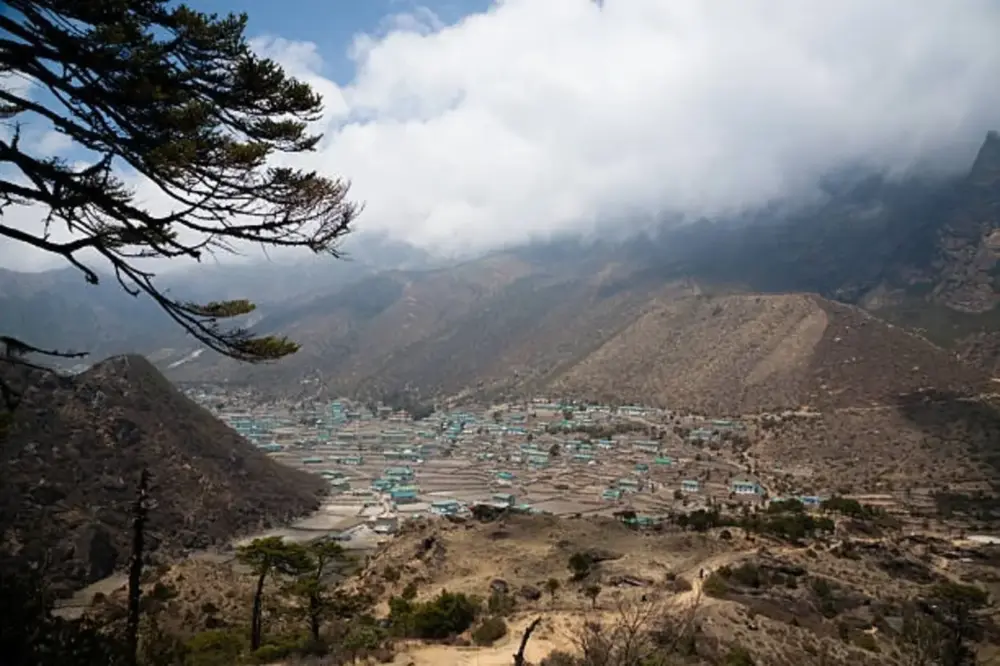
The prayer flags flutter against impossible blue skies, their faded colors whispering mantras across the valley. Below them, stone houses with bright window frames nestle into the mountainside at 3,790 meters, while yak bells echo through narrow lanes that have known centuries of footsteps. This is Khumjung Village. A place where the Himalayas feel less like a backdrop and more like family.
Most trekkers rushing toward Everest Base Camp glimpse Khumjung from the trail above Namche Bazaar and keep walking. What they miss is one of the most authentic Sherpa villages in the Everest region, where children still speak their mother tongue in the schoolyard, where monasteries hold secrets older than mountaineering, and where the rhythm of life hasn’t been entirely reshaped by tourism.
I’ve returned to Khumjung three times now, and each visit peels back another layer of understanding about what makes this village extraordinary.
A Village Carved From Sacred Ground
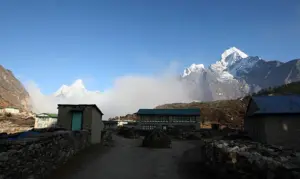
Khumjung, Nepal, sits in a natural amphitheater beneath the towering presence of Khumbila, a mountain so sacred that climbing it remains forbidden. The Sherpa people believe this peak is the abode of a guardian deity, and this spiritual geography has shaped everything about how Khumjung developed.
The village traces its roots back over 500 years, established by Sherpa families migrating from the Kham region of Tibet. Unlike the newer settlement of Namche Bazaar, which grew around trade routes, Khumjung was always meant to be home. A place for farming, for families, for permanence.
Walking through the village today, you can still see this in the architecture. The traditional stone houses aren’t built for tourists. They’re built for winter winds that could knock you off your feet, for storing potatoes harvested from impossibly steep terraced fields, for housing extended families under one smoke- darkened timber roof.
Life at 12,400 Feet: The Real Sherpa Story
There’s a tendency to romanticize Sherpa culture, to reduce it to colorful prayer flags and friendly smiles. But spending time in Khumjung reveals something far more compelling. A community that has mastered one of Earth’s harshest environments through ingenuity, cooperation, and profound environmental wisdom.
The Sherpa village in Everest’s Khumjung maintains traditions that are slowly fading elsewhere. Women still gather to brew chang (barley beer) in massive copper pots. Families rotate grazing their yaks and dzos through high pastures using centuries-old agreements about whose turn it is. Elders gather at the village’s central chorten each morning to walk their devotional circuits.
Yet this isn’t a museum. Young people video-call relatives working in Kathmandu. Solar panels power WiFi routers. The same grandmother who spins prayer wheels with wrinkled hands also checks the weather forecast on her smartphone before deciding whether to take the yaks up-valley.
This blend makes Khumjung fascinating. It’s a living culture making deliberate choices about what to preserve and what to adapt.
Khumjung Monastery and the Legendary Yeti Scalp
The Khumjung Monastery stands as the spiritual heart of the village, its whitewashed walls bright against the mountain slopes. Built in the 1960s with support from Sir Edmund Hillary, the monastery replaced an older structure and became home to one of the region’s most intriguing artifacts.
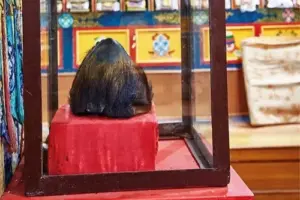
Inside a locked glass case sits what the monks claim is a Yeti scalp. A reddish- brown, furry dome that has sparked debate for decades. Edmund Hillary himself borrowed it in 1960, taking it to scientific institutions for analysis. The results were inconclusive. Some suggested it was made from Himalayan serow hide; others found it genuinely puzzling.
Standing before this artifact, watching the butter lamp flames flicker across its surface, you realize the Yeti legend matters less for what it proves and more for what it reveals about the Sherpa relationship with these mountains. The Himalayas remain wild enough, mysterious enough, that even in our age of satellite mapping and DNA analysis, they hold space for wonder.
The monastery also houses ancient Buddhist texts and thangka paintings, some centuries old. During festivals like Mani Rimdu, the courtyard explodes with color as masked dancers perform sacred dramas that have been passed down through generations.
The Hillary School: Education That Changed Everything
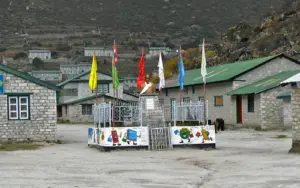
Perhaps no single structure has impacted Khumjung more than the Khumjung Hillary School, the first of 27 schools Edmund Hillary built in the Solu-Khumbu region. Established in 1961, this wasn’t just about literacy. It was about giving Sherpa children opportunities their parents never had.
Before Hillary’s schools, education meant sending children to distant monasteries or doing without. The Khumjung school changed that calculation entirely. Today, Khumjung has produced doctors, engineers, government officials, and successful business owners. Many of whom return to contribute to their home village.
The school building sits on a slight rise, its blue-trimmed windows overlooking potato fields and prayer flag lines. On any school day, you’ll hear the sound of children reciting lessons in Nepali and English, their voices carrying across the valley.
What strikes me most is how the school represents sustainable development done right. Hillary didn’t impose outside values; he worked with community leaders to create something that served Sherpa aspirations. The result is a village that can engage with the modern world without losing its foundation.
When the Mountains Show Their Best Face
The best time to visit Khumjung Village follows the same patterns that govern all Everest region trekking: spring (March-May) and autumn (September-November) offer the most reliable weather and clearest mountain views.
Spring brings rhododendron blooms to the lower valleys, painting entire hillsides in shades of red and pink. The weather warms enough that sitting outside a teahouse feels pleasant rather than punishing. You might catch the monastery’s spring festivals, when the entire community gathers for ceremonies and celebrations.
Autumn is trekking season proper. The post-monsoon air scrubs the atmosphere clean, leaving visibility so sharp that Everest, Lhotse, and Ama Dablam seem close enough to touch. The potato harvest happens in October, and if you’re lucky, you might be invited to help with backbreaking work that gives you profound respect for high-altitude farming.
Winter (December-February) sees fewer trekkers but offers its own stark beauty. Snow transforms Khumjung into a monochrome study in white and shadow. It’s bitterly cold, and many lodges close, but the village life continues with a different rhythm.
Summer monsoon (June-August) is generally avoided due to clouds, leeches on lower trails, and flight cancellations. But if you can handle uncertainty, you’ll have the trails nearly to yourself.
Trails That Connect More Than Places
Reaching Khumjung Village requires flying to Lukla’s famously dramatic airport, then trekking for two days. Most people spend their first night in Phakding or Monjo, then push up to Namche Bazaar. From Namche, Khumjung is just an hour’s walk. It’s close enough for a day visit, but worthy of at least one overnight.
The village sits along several classic Everest trekking routes. Many itineraries include Khumjung as an acclimatization stop before heading higher toward Tengboche or Dingboche. The nearby village of Khunde, just fifteen minutes away, forms a twin settlement with its own hospital (also built by Hillary).
For those seeking less-traveled paths, Khumjung serves as a gateway to Gokyo Valley via the high route over Mong La pass. This trail sees far fewer trekkers than the standard Everest Base Camp route, yet offers equally spectacular scenery.
The village’s location also makes it perfect for acclimatization hikes. The climb to Syangboche airstrip and beyond to Everest View Hotel provides stunning panoramas while helping your body adjust to altitude.
Why Khumjung Isn’t Namche (And Why That Matters)
Namche Bazaar, just below Khumjung, has transformed into the Everest region’s commercial hub, a place of bakeries, gear shops, Irish pubs, and ATMs. There’s nothing wrong with Namche; it serves a vital function for trekkers and has brought prosperity to many families. But Khumjung offers something different. It remains primarily a village where people live, not a town that exists primarily for visitors. Yes, there are lodges and teahouses, but they’re usually family homes that happen to rent rooms. The woman serving you dal bhat is also preparing the same meal for her children. The man tending the potato fields isn’t performing culture for tourists—he’s doing the work that feeds his family through winter.
This distinction creates a different quality of experience. Conversations happen more naturally. You’re invited to join a family for butter tea, not as a tourist attraction, but because Sherpa hospitality runs deep. Children approach out of genuine curiosity rather than to sell postcards.
Treading Lightly in Thin Air
The Everest region faces real environmental pressures. More trekkers mean more waste, more firewood consumption, and more erosion. Khumjung has been relatively protected by its position slightly off the main trail, but that protection only holds if visitors make conscious choices.
Sustainable tourism here means simple but important actions. Choose lodges that use solar heating rather than burning scarce firewood. Carry a reusable water bottle and use the village’s water purification stations instead of buying plastic. Say no to the hot shower that requires burning yak dung or wood.
It means respecting photography boundaries as not every moment needs to be captured, and people aren’t decorative elements in your Instagram feed. Ask before photographing individuals, and accept if someone declines.
Most importantly, it means spending money directly in the community. Sleep in locally owned lodges. Buy snacks from village shops rather than carrying everything from Kathmandu. If you purchase a locally woven carpet or traditional textile, you’re supporting artisans keeping traditional skills alive.
The Khumjung community has shown remarkable stewardship of its environment and culture. The least we can do is travel in ways that support rather than undermine those efforts.
Mountains That Become Part of You
I’ve spent time in many Himalayan villages, chasing the perfect view or the most dramatic landscape. But Khumjung taught me that the most powerful travel experiences come not from what you see but from what you begin to understand.
Standing in a potato field with a Sherpa farmer who patiently explained the challenges of growing crops at this altitude, I understood something about resilience that no motivational quote could teach. Watching monks debate Buddhist philosophy in the monastery courtyard, their laughter punctuating serious points, I glimpsed how joy and discipline can coexist.
Khumjung Village in the Everest region isn’t the highest settlement, the most dramatic viewpoint, or the easiest place to reach. But it might be the most honest. A place where the layers of history, culture, spirituality, and daily survival interweave so completely that you can’t separate them.
The mountains here don’t just form a backdrop. They shape how people think, what they value, how they measure success, and honor their ancestors. And for a few days, if you’re paying attention, they can shape you too.
That’s why I keep returning. And why, if you make it to Khumjung, you’ll understand why some places aren’t just destinations. They’re destinations that become part of your own story.


How to book a trip?

make free inquiry

confirm the trip
