


Luxury vs Budget Trekking in Nepal: Cost, Comfort & Experience Compared (2026 Guide)
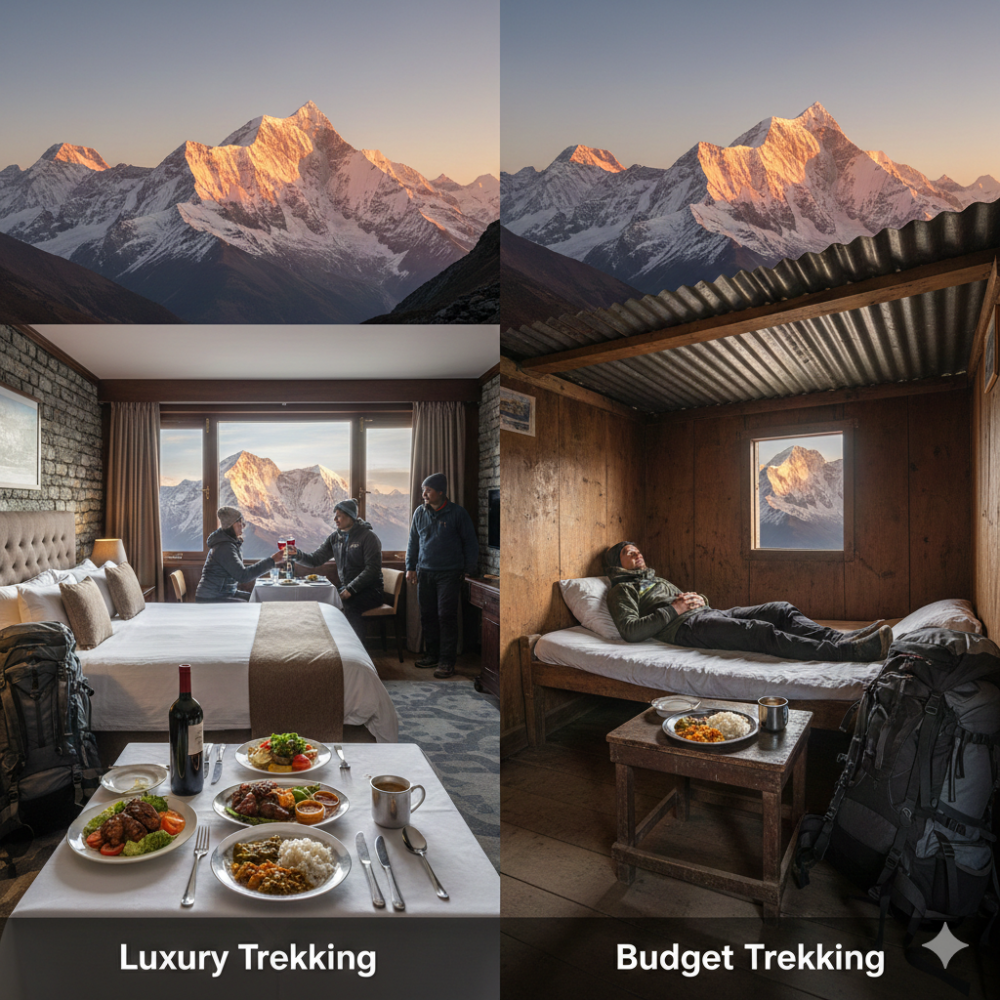
Trekking in Nepal is one of the most iconic adventure experiences in the world. Home to eight of the fourteen highest peaks on Earth—including Mount Everest—Nepal offers breathtaking Himalayan landscapes, rich mountain culture, and unforgettable trekking routes.
But when planning your trip, one major question arises:
Should you choose luxury trekking or budget trekking in Nepal?
Both options take you to the same mountains—but the experience, comfort level, and cost can vary widely. This complete guide compares luxury vs budget trekking in Nepal so you can choose the style that fits your travel goals.
What Is Luxury Trekking in Nepal?
Luxury trekking in Nepal combines Himalayan adventure with premium comfort. Instead of basic teahouses, trekkers stay in high-end lodges offering:
-
Heated rooms
-
Private bathrooms
-
Hot showers
-
Electric blankets
-
Wi-Fi access
-
Premium dining options
On popular routes like Everest Base Camp, some luxury lodges even provide scenic lounges with panoramic mountain views.
Luxury treks often include:
-
Experienced guides
-
Porters to carry your backpack
-
Private transfers
-
Helicopter return options
-
Personalized service
This option is ideal for families, older travelers, or anyone who wants adventure without sacrificing comfort.
What Is Budget Trekking in Nepal?
Budget trekking focuses on authenticity, simplicity, and cultural immersion.
Trekkers stay in locally run teahouses that offer:
-
Basic but cozy rooms
-
Shared bathrooms
-
Limited heating
-
Traditional Nepali meals like Dal Bhat, noodles, and soup
While facilities are simple, the experience is deeply cultural. You interact closely with local families, learn their stories, and experience real Himalayan village life.
Budget trekking is perfect for:
-
Backpackers
-
Adventure seekers
-
Solo travelers
-
Travelers prioritizing experience over comfort
Cost Comparison: Luxury vs Budget Trekking in Nepal
The Luxury Trekking covers the premium accommodations, experienced guides, porters to carry your heavy backpacks, personalised support, and selective meals. This even includes helicopter flights and private transfer sometimes. This shapes the Luxury Trekking to be more expensive, usually about $150-$350 per day. This cost is an investment that prioritises safety, comfort, and convenience, and provides a supported and memorable Himalayas adventure.
Budget Trekking is more affordable as trekkers usually carry their own backpacks, hire local guides for cost reduction, and have inexpensive meals that are filling. The cost is usually about $35-$65 per day, which makes it more accessible to a wide range of people. This trek helps people to immerse themselves in authentic culture.
Here’s a clear breakdown of average daily costs:
| Feature | Luxury Trekking | Budget Trekking |
|---|---|---|
| Cost per day | $150–$350+ | $35–$65 |
| Accommodation | Premium lodges | Teahouses |
| Porter included | Yes | Optional |
| Private transport | Yes | Usually no |
| Wi-Fi | Mostly included | Limited/paid |
| Best for | Comfort seekers | Adventure travelers |
Why Is Luxury Trekking More Expensive?
Luxury packages include:
-
High-end accommodations
-
Professional guides
-
Porter services
-
Premium meals
-
Sometimes helicopter transfers
This cost prioritizes safety, convenience, and comfort.
Why Is Budget Trekking More Affordable?
Budget trekkers:
-
Carry their own gear
-
Stay in basic lodges
-
Eat local meals
-
Use shared facilities
This makes trekking accessible to a wider range of travelers.
Experience Comparison: Which One Feels Better?
Luxury Trekking Experience
The Luxury trekking lets you immerse yourself in the mountain sceneries and culture, without worrying about your heavy backpacks, basic utilities, and lack of heating. This focuses on an adventurous journey with comfort and convenience. You can still enjoy the Himalayas’ views
and traditional life, but without straining yourself physically. For old travellers, families, physically challenged, or anyone who is seeking to balance adventure and comfort, this is the style you want to experience the Himalayas.
Best suited for:
-
Families
-
Senior travelers
-
Couples
-
Travelers combining adventure with relaxation
Budget Trekking Experience
But in experience, the Budget trekking wins here with the opportunity to immerse yourself with locals, knowing their stories and histories. It lets you engage with the traditional village life and gives you hands-on experiences of the Himalayas. Not just with local but with the fellow
travellers. The people who are seeking adventure and thrill with cultural immersion, this style is what you want to go with. Many travelers say this raw and authentic experience feels more adventurous and meaningful.
Best suited for:
-
Young travelers
-
Cultural explorers
-
Adventure enthusiasts
Popular Routes for Both Luxury and Budget Treks
Most major trekking routes in Nepal offer both styles.
1. Everest Base Camp
Everest Base Camp is one of the most popular treks located in the Khumbu Valley of Nepal, attracting trekkers from all around the world. Along the trail, trekkers can easily choose between the local teahouse and expensive premium lodges. Trekkers can easily choose a basic room with shared facilities or private rooms with personalized services. The budget trek ranges around $40 -$60 per day for a trekker, while the luxury trek ranges about $150-$350 or more. Trekkers can choose between simple teahouses or high-end lodges with heated rooms and private facilities.
2. Annapurna Base Camp
Annapurna Base Camp is also one of the iconic trekking destinations that takes you to the unforgettable trail to Mount Annapurna, also known as the “Fishtail”. Budget trekkers can stay in the simple teahouses and lodges, while having basic meals, whereas luxury trekkers can choose premium lodges and facilities. On average, the budget trekker spends around $35-$60 per day, and the luxury trekker spends around $150-$300 per day. Both options offer spectacular mountain views and cultural encounters.
3. Manaslu Circuit
Manaslu Circuit is another incredible trek in Nepal, which starts from Macha Khola and ends at Besi Sahar. This trek is more remote, but provides both options. For budget trekkers, the daily spending is around $40-$60, and for luxury trekkers, it is around $150-$250 per day. Though remote, luxury arrangements are possible with planning.
Additional Costs to Consider
When calculating trekking costs in Nepal, remember:
-
Permits: Trek permits and fees are other expenses to consider. Some treks also need special permits. Permits are mandatory. You can learn more from the official trekking permit guidelines.
-
Flights & Transport: Flight costs are not included in the daily expenses. The flight cost varies by season and according to the destination.
-
Travel Insurance: Travel insurance is most suitable for trekking in Nepal.
-
Helicopter evacuation: Helicopter in a luxury trek is common, but emergency evacuation is to be considered.
-
Extra expenses: Snacks, water bottles, and Wi-Fi (sometimes) in the trail of the Himalayas are extra expenses.
Smart Ways to Trek Nepal on a Budget
If you want to reduce costs:
-
Choose your accommodation within your budget.
-
Carry your own gear.
-
Plan/Join a group trek.
-
Eat local food.
-
Hire local guides directly.
These small decisions significantly lower your overall trekking budget.
Environmental Considerations
Trekking responsibly protects Nepal’s fragile mountain ecosystem.
-
Leave No Trace: Avoid leaving plastic bottles and wrappers on the trails.
-
Use Eco-Friendly Gear: Reusable bottles, biodegradable soaps, etc.
- Respect Local Wildlife: Avoid disturbing animals and picking plants.
-
Avoid plastic waste.
-
Follow Local Guidelines: Follow strict environmental and conservation rules.
Sustainable trekking ensures the Himalayas remain beautiful for future generations.
Final Verdict: Luxury or Budget Trekking in Nepal?
There is no wrong choice.
-
Choose budget trekking if you want authenticity, cultural immersion, and adventure at a lower cost.
-
Choose luxury trekking if you want comfort, safety, and a worry-free Himalayan experience.
Both options lead to the same breathtaking mountain views and unforgettable memories.
The Himalayas do not change; only the way you experience them does.


How to book a trip?

make free inquiry

confirm the trip
