


Pisang Peak Climbing: Cost, Difficulty, Itinerary and Everything You Actually Need to Know
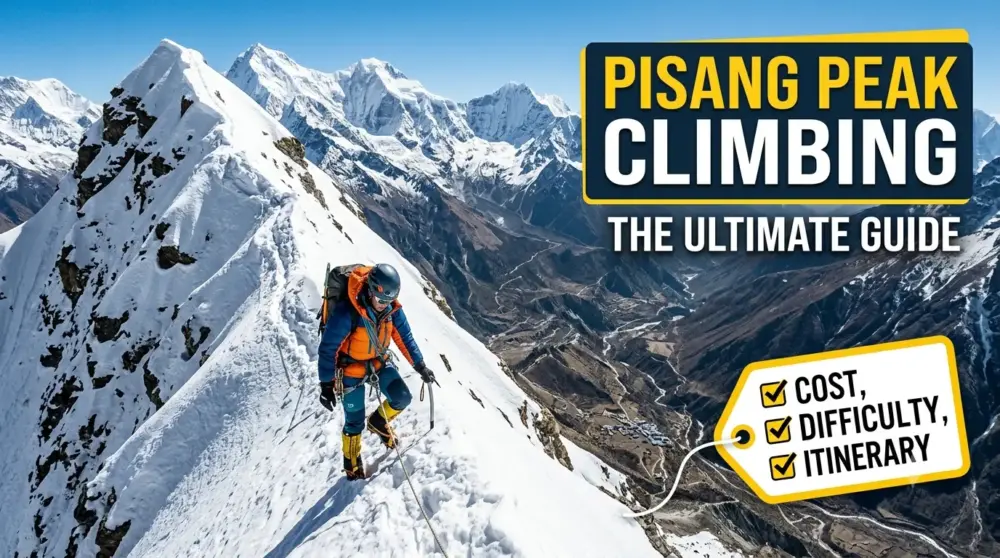
I’ll be honest with you. When I first heard about Pisang Peak, I thought it was one of those mountains that operators hype up to sell packages to people who aren’t ready for something real.
I was wrong.
Pisang Peak is 6,091 meters. That’s not a number you throw around casually. That’s above the altitude where your body starts doing things you don’t expect, where a headache at 2 pm becomes a serious conversation by 8 pm, where every extra kilogram in your pack becomes a personal grudge. And yet every season, people with no climbing background show up, do the work, and stand on that summit. Regular people. Teachers, accountants, software developers. People who trained for it and picked a guide who knew what they were doing.
So the question isn’t really whether Pisang Peak is possible for you. It probably is. The question is whether you’ll prepare as it deserves.
First, Where Even Is This Mountain?
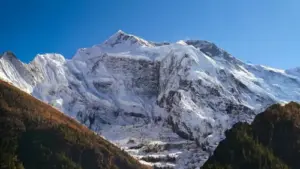
Pisang Peak sits in Nepal’s Manang District, which is part of the Annapurna Conservation Area. You pass directly through the area if you’re doing the Annapurna Circuit, which is one reason why so many trekkers end up eyeing it. It’s right there. You’re walking past the base of it for days before you realize what you’re looking at.
The village of Upper Pisang sits at the foot of the mountain. Locally, the peak is called Jong Ri, which almost nobody outside the region knows. It was first climbed in 1955 by a German team and has been attracting climbers in growing numbers ever since. The Nepal Mountaineering Association classifies it as a trekking peak, their way of saying it’s achievable without an elite expedition team, but definitely not a stroll either.
From the summit on a clear morning, you can see Annapurna II, III, and IV almost close enough to touch. Gangapurna across the valley. Tilicho Peak. On the best days, a slice of Manaslu in the far distance. People who get up there say it’s the kind of view that rearranges something in your head. I believe them.
At a Glance
| Details | Information |
|---|---|
| Height | 6,091 meters / 19,983 feet |
| Location | Manang District, Annapurna region |
| Trip Length | 16 to 20 days |
| Difficulty | Moderate to Challenging |
| Best Time | Spring and Autumn |
| Permits | Three required |
| Skills | Basic mountaineering |
How Hard Is It, Genuinely?
This is what everyone wants to know, and nobody gives a straight answer to. So here’s mine.
The climbing itself is not the hard part for most people. Yes, you’re on crampons. Yes, you’re using an ice axe on the upper section. Yes, there are fixed ropes near the summit that you clip into. None of that is beyond what a reasonably coordinated person can learn quickly. Your guide will go through all of it with you at base camp. The technical side of Pisang is real, but it’s teachable.
What actually ends trips is altitude. Not fitness. Altitude.
You can run half marathons and still feel genuinely awful above 5,000 meters if your body hasn’t had time to adjust. The red blood cell count, the way your lungs process oxygen up there, that doesn’t improve with willpower. It improves with time, rest, and not being stupid about rest days. The itinerary has acclimatization built in for exactly this reason. The people who skip those days because they feel fine are usually the ones turning around at high camp two days later.
Beginners can absolutely climb Pisang Peak. But “beginner” means someone who has spent time at altitude before, who has done serious multi-day trekking, and who has genuinely trained for this in the months before. Not someone who goes to the gym three times a week and thinks that covers it.
The Route
The approach goes through Upper Pisang village and climbs through high yak pastures above the treeline. There’s a stretch up here that’s just an open rocky plateau with prayer flags and massive silence and the mountain growing in front of you. It’s worth the whole trip before you’ve even reached base camp.
Base camp sits at around 4,300 meters. You spend a day or two here, do your climbing practice, and let your body adjust. Then, the high camp at roughly 5,400 meters, which is a shorter day physically but hits harder than you expect because of where your body is by now.
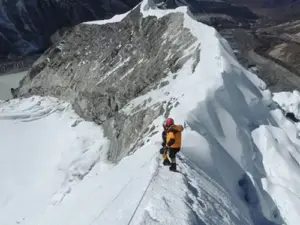
Summit day starts before dawn. Headlamps across the glacier, west ridge on snow and ice, and then the top. Most groups take five to seven hours from high camp. Descent follows the same route. By afternoon, you’re back at camp trying to eat something and process what just happened.
The western face of the mountain is blocked by a hanging glacier and rock slabs that make it essentially unclimbable from that side. The southwest ridge is the route and has been for decades.
Day by Day
Day 1 — Arrive Kathmandu
Gear check tonight, not tomorrow morning.
Day 2 — Drive to Besisahar or Bhulbhule
Seven or eight hours. Bring snacks and something to read.
Day 3 — Trek to Jagat
Day 4 — Trek to Dharapani
Day 5 — Trek to Chame
You’re gaining real elevation now. Pay attention to how you feel.
Day 6 — Trek to Lower Pisang
The peak starts coming into view.
Day 7 — Upper Pisang
Short acclimatization walk in the afternoon, nothing ambitious.
Day 8 — Rest Day in Manang
Do not skip this. Walk around the village. Eat. Sleep. That’s it.
Day 9 — Trek to Base Camp at 4,300 Meters
Day 10 — Training Day
Crampons, ice axe, rope technique. Ask every question you have.
Day 11 — Move to High Camp at 5,400 Meters
Day 12 — Summit Push
Then all the way back down to base camp.
Day 13 — Reserve Day for Weather
Used more often than people expect.
Day 14 — Start Heading Back Down Toward Manang
Days 15 to 20
Trek out, drive back to Kathmandu, done.
Total trip runs 16 to 20 days. Different operators structure this slightly differently, so confirm the breakdown before you book.
Best Time to Go
Ask any guide who has been up Pisang multiple times, and most of them will say April without much hesitation. The weather holds longer in spring, the sky stays clear in the mornings, and the snowpack on the upper sections is usually in good condition. It’s the season when everything cooperates.
October is the other option and a genuinely strong one. After the monsoon, the Himalayan air gets a clarity that people who’ve experienced it mention almost every time. The trail is slightly less busy than in the spring, which some people prefer. The permit costs less too, $175 versus $350 for the spring season.
Winter is technically possible in Manang because the district sits in a rain shadow and gets less snowfall than most of Nepal. But cold at high camp in December or January is a different category of cold, and the summit success rate drops. Not a first-time season.
Monsoon, June through August, is a firm no. Visibility goes, trails flood, the risk is pointless.
| Season | Months | Conditions | Permit |
|---|---|---|---|
| Spring | March to May | Best overall | $350 |
| Autumn | Sept to Nov | Excellent, clearer budget | $175 |
| Winter | Dec to Feb | Tough, not for beginners | $175 |
| Monsoon | June to Aug | Don’t | $175 |
Permits You Need
Three of them. None optional.
The NMA climbing permit is the big one, issued by the Nepal Mountaineering Association. Spring costs $350 per person. Every other season it’s $175. There’s also a $500 garbage deposit that comes back to you at the end.
The Annapurna Conservation Area Permit is about $30 for foreign nationals. Standard for entering the region.
The TIMS card is around $10 and mandatory for all trekkers in designated Nepal trekking zones.
Most package operators roll all of these into the total price. Confirm that in writing before you pay anything. Some don’t, and the surprise later is never pleasant.
What the Whole Thing Costs
Prices in 2026 run across three rough tiers.
| Package | Per Person |
|---|---|
| Budget | $1,500 to $2,000 |
| Standard | $2,000 to $2,800 |
| Premium | $2,800 to $3,500+ |
A standard package covers permits, a licensed climbing guide, porters, all meals on the trail, accommodation throughout, and transport from Kathmandu. Outside that: your personal gear, travel insurance, tips for the crew, and anything you spend in Kathmandu before and after.
You can rent crampons, a harness, and an ice axe in Thamel in Kathmandu at reasonable rates if you don’t own the gear already. Most shops there know exactly what a Pisang Peak trip needs.
Pisang Peak or Island Peak?
People argue about this constantly online. Here’s the simple version.
| Pisang Peak | Island Peak |
|---|---|
| Height: 6,091m | Height: 6,189m |
| Annapurna | Everest region |
| Moderate | Moderate to harder |
| Quieter | Busy |
| Full Annapurna panorama | Everest and Lhotse |
| Lower cost | Slightly higher |
If being near Everest matters to you specifically, then Island Peak wins on location. But Pisang gives you the full Annapurna Circuit experience around the climb, fewer people waiting on the fixed ropes, and a summit view that most people find genuinely shocking in the best sense. For a first Himalayan climb, most guides will quietly point you toward Pisang. That says something.
Quick Answers to Things People Ask Before Booking
Can a beginner climb this?
With proper preparation and respect for the acclimatization schedule, yes. Without those two things, probably not.
How many days total?
16 to 20 days, Kathmandu to Kathmandu.
Is travel insurance mandatory?
More than mandatory. It must cover mountaineering at 6,100 meters and helicopter evacuation specifically. Read your policy line by line before you leave home. Some adventure policies cap at 4,000 or 5,000 meters and won’t cover this.
What’s the summit success rate?
No official numbers exist publicly. With a good guide, proper acclimatization, and reasonable weather, the majority of prepared climbers make it. Weather and how your body handles altitude are the two real variables.
Best single month?
April, if you’re going in the spring. October, if you’re going in autumn.
Why People Come Back Changed
There’s a specific feeling that happens somewhere on day ten or eleven of a climb like this.
Everything that felt urgent back home starts to seem a bit smaller. Not in a cliché way. Just in the practical sense that your whole brain is occupied with the next hour and the body scan you’re doing every twenty minutes to track how you feel.
People come back from Pisang Peak quieter about certain things. More sure of themselves about others. It sounds like something a brochure would say, but ask anyone who has stood on that summit, and they’ll tell you the same thing in their own words, unprompted.
If this is something you’re seriously considering for 2026, the team at Green Horizon Tour has done this route across seasons and knows it properly. Permits, guides, logistics, all handled. Reach out early because the spring spots fill faster than people expect.


How to book a trip?

make free inquiry

confirm the trip
