


Restricted Trekking Routes in Nepal: Complete Guide (Permits, Cost & Rules)
Nobody told me about the checkpoints until I was already planning the trip.
I’d been reading about Upper Mustang for weeks, convinced I’d just fly into Pokhara, find a guide in the bazaar, and figure the rest out as I went. That’s how I’d done Annapurna. Worked fine. I assumed Nepal was Nepal.
It’s not that simple with restricted areas. Not even close.
Restricted trekking zones are government-controlled regions where the rules are actually enforced. Not the polite suggestion kind of rules. The kind where uniformed officers at staffed checkpoints turn you around if your paperwork isn’t exactly right. I know someone this happened to. Two days into the approach, sent back to Kathmandu, and the permit fees were gone.
So this guide exists to make sure that doesn’t happen to you. It covers what these areas actually are, which ones are worth the cost, what permits you need. and what they currently cost in 2025 and 2026, and the rules you genuinely cannot work around.
Why Some Parts of Nepal Are Off-Limits Without Special Permission
Nepal has fifteen officially restricted trekking zones. To enter any of them, you need something called a Restricted Area Permit, which comes from the Department of Immigration in Kathmandu.
The catch that surprises most people: you cannot apply for this yourself. There’s no online form, no counter at the airport, no way to sort it independently once you’re already in the country. It has to go through a registered Nepali trekking agency that submits your documents to the immigration department on your behalf. This is not a formality you can skip or delay until you arrive.
Why do these zones exist in the first place? Three main reasons. A lot of restricted areas share a border with Tibet, and the Nepali government keeps a close track of movement through those corridors. Cultural reasons matter too — communities in places like Tsum Valley and Upper Mustang have maintained living traditions for centuries partly because outside influence has stayed low, and the permit system is one of the mechanisms keeping it that way. And then there’s the environment. Dolpo and Kanchenjunga hold ecosystems with wildlife that has largely disappeared from the rest of South Asia. Low visitor numbers are part of why they’re still there.
The money from your permit fees goes somewhere real, for what it’s worth. Local schools, trail maintenance, and conservation programs in the areas you’re walking through.
Upper Mustang
This is the one people know about, even if they don’t know the details.
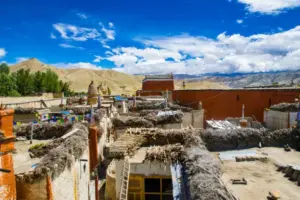
The region was completely sealed off to foreign visitors until 1992. Not restricted — sealed. And the landscape reflects that history. You’re not walking through a lush Himalayan forest here. Upper Mustang is a high desert, genuinely. Wind-carved cliffs in ochre and rust. Ancient cave dwellings cut into cliff faces by people who lived there centuries ago. The walled city of Lo Manthang, sitting at 3,840 metres, looks like something from a different era entirely, which it is.
The culture is Tibetan, not Nepali. The monasteries aren’t attractions. They’re working institutions. Some of the older residents speak a dialect that sounds nothing like Nepali.
Permit costs changed in November 2025, and the change is significant. Before, you paid USD 500 flat for ten days regardless of how long you were actually inside the restricted zone. That system is gone. The current rate is USD 50 per person per day from the moment you cross the Kagbeni checkpoint. So a five-day visit costs USD 250. A twelve-day visit costs USD 600. You only pay for what you actually use. You still need the Annapurna Conservation Area Permit on top, around USD 20 to 25. A licensed guide is required. Minimum two trekkers on the permit.
March through November is the viable window. Spring and autumn are clearer and more predictable.
Manaslu Circuit
Straight up: Manaslu Circuit might be the best trekking route in Nepal that most people aren’t doing.
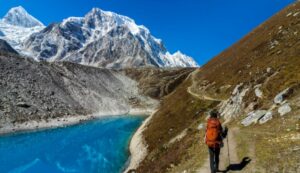
It circles the eighth-highest mountain in the world. The Larkya La pass at just over 5,100 metres is a genuine physical test, not the kind of pass you saunter over. The villages along the way still carry real Tibetan cultural roots rather than the version adapted for tourism that you sometimes find on busier trails. And the trail is quiet. Not metaphorically quiet. Actually quiet.
For permits, you’re looking at the restricted area permit billed weekly, the Manaslu Conservation Area Permit, and if your route finishes by crossing into the Annapurna region, the ACAP as well. Budget somewhere around USD 100 or more in permit fees, depending on how long your itinerary runs. Your agency handles the applications, but knowing the cost structure before you sit down with them is useful.
March to May and September to November are the windows that work.
Tsum Valley
Tsum Valley doesn’t get as much attention as Manaslu, even though it’s often done as part of the same trip, and that’s a shame because it’s something else entirely.
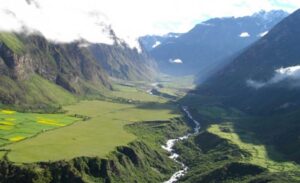
Hidden behind the Ganesh and Sringi Himalaya ranges, the valley has been a Tibetan Buddhist pilgrimage route for generations. Active monasteries, terraced fields growing buckwheat and barley at altitudes that seem to defy the logic of farming, communities where traditions that barely exist elsewhere are still part of daily life.
Permit-wise, it falls under the same conservation area as Manaslu, so the structures overlap. Most trekkers combine both into one longer itinerary, which makes practical sense and gives you time to actually take in what you’re seeing.
Same seasonal windows as Manaslu: spring and autumn.
Kanchenjunga
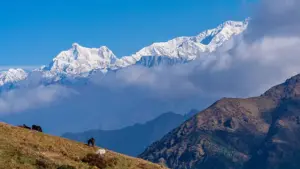
Far eastern Nepal is its own world. The third-highest mountain on earth dominates the skyline, and the two base camp routes are among the least-walked major trekking routes in the country.
The wildlife is specifically remarkable here. Red pandas in the lower forests. Snow leopards are present, though not commonly spotted. Himalayan wolves. Rhododendron forests in spring that look almost aggressively colourful. Annual visitor numbers in this region stay genuinely low, and the ecosystems reflect that.
Permit costs are more manageable than in most restricted areas. The Kanchenjunga Conservation Area Permit is around 2,000 NPR. The Restricted Area Permit runs roughly USD 20 per week. Getting there from Kathmandu adds to the overall budget, but the permit component is not the expensive part of this particular trek.
March to May and October to November.
Dolpo
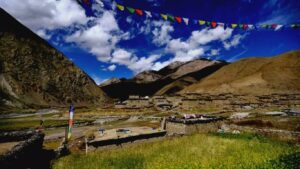
Dolpo is not for everyone, and it doesn’t try to be.
Upper Dolpo has a restricted area permit that costs USD 500 for the first ten days, then USD 50 for each additional day. That’s before you factor in the domestic flights to remote airstrips, full camping logistics because teahouse infrastructure is limited across much of the route, a licensed high-altitude guide, and porters for the camping gear. This is an expedition, not a teahouse trek.
Lower Dolpo is a different proposition at USD 20 per week for the restricted permit. Both sections move through Shey Phoksundo National Park. Phoksundo Lake is there, and the lake is worth going to see specifically — the colour is a deep, almost impossible turquoise that photographs don’t quite capture, and in-person catches you off guard.
What the expense buys you in Dolpo is a region that feels genuinely separated from the world outside it. That feeling is rare now. Dolpo still delivers it.
May through October works best here. The mountain ranges cast a rain shadow that keeps Dolpo drier during the monsoon than most of Nepal, which is counterintuitive but real.
What Each Permit Costs Right Now
| Trek | Restricted Area Permit | Other Permits You’ll Need |
|---|---|---|
| Upper Mustang | USD 50 per person per day | ACAP (~USD 20–25) |
| Manaslu Circuit | Weekly rate, roughly USD 100+ total | MCAP required |
| Tsum Valley | Combined with Manaslu | MCAP required |
| Kanchenjunga | ~USD 20 per week | KCAP (~2,000 NPR) |
| Upper Dolpo | USD 500 (first 10 days), USD 50 per day after | Shey Phoksundo NP permit |
| Lower Dolpo | USD 20 per week | Shey Phoksundo NP permit |
The Guide Situation
People ask whether there’s a workaround. Hire a guide on paper, trek independently on the ground. Use the guide for the checkpoints and then split off.
There isn’t a workable version of this. Checkpoints along restricted routes check your permit and your guide’s credentials together. If the guide isn’t present or the documentation doesn’t line up, you get sent back. Permit fees already paid don’t come back with you.
Setting the legal side aside, the practical argument for a legitimate guide in these areas is strong on its own. Trails in restricted zones are often unmarked or minimally marked. Weather at altitude moves faster than forecasts suggest. A medical evacuation from Dolpo or Kanchenjunga is a logistical operation that takes real time to set in motion. A guide who knows the terrain personally, has contacts in the villages, and can communicate with locals is not a luxury add-on. That’s the baseline infrastructure that makes these treks function safely.
One more thing: you need a minimum of two trekkers on the restricted area permit. Solo travellers need to either join a group departure or ask their agency to clarify whether their guide’s presence satisfies the minimum requirement for their specific trek.
Restricted vs Popular Treks — The Honest Comparison
| Restricted Treks | Popular Routes (EBC, Annapurna) | |
| Crowd level | Very few trekkers | Busy in peak season |
| Permit cost | Higher | Lower |
| Guide | Required by law | Strongly recommended |
| Trail marking | Often minimal | Well-marked |
| Cultural feel | Largely intact | More tourism-adapted |
| Total cost | Considerably more | More budget-friendly |
Before You Go — Things That Actually Matter
Permits take time. Three to four weeks of lead time before departure is the comfortable zone. Last-minute processing through the Department of Immigration is possible but stressful, and you don’t want to start a remote trek having been stressed by paperwork for the past week.
Acclimatisation is not optional. Most restricted area routes cross passes between 4,500 and 5,400 metres. Spending extra days at moderate altitude before heading into the high terrain makes a measurable difference to how your body performs up there. Neither Kathmandu at 1,400 metres nor Pokhara, lower than that, is adequate preparation for Larkya La.
Cash, Nepali Rupees, more than you think you need. Permit fees quoted in USD are paid in Rupees at the point of collection. ATMs exist in Kathmandu and Pokhara. After that, they become increasingly theoretical.
Ask before photographing. Some communities are relaxed about cameras. Others genuinely aren’t. The villages and monasteries in restricted areas are places where people live and practice their religion. Behave as a guest, not a sightseer.
Questions People Usually Have
What is a restricted trekking area in Nepal?
A government-designated zone that requires a Restricted Area Permit for entry. The permit must be obtained through a registered Nepali trekking agency. Cannot be applied for individually under any circumstances.
Which treks need special permits?
Upper Mustang, Manaslu Circuit, Tsum Valley, Kanchenjunga, Upper and Lower Dolpo, and Nar Phu Valley all require Restricted Area Permits alongside standard conservation or national park permits.
Can I go without a guide?
No. A licensed guide is legally required for the entire duration of any restricted trek. No permit is issued without confirmed guide and agency documentation. There are no exceptions to this.
What do permits cost realistically?
USD 20 per week at the low end (Kanchenjunga, Lower Dolpo), USD 50 per person per day for Upper Mustang, and USD 500 for ten days in Upper Dolpo. Total trip costs stack on top of that: flights, agency fees, guide, porter, food, and accommodation.
Are these treks worth the extra expense?
For people who’ve done the classic routes and want something that hasn’t been smoothed into a tourism product yet — yes. The quiet alone is worth something. The cultural depth is worth more.
Come Trek With Us
Green Horizon Tour runs restricted area treks with guides who have walked these routes personally. Not read about them. Walked them.
We handle the permits, the agency submissions, the checkpoint documentation, and the logistics. You handle showing up with decent boots and a willingness to be somewhere most people haven’t been.
Visit greenhorizontour.com to see current restricted trek packages or reach out to build a custom itinerary around your dates and budget.
The paperwork is the hard part. We make it not hard.


How to book a trip?

make free inquiry

confirm the trip
