


Best Adventure Activities in Nepal for Thrill Seekers (2026 Guide)
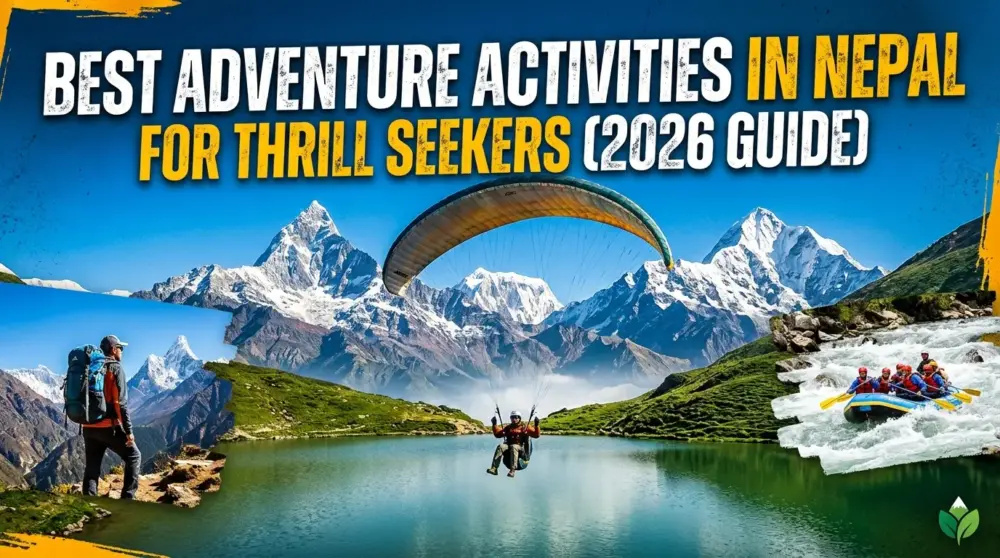
Adventure Activities in Nepal are among the most thrilling in the world. From trekking through the towering Himalayas to paragliding over Phewa Lake, bungee jumping into gorges, and exploring jungle safaris, Nepal offers an unmatched variety of adrenaline-packed adventures. Spread across a country smaller than most people expect, these activities are available at prices that genuinely surprise visitors.
Ask someone who has been to Nepal what it is actually like and watch their face. They pause. They usually say something like “you just have to go,” which is an annoying non-answer until you go, and then you completely understand why that is the only honest thing they could say.
Nepal does not work the way other adventure destinations work. You do not show up, tick off a list, and go home satisfied. You show up, do three things on the list, discover six more you had never heard of, and find yourself at a teahouse somewhere above 3,000 metres calculating whether you can extend your visa. It happens to people constantly. The mountains and the river gorges and the jungle lowlands, just have a pull that is hard to explain until you are inside it.
And for adventure specifically, Nepal is difficult to beat. Eight of the world’s fourteen highest mountains are here. Glacier-fed rivers tear through gorges that took millions of years to form. Pokhara sits at the edge of a lake looking directly at the Annapurna range and has somehow become one of the best paragliding spots on the entire planet. Chitwan, down south, has tigers and one-horned rhinos walking around freely. All of this within one country, most of it under a budget that would barely cover one activity in Switzerland.
Why Nepal Works So Well for Adventure Tourism
The honest answer is geography. Nepal’s topography is just absurdly varied for a country this size. You have altitude going from roughly 60 metres at the Terai lowlands all the way up past 8,800 metres at Everest, and almost every kind of terrain in between — subtropical jungle, river gorges, high-altitude desert, rhododendron forests, glaciers. That variety creates conditions that make different adventure types possible within short distances of each other.
The other honest answer is price. Nepal is not cheap in the way that “budget travel” sometimes implies low quality. It is more than the dollar goes very far here. A tandem paragliding flight over Phewa Lake with the whole Annapurna range stretched behind you costs $35 to $40. The same activity in New Zealand costs $200 plus. The bungee jump at The Last Resort — 160 metres over the Bhote Koshi gorge, one of the most dramatic bungee setups in Asia —runs $90 to $110. Comparable setups elsewhere charge closer to $200.
Beginners do well here, too. That gets underplayed. Nepal is not exclusively for people who have done this before. The paragliding operators in Pokhara run beginner courses every single day. The Trishuli rafting works for people who have never been in a raft. The shorter treks, like Poon Hill, are done every week by people in fairly ordinary physical shape who just want to see the mountains. Nepal has a genuine range.
Top 10 Best Adventure Activities in Nepal
1. Trekking in the Himalayas
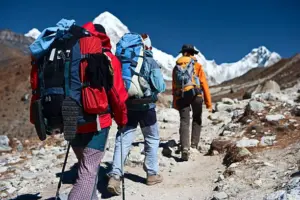
Trekking is what Nepal is most known for, and it deserves that reputation. Everest Base Camp gets the most attention — and fairly, it is extraordinary —but the Annapurna Circuit is arguably a better overall experience for most people because the terrain variety is wider, the villages are more interesting to walk through, and the altitude progression is slightly more forgiving if you are newer to high-elevation trekking.
Neither route requires technical climbing skills. Base Camp sits at 5,364 metres, and the walk in takes around twelve days each way, which is a long time to be doing something physically demanding. Fitness matters. Patience matters more. The people who enjoy it most are not always the fittest; they are the ones who are genuinely willing to slow down and let the landscape arrive at its own pace.
Worth knowing: Lukla flights, the standard way to start the Everest route, get delayed frequently. Build flex days into any Everest itinerary, or you will spend time being anxious about missing flights home.
2. Paragliding in Pokhara
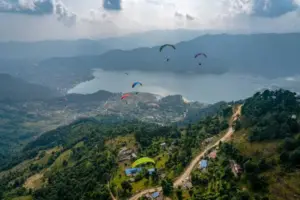
Pokhara’s reputation for paragliding is not hype. The thermal conditions above the Phewa Lake valley are genuinely reliable, the views from altitude are mountains-and-lake at the same time, and the tandem flights are smooth enough that people with no experience regularly describe them as one of the most enjoyable things they have ever done. Flight duration is typically 30 to 45 minutes. You do not control anything. You run four steps, and you are in the air, and your only job after that is to look around and try to take it in.
Go in the morning. Clouds build over the valley from midday onwards, and the mountains are clearest in the first few hours of light.
3. Bungee Jumping at The Last Resort
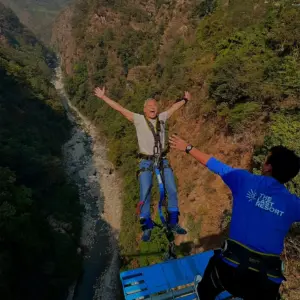
About three hours east of Kathmandu, The Last Resort runs what remains one of the most intense bungee setups in Asia. The jump is from a suspension bridge strung over the Bhote Koshi gorge. The freefall is 160 metres. The river below is loud and white and very far down, and your brain knows exactly how far down it is the whole time you are standing on that platform.
Nobody who has done this pretends it is not terrifying. That is the point. Most people describe the twenty seconds after the bounce settles as the most alive they have felt in a long time. The operators are experienced, and safety standards are rigorous. But it is still a 160-metre freefall into a gorge, and you should go in knowing that.
4. White Water Rafting
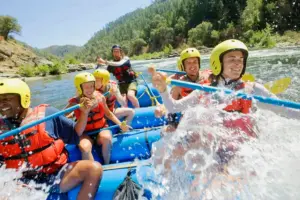
Nepal’s rivers come straight off Himalayan glaciers, and that means cold, fast, and very real. The Trishuli is the most accessible from Kathmandu and Pokhara and handles beginners well — Class III rapids, good scenery, easy logistics. If you want something harder, the Bhote Koshi near The Last Resort runs Class IV and V and is a different kind of experience entirely.
Multi-day trips on the Sun Koshi are worth looking at if you want rafting to be a proper adventure rather than a half-day activity. Nine days start to finish, camping on river banks, moving through landscapes that most tourists never see. People who have done Sun Koshi consistently put it among the best things they have done anywhere.
5. Zipline in Pokhara
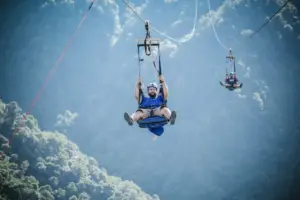
The Zip Flyer above Pokhara is genuinely one of the world’s steepest ziplines. You launch from a hilltop, and the gradient is steep enough to push you over 120 km/h before you reach the valley floor. The whole run is under two minutes. People who have done both the zipline and the bungee often say the zipline made them more nervous, which is a strange thing to say about something you are attached to the entire time. The views on the descent are extraordinary if you can manage to open your eyes.
6. Jungle Safari in Chitwan National Park
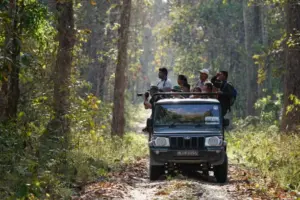
Chitwan gets overlooked by people who think Nepal is only mountains. That is a mistake. Chitwan National Park is a UNESCO World Heritage Site in the country’s southern lowlands, about five hours by road from Kathmandu, and it is one of the better wildlife destinations in Asia.
One-homed rhinos are genuinely common here. Tigers exist in real numbers. Canoe safaris along the Rapti River at dawn are the kind of slow, quiet experience that stays with people far longer than the adrenaline activities do —watching a rhino on the opposite bank while your canoe drifts without sound is not something you forget quickly.
Do not go for just one day. Two is minimum, three is better.
7. Mountain Biking
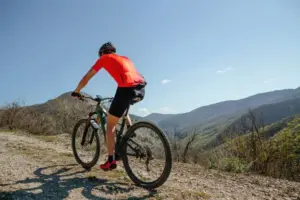
The Kathmandu Valley rim trails run through Newari villages, hilltop temple complexes, forested sections, and open ridgelines with mountain views that stop you in your tracks. The cultural element makes it different from mountain biking almost anywhere else. You are not just riding terrain, you are moving through centuries of history with occasional technical descents.
Experienced riders will find it properly challenging in places. First-timers can take gentler routes.
8. Rock Climbing
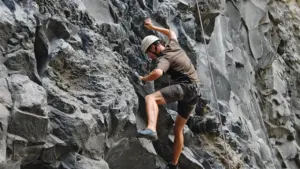
Nagarjun Forest sits close to Kathmandu city and has natural rock faces suited to beginners through intermediate levels. Several indoor walls in Thamel handle complete newcomers who want to try before committing to outdoor climbing. The options scale up significantly as you move toward the mountains.
9. Peak Climbing
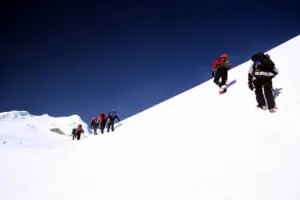
Island Peak at 6,189 metres and Mera Peak at 6,476 metres are where recreational trekking ends and something more serious begins. Neither demands advanced technical experience, but both will ask for more than most people have been trained for. The approach to Mera is remote and beautiful and exhausting in exactly the right way. From the summit on a clear day, you can see five 8,000-metre peaks simultaneously. Everest, Lhotse, Makalu, Kanchenjunga, Cho Oyu — all at once. There is genuinely no way to prepare for what that looks like.
10. Canyon Swing and Canyoning
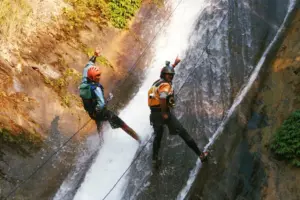
The canyon swing at The Last Resort launches from the same bridge as the bungee, but instead of dropping straight down, you swing outward in a wide pendulum arc across the gorge at around 150 km/h. A different kind of fear from the bungee. Bigger and more sustained. Canyoning routes on rivers near Chitwan and the Trishuli involve rappelling active waterfalls and swimming through gorge sections with guides who know every metre. Physically demanding and genuinely fun.
Best Adventure Activities for Beginners in Nepal
Pokhara is where to start. Paragliding first —zero experience needed, the instructor manages everything, and you will land already thinking about how soon you can go again. Poon Hill trek is three to four days, with a manageable gradient, and the sunrise view from the top over Dhaulagiri and the Annapurna range is the kind of thing people bring up for years afterwards.
Trishuli rafting on the easier sections is another good start —proper rapids, cold glacier water, and no experience required. Chitwan safari needs no physical preparation at all. You sit in a jeep or a canoe, and the wildlife does all the work.
Extreme Adventure Activities in Nepal
Bungee at The Last Resort. Bhote Koshi Class IV/V rafting. Island Peak or Mera Peak climbing. Canyon swing. These are not theme park versions of extreme adventure. They are the real thing, run by professionals who take safety seriously, but the underlying activity is genuinely demanding and cannot be made otherwise.
What Does Adventure in Nepal Actually Cost
| Activity | Nepal | New Zealand | Switzerland |
|---|---|---|---|
| Paragliding tandem | $35 — $60 | $180 — $280 | $200 — $350 |
| Bungee jumping | $90 — $110 | $175 — $225 | $180 — $240 |
| White water rafting | $80 — $100 | $120 — $160 | $150 — $200 |
| Zipline | $55 — $70 | $100 — $150 | Unavailable |
| Jungle safari 2 days | $150 — $200 | Unavailable | Unavailable |
| EBC Trek guided all-in | $1,200 — $1,800 | Not comparable | Not comparable |
A week of mixed adventure —rafting, paragliding, a short trek, one adrenaline activity — is doable for under $600 all-in if you plan sensibly. That includes food and accommodation.
When Should You Go
October is the single best month for most people. Post-monsoon air means mountain views that look almost artificial; they are so sharp. Temperatures at trekking altitude are cold at night but manageable during the day, and the trails are alive.
March through May works well, too. Rhododendrons are blooming at mid-altitude, temperatures are warmer, and fewer people are on the trails than in autumn.
June through August — the monsoon — is genuinely difficult for trekking. Leeches on trails, cloud blocking mountain views, rivers running dangerously high. Chitwan is an exception. Wildlife is actually more active during this period, and safari conditions are often surprisingly good.
December through February suits lower-altitude activities fine. Cold at elevation, but Pokhara, Chitwan, and the valley trails are perfectly pleasant.
Safety: The Honest Version
Book with Nepal Tourism Board-registered operators. Not because it is a formality but because it genuinely matters. Ask them directly what their emergency protocols are. Ask about guide certifications. Any operator worth booking will answer both without any fuss.
Altitude sickness is the most common serious problem on Himalayan treks, and it does not care how fit or young you are. Ascend slowly. Drink more water than you feel necessary. Do not push through symptoms because you have a tight itinerary. A schedule is not worth a medical emergency in a remote valley.
Tell someone at home where you are going and when you expect to be back. Check the weather before any outdoor activity. When your guide says conditions are not right — and they will sometimes say this — that call is not open to debate. These people read this mountain and this river every single day. You have been here a week.
Nepal vs Everywhere Else for Adventure
Switzerland has the Alps and an organised infrastructure. New Zealand has excellent adrenaline tourism and great scenery. Both are good. Neither has Himalayan-scale altitude, nor glacier rivers, nor a jungle national park with tigers, nor aerial sports over a mountain lake, all within a single two- week itinerary, for prices that do not require you to remortgage anything.
Nepal is in a category by itself for the combination of what it offers, what it costs, and how genuinely wild the landscape still is.
How to Actually Plan This Trip
Start with your base locations. Pokhara for aerial and water sports —that is your adventure hub. Kathmandu for trekking access and cultural orientation before you head into the mountains. Chitwan for wildlife, best tackled at the end when your legs need a rest from trails.
Factor in permit costs early. Annapurna Conservation Area permits, Sagarmatha National Park entry for Everest treks, and TIMS cards —these add up and catch people off guard when they have already fixed their budget.
Only check reviews from the last six months. Operator quality shifts and reviews from 2022 tell you almost nothing about what a company is like in 2026.
Rent gear in Thamel rather than carrying it from home—down jackets, sleeping bags, trekking poles — all available cheaply in Kathmandu’s main tourist district. Your airline baggage allowance will thank you.
Build in slack days. Lukla flights are delayed. Weather changes. Rivers shift. The travellers who fight the schedule end up stressed in one of the most beautiful places on earth. The ones who leave room in the plan consistently have the best trips.
Closing Thought
People come back from Nepal changed in ways that are hard to explain without sounding dramatic. Something about the scale of the landscape and the slowness of moving through it on foot, and the way the people here treat strangers — it adds up to something that ordinary tourism does not produce.
The trails are open in 2026. The Bhote Koshi is running. The thermals above Pokhara are doing what they always do.
Stop putting it off.
Book your Nepal adventure with Green Horizon Tours at greenhorizontour.com and let the team put together an itinerary that actually fits what you are looking for.
Frequently Asked Questions
What is the most popular adventure activity in Nepal?
Trekking by a wide margin. Everest Base Camp and Annapurna Circuit draw the biggest numbers every year. Among non-trekking activities, paragliding in Pokhara gets booked more than anything else.
Is Nepal safe for adventure sports?
Yes, with registered operators. The industry is properly regulated, and top companies work to international safety standards. Do your research, ask direct questions before booking, and you will be in capable hands.
What is the cheapest adventure activity in Nepal?
Day hikes around Pokhara or the Kathmandu Valley with a local guide start from around $10 to $20. Paragliding at $35 to $40 is an extraordinary value for what it actually delivers.
Can complete beginners do adventure activities in Nepal?
Genuinely yes. Paragliding, Trishuli rafting, Chitwan safari, and shorter treks like Poon Hill run daily with first-timers, and no prior experience is needed for any of them.
Which city is best for adventure in Nepal?
Pokhara offers the widest range of activities in one location. Kathmandu for trekking access and logistics. Chitwan for wildlife. Most good itineraries include all three.


How to book a trip?

make free inquiry

confirm the trip
