


Best Beginner Treks in Nepal — Complete First-Time Guide (5 Routes)
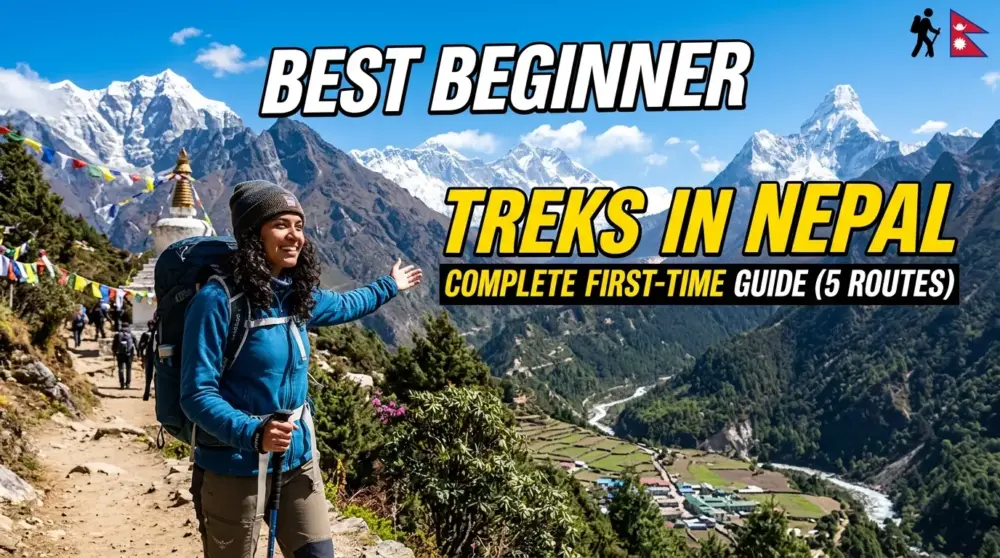
Best beginner treks in Nepal offer some of the most unforgettable first-time Himalayan experiences, combining accessible trails with incredible mountain views. Let me tell you something about the first time you see the Himalayas properly.
Not from a plane window, not in a photo — actually see them. You’re walking through some dusty little village, maybe tired, maybe slightly questioning your life choices, and then the clouds just… move. And there they are. Enormous. White. So big they don’t look real, like someone pasted them onto the sky using the wrong scale.
Nothing prepares you for that. Nothing.
But before that moment comes, the part everyone stresses about — choosing the right trek, figuring out if you’re actually capable of doing this, wondering if you’ve bitten off more than you can chew.
So let’s sort all of that out properly.
The Fitness Thing — Because Everyone Asks
Right. You’re not an athlete. Maybe you walk the dog, take the stairs sometimes, occasionally think about joining a gym. And now you’re wondering whether any of that qualifies you for trekking in the Himalayas.
Here’s the genuinely honest answer: probably yes.
The beginner trails in Nepal aren’t technical. There’s no scrambling, no ropes, no moments where you look down and regret everything. What there is — and you should know this going in — is a lot of uphill walking. Gradual, mostly. Sometimes steep for short stretches. But walking.
A friend of mine did Poon Hill last spring. Mid-forties, works a desk job, describes his fitness as “functional but not impressive.” He finished the trek, saw the sunrise, ate roughly his bodyweight in dal bhat, and came back telling everyone it was the best thing he’d ever done.
The altitude is the thing that actually catches people. Not the distance, not the gradient — the altitude. Because altitude doesn’t care about fitness. It doesn’t care that you’ve been going to the gym three times a week or that you once ran a half-marathon. It will find the fittest person in your group and humble them just as readily as anyone else if they ascend too fast.
The solution is boring, but it works: go slower than you think you need to. Drink water until you’re tired of drinking water. Rest when your body asks for it, not just when the schedule says to.
Do those things, and most healthy adults can handle Nepal’s beginner treks without any special preparation.
What “Beginner-Friendly” Actually Feels Like
Travel websites are pretty loose with this phrase. So here’s what it actually means when you’re on the ground.
It means your walking day is four to six hours — long enough to feel like a proper day, short enough that you’re not destroyed by the time you reach the teahouse. It means the trail is so well-worn that getting lost would genuinely require effort. It means at the end of every walking day, there’s a real bed, a hot meal, someone making you tea you didn’t ask for because they could tell you needed it.
It does not mean flat. Nepal doesn’t do flat. Your calves will discover muscles they didn’t know they had.
It does not mean the views are average. This is actually the thing that surprises first-timers most — the beginner trails aren’t the consolation prize. Poon Hill is technically one of the most accessible treks in Nepal, and it has some of the most staggering sunrise views anywhere in the Himalayas. The two things aren’t in conflict here.
Best Beginner Treks in Nepal
1. Ghorepani Poon Hill — Start Here, Seriously
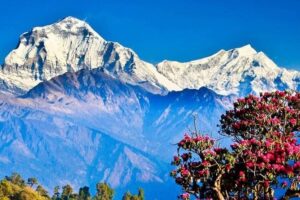
If someone twisted your arm and said pick one, this is the one.
Four to five days out of Pokhara. Well-marked trail, good teahouses, proper Gurung villages where actual life is happening around you rather than for you. The kind of place where you eat breakfast next to a local farmer heading out for the day, and somehow that feels more interesting than any museum you’ve ever visited.
The trail itself moves through terraced farmland, then rhododendron forest, then up to Ghorepani, where the real thing happens.
Poon Hill morning. Four-thirty AM. Cold in a way that feels personal. Everyone in the teahouse is doing that half-asleep shuffle toward boots and headlamps. The hike up takes about forty-five minutes and feels slightly endless when you’re doing it in the dark.
Then the sky starts changing.
Deep violet first. Then lighter. Then the first gold hits the top of Annapurna South and spreads slowly downward while the valley below is still completely dark and quiet. Machhapuchhre right there — that ridiculous fishtail shape — and Dhaulagiri behind it and the whole range doing something that makes every photo you’ve ever seen of it feel completely inadequate.
People cry on Poon Hill. Grown adults who weren’t expecting to. It just happens.
There’s a reason this is the default first-trek recommendation. The reason is that it earns it every single time.
2. Mardi Himal — Same Region, Completely Different World
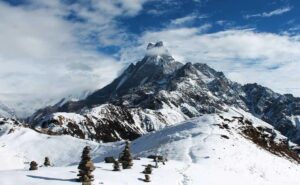
Mardi Himal sits in the same general area as Poon Hill but sees maybe a quarter of the traffic. Which is baffling because the views are extraordinary.
The trail spends its first couple of days in proper forest — dense rhododendron, birds making noise in every direction, almost no one else around. Then it climbs onto a high ridge, and Machhapuchhre appears suddenly and up close in a way that makes you audibly react. Like your brain hasn’t been warned that something that large was about to appear.
High camp is around 4,500 meters. Higher than Poon Hill, so a bit more altitude to manage. But the ascent is spread sensibly across five to six days, and most people who respect the pace get through it fine.
The thing about Mardi Himal is the atmosphere. Long stretches of trail with nothing but your own footsteps and birds. Small teahouses where you’re one of maybe eight guests. No queues for the toilet at four in the morning. The feeling of being somewhere most people passing through Nepal never bother to look for.
If crowds make you quietly exhausted, choose this without a second thought.
3. Langtang Valley — The One That Surprises Everyone
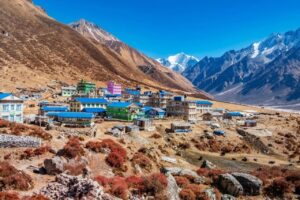
Most first-timers in Nepal head straight to Pokhara and never think to look anywhere else. Which means Langtang sits there, north of Kathmandu, quietly excellent and largely ignored by the international trekking crowd.
The cultural atmosphere here is completely different from Annapurna. Deep Tibetan influence monasteries with real age to them, yak herders who look at you with polite indifference, butter tea if you’re brave enough to try it, stone villages that feel like they’ve been standing since before tourism existed as a concept.
Seven to eight days, topping out at Kyanjin Gompa around 3,800 meters. Comfortable daily walking throughout. Thin crowds even in peak season.
Something else worth saying about Langtang: the 2015 earthquake hit this valley harder than almost anywhere else in Nepal. Whole sections of the village were buried. The community was rebuilt from scratch. Choosing to trek here, eating in local teahouses, tipping guides and porters properly, it matters here in a way that feels genuinely worth acknowledging when you book.
4. Helambu — The Trek Nobody’s Heard Of (Which Is Why It’s Great)
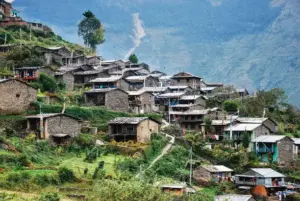
Ask most tourists in Kathmandu about Helambu, and you’ll get a blank look. This is one of the reasons to recommend it.
Trailhead is a few hours northeast of Kathmandu by road. No domestic flight. No bus journey through winding mountain passes in the dark. Just out of the city and into hills that stay at sensible altitudes throughout — rarely above 3,600 meters — which makes it the best option for anyone with genuine altitude nerves or very limited time.
Trails pass through Sherpa and Tamang villages that feel genuinely unpolished by tourism, small monasteries, apple orchards, and forested ridges where you might walk for an hour without seeing another trekker.
Mountain views are more gentle than dramatic. But the quiet on this trail is something you can’t find on the busier circuits anymore. And sometimes that’s exactly what a first trek needs to be.
5. Annapurna Base Camp — For the Ones Who Want to Really Go For It
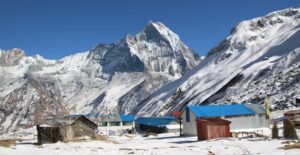
Different category from everything else on this list. This one asks more of you.
4,130 meters. Natural amphitheater of peaks — Annapurna I, Hiunchuli, Gangapurna, Machhapuchhre, surrounding you. Not a viewpoint. Something more than that. Standing there feels like being inside something ancient that predates every human concern by several million years.
Good trails all the way up. Teahouses at every stop, including base camp itself. Seven to nine days standard.
Motivated beginners complete this trek regularly. The ones who have a hard time are almost always the ones who felt great on day three and pushed too hard. Don’t do that. Rest days exist for reasons. Build one in.
Take a guide on this one. Not because the trail is complicated, but because the altitude genuinely warrants having someone experienced beside you who has seen altitude sickness develop a hundred times and knows the signs before you feel them yourself.
Poon Hill vs Mardi Himal — Just Decide Already
Poon Hill: social, iconic, proven, busy in a fun way during peak season.
Mardi Himal: quieter, more personal, slightly higher, same general area with a completely different feel.
That is genuinely the whole decision. Neither is wrong. The only wrong move is spending three weeks reading comparison articles instead of just booking one of them.
The Guide Question — Honest Answer
Technically, independent trekking is possible on the popular routes. Trails are marked. Other trekkers are around. Some people manage fine alone.
For the first time in Nepal, though a different country, a different language, a different altitude, logistics you’ve never dealt with before — a guide changes what the whole experience actually is.
Not just because they handle the paperwork and know where they’re going. Because a genuinely good local guide tells you things about every village you walk through that you’d completely miss without them. They notice when your lips are going slightly blue before you’ve even noticed a headache starting. They know which teahouse has been using the same cooking oil for two weeks and which one actually has fresh vegetables. Small things that add up to a completely different trip.
Green Horizon Tour builds their beginner packages specifically around what first-timers need — sensible pacing rather than rushing, experienced local guides who actually know these specific trails, and support from the moment you land. If you want the first trek to be genuinely good rather than just something you survived, they’re worth contacting before you book anything else.
What It Costs — Actual Numbers
Solo budget trekking: $25–$40 per day on trail covering basic teahouses and meals. Add permit fees — around $30–$40 for the Annapurna region — and Poon Hill done independently totals roughly $150–$250, depending on how you travel.
Guided packages: $400–$800 depending on route, group size, and what’s included. For most first-timers, that investment pays for itself before day two.
Permits are mandatory. Non-negotiable. Any operator suggesting they can skip them is communicating something important about their standards — none of it good.
Mistakes That Quietly Wreck First Treks
Wrong season. Monsoon is from June through August. Everything gets wet, muddy, and invisible behind clouds. Spring and autumn exist for very good reasons. Use them.
Overpacking. The trail doesn’t care about your contingency layers. Gear rentals in Kathmandu and Pokhara are cheap and genuinely good quality. Pack for what you’ll actually use.
Brushing off altitude. This one actually matters. Persistent headache, nausea, dizziness — these are signals, not inconveniences. Slow down. Rest. Descend if things get worse. No summit view is worth getting seriously sick over.
Treating it like a race. The mountain isn’t going anywhere. That teahouse will still be serving tea at four in the afternoon. Slow down and actually be in the place you’ve come so far to reach.
When to Go
March to May — rhododendrons on every hillside, warm lower elevations, solid mountain views. Genuinely lovely time to be on the trail.
Late September to November — post-monsoon air is the clearest it gets all year. Best mountain visibility. The busiest season is especially around Annapurna.
December to February — cold, quiet, beautiful on lower routes. Some passes are closed. A specific kind of traveler absolutely loves winter trekking for the empty trails.
June to August — not for beginners. Honestly, not ideal for anyone who came specifically to see mountains.
The Thing That Actually Happens Out There
Day three is when something shifts.
The legs stop screaming and find a rhythm. The brain stops running logistics. The breathing settles into something automatic. And you’re just walking — actually walking — through a landscape that operates on a completely different scale from anything in ordinary life.
Then the clouds move or the trail corners, and there’s a peak filling the entire sky. Not a photo of a peak. Not a peak in the distance. A peak that is just there, massive and quiet and completely indifferent to how long you saved for this trip or how many comparison articles you read before booking.
That specific moment — which comes for almost everyone somewhere on these trails — is what people are actually going for. Not the certificate. Not the photo. That few seconds of feeling genuinely small and genuinely alive at the same time.
Pick a trail that honestly matches where you are right now. Go at your own pace. Trust that the mountains will meet you there.
They always do.
Questions People Actually Ask Before Their First Trek
1. Can I do this with zero hiking experience?
Yes. Poon Hill and Helambu are done regularly by people who’ve never hiked a day in their life. Pace matters infinitely more than experience.
2. Easiest trek in Nepal for a complete beginner?
Helambu for simple logistics and low altitude. Poon Hill for the best combination of accessibility and mountain payoff.
3. How should I actually prepare physically?
Walk regularly for a month beforehand. Weekend hikes on uneven ground help more than gym sessions. You don’t need a programme — you just need to use your legs more than you currently do.
4. Cheapest beginner option?
Helambu overall. Poon Hill costs a bit more and delivers significantly better high mountain views for the difference.
5. Safe for solo female trekkers?
Nepal ranks consistently among the safest trekking destinations in Asia. Solo female trekkers complete these routes routinely. A guide adds comfort and is worth considering for a first trip, regardless of gender.
6. What permits do I need?
Annapurna region: TIMS card plus ACAP permit, roughly $30–$40 total. Langtang: TIMS card plus Langtang National Park permit. A proper guide company handles all of this — just confirm it’s included before you hand over any money.
Planning your first Nepal trek and not sure where to start? Green Horizon Tour runs beginner-friendly guided packages built around proper pacing and guides who genuinely know these trails. Get in touch — the good teahouse beds fill up faster than most people expect.


How to book a trip?

make free inquiry

confirm the trip
