


The Ultimate Guide to Trekking in Nepal: Do You Really Need a Guide in 2026?
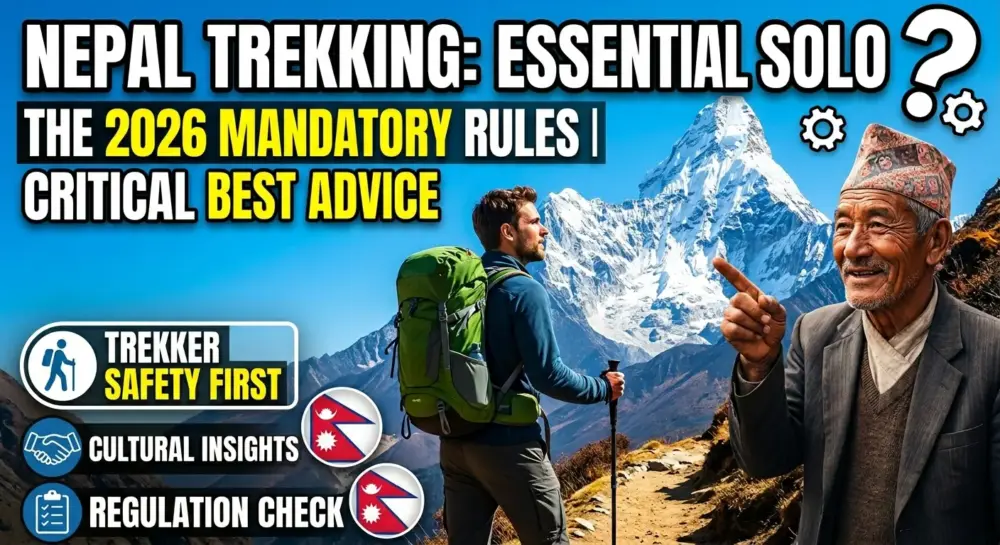
Nepal is often described as the “Roof of the World.” For decades, it has served as a sanctuary for those seeking to test their limits against the backdrop of the planet’s highest peaks. From the rugged beauty of the Everest Base Camp to the spiritual serenity of the Annapurna Sanctuary and the mystical, rain-shadowed valleys of Upper Mustang, the Himalayas offer an experience that is as much internal as it is physical.
However, as you sit down to plan your expedition, you will inevitably hit the most debated topic in the trekking community: Do you need a guide in Nepal?
In 2026, the answer is more complex than a simple “yes” or “no.” Between shifting government regulations, evolving safety standards, and a new emphasis on sustainable tourism, the choice you make will define your entire Himalayan experience. This comprehensive guide explores every angle of this decision, from legal mandates and costs to safety protocols and cultural depth.
1. The Legal Landscape: The 2026 “No Guide, No Trek” Policy
For years, Nepal was a haven for “Free Individual Trekkers” (FITs). You could grab a backpack, buy a map in Thamel, and head into the mountains. However, following several high-profile disappearances of solo trekkers and the increasing cost of search-and-rescue operations, the Nepal Tourism Board (NTB) transitioned to a mandatory guide policy.
The Current Mandate
As of March 2026, the Nepal government has fully standardized the requirement for all foreign trekkers to be accompanied by a government-licensed guide when entering National Parks and Conservation Areas.
This policy covers the “Big Three” regions:
-
Sagarmatha (Everest) Region
-
Annapurna Region
-
Langtang Region
Why the Change?
The shift wasn’t just about bureaucracy; it was about Safety and Sustainability.
-
Safety: Every year, solo trekkers went missing due to sudden blizzards or altitude-induced disorientation. Having a guide ensures that there is always a professional on-site to initiate a rescue.
-
Economic Impact: Hiring a guide ensures that the tourism dollar stays within the local mountain communities, providing livelihoods for thousands of families in high-altitude villages.
-
Environmental Protection: Guides are trained in “Leave No Trace” principles, ensuring that the fragile alpine ecosystem isn’t littered with waste.
2. The Practical Advantages: Why a Guide is Your Best Asset
Even if it weren’t a legal requirement, most experienced Himalayan veterans would still recommend a guide. Here is why:
A. Mastering the “Silent Killer”: Altitude Sickness
Acute Mountain Sickness (AMS) is the primary risk for anyone trekking above 3,000m. The symptoms—headache, nausea, and dizziness—can quickly escalate into High Altitude Cerebral Edema (HACE) or High Altitude Pulmonary Edema (HAPE), both of which can be fatal.
A licensed guide is trained to:
-
Monitor your oxygen levels: Most guides now carry pulse oximeters to check your blood oxygen saturation every evening.
-
Enforce acclimatization: They know exactly where you should sleep to follow the “climb high, sleep low” rule.
-
Decide when to turn back: In the “death zone” of ego, a guide provides the objective voice of reason when you are too exhausted to realize you are in danger.
B. Navigation in Unpredictable Terrain
Himalayan trails are dynamic. A path that was clear yesterday could be buried under a landslide or a sudden October snowstorm today.
-
Local Knowledge: Guides know the “shortcuts” and the safer alternative routes that don’t appear on paper maps or GPS apps.
-
Winter/Monsoon Shifts: During the shoulder seasons, many high passes (like Thorong La or Cho La) become treacherous. A guide’s ability to read the clouds and the wind can be the difference between a successful crossing and a dangerous retreat.
C. The Bridge to the Culture
Without a guide, you are merely a spectator. With a guide, you are a guest.
-
Language Barrier: While many teahouse owners speak basic English, the true stories of the mountains are told in Nepali, Sherpa, or Gurung. Your guide acts as a translator, allowing you to have meaningful conversations with the monks at Tengboche or the farmers in the Manang valley.
-
Spiritual Context: Why do you walk clockwise around a stupa? What do the different colors of prayer flags represent? A guide provides the context that turns a “hike” into a pilgrimage.
3. Logistical Peace of Mind
The administrative side of trekking in Nepal has become increasingly digitized in 2026. The days of standing in long lines at the tourism office in Kathmandu are mostly gone, but the digital systems can be finicky for foreigners.
E-TIMS and Permits
The Digital Trekkers’ Information Management System (E-TIMS) is now the standard. These permits are linked to your guide’s license. If you are with an agency, they handle all of this for you. You simply provide your passport copy and photos; they provide the paperwork that gets you through the checkpoints.
Securing the Best Teahouses
In peak months (October and November), the popular routes like the Annapurna Circuit or the Everest Base Camp trail are incredibly crowded.
-
The “Guide Network”: Guides use their mobile phones to call ahead to the next village. Because they have long-standing relationships with lodge owners, they can secure a room for you, while independent travelers might find themselves sleeping on a dining room bench.
-
Food Safety: Guides know which kitchens maintain the highest hygiene standards and which “special of the day” is actually fresh.
4. Understanding the Costs: Budgeting for 2026
Trekking in Nepal remains one of the best value-for-money adventures in the world, but you must budget correctly for your support staff.
Daily Rates for Trekking Staff
| Position | Daily Rate (USD) | Responsibilities |
| Professional Licensed Guide | $35 – $55 | Navigation, safety, logistics, and in-depth cultural education. |
| Porter-Guide (Hybrid) | $25 – $40 | Carries a limited load (up to 12kg) and provides basic guidance in English. |
| Porter | $20 – $30 | Carries your heavy gear (up to 20kg). Does not usually speak English. |
Tipping Culture
Tipping is not just “extra”—it is an expected part of the mountain economy. In 2026, the standard tip for a guide is roughly 15% to 20% of the total cost of the trek. This is usually presented in a “tipping ceremony” on the final night of the trek.
5. Decision-Making: Should You Go “Solo-Guided” or in a Group?
Since you now need a guide by law, the real choice is about the style of your trek.
The Case for Private Guided Treks
If you value privacy and flexibility, hiring a private guide is the best option.
-
Custom Pace: If you find a village you love, you can stay an extra day. If you’re feeling strong, you can push a little further.
-
One-on-One Learning: You have the undivided attention of an expert who can teach you about Himalayan flora, fauna, and history.
The Case for Group Expeditions
Joining a group (fixed departures) is ideal for solo travelers who want to meet like-minded people.
-
Lower Costs: You share the cost of the guide and potentially some transport.
-
Shared Motivation: When the trail gets steep and the air gets thin, having a “trail family” to cheer you on is incredibly motivating.
6. How to Choose a Guide and Agency
Not all guides are created equal. To ensure a high-quality experience, follow these 2026 vetting standards:
-
Check the License: A legitimate guide must carry a license issued by the Ministry of Tourism and the Nepal Academy of Tourism and Hotel Management (NATHM). Ask for a photo of their ID.
-
Verify the Agency: Ensure the trekking company is a member of TAAN (Trekking Agencies’ Association of Nepal). This ensures they pay their staff fair wages and provide them with proper insurance and gear.
-
Insurance is Mandatory: Do not hire a “freelance” guide off the street in Thamel. If they get injured or suffer from altitude sickness, you could be legally and financially responsible for their evacuation. Reputable agencies provide full insurance for their staff.
7. The Final Verdict
In the modern era of Himalayan trekking, the question is no longer about whether you can navigate a trail with a map. It’s about being a responsible traveler who values safety, cultural immersion, and local economic support.
Hiring a guide is the single most impactful thing you can do to ensure your Nepal trek is successful. You aren’t just paying for someone to show you the way; you are paying for a safety officer, a translator, a storyteller, and a friend.
Plan Your Journey with Green Horizon
At Green Horizon, we specialize in creating authentic, safe, and deeply personal trekking experiences. Our guides are not just employees; they are locals who have grown up in the shadow of the peaks they walk. We handle every detail—from your E-TIMS permits and internal flights to your acclimatization schedules—so you can simply breathe in the mountain air and enjoy the journey.
Contact Us to Start Your Adventure:
-
Office Location: Thamel Marg, Kathmandu, Nepal
-
Phone/WhatsApp: +977 9851077971, +977 9843728648
-
Website: https://greenhorizontour.com/
Ready to stand at the base of the world’s highest mountains? Reach out today for a free itinerary consultation!
Frequently Asked Questions (FAQ)
1. Can I still trek solo in the Everest region?
While the local municipality in Everest (Khumbu) sometimes has slightly different rules than the central government, the 2026 trend is toward mandatory guidance for all. It is highly recommended to check with us 30 days before you depart for the absolute latest local policy.
2. What happens if I don’t hire a guide?
You will likely be stopped at the first National Park checkpoint (e.g., Monjo for Everest or Jiri/Birethanti for Annapurna). Without a registered guide and a valid E-TIMS card, you will be denied entry and potentially fined.
3. Does my guide need to be from my specific trekking region?
Not necessarily, but it helps. A Sherpa guide for the Everest region or a Gurung guide for the Annapurna region often provides a much deeper level of local “insider” knowledge.
4. Is there a difference between a “Guide” and a “Leader”?
In larger expeditions, a “Leader” is often a highly experienced mountaineer with advanced medical training, while a “Guide” focuses on the daily trail navigation and logistics. For standard treks, a licensed trekking guide is more than sufficient.
5. How do I pay my guide?
Usually, you pay the trekking agency the contract price, and the agency pays the guide’s salary. However, tips should be given in cash (Nepali Rupees) directly to the guide at the end of the trek.
Have you trekked in Nepal before? What was the most valuable thing your guide taught you? Share your experience in the comments below!


How to book a trip?

make free inquiry

confirm the trip
