


Hidden Treks in Nepal : Most Tourists Don’t Know (7 Secret Trails for Real Adventure)
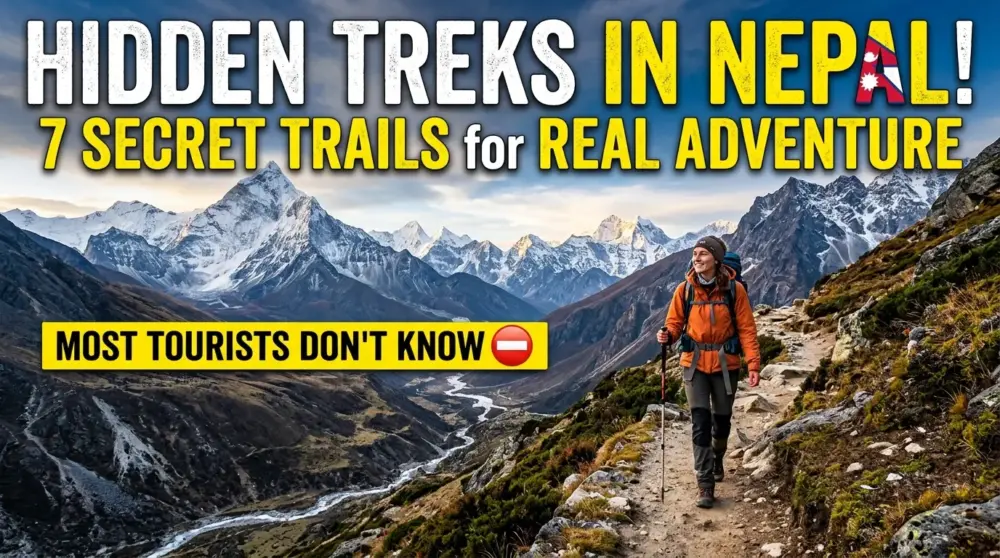
You know what nobody tells you before your first trip to Nepal? The trail to Everest Base Camp in October basically looks like a Black Friday queue. Except it’s at 4,000 metres and everyone’s wearing the same three North Face jacket colors.
I found this out the hard way.
Flew in with this whole mental image of empty mountain paths, prayer flags, maybe a yak or two. What I got instead was a conga line of trekkers, a teahouse charging airport prices for instant noodles, and a guy from Manchester doing a podcast recording mid-trail. Still did the trek. Still loved the mountains. But something about it felt — I don’t know — packaged like Nepal-flavored Nepal rather than actual Nepal.
That trip cracked something open for me, though. I started asking around. Talking to guides, other trekkers, and random people at tea shops in Thamel who looked like they’d been coming to Nepal for twenty years. And slowly, a completely different picture of this country began to form.
Turns out Nepal has around 1,000 documented trekking routes. Most foreign visitors walk maybe five of them. The rest of the country — the valleys, the passes, the villages, all of it — sits there. Quiet. Waiting for whoever bothers to look.
Hidden treks in Nepal are real. Some of these places get under 300 foreign visitors a year. I’m not talking about obscure routes that are only quiet because they’re terrible. I’m talking about places that are extraordinary AND empty. That combination shouldn’t exist, but somehow in
Nepal, it still does.
What Are Hidden Treks in Nepal?
Short answer for anyone who needs it fast: these are trekking routes that exist completely outside the tourist bubble. No branded teahouse chains, no trail running like a conveyor belt of matching backpacks, no, arriving at a viewpoint to find it’s already standing-room only.
Longer answer: Nepal’s trekking industry runs on volume, and volume follows the famous names. Nar Phu Valley doesn’t have the same marketing budget as Everest Base Camp. Tsum Valley isn’t on the wall of every agency in Thamel. So these places stay under the radar, not because they’re bad but because selling them takes more effort, and most agencies don’t bother.
What’s left are the valleys that opened late to foreign trekkers, the trails that need special permits, the routes that connect two famous places but never became famous themselves. Some of them are flat-out world-class. They just never got the Instagram moment that changed everything for EBC in 2012.
Why Go Offbeat at All — Honest Answer
Because the famous routes have genuinely changed, and not everyone will say that out loud.
EBC now gets north of 50,000 trekkers a year. That’s not a wilderness experience. That’s a very long, very scenic footpath with permanent foot traffic and teahouses that price based on what the market will bear from the sheer volume of foreigners passing through. Annapurna Circuit —Once one of the great walks of the world, it now has stretches of paved jeep road running alongside the trail. You can walk next to a road in the mountains. And people pay for that.
None of this means those treks aren’t worth doing. I’d still send my friends to both. But if “feeling like I actually went somewhere remote” is on your list of requirements — and let’s be honest, it probably is — then those routes have a harder time delivering that now.
Off the beaten path in Nepal, things cost what they cost. The family running the teahouse in Ganesh Himal isn’t in hospitality — they’re farmers with a spare room. Pricing reflects that. The conversation reflects that. You leave feeling like you actually visited a place rather than completed a product experience.
Also genuinely cheaper. Worth saying twice.
7 Hidden Treks in Nepal That Are Worth Your Time
1. Nar Phu Valley Trek
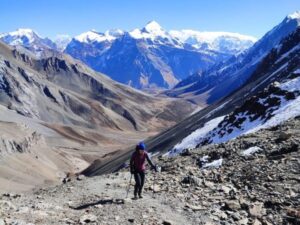
Here’s something that should blow your mind a little. There’s a junction village called Koto sitting right on the Annapurna Circuit trail. Every single trekking season, thousands of people walk past it. The turnoff to Nar Phu Valley is right there. Almost nobody takes it.
The valley opened to foreign trekkers in 2003 and still hasn’t gotten crowded. A big reason is the Special Restricted Area Permit — $100 per person per week in peak season, $75 off-season. That filters out casual visitors, and that filtering is genuinely what keeps the place special, so no complaints about the cost.
What you actually find inside: gorges narrow enough that the sky above you shrinks to a thin strip of blue, monasteries built into cliff faces in ways that defy basic physics, and the villages of Nar and Phu, where life runs on Tibetan Buddhist rhythms that haven’t changed much in centuries. Kang La Pass sits at 5,320 metres, and the view — Annapurna II, Himlung, Pisang Peak — is up there with anything Nepal has to offer. You’ll probably be watching it alone.
Difficulty: moderate to challenging.
Best time: March–May, September–November.
Duration: 14–18 days.
2. Khopra Ridge Trek
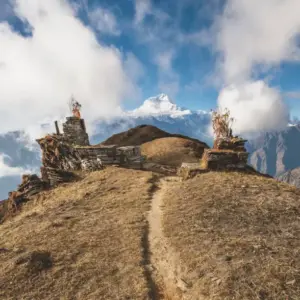
Someone once told me that Khopra Ridge is what Poon Hill used to feel like before everyone found out about it. That description is pretty much perfect.
Both are in the Annapurna region. Both have views of Dhaulagiri, Nilgiri, Annapurna South, and Tukuche Peak. The scenery isn’t the difference. The difference is that on Khopra Ridge at sunrise, you might have four other people around you. On Poon Hill during October, you might have four
hundred.
The trail goes through Magar and Gurung villages, where outside visitors are still unusual enough to be interesting to local people rather than background noise. Push on to Khayer Lake at 4,660 metres — a glacial sacred site that most Annapurna trekkers never even hear about — and suddenly you’re at one of the more quietly spectacular spots in Nepal with almost nobody around to share it with.
Best beginner-level hidden trek on this list. Teahouses work properly, the trail is clear, and the altitude is manageable.
Difficulty: easy to moderate.
Best time: March–May, October–November.
Duration: 6–8 days.
3. Ruby Valley Trek
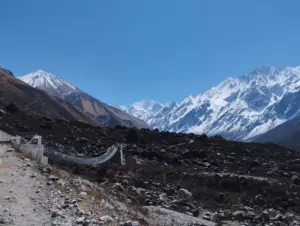
Between Langtang and Manaslu, there’s a gap that the trekking world mostly falls through without noticing. Ruby Valley sits right there, and it gets its name from actual ruby and garnet deposits in the area, which sounds like a fantasy novel but is completely real.
Rupina La Pass at 4,610 metres puts Ganesh Himal, Manaslu, and the Langtang range in front of you. Below the pass, the Tamang and Gurung villages are doing the farming lives they’ve always done, pretty much undisturbed by tourism. Stone houses. Terraced fields worked for generations. Woodsmoke smells before a village comes into view. These are the details the popular routes used to have before thirty years of tourist traffic changed everything.
Someone who wants more than Khopra Ridge but isn’t ready for a proper expedition — this is the right fit.
Difficulty: moderate.
Best time: March–May, October–November.
Duration: 10–14 days.
4. Dhaulagiri Circuit Trek
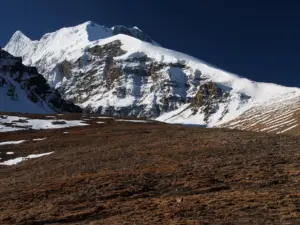
No point dressing this one up. Dhaulagiri Circuit is hard. Not “long and tiring” hard. Genuinely, technically demanding hard.
This is for trekkers who’ve already done the famous routes, found them manageable, and are now genuinely curious what the ceiling looks like. You circle the seventh-highest mountain on Earth — 8,167 metres — through terrain where some teahouses don’t even open for the full season because so few people pass through. French Pass at 5,360 metres, Dhampus Pass at 5,182 metres, glacier travel on both. At French Base Camp, the south face of Dhaulagiri fills the sky above you, and there are, in all realistic probability, zero other trekkers within several hours of walking.
The silence at that spot has a weight that’s hard to describe. The word that keeps coming back is earned.
Difficulty: challenging.
Experienced trekkers only.
Best time: October–November.
Duration: 18-22 days.
5. Panch Pokhari Trek
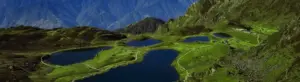
Panch Pokhari gets underestimated constantly. It’s close to Kathmandu, so people assume it can’t be wild. That assumption is wrong.
Five glacial lakes at 4,100 metres in the Sindhupalchok district, a few hours northeast of the city. Sacred Hindu pilgrimage site — timing your visit around Janai Purnima festival is actually worth considering if you want to see something genuinely extraordinary. Outside that festival window, the whole area runs on near-empty for basically the entire rest of the year.
Dense rhododendron forest through the lower sections, Tamang villages, ridgelines with views that don’t need eight-thousand-metre peaks to justify stopping. Got a week? Want something genuinely offbeat without a six-hour drive to the trailhead? This is the most practical answer on this list.
Difficulty: easy to moderate.
Best time: March–May, September–November.
Duration: 7–9 days.
6. Tsum Valley Trek
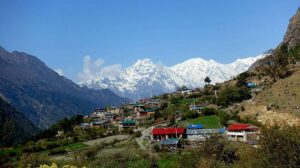
I’ve tried describing Tsum Valley to people who haven’t been, and I always end up underselling it somehow.
Northern Gorkha district, against the Tibetan border, only opened to foreign trekkers in 2008. The Tsumba people living here have maintained a form of Tibetan Buddhism so old and untouched by outside influence that researchers come specifically to document it before modernity inevitably reaches in. Mani walls running hundreds of metres along the trail. Monasteries on ridgelines with no clear explanation of how anyone got the building materials up there. Villagers who speak old Tibetan dialects find your arrival somewhere between curious and mildly confusing.
Walking in Tsum Valley feels like operating at a different pace than everything outside it. That sounds like an exaggeration. It isn’t. You feel it on day one, and it stays with you after you leave.
Most people doing the Manaslu Circuit treat Tsum as a quick detour or skip it entirely. Don’t do that. The upper valley, given real time, is one of the more remarkable places you can walk to on this
planet.
Difficulty: moderate.
Best time: March–May, September–November.
Duration: 14–18 days.
7. Ganesh Himal Trek
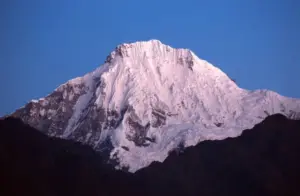
Ask someone who really knows Nepal about Ganesh Himal and watch what happens. Small pause. Slight nod. “Yeah. That one’s good.”
Rasuwa and Gorkha districts, north of Kathmandu. Trails pass through Tamang and Gurung communities that haven’t built their lives around the tourism economy. Red pandas are spotted regularly — not as a big event, just as something that happens when human traffic is low enough that wildlife doesn’t bother hiding. Himalayan tahr on the upper sections. Raptors all over the place.
No restricted area permit needed. Teahouses charge what teahouses in farming communities charge, not what teahouses in tourist corridors charge. Easiest logistics of anything on this list. Best starting point for someone wanting their first genuine offbeat Nepal experience without a complicated setup operation.
Difficulty: easy to moderate.
Best time: March–May, October–November.
Duration: 10–12 days.
Which of These Can a Beginner Actually Do?
Three routes here work genuinely well for people without serious prior trekking experience. “Genuinely well” meaning actually appropriate, not ” possible if you suffer through it.”
Khopra Ridge. Six to eight days. Max altitude around 3,700 metres before the Khayer Lake add-on. Teahouses functioning, trail clear, daily elevation gain manageable. If you’re reasonably active and put some preparation in beforehand, you’ll enjoy this rather than just survive it.
Panch Pokhari. Shorter. Lower ceiling around 4,100 metres. Close to Kathmandu. Seven to nine days. Best pick if you’re genuinely unsure whether high-altitude trekking is your thing — gives you the real experience without the kind of commitment that’s hard to back out of once you’re in it.
Ruby Valley. Step up from the other two. Rupina La at 4,610 metres is a real effort and the route runs longer at 10 to 14 days. But it’s not technical. The difficulty is physical, not skill-based. Ambitious beginners who prepare properly can do it.
When to Go
Spring — March through May. Rhododendrons are flowering through the lower forest from late February; temperatures at altitude are comfortable, and mountain visibility is decent before late-season haze. The sweet spot is probably mid-March through April.
Autumn — September through November. Nepal’s clearest skies. October especially — the monsoon has scrubbed the air clean, and the mountains in October have a sharpness that other seasons don’t touch. Peak season for Nepal overall, but on these routes, you’re still largely alone.
Winter — December through February. Fine for lower routes like Ganesh Himal. High passes on Nar Phu, Dhaulagiri, and Ruby Valley will be blocked or dangerous. Don’t attempt those without
knowing exactly what you’re doing.
Monsoon — June through August. No. Leeches, flooding, bad visibility, and minimal support on isolated routes. Unless you have very specific reasons and genuinely experienced guidance, avoid it.
What It Actually Costs
Restricted area permits for Nar Phu Valley and Tsum Valley: $75–$100 per person per week, depending on season. Standard TIMS cards and national park entry add $10–$30.
Licensed local guide: $25–$40 per day. Remote routes need this, both practically and sometimes legally. Spend properly here. A guide who actually knows the route is night-and-day different from one who doesn’t.
Porter: $15–$25 per day carrying up to 20kg. Your back thanks you, income goes directly into a community that mass tourism mostly bypasses, everyone wins.
Teahouse bed: $3–$8 per night. Meals: $3–$7. Often woodfire-cooked. Frequently, the best dal bhat you’ll have anywhere in Nepal.
Full 14-day hidden trek with guide, porter, permits, food, and accommodation: roughly $800–$1,500 USD. EBC same duration runs $2,000+ because demand across every item on the bill supports it.
Things Nobody Actually Tells You Beforehand
Guide: get one through a proper local agency. Not through an app, not through whoever approaches you in Thamel with a great deal. On a remote trail, a bad guide is a categorically different problem than on a route with rescue checkpoints every few hours. Don’t cut corners here.
Pack for what the trail has, not what you hope a teahouse might have. Actual first aid kit. Water filter, not just tablets. Emergency food for one extra day — real food, not just snacks. Sleeping bag rated colder than the forecast says. Power bank, because some nights there’s no electricity, and that’s just how it is.
Altitude above 3,000 metres: max 500 metres gain per day, real rest days, watch yourself carefully. Buy travel insurance before you leave home that explicitly covers helicopter evacuation. A single evacuation from a remote valley can cost several thousand dollars, and this is not where you want to find out your policy has a clause.
Walk clockwise around the mani walls and stupas. Shoes off at monastery entrances. Ask before photographing anyone. These communities host very few outsiders, and how individual travelers behave genuinely shapes how the next person gets received.
The Honest Comparison
| Factor | Hidden Treks | Popular Treks |
|---|---|---|
| Crowd levels | Very low to zero | High to very high |
| Daily costs | $50–$90 | $80–$150+ |
| Cultural experience | Authentic | Increasingly Transactional |
| Infrastructure | Basic | Well-Developed |
| Wildlife | Commonly spotted | Pretty Rare |
| Feeling of remoteness | Very much real | Mostly gone |
| Rescue access | Remote | Close |
Neither side wins for every type of traveler. Popular routes have reliable infrastructure, documented conditions, and other trekkers around you if that matters. Those are legitimate things. But if the reason you’re reading this article is the left column — that genuine off-the-map feeling — then it’s not really a comparison. Hidden treks are just the answer.
How to Actually Plan One of These
Be honest about your fitness — not optimistically honest, actually honest. Dhaulagiri Circuit is not a stretch goal for someone who jogs occasionally. Panch Pokhari is. Pick the route that matches where you genuinely are right now.
Sort permits well ahead. Restricted area permits go through a registered agency and need government processing — give yourself two to three weeks minimum before departure. Last-minute permit problems for restricted routes are very hard to fix in the field.
Book through a reputable local operator. Green Horizon Tour handles guided treks on these specific routes — permits, certified local guides with actual route experience, and all logistics. People who know these valleys from walking them, not from reading about them.
Pack smart. Boots already broken in. Proper layers. Waterproofs. Trekking poles. Sleeping bag colder than the forecast. Power bank.
Sort transport in advance. Most hidden treks start with a long drive from Kathmandu — six to eight hours on mountain roads in some cases, a domestic flight before that in others. Peak season jeep seats fill. Book ahead.
Questions People Actually Ask
Which Nepal trek gets the fewest tourists?
Nar Phu Valley and Tsum Valley — annual foreign visitor counts in the low hundreds for both. Panch Pokhari and Ganesh Himal are similarly empty most of the year.
Are remote treks in Nepal actually safe?
Yes, with proper preparation. Real risks are altitude sickness, weather changes, and slower evacuation access. A qualified guide, plus sensible acclimatisation, plus proper insurance, manages those effectively. Going unprepared is a genuinely different situation.
Do I need a guide on these routes?
Restricted area routes legally require one. All remote routes practically require one regardless of the rules. Minimal markings, communities where English isn’t spoken, and real consequences for navigation errors in isolated valleys.
Easiest hidden trek for a complete beginner?
Khopra Ridge or Panch Pokhari. Working teahouses, manageable altitude, clear trails. Suitable for anyone with decent fitness who prepares beforehand.
Only have a week — anything that fits?
Panch Pokhari in 7–9 days, including transport from Kathmandu. Khopra Ridge in 6–8 days. Both are genuine offbeat experiences, not just shorter versions of something bigger.
The Nepal You Actually Came For Is Still Out There
There’s something that gets lost whenever travel content tries to describe what Nepal actually does to people.
Before mass tourism found it, Nepal changed people in a specific, concrete way. You went somewhere genuinely remote. You were dependent on strangers who had zero economic reason to be kind to you. They were kind anyway. Tea is offered without a transaction behind it. A conversation that somehow worked across a full language barrier. A family moving over on a bench to make room for someone who had absolutely no business being in their village.
That’s what people were actually describing when they said Nepal changed them. Not the mountains. The people and the unscripted contact with them.
That experience is harder to find along the famous trails now. The economy there has adapted entirely to tourism. Everything’s still beautiful. But the texture has changed.
The hidden treks are where that original texture survives. In Tsum Valley. In Nar Phu. In Ganesh Himal. The older woman who watched you from her rooftop in Phu village, not because she’d seen a thousand foreign trekkers that season, but because you were genuinely one of the few who came this year, and she found that worth looking at.
That Nepal is still there. You just have to turn off the main trail to find it.
Green Horizon Tour has been taking people there for years — local guides who know these valleys from walking them, full permit and logistics support, genuine understanding of why someone would choose Tsum Valley over EBC. Head to greenhorizontour.com and let’s figure out where you want to go next.




How to book a trip?

make free inquiry

confirm the trip
