


Lapchi Valley Trek 2026: Nepal’s Hidden Spiritual Sanctuary in the Himalayas
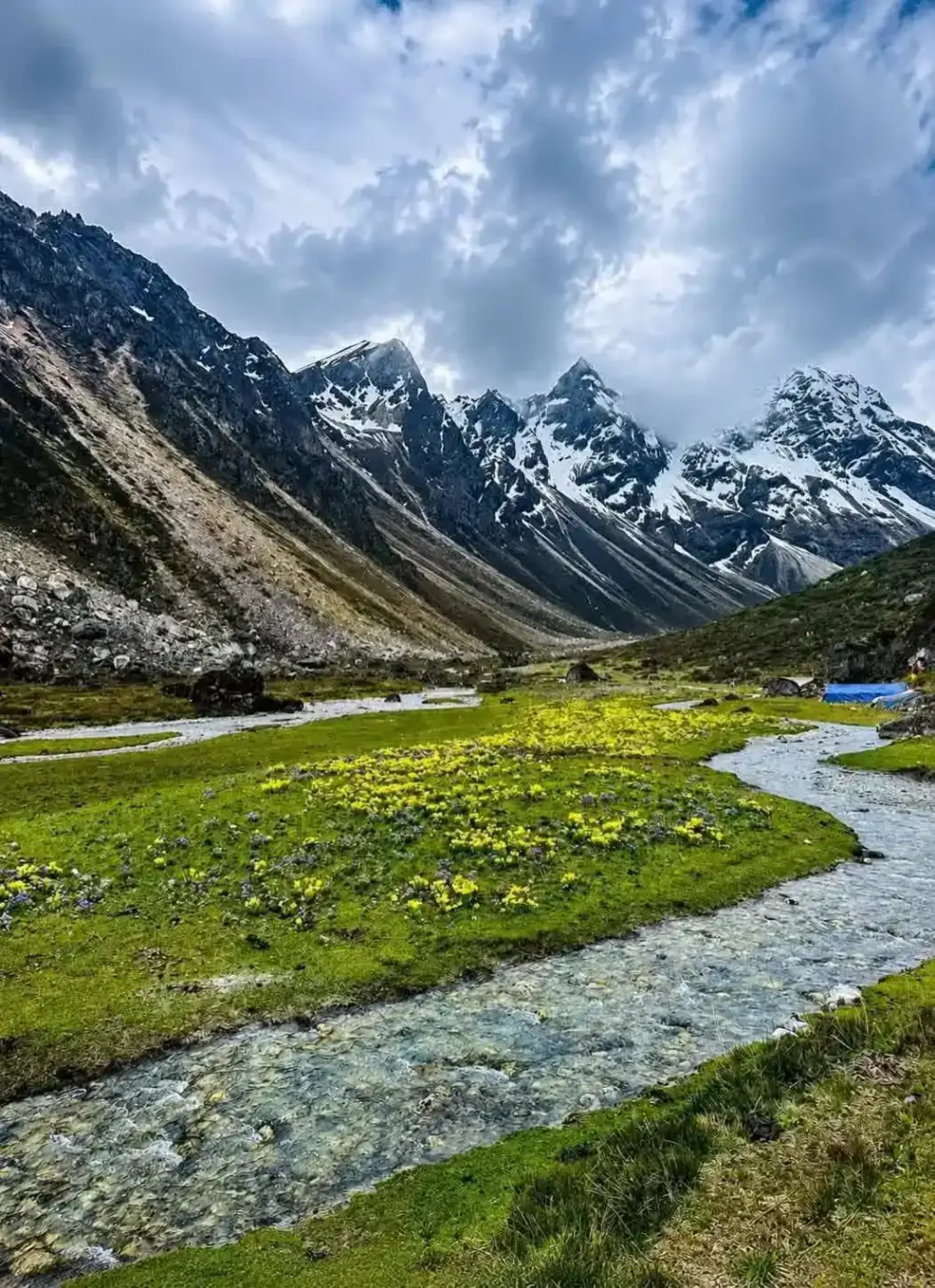
Nestled in the remote northernmost fringes of Nepal’s Dolakha District, pinned directly against the jagged, windswept border of Tibet, lies a landscape forgotten by the modern world. Lapchi Valley (also spelled Lapche) remains one of the least explored yet most spiritually significant destinations in the entire Himalayan chain. While Nepal is world-famous for commercial trekking hubs such as Everest Base Camp, the Annapurna Circuit, and Langtang, Lapchi offers an entirely different realm of experience—one that seamlessly fuses raw mountain wilderness, ancient Vajrayana Buddhist heritage, sacred caves, and a profound, indestructible aura of spiritual tranquility.
For centuries, Lapchi has been revered by Buddhist practitioners as a living mandala. In esoteric geography, it is recognized as the “Speech Mandala” of the deity Chakrasamvara (with Mount Kailash representing the Body Mandala and Mount Tsari representing the Mind Mandala). Together, these three peaks constitute the most powerful sacred mountains of the earthly realm. Lapchi is also the legendary wilderness where the 11th-century yogi, poet, and saint Jetsun Milarepa spent years in profound meditation, leaving behind a legacy of miracles, footprints pressed into solid stone, and an enduring spiritual energy.
Unlike heavily commercialized routes, Lapchi remains relatively isolated. Visitors who journey into this hidden valley encounter pristine cloud forests, alpine meadows, dramatic vertical river gorges, and centuries-old monasteries largely untouched by mass tourism. The result is an authentic Himalayan expedition that offers both rigorous physical adventure and deep inner reflection.
Where is the Lapchi Valley Located?
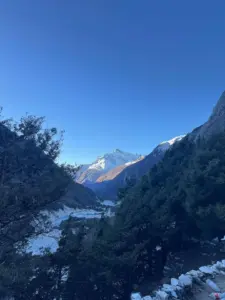
Lapchi Valley is situated in the northern part of Nepal within the Gaurishankar Conservation Area (GCA) in the Dolakha District of Bagmati Province. The valley is positioned directly on the boundary separating Nepal from the Tibet Autonomous Region of China.
                       [ Mount Kailash ] -> Body Mandala (Tibet)
                               |
                       [ Lapchi Valley ] -> Speech Mandala (Nepal-Tibet Border)
                               |
                       [  Mount Tsari  ] -> Mind Mandala (Tibet/India)
The area is hemmed in by towering snow-capped peaks, deep river canyons, and dense mountain forests. Due to its remote location and sensitive border geography, Lapchi has remained largely inaccessible compared to Nepal’s mainstream destinations. The valley floor sits at an elevation of approximately 3,670 meters (12,040 feet), with surrounding trekking routes, sacred caves, and high alpine pastures frequently reaching above 4,600 to 4,900 meters. This rugged, vertical terrain, combined with minimal modern infrastructure, reinforces its reputation as a true off-the-beaten-path sanctuary.
The Legacy of Jetsun Milarepa: Redemption and Realization
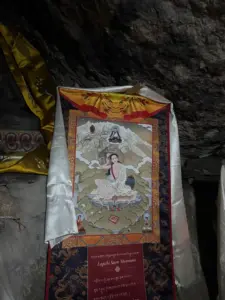
The history and identity of Lapchi are irrevocably intertwined with the life of Jetsun Milarepa (c. 1052–c. 1135 CE). His life story remains one of the most powerful narratives of transformation, moving from a practitioner of black magic who destroyed his relatives’ home to a completely enlightened master.
From Sorcery to the Cotton Robe
After seeking out the fierce translator Marpa, who subjected him to years of brutal physical and mental trials to purify his negative karma, Milarepa was initiated into the lineages of Mahamudra and the Six Yogas of Naropa. Marpa explicitly commanded his disciple to shun human settlements and spend his life meditating in the wild, uninhabited caves of the high Himalayas, prophesying that Lapchi Kang would become an extraordinary site for his practice.
Subjugating the Spirits of Lapchi
According to translations from The Hundred Thousand Songs of Milarepa, when the yogi first arrived in the Lapchi wilderness, the region was governed by fierce local deities and nature spirits hostile to the introduction of Buddhism. Milarepa engaged in intense spiritual warfare with these forces, ultimately subjugating them through compassion and cosmic insight. Instead of destroying them, he transformed these elemental entities into protectors of the Dharma (Dharmapalas). Milarepa lived as a hermit here, wearing nothing but a thin white cotton robe (repa) even in sub-zero alpine winters, surviving primarily on wild nettle soup, which legend states turned his skin a distinct green hue.
The Sacred Topography: The Caves of Lapchi
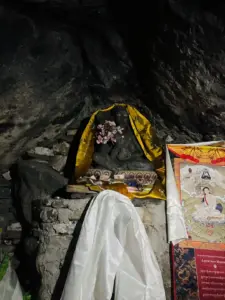
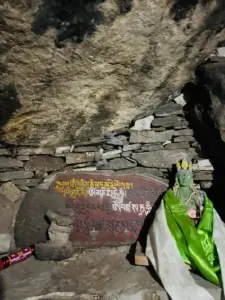
While there are dozens of smaller meditation cells scattered across the ridges of Lapchi, twelve distinct caves are recognized as major sites of Milarepa’s practice. Several of these sites can be visited by intrepid pilgrims and trekkers today.
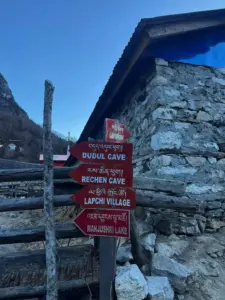
1. Rechen Phug (The Great Radiant Cave)
Located close to the main valley floor, Rechen Phug is one of the largest caves in the region. Long before formal monasteries were constructed, this cave served as the communal assembly hall for wandering yogis.
-
The Handprint Miracle: Inside Rechen Phug, visitors can see a smooth impression in the solid rock. Legend holds that when the ceiling of the cave began to collapse, Milarepa used his bare hand to push the giant boulder back into place, leaving his handprint permanently etched into the stone.
2. Dudul Phug (The Cave of Demon Subjugation)
Situated near the confluence of the roaring glacial rivers below the main village, Dudul Phug is the site where Milarepa famously wrestled with the elemental spirits of the mountain. The cave is humble and narrow, forcing visitors to crouch, mirroring the physical asceticism required of the ancient hermits.
3. Ze Phug (The Crest Cave)
Perched higher up the mountain slopes, Ze Phug is associated with Milarepa’s mastery over the physical elements. Near this cave sits a holy water spring. According to local oral histories, when Milarepa’s disciples grew exhausted from carrying water up the steep, rocky ridges, the master struck his wooden staff into the solid rock face, causing a crystal-clear stream to bubble forth.
4. Sephuk Cave (The Highest Hermitage)
Sitting at a daunting 4,600 meters (15,091 feet) above sea level, Sephuk Cave rests on a sheer cliff face overlooking the entire valley. Sephuk was Milarepa’s final sanctuary in Lapchi, where his practice reached its absolute zenith. The path to Sephuk is steep and narrow, and traditional pilgrims often undertake the grueling multi-hour ascent from the valley floor in complete silence or while fasting.
Monasteries and Sacred Monuments
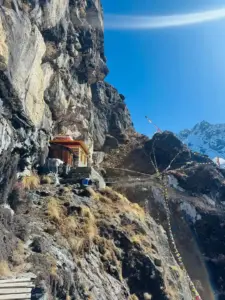
While the caves represent the raw, ascetic heart of Lapchi, the institutional and communal anchor of the valley is its monastic infrastructure.
                       [ Lapchi Valley Mandala ]
                                  |
         +------------------------+------------------------+
         |                                                 |
[ Chöra Gephel Ling ]                             [ High Retreat Caves ]
  (Monastic Anchor)                                 (Spiritual Crucible)
         |                                                 |
  Built by Shabkar (~1830)                         - Rechen Phug (Handprints)
  Restored by Nubpa Rinpoche                       - Sephuk (4,600m Hermitage)
  Preserves Ancient Relics                         - Ze Phug (Holy Spring)
Chöra Gephel Ling Monastery
The monastery was founded around 1830 by another legendary figure in Tibetan Buddhism: Shabkar Tsogdrug Rangdrol (1781–1851), a yogi from Amdo who spent decades meditating in wilderness areas. Recognizing the deterioration of the older retreat structures in Lapchi, Shabkar mobilized his disciples to construct a central temple on a small, flat alpine plain known as Chöjung Mathang.
Over the centuries, Lapchi became deeply tied to the Drikung Kagyu school of Tibetan Buddhism. By the late 20th century, the monastery had fallen into near-total ruin due to the extreme climate and geopolitical isolation. However, through the tireless efforts of Nubpa Rinpoche and the Drikung Kagyu lineage, a monumental restoration project completely rebuilt Chöra Gephel Ling, featuring a beautifully preserved assembly hall, new retreat rooms for long-term practitioners, and a protective sanctuary for local monks.
The Miracle Stupa of Vajrayogini
Near the monastery stands the historic Jangchub Stupa, a monument built on grounds sacred to the female deity Vajrayogini. When Shabkar originally proposed building this stupa, he lacked financial resources. He requested that each of his hundreds of gathered disciples carry exactly one large stone to the site. Remarkably, because of the sheer size of the crowd, the entire stupa was fully constructed in a single day. To protect this ancient monument from collapsing due to weathering, a modern exterior stupa was recently constructed over it, encapsulating the original stones like a spiritual time capsule.
Natural Beauty and Biodiversity
While Lapchi is celebrated for its spiritual importance, its natural geography is equally striking, characterized by an undisturbed ecosystem.
-
Majestic Himalayan Peaks: The valley is dominated by the imposing, unclimbed granite spire of Ama Bamare Himal and the massive massifs of Gaurishankar (7,134m) looming along the horizon. Snow-covered peaks encircle the valley, providing dramatic backdrops.
-
Pristine Forests and Alpine Meadows: Lower elevations feature dense, moss-covered cloud forests of rhododendron, bamboo, pine, and juniper. During spring, blooming rhododendrons paint the hillsides in deep reds and pinks. Higher up, these forests give way to expansive alpine tundra filled with specialized wildflowers during the brief summer months.
-
Glacial Rivers: The fast-flowing Lapchi Khola and its tributaries are fed directly by glaciers along the Tibetan border, creating dramatic waterfalls, deep river gorges, and challenging river crossings.
Wildlife in the Gaurishankar Conservation Area
Because mass tourism has completely bypassed this region, the ecological environment remains highly pristine, making Lapchi a safe haven for rare Himalayan wildlife:
| Category | Species Common to the Lapchi Valley |
| Ungulates | Himalayan Thar, Blue Sheep (Bharal), Musk Deer |
| Avifauna | Himalayan Monal (Danphe), Snow Pigeons, Golden Eagles, Vultures |
| Elusive Predators | Snow Leopard, Red Panda (found in dense bamboo zones) |
Why Lapchi Remains Undiscovered
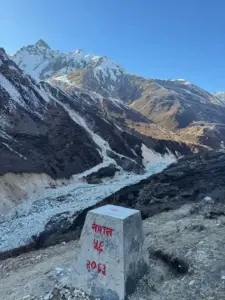
Several factors contribute to Lapchi’s relative obscurity:
- Remote access
- Limited promotion
- Challenging trekking routes
- Focus on spiritual rather than commercial tourism
For many travelers, these characteristics are precisely what make Lapchi special.
The absence of large crowds allows visitors to experience a deeper connection with nature, culture, and spirituality.
The Lapchi Valley Trek: Detailed Wilderness Itinerary
Trekking to Lapchi is categorized as a strenuous, high-alpine expedition. There are no luxury teahouses, no cellular networks, and no easy evacuation routes. It requires physical endurance, a resilient mindset, and proper logistical planning.
Expedition Summary
-
Total Duration: 7 to 11 days (depending on acclimatization and side hikes)
-
Maximum Elevation: 4,900 meters (High Alpine Lakes) / 4,600 meters (Sephuk Cave)
-
Trek Grade: Strenuous / Level 3
-
Accommodation Type: Camping, with very basic home-stays or monastery lodging in select spots.
Day-by-Day Itinerary
Day 1: Kathmandu to Lamabagar via Singati
-
Altitude: 1,950 meters (6,397 feet)
-
Travel Time: 8–10 hours by private 4WD Jeep
-
The Journey: The expedition leaves Kathmandu, following the Arniko Highway before branching off into the deep valleys of the Dolakha district. Driving alongside the roaring Tama Koshi River, you pass through the trading town of Charikot and end at Lamabagar, a small Sherpa settlement that serves as the last major road head and the site of massive hydroelectric infrastructure.
Day 2: Lamabagar to Lower Lumnang
-
Altitude: 2,700 meters (8,858 feet)
-
Trekking Time: 6–7 hours
-
The Trail: The trek begins with a passage through a 1.3-kilometer-long, unlit industrial tunnel built by the hydro project. Emerging into the raw wilderness, the trail climbs up a narrow, challenging path carved into the cliffs. You ascend steadily through dense bamboo groves and mossy forests, crossing rushing side-streams via suspension bridges before arriving at Lower Lumnang—the traditional winter settlement for the people of Lapchi.
Day 3: Lower Lumnang to Lapchi Village and Monastery
-
Altitude: 3,670 meters (12,040 feet)
-
Trekking Time: 5–6 hours
-
The Trail: This day features a significant altitude gain as you follow the Lapchi Khola upstream. As you approach the 3,600-meter mark, the dense forests give way to open alpine valleys. Suddenly, the ancient Chöra Gephel Ling Monastery and the scattered stone houses of Lapchi Village come into view. The village consists of only about 14 permanent households, whose residents survive primarily on high-altitude yak herding.
Day 4: Exploration of the Monasteries, Caves, and Footprints
-
Altitude: 3,670 meters (12,040 feet)
-
Activity: Acclimatization and Spiritual Exploration
-
The Experience: A dedicated day to explore the sacred topography of the valley floor. You will visit the main monastery building, spin the ancient prayer wheels, and visit Rechen Phug and Dudul Phug. Take time to sit in silent reflection inside the caves. The local monks and villagers are deeply welcoming, often sharing bowls of Tibetan salt-butter tea.
Day 5: The High Ascent to Sephuk Cave and the Alpine Lakes
-
Altitude: 4,600m (Sephuk) to 4,900m (Alpine Lakes)
-
Trekking Time: 6–7 hours (round trip)
-
The Trail: This is the most physically demanding day of the expedition. You leave the village early, climbing up steep ridges toward the high pastures. The trail passes through the retreat houses where dedicated monks undergo traditional three-year, three-month, three-day solitary retreats. Continuing upward, you reach the cliffside Sephuk Cave. Weather permitting, you can push further up to the high alpine glacial lakes at 4,900 meters, which offer panoramic views stretching into the Tibetan plateau.
Day 6: Lapchi Village to Lower Lumnang
-
Altitude: 2,700 meters (8,858 feet)
-
Trekking Time: 5 hours
-
The Trail: After bidding farewell to the monks and residents of Lapchi, you begin your descent. The trail retraces your steps back down through the river gorges, descending back into the richer air and dense green canopy of the lower forests to camp overnight at Lumnang.
Day 7: Lower Lumnang to Lamabagar to Kathmandu
-
Altitude: 1,350 meters (Kathmandu)
-
Trekking/Travel Time: 5 hours of hiking, followed by an 8–10 hour drive
-
The Finish: The final leg of the trek brings you back down through the river gorges and through the hydro tunnel to Lamabagar. Your vehicle will transport you back along the winding mountain roads, returning you to the vibrant energy of Kathmandu by late evening.
Practical Travel Information & Logistics
Because Lapchi is an isolated and highly sensitive border zone, independent or solo travel is not possible. Success requires adherence to strict legal and logistical guidelines.
1. Required Permits and Regulations
To legally enter the region, you must secure two distinct permits in Kathmandu through a registered Nepalese trekking agency:
-
Gaurishankar Conservation Area Permit (GCAP): Required for environmental entry into the protected conservation zone.
-
Rolwaling Valley / Lapchi Restricted Area Permit: Because Lapchi shares an open, sensitive border with Tibet, it falls under restricted area regulations. This mandate requires that you travel with a licensed, professional guide and a minimum of two trekkers per group. Solo trekking is strictly prohibited.
2. Best Time to Visit
Choosing the correct season is essential for safety, visibility, and accessibility.
-
Spring (March to May): One of the optimum windows. Temperatures are mild at lower elevations, rhododendron forests are in full bloom, and mountain views are generally clear. Wildlife is also highly active during this period.
-
Autumn (September to November): The premier trekking season. Post-monsoon air provides excellent atmospheric visibility, stable weather conditions, and crisp, clear mountain scenery.
-
Winter (December to February): Heavy snowfall frequently buries the high trails, and temperatures drop far below freezing. Water sources freeze solid, and most local villagers descend to lower settlements, leaving the upper valley mostly deserted.
-
Monsoon (June to August): Heavy rainfall triggers landslides along the vertical access trails, paths become slick and hazardous, and mountain visibility is severely obscured.
3. Essential Packing List
There are no stores to purchase or rent gear once you leave Kathmandu. You must be completely self-sufficient.
-
Sleeping Systems: A high-quality down sleeping bag rated for comfort down to at least $-15^\circ\text{C}$ ($5^\circ\text{F}$), accompanied by an insulated sleeping pad.
-
Apparel: A windproof, waterproof shell jacket and pants; a heavyweight down parka for freezing nights; and thermal base layers (merino wool is highly recommended).
-
Footwear: Sturdy, broken-in waterproof hiking boots with deep tread to navigate wet rock, mud, and scree.
-
Water Safety: A reliable UV purifier (such as a SteriPEN) or water purification tablets, as you will be drawing water directly from glacial streams.
Challenges and Responsible Tourism
Environmental and Cultural Challenges
-
Communication Limitations: There is no mobile network coverage (Ncell or Nepal Telecom) once you enter the deep gorges beyond Lamabagar. Satellite communication devices are highly recommended for emergency evacuation logistics.
-
Physical Demands: The rapid elevation gain from Lamabagar (1,950m) to Lapchi Village (3,670m) over two days presents a real risk of Acute Mountain Sickness (AMS). Walking at a slow, measured pace and maintaining proper hydration are critical.
Cultural Etiquette and Respect
Lapchi is an active, sacred pilgrimage site, not a commercial tourist trail. Visitors are expected to respect local customs:
Sacred Etiquette Guidelines:
Monastery Attire: Always cover your shoulders and knees when entering temple spaces. Remove your footwear before stepping onto the wooden floors of the assembly halls.
Circumambulation: Always walk around monasteries, stupas, chortens, and mani stone walls in a clockwise direction.
Photography: Never photograph the interior of shrines, sacred relics, or meditating monks without explicitly asking for permission first.
Waste Management: Practice strict “Leave No Trace” principles. Pack out all non-biodegradable waste, plastics, and batteries.
The Future of Tourism in Lapchi
As awareness of Lapchi increases, tourism is expected to grow gradually.
Careful management will be essential to balance:
- Visitor access
- Environmental conservation
- Cultural preservation
- Community benefits
Sustainable development can help ensure that Lapchi retains its unique character while providing economic opportunities for local communities.
Conclusion: The Purest Himalayan Form
What differentiates a casual trekker from a true pilgrim? A trekker seeks to conquer the physical landscape; a pilgrim allows the landscape to transform them from within.
Lapchi Valley remains refreshingly authentic in an era when many mountain destinations have succumbed to commercialization. It is a rare sanctuary where spirituality, history, culture, and nature converge in their purest forms. Whether you are a trekker seeking a rugged wilderness challenge, a practitioner looking to meditate in the footsteps of Milarepa, or a traveler in search of something extraordinary, Lapchi Valley stands as one of Nepal’s premier hidden treasures—waiting to be approached with reverence, discipline, and an open mind.




How to book a trip?

make free inquiry

confirm the trip
