


Solo Trekking in Nepal: Is It Safe? Rules, Permits and Tips (2026 Guide)
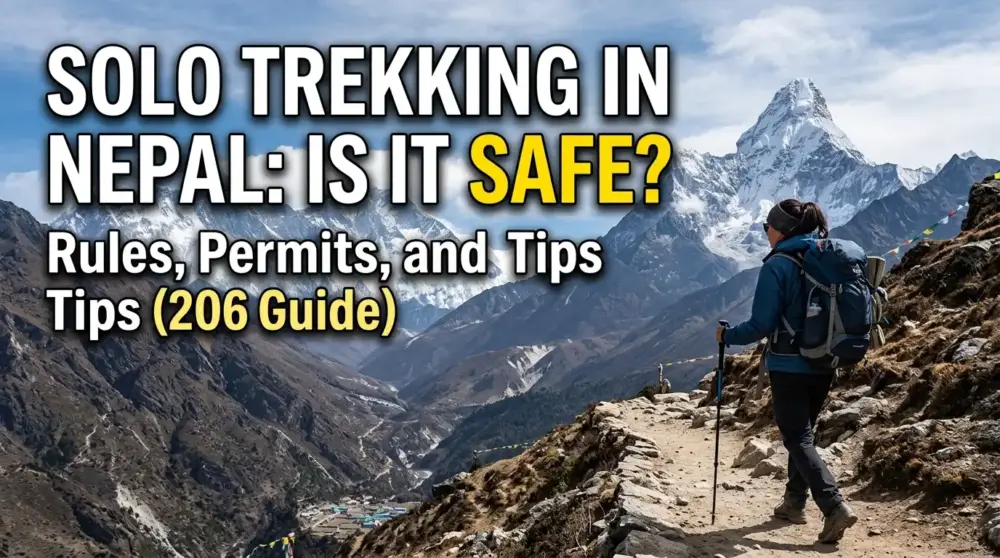
I get this question a lot. Someone finds out I’ve trekked in Nepal and immediately asks, “But is it actually safe to go alone?”
And my answer is always the same. Yes. But you need to know what you’re walking into.
Nepal in 2026 is not the Nepal of ten years ago. The rules have changed, the permit system has changed, and if you’re planning a solo trek based on a blog post from 2022, you’re going to hit walls at checkpoints that nobody warned you about. This guide is written to fix that.
So, Can You Actually Trek Alone in Nepal?
Short answer — yes, foreigners can trek alone in Nepal.
But here’s the thing: most travel blogs don’t explain clearly. “Solo trekking” in Nepal now means you travel without a companion. It does not mean you travel without any local support. Since April 2023, the government has made it compulsory for foreign trekkers to hire a licensed guide on trails that pass through national parks, conservation areas, and restricted zones.
Now, before you close this tab — that’s not as bad as it sounds. You’re still doing your own itinerary, walking at your own pace, sleeping where you want. You just have a licensed professional walking with you on regulated routes.
What actually changed recently is bigger news. In March 2026, Nepal scrapped the old rule that required at least two foreign trekkers on a single restricted area permit. Upper Mustang, Manaslu, Dolpo, and Tsum Valley — all of these remote zones now allow solo permit applications. One person, one permit. That was genuinely not possible before 2026.
So yes — solo trekking in Nepal is allowed, and it’s more accessible for lone travellers now than it’s ever been.
Is Nepal Safe for Solo Trekkers? Real Talk.
Let me say something that gets glossed over in most travel content.
Nepal is one of the safest countries in Asia for solo travellers. The kind of petty crime that ruins trips in other popular destinations — pickpocketing, tourist scams, street harassment — is genuinely rare here. Mountain villages run on hospitality. Teahouse families along the main trails have been hosting trekkers for decades, and they take that seriously. You are not a target in Nepal. You are a guest.
What demands serious respect is the landscape.
Altitude sickness is the number one reason trekkers end up in trouble in Nepal. Not bad people. Not bad luck. Altitude. And the thing about it is that it doesn’t care how fit you are. You can run marathons and still get hammered by altitude if you ascend too fast. The rule that actually works is simple — don’t gain more than 500 metres per day once you’re above 3,000 metres, and schedule proper rest days at Namche Bazaar or Manang, depending on your route. Ignore this, and you will suffer for it.
The weather is unpredictable in ways that catch first-timers off guard. Himalayan mornings are usually clear and gorgeous. By early afternoon, the clouds build. By 3 pm in certain seasons, you might be in rain, hail, or near-whiteout conditions on a pass that looked completely fine at breakfast. The trekkers who consistently have good experiences in Nepal are the ones who start walking by 6 or 7 am and are already at their next teahouse before things turn.
Getting lost is also more real than people think. On busy routes like Everest Base Camp, the trail is obvious. On quieter sections, at junctions, in fog or snow, things get confusing fast. Offline maps saved my trip more than once. Download Maps.me or Gaia GPS in Kathmandu before you leave the city. Don’t trust the phone signal above a certain elevation.
The safety verdict? Popular routes in Nepal are genuinely safe with proper preparation. Remote restricted zones carry a higher real risk, which is exactly why mandatory guides exist there in the first place.
Nepal Trekking Rules for 2026 — What You Actually Need to Know
The core rule is this. Every non-Nepali trekker inside a national park, conservation area, or restricted zone must hire a licensed guide or porter-guide through a government-registered trekking agency. This has been the law since 2023, and it is enforced. People do get turned back at checkpoints. Don’t be that person.
The March 2026 change lifted the two-foreigner minimum on restricted area permits. Thirteen districts that were previously group-only are now open to solo permit holders. You still need a licensed guide. You still need a TAAN-registered agency to arrange the paperwork. But the solo barrier on these incredible remote routes is gone.
Also new for high-altitude routes in 2026 — helicopter evacuation insurance above 4,000 metres is now a legal requirement when you apply for permits. This gets checked. Sort it before you arrive in Nepal. It’s not expensive and genuinely matters if something goes wrong above Gorak Shep.
Where guides are legally mandatory and enforced hard: Everest Base Camp, the entire Khumbu region, and all restricted area destinations, including Upper Mustang, Manaslu Circuit, Dolpo, and Kanchenjunga.
Where national policy requires guides but checkpoint enforcement varies: Annapurna region, Ghorepani Poon Hill, Langtang Valley.
Fully unregulated for foreign trekkers in Nepal: nowhere in 2026.
Permits for Solo Trekking in Nepal — Here’s What You Need
Every region has its own permit requirements, and that’s where the confusion usually comes from. Here’s a clean breakdown.
TIMS Card
This registers your details — name, route, emergency contact — into a national database. If you go missing, this is the first document search and rescue teams look up. Cost is NPR 2,000 to NPR 3,000 for foreign nationals, depending on whether you apply through an agency or independently. One exception — the Everest region no longer uses TIMS. Local municipality permits have taken their place there.
National Park and Conservation Area Permits
Annapurna Conservation Area Permit costs NPR 3,000, which is roughly USD 23. Sagarmatha National Park for the Everest route is the same base rate plus 13% VAT. In the Khumbu region, you also need the Khumbu Pasang Lhamu Rural Municipality permit at NPR 3,000, checked at Monjo before the park entrance. Langtang National Park follows a similar structure.
Restricted Area Permits
Upper Mustang moved in 2026 from a flat USD 500 for the first ten days to USD 50 per day based on actual time spent. For a short trip, this is significantly more affordable. Manaslu Circuit costs USD 100 per week during peak season (September to November) and USD 75 per week the rest of the year. All restricted area permits go through a TAAN-registered agency only — no self-application option exists.
| Trek | Permits Required | Approx Cost (USD) |
|---|---|---|
| Ghorepani Poon Hill | ACAP + TIMS | ~$38 |
| Annapurna Base Camp | ACAP + TIMS | ~$45 |
| Everest Base Camp | SNP + Khumbu Municipality | ~$30 |
| Langtang Valley | Langtang NP + TIMS | ~$38 |
| Manaslu Circuit | TIMS + Conservation + RAP | $175+ |
| Upper Mustang | ACAP + TIMS + RAP | $50/day |
Best Solo Treks in Nepal — Honest Takes on Each Route
Ghorepani Poon Hill — 3 to 5 days
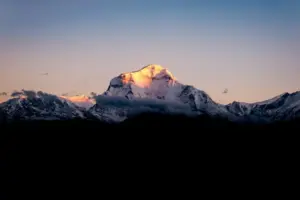
If this is your first time trekking at altitude, do this one. The trail is well-marked, teahouses are solid, and the altitude stays manageable. The sunrise from Poon Hill at 3,193 metres — Dhaulagiri and Annapurna South lit up in orange and pink — is genuinely one of those views you’ll talk about for years. No experience required, just reasonable fitness.
Langtang Valley — 7 to 10 days
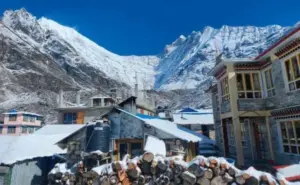
Langtang is criminally underrated, and I will die on this hill. It’s a few hours by road from Kathmandu, far less crowded than the Annapurna and Everest corridors, and the Tamang culture up in these villages is something the busier routes simply can’t offer anymore. Altitude gets serious above Kyanjin Gompa — plan acclimatisation carefully and don’t rush it.
Annapurna Base Camp — 10 to 12 days
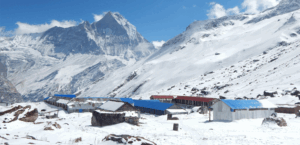
This is a proper trek. The sanctuary section near base camp — a natural amphitheatre with peaks above 7,000 metres on every side of you — is one of those places where you stop and just stand there for a while because no photo is going to capture what you’re actually seeing. Spring and autumn are the windows. Don’t attempt this in the monsoon season.
Everest Base Camp — 12 to 14 days
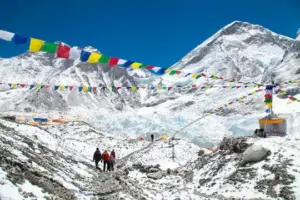
The route that everyone knows and that still somehow delivers. Licensed guide enforcement is real and thorough in the Khumbu in 2026. Acclimatisation days at Namche Bazaar and Dingboche are not negotiable — skip them, and you will pay for it at a higher altitude. Physically, it’s within reach for most people with decent fitness. Mentally, it requires patience with the schedule.
Not for First-Time Solo Trekkers
Manaslu Circuit and Upper Mustang are both worth doing at some point. They are not beginner territory. Logistics are complex, restricted area permit paperwork is involved, and these are the kind of treks that genuinely benefit from working with an agency that has done them before.
What Does Solo Trekking in Nepal Actually Cost?
On popular routes, budget USD 25 to USD 50 per day.
Teahouse beds run USD 5 to USD 15 per night. Meals — and dal bhat with its unlimited rice refills is the best trekking food deal on earth — cost USD 4 to USD 8 at most teahouses on main routes. Permits add USD 40 to USD 80, depending on the region. A licensed guide is USD 25 to USD 35 per day and is now effectively a mandatory budget line on most regulated routes.
Transport from Kathmandu or Pokhara to the trailhead is USD 15 to USD 50, depending on whether you take a bus or fly.
For a 12-day Everest Base Camp solo trek — guide, permits, accommodation, food, local transport — expect to spend USD 900 to USD 1,400 before your international flights.
Tips for Solo Trekking in Nepal That Nobody Bothers Writing Down
Tell the teahouse owner where you’re going each morning. Not just someone back home — the people at your lodge that night. People notice when an expected trekker doesn’t show up. This informal check-in system has helped locate missing trekkers more than once.
Sort offline maps in Kathmandu before you get anywhere near the mountains. Maps.me and Gaia GPS both work well. Cell signal on high passes is wishful thinking. You want your route saved and accessible without internet before you need it.
Start walking early. Every day. I cannot stress this enough. Himalayan mornings are clear and stable. Afternoons are when things change. Most dangerous situations on Nepal’s trails involve trekkers who started late and walked into conditions they didn’t have the light or energy to handle.
Take altitude acclimatisation seriously before any symptoms arrive. The 500 metre rule above 3,000 metres exists for a reason. Rest days are not wasted days. If you feel symptoms of altitude sickness — real symptoms, not just tiredness — go down, not to bed at the same elevation.
Get travel insurance that covers helicopter evacuation above 4,000 metres and check the policy actually covers Nepal mountain rescue. This is legally required for high-altitude permit applications in 2026. And beyond the legal requirement, it’s just the intelligent thing to do when you’re walking around at 5,000 metres.
Pack light, but don’t be clever about your rain layer or sleeping bag. Extra weight is brutal above 4,000 metres. Wet gear from a cheap jacket is worse.
Solo vs Guided Trekking in Nepal — Which Makes More Sense?
| Category | Solo (with mandatory guide) | Full Guided Package |
|---|---|---|
| Cost | More affordable overall | Higher, everything included |
| Flexibility | Walk at your own pace | Set an itinerary with the group |
| Permit handling | You sort through an agency | The agency does everything |
| Best for | Experienced independent trekkers | First-timers or those who prefer ease |
Honestly, in 2026, the line between these two is thinner than it used to be. Because a guide is mandatory on most major routes anyway, you’re already getting professional local support regardless of which option you choose. The real decision is whether you want to handle logistics yourself or hand that off completely.
FAQs — Solo Trekking in Nepal
Can I do the Everest Base Camp alone?
Without a travel companion, yes. Without a licensed guide, no. Guide requirements are enforced at multiple checkpoints on the Khumbu route in 2026. No exceptions.
Is the TIMS card still required?
On most routes, yes. The Everest region is the exception — local municipality permits replaced TIMS there. Confirm requirements for your specific route with your agency before leaving.
Is Nepal safe for female solo trekkers?
Yes. Nepal is genuinely one of the safer countries in Asia for women travelling alone. Main trekking routes have consistent teahouse coverage, locals are welcoming, and a licensed guide adds a meaningful practical safety layer.
Best time to go?
October and November are the clearest skies and driest conditions. March to May is the second window with rhododendrons blooming at lower elevations. Monsoon and winter are possible but much harder — not recommended for solo first-timers.
Bottom Line — Should You Trek Solo in Nepal?
Yes. If the route is right and the preparation is real.
Poon Hill, Langtang, Annapurna Base Camp, Everest Base Camp — all realistic for solo trekkers who follow the 2026 rules, hire a licensed guide, and take the altitude seriously. You don’t need a group. You don’t need a companion. You need preparation, current information, and local support on the ground.
For restricted areas like Upper Mustang or Manaslu Circuit, do it through an agency that has handled these permits before. The complexity is real, and the margin for error in remote zones is small.
The mountains will wait for you. Go when you’re ready. Go prepared.
Want someone to sort the permits, licensed guide, and route planning for your solo Nepal trek without the stress? Green Horizon Tour works with solo trekkers and knows these trails properly. Reach out before you book anything.


How to book a trip?

make free inquiry

confirm the trip
