


Digital Nomad Visa Nepal: Complete Guide for Remote Workers in 2026
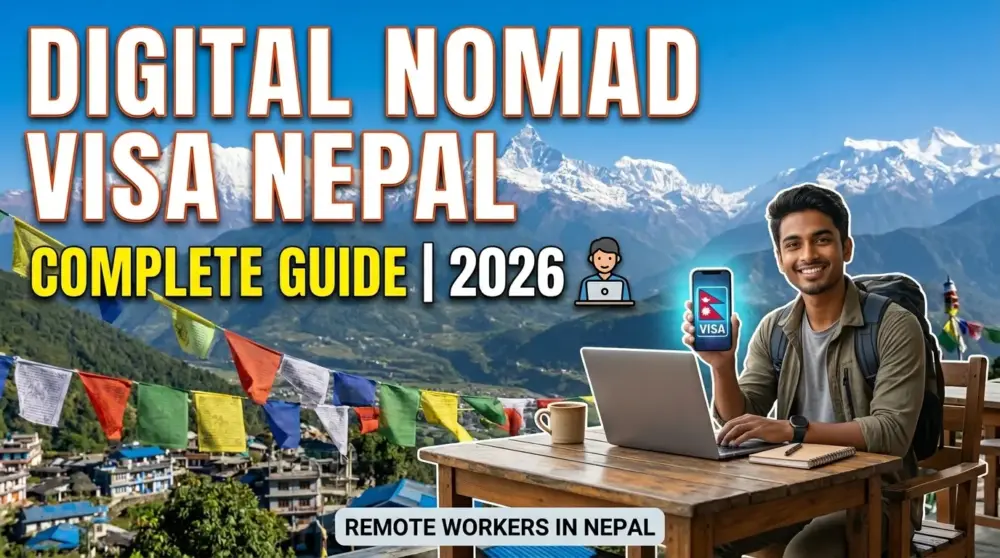
The world of work has changed dramatically over the past few years. More professionals than ever are working remotely, building businesses online, freelancing, consulting, or managing companies from anywhere with a reliable internet connection.
As digital nomads search for destinations that combine affordability, natural beauty, cultural richness, and a slower pace of life, Nepal has emerged as one of the most exciting locations in Asia. Known for its majestic Himalayan mountains, ancient temples, vibrant culture, and welcoming people, Nepal offers a unique experience that differs significantly from traditional digital nomad hubs like Bali, Thailand, or Portugal.
Imagine waking up to the crisp morning air of the Himalayas. You grab a hot, steaming cup of local Himalayan coffee or spiced masala chai, open your laptop, and log into a Zoom call with a backdrop of snow-capped peaks that most people only see on postcards.
For years, the phrase “digital nomad Nepal” meant playing a stressful game of visa roulette—constantly tracking your short-term tourist limits, planning forced border runs, and dealing with unpredictable internet connections. However, entering 2026, the global remote work landscape has shifted completely, and Nepal has formally thrown its doors open to the location-independent workforce.
With the official rollout and expansion of its long-term stay options for remote workers, interest in the Nepal Digital Nomad Visa has grown rapidly. Whether you’re a freelancer, entrepreneur, software developer, content creator, marketer, or remote employee, Nepal presents an unparalleled opportunity to work while experiencing one of the world’s most remarkable destinations.
This comprehensive guide covers everything you need to know about the Nepal Digital Nomad Visa, living costs, internet quality, taxation, coworking spaces, and the best places to stay.
What Is the Nepal Digital Nomad Visa?
A digital nomad visa (DNV) is a specialized residence permit designed for individuals who earn income from foreign employers, international clients, or online businesses while residing temporarily in another country. Unlike traditional work visas, digital nomad visas do not require employment from a local company.
The Nepal Digital Nomad Visa officially replaces the old, exhausting cycle of utilizing short-term tourist entries for remote work. Conceived by the Nepal Tourism Board, the Office of the Prime Minister, and the Department of Immigration, this structured framework lets you legally live and work in the country while earning your income entirely from foreign sources.
Key Highlights of the Program
-
Long-Term Security: The visa program structures your stay via a five-year multiple-entry framework, granted in renewable chunks of at least one year per entry.
-
Freedom of Movement: As a multiple-entry visa, you can come and go as you please without voiding your residency status or having to reapply.
-
Spouse & Dependent Inclusions: You don’t have to leave your loved ones behind; the policy allows primary applicants to include their legal spouses and immediate dependents in their stay.
Important Note: To protect local employment, digital nomad visa holders are strictly prohibited from engaging in local business activities or taking up domestic jobs within the Nepalese market. Your income must come entirely from entities established outside of Nepal.
Why Remote Workers Are Choosing the Himalayas
Many digital nomads initially consider established hotspots such as Bali, Chiang Mai, Lisbon, or Medellín. However, Nepal offers distinct advantages that make it an increasingly attractive alternative for location-independent professionals.
| Traditional Hubs | Nepal: The Himalayan Alternative |
|---|---|
| High Tourist Saturation | Authentic Cultural Immersion |
| Crowded Coastal Cafes | Majestic Himalayan Views |
| Rising Living Costs | Incredible Budget Value |
| Commercialized Experiences | Genuine Local Connections |
| Overcrowded Coworking Spaces | Peaceful and Inspiring Work Environments |
| Fast-Paced Lifestyle | Balanced Work-Life Experience |
| Limited Adventure Variety | Trekking, Wildlife, Culture & Spirituality |
| Expensive Accommodation | Affordable Long-Term Living |
| Highly Competitive Nomad Communities | Growing Opportunities for Meaningful Networking |
| Typical Remote Work Destinations | One of Asia’s Most Unique Remote Work Experiences |
1. Affordable Cost of Living
Compared to many Western countries and even saturated Southeast Asian hubs, Nepal provides exceptional value for money. A remote worker can comfortably live a high-quality lifestyle in Nepal while spending significantly less on accommodation, transportation, food, entertainment, and domestic travel. This high affordability allows digital nomads to extend their travels, maximize their personal savings rate, or reinvest heavily into growing their online businesses.
2. Incredible Natural Beauty
Few countries offer the dramatic landscapes found in Nepal. You can actively work from a trendy urban café in Kathmandu one week and enjoy tranquil mountain views in Pokhara the next. The country boasts easy access to bucket-list attractions, including:
-
The Everest and the Annapurna Region
-
Langtang Valley and the pristine Rara Lake
-
Chitwan National Park and Bardia National Park (for jungle safaris)
-
Lumbini (the birthplace of Lord Buddha)
The ability to seamlessly combine daily professional productivity with world-class outdoor adventure makes Nepal highly appealing to the active remote worker.
3. Rich Culture, Heritage, and Community
Nepal is home to centuries-old traditions, ancient architecture, and deeply spiritual lifestyles. Remote workers frequently seek meaningful cultural immersion rather than simply working from an isolated beach resort. Nepal offers a rich tapestry of Buddhist monasteries, Hindu temples, traditional Newari villages, local festivals, and diverse ethnic communities. Nepalese culture operates deeply on the ancient Sanskrit proverb “Atithi Devo Bhava” (The Guest is God), making it one of the safest and most genuinely welcoming countries in the world.
4. Growing Digital Infrastructure
Internet connectivity in Nepal has undergone a massive modernization effort. Scheduled power outages (known historically as “load-shedding”) are entirely a thing of the past. Major cities now boast high-speed fiber internet, expanding 4G and 5G mobile networks, modern coworking spaces, and beautifully designed laptop-friendly cafés.
Why More Remote Workers Are Looking Beyond Traditional Hubs
For years, destinations like Bali, Chiang Mai, Lisbon, and Medellín dominated the digital nomad scene. While these locations remain popular, many remote workers are beginning to seek something different—less crowded, more authentic, and better connected to nature.
Nepal offers a refreshing alternative.
Instead of competing for a seat in a packed beachfront café, digital nomads can work with panoramic Himalayan views, explore centuries-old cultural heritage sites, and enjoy a significantly lower cost of living. The country combines productivity, adventure, spirituality, and cultural immersion in ways that few destinations can match.
Whether you’re a freelancer, entrepreneur, remote employee, or content creator, Nepal provides an opportunity to experience a lifestyle that goes beyond the typical digital nomad routine.
The Nepal Advantage
✅ Authentic cultural experiences
✅ Affordable long-term stays
✅ Stunning mountain landscapes
✅ Growing coworking ecosystem
✅ Adventure at your doorstep
✅ Wellness and spiritual retreats
✅ Friendly local communities
✅ Less crowded than mainstream nomad destinations
In a world where many digital nomad hubs are becoming increasingly crowded and expensive, Nepal stands out as one of the last truly transformative destinations for location-independent professionals.
Who Can Apply? Eligibility & Core Income Streams
The Nepal Digital Nomad Visa targets individuals who can demonstrate an independent income stream generated entirely outside the host country. The primary eligible groups include:
-
Remote Employees: Professionals working full-time or part-time for companies located outside Nepal (e.g., software engineers, marketing specialists, project managers, data analysts).
-
Freelancers and Contractors: Individuals providing independent services to international clients (e.g., graphic designers, writers, SEO consultants, web developers, video editors).
-
Entrepreneurs and Startup Founders: Business owners operating location-independent companies, such as SaaS founders, agency owners, and e-commerce entrepreneurs.
-
Content Creators: Digital creators earning income through YouTube, blogging, affiliate marketing, online courses, or international sponsorships.
Financial & Document Requirements
One of the most attractive aspects of the Nepal Digital Nomad Visa is its accessibility. Compared to the steep income thresholds required by European nations or regional neighbors like Japan, Nepal offers some of the most reasonable financial barriers in the world.
To successfully apply, remote workers must fulfill the following core requirements:
1. Proof of Remote Income or Savings
The government provides two flexible pathways to prove your financial self-sufficiency:
-
The Income Path: A minimum monthly income of $1,500 USD derived from sources outside of Nepal.
-
The Savings Path: A verifiable bank balance of at least $20,000 USD held in a recognized financial institution.
2. Verification of Remote Professional Status
You must explicitly prove that your profession can be performed completely online. This is demonstrated via:
-
Active employment contracts, accompanied by a formal letter from your employer verifying your remote status.
-
Freelance agreements, client invoices, a professional portfolio, and recent business bank statements.
-
Official business registration certificates and corporate revenue statements if you own an online agency or e-commerce shop.
3. Comprehensive Health Insurance
Healthcare infrastructure in Nepal varies wildly between urban hubs and remote trekking routes. To ease the burden on public systems, the government mandates that all applicants hold an international health insurance policy with a minimum coverage limit of $100,000 USD, specifically valid for treatment in Nepalese hospitals and inclusive of emergency medical evacuation provisions.
4. Valid Passport & Clean Background
Applicants need a passport valid for at least six months beyond their intended stay, alongside a clean criminal record supported by a police clearance certificate from their home country.
Step-by-Step Application Process
Navigating immigration systems can occasionally feel daunting, but the application process for Nepal’s DNV has been thoroughly digitized through the Department of Immigration’s updated portal.
Step 1: Gather Documentation
Prepare digital copies of your passport, income proofs (such as 3 to 6 months of bank statements, salary slips, or tax returns), corporate registries, insurance documents, passport photographs, and your background check.
Step 2: Submit the Online Application
Access the official Department of Immigration government portal. Fill out the comprehensive digital nomad application form with your personal details, travel history, professional background, and your proposed residential address within Nepal. Upload all scanned supporting documentation.
Step 3: Verification and Fee Review
Pay the designated visa processing fee directly through the portal’s integrated digital payment gateway. Once paid, your application enters a sequential review process involving identity verification by the Ministry of Home Affairs and financial vetting by the Ministry of Finance.
Step 4: Receive Approval & Visa Issuance
Upon approval, you will receive an official electronic visa confirmation. When you arrive at Tribhuvan International Airport (KTM) in Kathmandu, immigration officers will verify your biometric data and stamp your official long-term residence permit into your passport.
Unmatched Incentives: Taxes, Banking, and Lifespan Perks
The true genius of Nepal’s digital nomad framework lies in the auxiliary perks wrapped into the legislation. The government isn’t just letting remote workers stay; they are actively making it practical to build a highly functional everyday life.
1. The 5% Flat Tax Incentive
Taxation is usually the ultimate headache for long-term travelers. Nepal addresses this with an incredibly competitive, business-friendly structure:
-
First 183 Days: Completely tax-exempt on foreign-earned income.
-
Beyond 183 Days: If you reside in Nepal for more than 183 days in a calendar year, you become a tax resident and are subject to an incredibly lucrative, concessional flat 5% income tax rate on your foreign earnings.
2. Local Banking Freedoms
Constantly relying on international credit cards or paying high ATM withdrawal fees gets old fast. DNV holders are legally permitted to open personal bank accounts with local commercial banks and conduct transactions in foreign currency.
-
The $50,000 Rule: If your local savings exceed $50,000 USD, any surplus funds can be freely transferred back to foreign accounts at any time.
-
Account Liquidation: Should you choose to leave the country permanently or let your visa lapse after five years, you have the explicit right to withdraw and repatriate your entire bank account balance.
3. Vehicle Ownership & Licensing
Under the nomad visa guidelines, you are legally entitled to purchase and register a personal vehicle (car or motorcycle) in your own name. Furthermore, the policy officially accredits valid driving licenses issued in your country of origin, saving you from navigating complex local licensing exams.
Technical Infrastructure & Internet Quality
Reliable internet is non-negotiable for digital nomads. While copper-wire systems caused headaches in the past, modern fiber networks have completely transformed urban Nepal.
Fiber Internet
Fixed broadband fiber connections are the absolute standard in urban centers via major internet service providers (ISPs) like Vianet, CG Net, NT-Fiber, WorldLink, DishHome, and Classic Tech.
-
Speeds Available: Commercial lines easily offer 50 Mbps, 100 Mbps, 300 Mbps, and up to 1 Gbps.
-
Reliability: Highly stable and perfectly optimized for seamless Zoom video calls, cloud computing, continuous streaming, and large file transfers.
-
Cost: Packages are remarkably economical, ranging from $15 to $30 USD per month.
Mobile Data & 5G
4G networks provide exceptional coverage across major cities and highways, while 5G rollouts continue expanding rapidly within the Kathmandu Valley and Pokhara. The primary telecom networks are Ncell and Nepal Telecom (NTC). A massive 20GB high-speed mobile data pack can be bought for under $8 USD, serving as an excellent and affordable backup hotspot during occasional weather-related disruptions.
Pro-Tip for Nomads: While urban infrastructure is highly dependable, rural connectivity drops significantly the moment you enter deep trekking trails or high-altitude mountain villages. If you plan a multi-day trek, use satellite internet alternatives where available (like Starlink in select lodges) or notify your clients that you will be temporarily offline.
Best Cities in Nepal for Digital Nomads
Choosing the right base can significantly impact your remote work experience. Nepal offers a diverse spectrum of environments, from high-energy metropolitan hubs to peaceful lakeside sanctuaries.
1. Kathmandu: The High-Energy Capital & Business Hub
Kathmandu is Nepal’s capital, primary economic engine, and the core epicenter of the country’s startup ecosystem.
+--------------------------------------------------------------+
|                          KATHMANDU                           |
|  [ Fastest Fiber Internet ]      [ Largest Coworking Network]|
|  [ Top Private Hospitals  ]      [ Endless Cultural Sites ]  |
+--------------------------------------------------------------+
-
The Vibe: Fast-paced, historic, chaotic, and buzzing with networking opportunities.
-
Where to Work: Neighborhoods like Jhamsikhel and Patan are packed with specialty coffee roasters and laptop-friendly spaces.
-
Best For: Entrepreneurs, tech professionals, and long-term residents who want maximum networking and access to modern amenities.
2. Pokhara: The Peaceful Lakeside Sanctuary
Pokhara is widely considered the crown jewel of the digital nomad lifestyle in Nepal. Situated right alongside the peaceful waters of Phewa Lake and directly underneath the majestic Annapurna range, it perfectly balances productivity with lifestyle.
-
The Vibe: Laid-back, health-conscious, adventurous, and incredibly scenic.
-
Where to Work: The Lakeside district is lined with open-air cafes featuring steady Wi-Fi, organic menus, and a thriving expat community.
-
Best For: Freelancers, lifestyle entrepreneurs, writers, and creatives who want a perfect work-life balance and instant access to weekend hiking trails.
3. Lalitpur (Patan): The Creative & Artistic Suburb
Technically a distinct historic city separated from Kathmandu by the Bagmati River, Patan acts as the trendy, artsy extension of the capital.
-
The Vibe: Highly collaborative, design-forward, and rich in traditional Newari architecture.
-
Where to Work: Thriving creative coworking spaces like Rem.Work and Work Around, hidden courtyard cafes, and artisanal workshops.
-
Best For: Designers, consultants, remote freelancers, and those who want a tight-knit neighborhood feel within arm’s reach of Kathmandu’s main facilities.
4. Bhaktapur: The Cultural Time Capsule
Located on the eastern edge of the Kathmandu Valley, Bhaktapur offers a quieter, deeply historic environment.
-
The Vibe: Timeless, meditative, and visually stunning with its red-brick pavement and well-preserved wood carvings.
-
Best For: Researchers, writers, and creative professionals seeking minimal distractions, fewer tourist crowds, and an authentic window into ancient Nepalese history.
Comprehensive Cost of Living Breakdown
Your purchasing power goes incredibly far in Nepal. Because your earnings are generated in stronger foreign currencies while your local daily expenses are paid in Nepalese Rupees (NPR), maintaining an exceptional standard of living is highly affordable.
A comfortable, mid-range monthly budget for a single digital nomad generally hovers between $900 and $1,300 USD. Let’s break down the realistic numbers:
Accommodation Costs
-
Budget Studio/Apartment: $150 – $300 USD / month (Ideal for solo travelers seeking clean, basic, and functional local housing).
-
Mid-Range Fully Furnished Apartment: $300 – $700 USD / month (Located in prime digital nomad areas, featuring premium fiber internet, backup power options, air conditioning, and modern appliances).
-
Premium/Luxury Serviced Residences: $700 – $1,500+ USD / month (Luxury penthouses or serviced mountain-view properties with inclusive housekeeping, gyms, and top-tier security).
Food & Dining Costs
Local dining is incredibly cheap, and even high-end Western cafes are highly affordable:
-
Local Restaurant Meal (e.g., Momos or standard Dal Bhat): $3 – $8 USD
-
Mid-Range Tourist/Expat Restaurant Meal: $5 – $15 USD
-
Specialty Cafe Cappuccino / Latte: $1.50 – $3 USD
-
Average Monthly Food/Groceries Budget: $150 – $300 USD
Transportation & Utilities
-
Monthly Infrastructure Utilities (Fiber internet, mobile data, electricity): $30 – $60 USD
-
Monthly Local Transportation (Using ride-sharing apps like Pathao/inDrive or local taxis): $30 – $100 USD
Coworking Spaces & Networking Opportunities
As the community grows, dedicated coworking spaces continue expanding across major urban areas. These hubs provide digital nomads with guaranteed internet uptime, backup power generators, professional meeting rooms, and a focused environment to network with local entrepreneurs and international remote workers.
| Space Name | Location | Primary Features |
| Rem.Work | Lalitpur (Patan) | Premium high-speed fiber, vibrant local startup community, ergonomic seating, and excellent networking events. |
| Work Around | Kathmandu | Quiet zones, meeting rooms for client calls, outdoor garden workspace, and free-flowing local coffee. |
| Lakeside Hubs & Cafes | Pokhara | Indoor/outdoor hybrid spaces overlooking the lake, relaxed networking, ideal for creative freelancers. |
Kathmandu’s tech and startup ecosystem is growing rapidly. By working from these spaces, you can easily attend local entrepreneur meetups, tech conferences, and collaborative business networking groups that open doors for unexpected international partnerships.
Weekend Adventures: Maximizing Work-Life Balance
One of Nepal’s greatest strengths is that your weekends will feel like a bucket-list vacation. You don’t have to wait for a two-week annual holiday to experience world-class travel.
-
Short Day Hikes: Explore the scenic rims of the Kathmandu Valley, such as Nagarkot, Shivapuri, Champadevi, or Dhulikhel, offering panoramic views of the Himalayas right after your Friday shift ends.
-
Short Trekking Escapes: Take a week of light remote work from Pokhara and spend your long weekends conquering accessible, world-famous routes like the Mardi Himal trek, Poon Hill, or paths leading toward Annapurna Base Camp.
-
Wildlife Safaris: Head south to the sub-tropical plains of Chitwan National Park or Bardia National Park for a weekend of elephant tracking, canoeing down crocodile-filled rivers, and spotting wild rhinos and Bengal tigers.
-
Spiritual Retreats: Immerse yourself in profound self-care by booking weekend stays at peaceful Buddhist monasteries, specialized meditation centers, or holistic yoga retreats scattered around Pokhara and the valley.
       Mon - Fri (Productivity)             Sat - Sun (Adventure)
[ 300 Mbps Fiber ] -> [ Client Calls ]  =>  [ Himalayan Trekking ] -> [ Safaris ]
Challenges of Living in Nepal as a Digital Nomad
Every destination has its unique set of trade-offs. To maintain realistic expectations, digital nomads should be aware of the following local challenges:
-
Infrastructure Differences: While modern buildings are excellent, older neighborhoods or rural areas may not match the strict infrastructure standards of highly developed Western countries. Unpaved roads can turn muddy during the monsoon.
-
Traffic Congestion and Air Quality: Kathmandu experiences heavy traffic congestion during peak commuting hours. Air quality can fluctuate significantly and become dusty, particularly during the dry winter season. Investing in a quality indoor air purifier and wearing a protective mask during active transit is highly recommended.
-
Seasonal Weather (Monsoon): The monsoon season (typically June to September) brings heavy rainfall, which can disrupt domestic flights, cause localized landslides on mountain highways, and temporarily limit outdoor trekking activities.
-
Public Transit Learning Curve: The local public microbus system is chaotic, crowded, and completely un-digitized. However, you can easily bypass this challenge by downloading local ride-sharing apps.
Essential Local Apps for Nomads
-
Pathao: The absolute go-to ride-sharing application in Nepal. You can instantly book incredibly cheap motorcycle taxis (the fastest way to cut through city traffic), order food delivery, or request standard cars.
-
inDrive: A highly popular alternative ride-share app operating on a peer-to-peer bidding system, allowing you to negotiate fares directly with drivers in real-time.
-
eSewa & Khalti: The premier digital wallets in Nepal. Once you open your local digital nomad bank account, you can link it to these apps to seamlessly scan QR codes at local supermarkets, cafes, and utility vendors.
Is Nepal Better Than Bali or Thailand for Digital Nomads?
The answer depends heavily on your personal lifestyle priorities and professional goals.
-
Choose Nepal if you want: Majestic mountain scenery, profound cultural immersion, world-class alpine trekking, deep spiritual experiences, an elite 5% tax incentive, and a refreshing lack of over-tourism or tourist saturation.
-
Choose Bali or Thailand if you prioritize: A beach-centric lifestyle, massive established Western expat communities, active nightclub scenes, and heavily saturated digital nomad ecosystems.
Many remote workers find that while Southeast Asia offers comfortable, predictable tourist paths, Nepal provides a far more authentic, grounding, and personally transformative remote work experience.
Conclusion & Final Thoughts
Nepal is no longer just an exclusive destination for hardcore mountaineers and backpackers. It is rapidly transforming into a compelling, highly strategic option for digital nomads who refuse to compromise between professional productivity, extreme affordability, rich culture, and pristine natural beauty.
From the bustling, historic streets of Kathmandu to the peaceful, mountain-framed lakeside cafés of Pokhara, Nepal offers remote workers an environment where high-tech work and deep geographical exploration coexist seamlessly. For freelancers, entrepreneurs, content creators, and remote employees looking for an intentional life beyond conventional, overcrowded nomad hubs, Nepal provides an experience that is both professionally rewarding and personally life-changing.
As digital nomad visa programs continue to evolve and infrastructure improves throughout 2026, Nepal is firmly poised to become Asia’s premier Himalayan destination for location-independent professionals. Pack your laptop, secure your health insurance, and prepare to elevate your career to a completely new altitude. The roof of the world is waiting for you.
Frequently Asked Questions (FAQs)
Can I apply for the Nepal Digital Nomad Visa if I am an Indian citizen?
No. Under the historic 1950 Indo-Nepal Treaty of Peace and Friendship, Indian citizens do not require a visa to enter, reside, or work in Nepal. Indian remote workers can move, live, and work freely in the country without going through the DNV application process.
Can I bring my family members on this visa?
Yes. The current digital nomad visa framework explicitly allows successful primary applicants to include their legal spouses and dependent children in their long-term residence permit framework.
What happens if I want to leave Nepal before my 5-year visa period expires?
The visa operates on a flexible, multiple-entry framework. You are not forced to stay for five continuous years. You can leave and return at your convenience. If you decide to end your stay permanently, you can fully close your local bank accounts and legally repatriate all your remaining foreign currency funds.
Is the 5% tax applied to money I earn within Nepal?
No, because you are strictly prohibited from earning money within Nepal. The 5% flat tax applies strictly to your foreign-sourced income (your overseas remote salary, freelance client payments, or foreign corporate revenues) if you spend more than 183 days a year inside the country.


How to book a trip?

make free inquiry

confirm the trip
