


Top 10 Must Visit Place in Nepal: Incredible Hidden Gems for an Unforgettable Trip
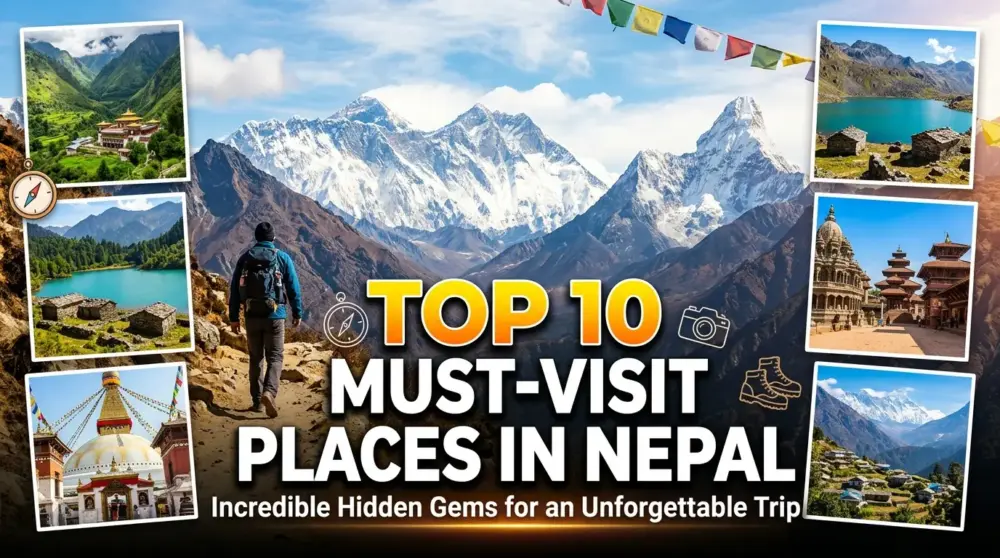
This guide to the Top 10 must visit Place in Nepal will help you explore the country’s most incredible destinations. This guide to the Top 10 Must Visit Place in Nepal will help you explore the country’s most breathtaking destinations and hidden gems.
Why Nepal Belongs on Every Traveler’s List
There is a moment that happens to almost every traveler who sets foot in Nepal. It usually strikes somewhere unexpected, perhaps mid-bite of a steaming bowl of dal bhat after a long day on the trail, or during a quiet sunrise when the first golden light spills across the Himalayan peaks and the world goes completely, breathlessly still. The moment is simple: you realize this place is unlike anywhere else on earth.
Nepal is a country of staggering contrasts. Eight of the world’s fourteen peaks above 8,000 meters stand here, including the undisputed king of them all, Mount Everest. And yet, just hours south, the subtropical lowlands of the Terai shelter one-horned rhinoceroses and Bengal tigers in dense, riverine forests. Sacred Hindu shrines stand a stone’s throw from ancient Buddhist stupas. A medieval cobblestone alley in Bhaktapur can lead you, without warning, into a courtyard that has barely changed since the fifteenth century.
This is not a destination you merely visit. It is one you absorb. This guide to the Top 10 Must Visit Place in Nepal highlights the most unforgettable destinations across the country. The ten places collected in this guide each offer something distinct, and together they tell the full story of one of the most fascinating countries on the planet. Whether you are a first-time visitor lacing up your trekking boots, a culture seeker wandering through courtyard after courtyard of intricate woodwork, or simply someone who wants to sit by a lake and watch the mountains reflect on still water, Nepal has prepared something remarkable for you.
Travelers searching for the Top 10 Must Visit Place in Nepal will find this guide especially helpful for planning their journey.
1. Kathmandu Valley

Where gods and mortals have shared the same streets for two thousand years
You land at Tribhuvan International Airport, and immediately the city begins its negotiations with your senses. The air carries woodsmoke and incense, marigold garlands, and roasted corn. Motorbikes weave through narrow lanes. Temple bells ring somewhere nearby. Kathmandu does not ease you in gently. It simply begins.
The valley is home to seven UNESCO World Heritage Sites, a density of cultural treasure that rivals anywhere on earth. Swayambhunath, the Monkey Temple, watches over the city from its hilltop perch, its all-seeing eyes painted beneath the gilded spire unchanged for centuries. Boudhanath, one of the largest Buddhist stupas in the world, draws pilgrims who circle clockwise in a slow, meditative procession that has repeated itself daily for generations. At Pashupatinath, the sacred ghats along the Bagmati River host cremation ceremonies that are not hidden away or sanitized but openly visible, a reminder that here, the cycle of life and death is honored, not feared.
The durbar squares of Kathmandu, Patan, and Bhaktapur reveal the extraordinary skill of Newar craftsmen across multiple dynasties. Intricately carved wooden windows, peacock-shaped fountains, and tiered pagodas demonstrate a level of artistic ambition that still astonishes architects and historians who study them today. Patan Durbar Square in particular has a quality of refined elegance that many visitors describe as the finest square in all of Asia.
Kathmandu remains one of the key highlights in the Top 10 Must Visit Place in Nepal due to its cultural and spiritual depth. Kathmandu is also a city very much alive in the present. Thamel thrums with guesthouses, gear shops, rooftop cafes, and the meeting of travelers from every corner of the world. Asan Tole market overflows with spices, textiles, and locals doing exactly what they always do, which is also exactly what makes it worth watching.
Traveler’s Tip: Spend at least three full days in the valley. Morning light at Boudhanath before the crowds arrive is something close to magic. Hire a local guide for the durbar squares because the stories behind the carvings are as rich as the carvings themselves.
The capital region remains one of the Top 10 Must Visit Place in Nepal due to its rich cultural heritage.
2. Pokhara
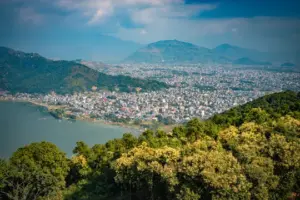
A lakeside city that holds the Annapurna range like a mirror holds the sky
Pokhara is one of the Top 10 must visit place in Nepal for travelers seeking relaxation. There is a good reason that nearly every traveler who visits Nepal eventually finds their way to Pokhara, and an equally good reason that many of them never quite manage to leave on schedule. The city sits beside Phewa Lake at an altitude of around 800 meters, and on a clear day, the entire Annapurna Massif appears across the water as though someone placed the most dramatic backdrop in the world just outside your window.
Pokhara operates at a pace entirely its own. It is no surprise that Pokhara is included in the Top 10 Must Visit Place in Nepal for most travelers. The lakeside promenade, lined with cafes and small boats for hire, invites the kind of unhurried afternoon that travelers rarely allow themselves. You rent a rowing boat, drift toward the island temple at the center of the lake, listen to the mountains, and somehow an hour disappears. This happens repeatedly.
For those who want more active engagement, the options are extraordinary. Pokhara serves as the gateway to the Annapurna Conservation Area, a launching point for both the Annapurna Circuit and the trek to Annapurna Base Camp. Paragliders launch daily from Sarangkot and glide above the lake for thirty minutes to an hour of uninterrupted Himalayan views. White water rafting on the Seti and Kali Gandaki rivers draws serious paddlers. The World Peace Pagoda above the lake offers a peaceful walk and a panorama that resets whatever stress you arrived with.
The city has also developed a genuinely excellent food and cafe culture. You can eat Newari cuisine, Israeli food, Italian pasta, or Tibetan thukpa within the same block. The coffee is better than you expect, and the lakeside sunset, accompanied by a warm drink and that mountain silhouette, is the kind of scene that fills memory cards and, more importantly, actual memories.
Traveler’s Tip: Sarangkot at sunrise is unmissable. Wake at 4:30 am, take a taxi to the viewpoint, and watch Machhapuchhre (Fish Tail Mountain) turn from grey to gold to brilliant pink. It is disorienting in the best possible way.
Pokhara easily ranks among the Top 10 Must Visit Place in Nepal for its relaxing lakeside atmosphere.
3. Everest Base Camp
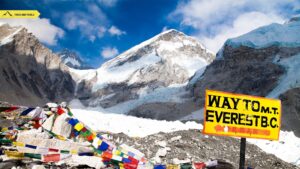
The trek that rewires you completely
Let’s be honest about something: reaching Everest Base Camp at 5,364 meters does not give you a view of the summit. The mountain’s upper reaches stay hidden from the camp itself. And yet, nearly everyone who completes this trek describes it as one of the most transformative experiences of their life. The reason has nothing to do with the view at the end.
The Everest Base Camp trek typically begins with a short flight from Kathmandu to Lukla, one of the world’s most dramatic airport approaches, landing on a hillside runway with mountains rising immediately beyond it. From Lukla, the trail winds through Sherpa villages whose names have become almost mythological to mountaineers worldwide: Namche Bazaar, the bustling trading hub where you acclimatize for two days and drink surprisingly good espresso at high altitude cafes; Tengboche, where a monastery perched above the treeline frames Ama Dablam in a composition that photographers obsess over; Lobuche and Gorak Shep, where the landscape strips itself down to stone and ice and you begin to feel the altitude in your chest.
What the trek actually delivers is this: eleven to fourteen days of walking through one of the most visually dramatic landscapes on earth, through a living culture of extraordinary resilience, through personal boundaries you did not know you had. The Khumbu glacier sprawls below you at camp. Prayer flags snap in a wind that carries something elemental. And all around, in every direction, the world is bigger than it has any right to be.
The Sherpa community that calls this region home deserves particular attention. Their hospitality, their expertise, and their quiet pride in this landscape they have stewarded for generations are woven into every day of the journey. The teahouses where you sleep and eat along the route are family-run operations, and the connections you make over dal bhat at altitude are genuinely one of the trek’s great pleasures. For adventure lovers, this is one of the Top 10 Must Visit Place in Nepal that offers a life-changing experience.
Traveler’s Tip: Acclimatization is not optional. Follow the golden rule: climb high, sleep low. Add an extra rest day at Namche Bazaar if your body asks for it. The mountain will wait. The trek is best completed between October and November or March and May.
4. Chitwan National Park
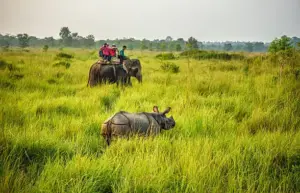
Where the jungle breathes, and the wildlife does not apologize for existing
Drive south from Kathmandu for four to five hours, or take a short domestic flight to Bharatpur, and Nepal transforms completely. Gone are the mountains and the thin air. In their place: the dense, humid, golden grasslands and riverine forests of the Terai, home to one of Asia’s great wildlife conservation success stories.
Chitwan National Park covers 932 square kilometers and holds one of the last populations of the one-horned rhinoceros in the world. In the 1960s, fewer than 100 of these extraordinary animals remained in Nepal. Decades of committed conservation work, often done at significant personal risk by park rangers and local communities, brought that number to over 700. Walking through the park on a guided jungle safari and suddenly finding yourself twenty meters from a rhino grazing in a clearing is an experience of pure, uncomplicated awe.
Chitwan also shelters a healthy population of Bengal tigers, though sightings require patience and some luck. What you are almost guaranteed to encounter, regardless: gharial crocodiles basking on river banks, hundreds of bird species making this a paradise for birdwatchers, spotted deer, langur monkeys, sloth bears, and the park’s elephants, which have become the subject of important ongoing conversations about ethical wildlife tourism.
The Tharu community has lived alongside this landscape for centuries, developing a culture, an architecture, and a relationship with the forest that is entirely their own. A village walk through a Tharu settlement, attending a cultural dance performance in the evening, or simply speaking with a local guide about how their community navigated the establishment of the park, adds a dimension to the Chitwan experience that pure wildlife watching cannot provide on its own.
Traveler’s Tip: Book a reputable lodge that prioritizes ethical wildlife practices and community benefit. Jungle walks at dawn with a naturalist guide offer the most intimate encounters. The best months are from October through March when the vegetation is lower, and animals are more visible near water sources.
Wildlife enthusiasts consider this one of the Top 10 Must Visit Place in Nepal for jungle safaris.
5. Annapurna Circuit
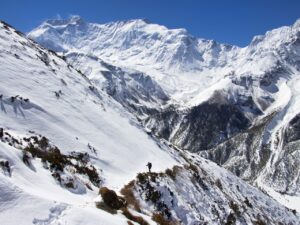
The trek that shows you Nepal in its full, unrepeatable diversity
Ask serious trekkers to name the world’s greatest long-distance walks, and the Annapurna Circuit appears with a frequency that is not a coincidence. The classic circuit covers around 160 to 230 kilometers, depending on your chosen route, and in that distance, it takes you through a cross section of geography, culture, and climate that would take a lifetime to replicate in fragmented pieces.
You begin in subtropical lowlands, walking through rice paddies and banana groves where butterflies the size of your hand drift between flowers. You climb through oak and rhododendron forests that, in spring, flood with color in a way that makes you stop every twenty steps to look back. You pass through Manang, a high-altitude village where the acclimatization day gives you time to explore monastery walls and crumbling medieval fortifications. And then, the crossing: Thorong La Pass at 5,416 meters, the high point of the circuit and one of the most celebrated mountain passes in trekking history.
On the other side of the pass, the landscape shifts dramatically into the rainshadow zone of Upper Mustang. The green disappears. The world becomes ochre and rust and deep brown, sculpted by wind into shapes that seem more like a painting than a place. The town of Muktinath at the base of the descent holds one of the most sacred pilgrimage sites in Hinduism and Buddhism, where an eternal flame burns from natural gas in a remarkable geological phenomenon.
The circuit finishes through the Kali Gandaki Gorge, the deepest gorge in the world by some measurements, where the river has carved a passage between Annapurna and Dhaulagiri that feels, even on clear days, like walking through the earth’s own history.
Traveler’s Tip: The Annapurna Circuit takes between 12 and 21 days, depending on pace and side trips. The Thorong La crossing should be attempted only in clear weather and ideally before noon to avoid afternoon wind. A TIMS card and an ACAP permit are both required before entering the area.
6. Lumbini
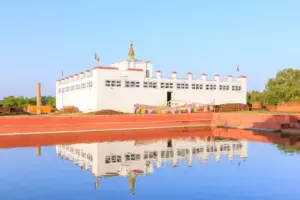
The birthplace of the Buddha, where stillness becomes a physical sensation
In the year 563 BCE, or thereabouts, a child was born in the garden of Lumbini in what is now the Terai lowlands of southern Nepal. His name was Siddhartha Gautama, and he would become the Buddha, the Awakened One, whose teachings have guided the lives of hundreds of millions of people across the following twenty-five centuries. That act of birth happened here, in this garden, and the place has been a site of pilgrimage ever since Emperor Ashoka visited and erected a commemorative pillar in the third century BCE.
The sacred garden itself contains the Mayadevi Temple, built over the exact spot traditionally held to be the birthplace. Inside, the stone carving depicting Queen Mayadevi holding a branch of a sal tree as she gives birth is modest and worn by centuries of devotion, which somehow makes it more affecting than any grand monument could be. The archaeological excavations around the temple have uncovered layers of history extending back to the very origins of the site.
Beyond the sacred garden, the Lumbini Development Zone spreads across 4.8 square kilometers of landscaped grounds containing monasteries built by Buddhist communities from across the world. Each country’s monastery reflects its own architectural tradition: the white and gold Thai monastery, the red and ochre Tibetan gompa, the understated Japanese pagoda, the ornate Sri Lankan temple. Walking from one to the next is an unexpected education in the diversity of Buddhist expression across Asia.
The overall atmosphere of Lumbini is one of quiet purpose. Monks in saffron and maroon robes move slowly along pathways. Pilgrims from Nepal, India, Sri Lanka, Japan, Korea, and many other countries sit in contemplation or walk the meditation circuit around the sacred garden. Whatever your own relationship with religion, the weight of what this place has meant to so many people for so long is present and genuinely felt.
Traveler’s Tip: Lumbini is best visited as an overnight trip rather than a day visit from Pokhara or Kathmandu. The early morning light in the sacred garden, before the tour groups arrive, is deeply peaceful. November through February offers the most comfortable temperatures in this lowland region.
7. Bhaktapur
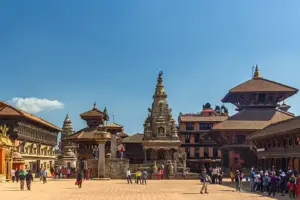
A living medieval city that refused to let its past disappear
Of the three great ancient cities of the Kathmandu Valley, Bhaktapur is the one that feels most fully preserved, most genuinely itself. While Kathmandu has absorbed the busy energy of a modern capital, Bhaktapur has kept its medieval bones largely intact. The streets are narrower here. The squares are quieter. Potters still work their wheels in the sun on Pottery Square, shaping the distinctive black clay vessels that have been made in this spot for centuries. Women spread lentils to dry on reed mats across temple steps.
Bhaktapur Durbar Square is the crown of the city. The 55 Window Palace, built by King Yaksha Malla in the fifteenth century and later restored, demonstrates the extraordinary level of woodcarving skill that made Newari craftsmen the most sought-after artisans across the Himalayan region. Every window, every strut, every doorway frame is a lesson in patience and mastery. The Royal Bath, the Sun Dhoka Golden Gate, and the Nyatapola Temple, a soaring five-tiered pagoda that is the tallest temple in Nepal, form a skyline unlike anything else in South Asia.
Food in Bhaktapur deserves its own paragraph. Ju ju dhau, literally ‘king curd,’ is a thick, creamy yogurt set in traditional clay pots and sold throughout the city. It has a richness and subtlety that regular yogurt simply does not possess, and eating it here, where it has been made the same way for generations, is one of those small but genuine pleasures that travel sometimes provides without warning.
The city sustained significant damage in the 2015 earthquake, and the reconstruction effort has been a major undertaking for both the local community and international preservation organizations. What you see today represents not only the original craftsmen’s achievement but also a continuing act of devotion by a community determined to keep its heritage alive.
Traveler’s Tip: Pay the entry fee for Bhaktapur without hesitation. A substantial portion goes directly toward conservation and restoration. Stay overnight if possible, as the city transforms after day trippers leave and the authentic rhythm of local life becomes more visible.
8. Langtang Valley
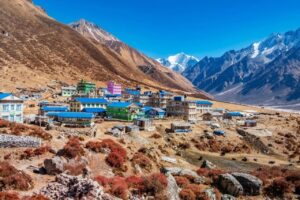
The forgotten valley that asks more of you and gives back even more in return
Langtang is sometimes called the forgotten valley, though the travelers who find their way here tend to feel like they have found a secret rather than discovered something overlooked. Located just 51 kilometers north of Kathmandu as the crow flies, the Langtang National Park contains dramatic glacier-fed valleys, Buddhist monasteries perched above the treeline, and the warm, generous culture of the Tamang and Tibetan communities who have called this landscape home for generations.
The 2015 earthquake struck Langtang village with catastrophic force. An avalanche triggered by the quake obliterated most of the village in seconds, killing over 200 people, including many trekkers who were staying there at the time. The village has since been rebuilt, largely by the same community that survived, and visiting Langtang today carries an additional layer of meaning: you are witnessing resilience made tangible, a community that chose to return to the valley they love.
The trek itself rewards at every elevation. The lower sections pass through forests of bamboo and rhododendron, with red panda reportedly present though seldom seen. Higher up, the valley opens dramatically to reveal the Langtang Lirung massif, a wall of ice and rock that rises abruptly from the valley floor in a scale that is difficult to process. The high pastures near Kyanjin Gompa offer walks to glacier viewpoints and to small cheese factories producing a type of hard cheese, yak milk-based, that has been sold to Kathmandu markets for generations.
Kyanjin Ri, the high point viewable without technical climbing, requires an early start and a few hours of effort, but the 360-degree panorama of peaks, including Langtang Lirung, Yala Peak, and the snow-covered ridges extending toward Tibet, is among the finest viewpoints in the entire country and one that far fewer people have stood on than it deserves.
Traveler’s Tip: The Langtang trek is often overlooked in favor of Everest and Annapurna, which means the trails are quieter, the teahouses more personal, and the experience more intimate. Allow at least seven days for the full circuit. Visiting Langtang also directly supports communities still rebuilding after 2015.
9. Upper Mustang
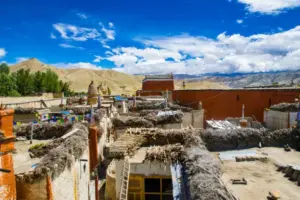
A forbidden kingdom at the end of the world, still dreaming in ochre and wind
Until 1992, Upper Mustang was closed to the outside world. The region, a former kingdom that maintained a degree of political autonomy even after its formal annexation by Nepal, preserved a version of Tibetan culture so intact that scholars sometimes describe it as a living museum of pre-modern Tibet. The landscape is Mars red and wind-carved, a high desert plateau above the treeline where the sky feels lower and the silence is the dominant sound.
Lo Manthang, the walled capital of the former kingdom, sits at 3,840 meters and contains a concentration of ancient monasteries, palaces, and cave dwellings that would be remarkable anywhere on earth. The great monasteries, Thubchen, Jampa, and Champa, hold wall paintings dating back to the fifteenth century of such quality and preservation that conservators from around the world have made ongoing restoration a priority. Walking through these dim, frescoed interiors, accompanied by the smell of butter lamps and the soft sound of monks reciting texts, you feel the full depth of time in a way that words cannot quite account for.
The landscape of Upper Mustang is unlike anything else in Nepal. The Kali Gandaki Gorge cuts through the region with geological authority. Wind-carved cliffs are honeycombed with ancient cave dwellings, some still used for meditation retreats, others abandoned to the sky. The ancient roads connecting villages are still sometimes traveled by horse, as they have been for centuries, because the terrain and the wind make this practical rather than merely picturesque.
A restricted area permit is required for Upper Mustang and costs 500 USD for the first 10 days, a figure that also functions as a conservation measure limiting the volume of visitors and helping fund local development. The permit requirement has preserved Mustang in ways that unrestricted access would have eroded. It is worth every rupee.
Traveler’s Tip: The restricted area permit must be arranged in advance through a registered trekking agency. The best seasons are May through June and September through October. Jeep travel is now possible between Jomsom and Lo Manthang, allowing visits for those who cannot trek, though the overland route itself is a remarkable experience.
10. Bandipur
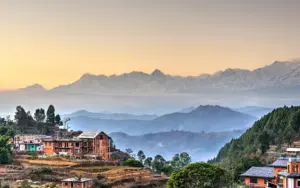
A hilltop village where time slows down, and you remember what quiet feels like
Bandipur does not appear on every list, and that is precisely part of its appeal. This hilltop Newari village sits at 1,030 meters above sea level, roughly midway between Kathmandu and Pokhara, and it occupies a ridge with views of the Annapurna and Manaslu ranges to the north and the Marsyangdi River valley spreading below. It is the kind of place you pass through, planning to spend one night and wake up three days later, wondering how that happened.
Bandipur was, for several centuries, a prosperous trading town on the trans Himalayan trade route, and the Newar merchants who settled here built the kind of architecture that reflects accumulated wealth and sophisticated taste. The main bazaar street is entirely pedestrian, lined with beautifully restored traditional buildings whose carved wooden facades and shaded archways create an atmosphere of unhurried elegance. No vehicles intrude. No electricity wires cut across the rooflines in the historic core. The main street is simply one of the most photogenic streets in Nepal.
The surrounding hills offer excellent day hikes. The Siddha Gupha cave, one of the largest caves in Nepal, lies a short walk below the village and contains impressive stalactite formations. The Tundikhel viewpoint at the western end of the village provides a panoramic sweep of peaks. Bindabasini Temple at the eastern end draws local devotees and offers another angle on both the village and the mountains.
What Bandipur ultimately offers is something increasingly difficult to find: genuine rest. There are good guesthouses, real conversations with local families, mornings with mountain views and hot tea, and evenings where the valley below fills with mist and the stars above, uncompeted with city light, are startlingly numerous. It is a reminder that travel does not always require effort to be rewarding.
Traveler’s Tip: Bandipur is most often visited as a stop between Kathmandu and Pokhara, but it deserves at minimum two nights. The village is at its most beautiful at dawn and dusk. The cave visit requires a local guide and a small fee, both worth securing.
Before You Go: A Few Honest Notes
Nepal rewards travelers who approach it with curiosity and patience rather than a rigid itinerary. The roads are sometimes rough. The weather at altitude is genuinely unpredictable. A flight to Lukla or Pokhara can be delayed by cloud cover without notice. And each of these apparent inconveniences has a way of leading to something unexpected and good, a conversation you would not have had, a view you would have missed, a rest day in a village that turns out to be the best day of the trip.
The people of Nepal carry their generosity openly. Namaste is not a greeting performed for tourists. It is a genuine acknowledgment of the humanity in the person in front of you, and it is given freely and without expectation. Learning a few words of Nepali, removing your shoes at temple thresholds, asking before photographing individuals, and buying from local vendors rather than international chains are small choices that add up to meaningful respect.
Nepal is a country that has faced enormous challenges: earthquakes, political transitions, economic pressures, and the difficult balance between welcoming the world and preserving what makes it worth visiting. The tourism infrastructure continues to improve while much of the cultural and natural heritage that draws visitors here remains remarkable and intact. Traveling thoughtfully, spending locally, and leaving things as you found them are the best ways to ensure the next traveler, and the generation after that, gets the same opportunity you had. These Top 10 Must Visit Place in Nepal showcase the country’s incredible diversity and beauty.
Go. Nepal is waiting, and it has more to offer than you can hold in a single visit. Most people who go once are already planning the second trip before they reach the departure gate.
Safe travels and open eyes.


How to book a trip?

make free inquiry

confirm the trip
