


Why Czech and Slovak Trekkers Keep Coming Back to Nepal?
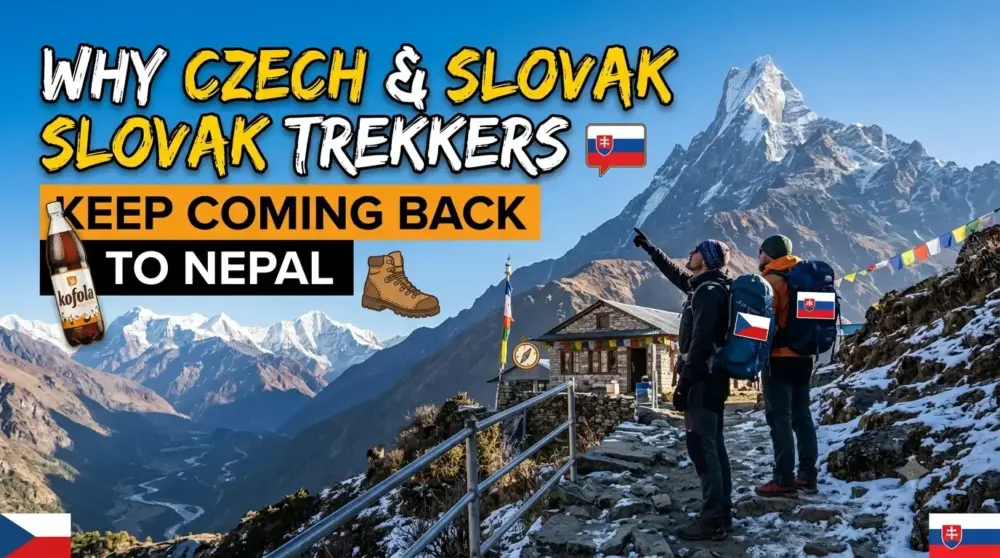
There’s a reason so many Czech and Slovak trekkers don’t stop at one trip to Nepal.
It might begin with a dream of reaching Everest Base Camp or seeing the Annapurna range up close. But somewhere along the trail—sharing tea with locals, watching prayer flags flutter beneath snow-covered peaks, or ending a long day with a warm plate of dal bhat—the journey becomes about much more than the mountains.
Unlike many hiking destinations, Nepal trekking offers incredible variety. One trek takes you through Sherpa villages beneath the world’s highest peaks, another winds through rhododendron forests to Annapurna Base Camp, while quieter routes like Langtang introduce you to a completely different landscape and culture. Every valley has its own character, traditions, and stories, which is why returning trekkers rarely choose the same route twice.
If you’re comparing Nepal with the Alps or planning your first Himalayan adventure, it’s natural to wonder whether the trip is worth the time and cost. This guide explores why Nepal continues to attract Czech and Slovak hikers year after year, how it differs from trekking in Europe, which routes are best for first-time visitors, and what you should know before booking your adventure.
Key Takeaways
- Nepal packs more trekking variety into one country than the Alps.
- Guide and porter support make it cheaper than most Europeans expect when going in.
- Spring and autumn are the seasons worth planning around.
- Everest Base Camp, Annapurna Base Camp, and Langtang are the usual first treks.
- Who you book with ends up mattering as much as which trek you pick.
Why does the second trip happen so often?
Ask someone from Prague or Bratislava why they returned to Nepal for trekking, and you’ll rarely hear the same answer twice.
One person talks about standing beneath the world’s highest mountains. Another remembers the warmth of a family-run tea house, endless plates of dal bhat, and the hospitality of remote Himalayan villages.
For many Czech and Slovak travellers, a trekking holiday in Nepal becomes more than a mountain adventure—it becomes the trip they compare every other hiking destination to.
Whether you’re considering your first Himalayan trek, comparing Nepal with the Alps, or deciding between Everest Base Camp, Annapurna Base Camp, and Langtang Valley, this guide explains why so many European hikers keep coming back.
The thing people get wrong after trek one
Someone does Everest Base Camp, has a great time, and quietly decides they’ve “done Nepal.” Fair enough, it’s the famous one. Then a colleague mentions Manaslu, or someone at a hostel won’t stop talking about Langtang, and it turns out EBC was one route among dozens. Each with its own villages. It’s own weather. It’s own mix of Sherpa, Gurung, or Tamang culture depending on which valley you’re in.
Trek Nepal for a decade, and you still won’t run out of new ground, which is probably the real reason people go back. Less about proving something, more about the country being bigger than one itinerary lets on.
Nepal against the Alps
Both regions have serious mountain scenery, so most of the comparison comes down to logistics and culture, not which peaks photograph better.
| Nepal | The Alps | |
| Highest points | Peaks above 8,000m; treks reach 5,500m+ | Peaks around 4,800m; most trails stay well below |
| Where you sleep | Tea houses run by local families | Mountain huts, often booked out early |
| Culture on the trail | Monasteries, Sherpa villages, prayer flags | Alpine villages, church spires |
| Guide and porter costs | Lower, and porter support is common | Higher; guides are often optional |
| Trekking season | Long window; spring and autumn are peak | Shorter, weather-dependent |
Neither wins outright. Plenty of Czech and Slovak hikers end up doing both eventually. Different trips, not rivals.
Picking a first trek
Three routes come up again and again for first-timers, and each suits a slightly different traveler.
Everest Base Camp. Lukla (2,860m) up to base camp (5,364m), around 12 trekking days. The classic, and the busiest, so acclimatization needs to be built into the schedule properly. Not trimmed to save two days.
Annapurna Base Camp. Shorter, a bit gentler underfoot. Forest, terraced villages, mountain views, without quite as many long walking days.
Langtang Valley. Closer to Kathmandu, so less of your holiday disappears into transit before the trek even starts. Good pick if your leave from work is tight.
Check the daily walking hours and elevation gain honestly before booking any of them. The website photos won’t tell you how your legs feel on day six.
What it actually costs
Set against a week in the Alps between huts, lift passes, and guiding fees, Nepal tends to come out cheaper. How much depends on permits, season, and how much guide or porter support you take along. Treat any figure you find online as a rough starting point, not a quote, and confirm current numbers with whoever you book with directly. One thing that holds fairly steady across operators: tea house trekking with local guide support is more within reach than most Europeans assume before they actually look into it.
Mistakes worth skipping
The Alps rarely keep you above 3,000m for long. Nepal will, for days at a stretch, and altitude sickness doesn’t care how many marathons you’ve run. Build the acclimatization days in. Don’t cut them to save time, no matter how strong you feel.
Cheapest quote wins, right? Not always. A low price with vague inclusions usually means something got quietly dropped, and you find out on day four when it’s too late to fix. Ask what’s specifically covered before deciding a price is actually good.
Packing for the Alps and packing for the Himalaya aren’t the same job. Mornings can be near freezing even in the better trekking months. Layers matter more here than most first-timers plan for.
And the one that trips people up most: assuming one trek is the whole story. It isn’t. Your first trip is an introduction, not the complete picture, however good it was.
Who do you book with
One of the biggest surprises for first-time visitors is that trekking in Nepal is often more affordable than a comparable hiking holiday in the Alps.
The total cost depends on your trekking route, permits, accommodation, domestic flights, guide and porter services, and the season you travel. Popular routes such as the Everest Base Camp Trek, Annapurna Base Camp Trek, and Langtang Valley Trek all have different budgets, but tea-house trekking remains one of the best-value mountain experiences in the world.
Compared with European alpine holidays—where mountain huts, lift passes, and professional guides quickly increase the cost—a guided trek in Nepal offers exceptional value while supporting local mountain communities.
Rather than relying on outdated online prices, ask your trekking company for a detailed quotation showing exactly what’s included, from permits and accommodation to meals, transportation, and guide services.
This gets skipped more than it should. A guide’s calls on pacing, weather, and when to turn back affect your actual safety, not just how comfortable the trip feels. Before handing over a deposit, ask about licensing, altitude first aid training, and what safety equipment is genuinely carried on the trail. Not just what’s written on the homepage.
Green Horizon has been running treks out of Kathmandu since 1989, and we were the first operator to bring Czech and Slovak trekkers here. Worth knowing as context. Not a reason to skip comparing us against others, which you should do regardless of who you end up booking with. Our full breakdown of what to check is here: how to choose a trekking company in Nepal.
FAQs
Why do Czech and Slovak trekkers love Nepal?
Route variety, mostly. That and the cost, which sits well below the Alps for a comparable trip. A lot of return visits come down to wanting a valley they haven’t walked yet.
Is Nepal cheaper than trekking in the Alps?
Generally, once guide and porter support, tea house stays, and permits are all factored in. The exact numbers shift with season and route, so check with your operator before you fix a budget.
Which trek should I do first?
Everest Base Camp, Annapurna Base Camp, or Langtang Valley. All three work well for a first visit, and the right one really just depends on your fitness and how many days you’ve got free.
Is Nepal safe for European hikers?
Yes, with a licensed guide, real acclimatization planning, and insurance that specifically covers high-altitude trekking. Solo trekking without any of that support changes the risk considerably, and not in a small way.
When’s the best time to go?
Spring or autumn. Clearer skies and weather that behaves itself more often than not.
Do I need a guide, or can I trek independently?
On some routes, technically, yes, you can go without one. Restricted areas legally require a registered operator, though, and a guide adds real safety value on any high-altitude trek regardless of what the rules technically allow.
Before you fly
- Bring cash. Cards barely function once you’re on the trail.
- Grab a local SIM in Kathmandu rather than relying on roaming.
- Charging your devices usually costs extra at tea houses. Budget for it.
- Layers beat one heavy jacket, every time.
- Read your insurance policy properly. It needs to cover high-altitude trekking specifically, not just general travel.
Where to go next
- Everest Base Camp Trek
- Nepal Trekking Permits
- Women’s Solo Trekking Guide
- How to choose a trekking company in Nepal
Planning your first trek, or your fifth? Get a tailored quote from our team → Or talk to us directly on WhatsApp.


How to book a trip?

make free inquiry

confirm the trip
