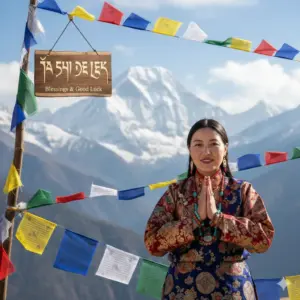
What Nobody Tells You About Trekking in Nepal is something many guidebooks and travel blogs rarely explain. Nepal is a dream destination for trekkers around the world. Trekking in Nepal offers stunning Himalayas, peaceful mountain villages, diverse trekking routes, and a unique culture. Trekking in Nepal is truly an unforgettable experience. Nepal’s famous routes like Everest Base Camp and Annapurna Circuit attract thousands of adventurers every year. While guidebooks show breathtaking photos and exciting itineraries, there are many things about trekking in Nepal that nobody really talks about. If you are planning a Himalayan adventure, here are some important realities you should know before you go.
1. The Tea Houses Are Everything
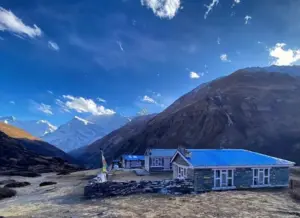
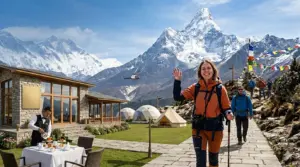
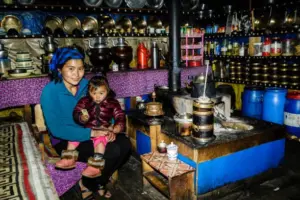
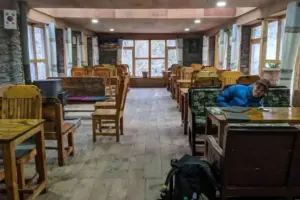
Tea houses are small lodges run by local families in the Himalayas. Most trekkers stay in tea houses at 3,800 meters. The rooms of these tea houses are usually simple with basic beds and blankets. Forget luxury, most teahouses offer thin mattresses, shared squat toilets, and dorm-style rooms.
The tea houses lack in luxury, but they make up for it with warm hospitality, home-cooked meals, and stunning mountain views. Additionally, it is best to bring your sleeping bag, earplugs, and a headlamp.
2. Altitude Sickness Doesn’t Care How Fit You Are
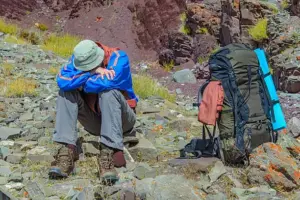
Altitude sickness is one of the biggest challenges of trekking in the Himalayas. Acute mountain sickness (AMS) can strike even ultra-marathoners or gym regulars. Therefore, it is not just about fitness but about how fast your body acclimatizes to thinning oxygen.
Headaches, nausea, dizziness, or worse can strike above ~2,500–3,000 meters. Follow the “climb high, sleep low” rule strictly, take mandatory rest, stay ultra-hydrated, and descend immediately if symptoms worsen.
3. The Weather Is a Character in Your Story
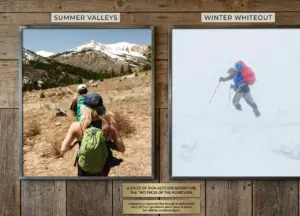
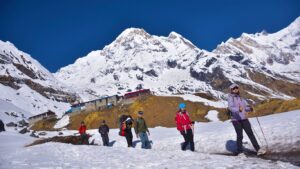
Nepal has two trekking seasons: October to November and March to May. A clear morning can become a whiteout in forty minutes. Snow can fall at Namche in November, turning the famous stones into an ice rink. Fog can swallow Annapurna South completely for two days, just as you arrive at Poon Hill for the sunrise.
These experiences are part of what nobody tells you about trekking in Nepal, especially for first-time trekkers visiting the Himalayas.
4. Your Guide Is the Most Valuable Thing You’ll Pack
Many trekkers, especially budget-conscious ones, skip the guide. They have maps, GPS apps, and YouTube videos. But a trustworthy guide is not a GPS but a meteorologist, a cultural translator, a medic who knows the trail, and a friend who knows exactly when you need to stop for tea and when you need a firm push.
They know which tea houses have the warmest blankets, which trails flood in unseasonal rain, and how to read your face for the early signs of altitude sickness you haven’t noticed yourself yet.
5. The Permits Situation Is More Complex Than It Sounds
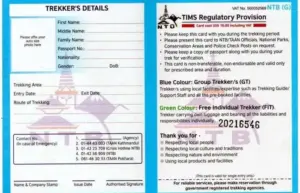
Nepal has streamlined trekking permits significantly, but you still need to navigate them correctly or face being turned back at a checkpoint, which happens more than people expect.
In Nepal, permits are checked at multiple points along every trail; therefore, it is best to carry originals, not just photos. Some checkpoints are unstaffed on weekends but still operational; you’ll sign a logbook regardless.
6. Your Mental Strength Matters
Trekking is not only about physical challenges but also mental ones. Daily 5–8+ hours of uphill/downhill on rocky paths wrecks knees and toenails. Long walking days, cold mornings, and simple living conditions can sometimes feel overwhelming.
But the moment you see the snow-covered Himalayan peaks or reach your trekking destination, every step becomes worth it.
7. The Spiritual Landscape Is Not Decoration
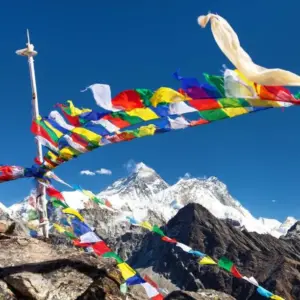
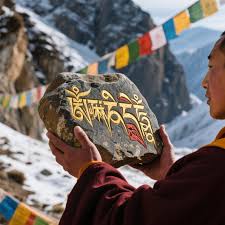
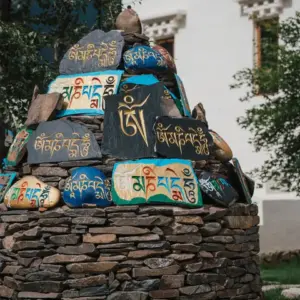
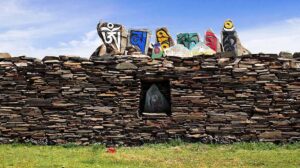
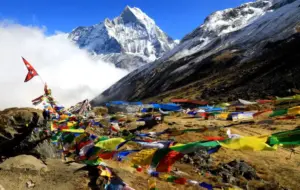
Prayer flags are not there to make photographs beautiful, though they do. Mani walls, long stone walls carved with Buddhist mantras, are not quaint trail markers. Always pass mani walls and stupas to the left (clockwise). Remove your shoes when entering monasteries. Ask before photographing people in religious practice. Learn a few words of Nepali.
8. The Culture Is as Beautiful as the Mountains
Trekking in Nepal is not just about mountains. It is also about experiencing local culture. While trekking in Nepal along trails, you will pass Buddhist monasteries, prayer flags, mani stones, and traditional mountain villages.
While many travelers come to see the stunning landscapes of the Himalayas, they often discover that the cultural experiences along the trail are just as memorable as the mountains themselves. One of the most noticeable cultural elements during a trek is the strong influence of Buddhism.
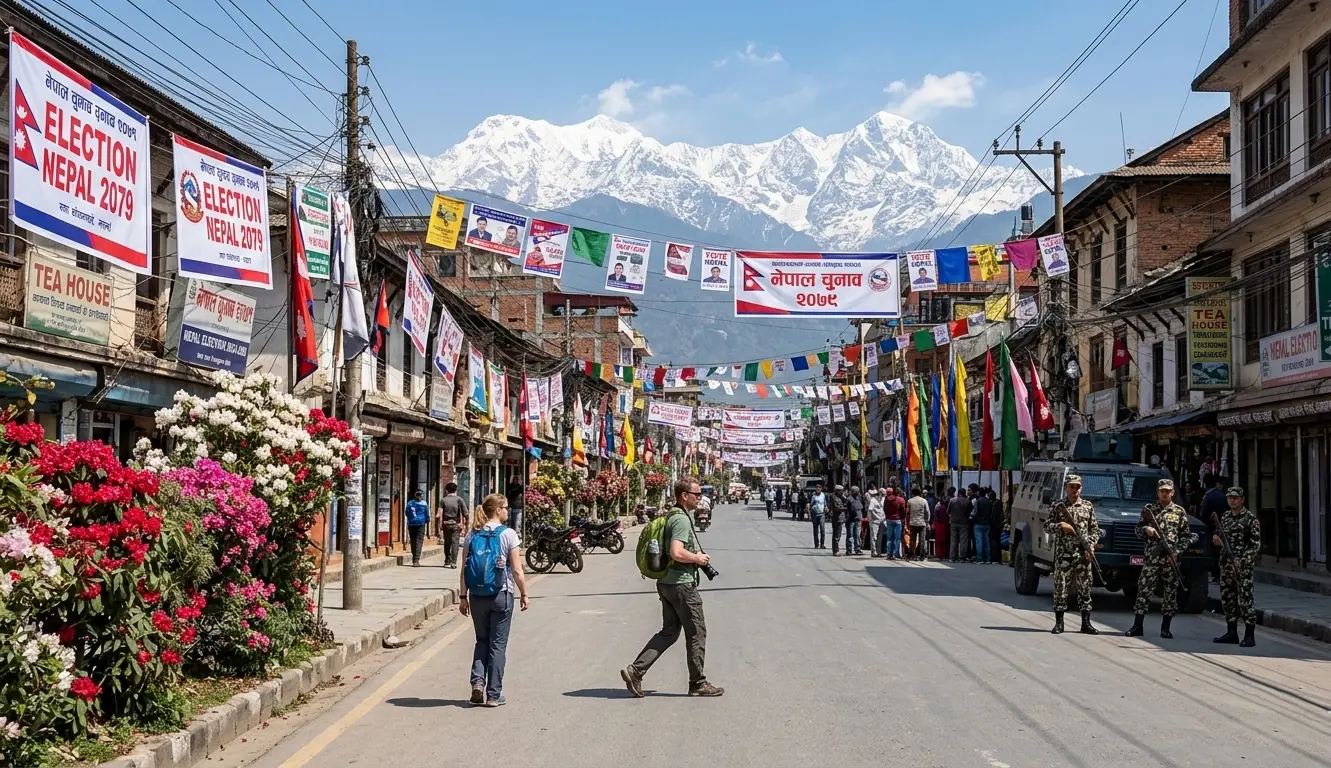
Is Nepal safe to travel during the Election 2026? Nepal is one of the world’s most welcoming destinations, known for the Himalayas, ancient heritage sites, and vibrant culture. With the general election set for March 5, 2026, many travelers are wondering whether it is safe to visit during this important political period. With the general election set for March 5, 2026, many travelers are asking: ‘Is Nepal safe to travel in during the 2026 election?’
Short answer: Yes, it’s generally safe for tourists, as the tourism infrastructure of Nepal is considered a “protected zone.” The Nepal Army is overseeing the security of the elections. Urban areas like Kathmandu and Pokhara have heightened police and military presence for security.
The Background: How Gen Z Protests Led to the March 2026 Election
The youth of Nepal were frustrated by nepotism, corruption, youth unemployment, and politicians’ families’ lavish lifestyles on social media, and took this to the streets. On September 8, protests turned deadly, killing at least 19 people in a single day. The violence forced then-Prime Minister K.P. Sharma Oli to resign the very next day. Parliament was dissolved; an interim government under former Chief Justice Sushila Karki took over. The election was set for March 5, 2026, which is nearly two years ahead of schedule. Young voters are demanding good governance, jobs, and accountability from the government. The protests are over, and the country is now in full election mode with heavy security for a better change.
Possible Disruptions During the Election
Vehicle restrictions/lockdown on polling day.
Road closures, delays, or curfews are possible in cities, especially Kathmandu.
Domestic flights might be suspended or limited on March 5.
Minor protests or rallies could occur before/after the results.
What About Trekking During Election Season?
Trekking is unaffected and remains one of the safest options even in this voting season. Popular routes like Everest Base Camp (EBC), Annapurna Base Camp (ABC), Langtang Valley Trek, and Manaslu Circuit Trek are far from urban political activity. Tea houses, lodges, and guides operate normally. The only potential impact could be minor flight schedule adjustments for domestic flights to trekking routes.
So, is Nepal safe to travel during the Election 2026 if your trip falls on March 5? Yes, especially if you plan.
Safety Tips for Travelling During the Election in Nepal
Many visitors planning spring trips are asking again: Is Nepal safe to travel during the Election 2026? The answer remains reassuring for most tourist areas.
Get permits before March 3: Secure your trekking permits by March 2.
Book through a reputable operation: They secure passes, backups, and real-time updates.
Time flights wisely: Arrive before March 4 or depart after March 6 to skip peak restrictions.
Stay informed: Check the Nepal Tourism Board (NTB) and local channels for updates.
Avoid political areas: Skip rallies, polling stations, large crowds, or protest zones.
Be flexible: Have buffer time in case of a minor disruption.
Respect locals.
General preparation: Have cash, offline maps, and emergency contacts ready.
Should You Cancel Your Trip?
No, you don’t need to cancel your trip during polling day. Nepal’s tourism industry continues to function even during election periods. March is one of the most beautiful months to visit; the weather is pleasant, the mountain views are clear, and rhododendrons begin to bloom across the hills.
The election is a normal democratic process and not a crisis, but contain real weight. With Army oversight and tourism protections, disruptions are minor and short-lived. If your dates fall directly around March 5, there are two solutions.
Option A: Arrive in Nepal 4-5 days early, take care of permits and gear in Kathmandu, then head to your trail before the election. With this, while the country votes, you’ll already be in the mountains, where life is peaceful, and trekking continues as usual.
Option B: Plan to be settled in your city hotel on election day and treat it as a rest day.
Final Thoughts
Nepal during the 2026 elections is still very much open, safe, and magical for travelers who plan ahead. Even in transitional times, the country shows the same hospitality, culture, and traditional mountain views and sceneries, and adventure. The Himalayas don’t pause for politics, and neither should your dreams of Nepal. In summary, if you’re wondering “Is Nepal safe to travel during Election 2026?”, Nepal remains open, secure, and welcoming to tourists. Safe travels!
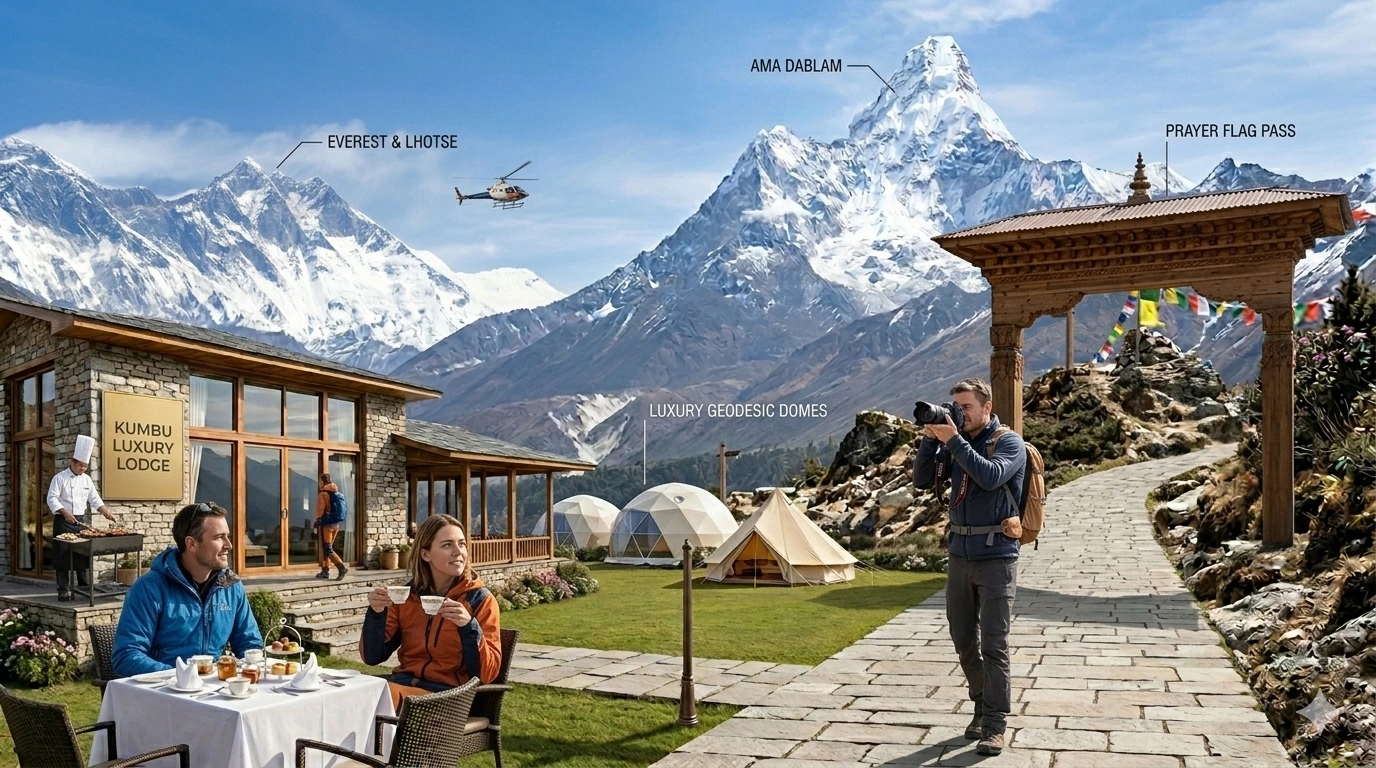
Luxury lodge treks in Nepal offer an elevated way to explore the Himalayas, combining breathtaking scenery with premium mountain accommodation, personalized service, and carefully curated scenic routes. For decades, trekking in Nepal has been associated with raw adventure. Thin mattresses, shared facilities, unpredictable meals, and long days that end in basic teahouses. While this traditional style of trekking still appeals to purists, it no longer defines the only way to experience the Himalayas. Today, Nepal has reimagined mountain travel through luxury trekking packages that blend world- class scenery with comfort, elegance, and thoughtful service. These journeys are designed for travelers who seek immersion without discomfort, adventure without compromise, and authenticity paired with refinement.
Luxury trekking in Nepal is not about removing the challenge or insulating travelers from the mountains. Instead, it is about enhancing the experience as we move forward, carefully choosing scenic routes, offering superior lodges, and providing personalized support that allows trekkers to focus on what truly matters: the landscape, the culture, and the profound sense of peace that comes from walking through the Himalayas.
From the legendary trails of the Everest Region to the diverse and lush valleys of the Annapurna Region, luxury trekking in Nepal offers an elevated way to experience some of the most beautiful walking routes on Earth without sacrificing warmth, rest, or exceptional hospitality.
Redefining Trekking Comfort in the Himalayas
Luxury trekking packages in Nepal are built around a simple yet powerful idea: adventure should feel rewarding, not exhausting. After a day spent walking through pine forests, crossing suspension bridges draped in prayer flags, or tracing ridgelines beneath snow-capped peaks, the ability to return to a warm, welcoming lodge transforms the entire journey.
Instead of basic teahouses, luxury trekking routes feature carefully selected high- end mountain lodges and premium teahouses known for their comfort, cleanliness, and design. Rooms are thoughtfully furnished with comfortable beds, quality linens, proper insulation, and often private or well-maintained attached bathrooms. Heated dining areas, cozy common rooms, and attentive lodge staff ensure that evenings are as enjoyable as the day’s walk.
Hot showers, once considered a luxury at altitude, become a reliable part of the experience. Meals are freshly prepared, nourishing, and varied, blending local Nepali flavors with international cuisine to suit different palates. The simple pleasure of sipping hot tea while watching clouds drift past Himalayan peaks from a lodge window becomes part of the daily rhythm, one that balances movement and rest with effortless grace.
Scenic Routes Chosen for Beauty and Balance
One of the defining features of luxury trekking in Nepal is the careful selection of routes. Rather than pushing for extreme distances or maximum altitude gains, these itineraries prioritize scenic diversity, gradual acclimatization, and immersive walking experiences. Every trail is chosen not just for where it leads, but for what unfolds along the way.
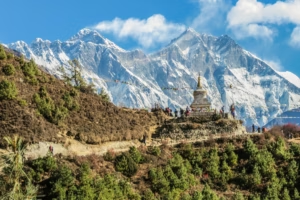
In the Everest region, luxury trekking routes wind through ancient Sherpa villages, rhododendron forests, and wide glacial valleys framed by some of the tallest mountains on Earth. The journey unfolds gradually, allowing trekkers to absorb the landscape without feeling rushed or overwhelmed. Iconic views of Everest, Ama Dablam, and Lhotse appear not as fleeting moments but as constant companions, changing with the light throughout the day.
In the Annapurna region, the scenery shifts dramatically from subtropical forests to alpine meadows and high mountain deserts. Trails pass through terraced farmland, traditional Gurung and Magar villages, and tranquil mountain sanctuaries. Luxury trekking routes here often combine moderate walking days with breathtaking viewpoints, ensuring that travelers experience the region’s incredible diversity without physical strain. This region is especially popular for luxury lodge treks in Nepal thanks to its moderate trails, dramatic viewpoints, and well-developed boutique mountain lodges.
These scenic routes are designed to offer both visual splendor and emotional resonance. Walking becomes meditative, conversations flow naturally, and the mountains reveal themselves slowly, creating a deeper connection to the journey.
Why Choose Luxury Lodges Treks in Nepal?
Luxury lodges and treks in Nepal combine breathtaking Himalayan scenery with high-end mountain accommodation and personalized service. Unlike traditional teahouse trekking, these journeys focus on comfort, carefully selected scenic routes, and thoughtfully designed itineraries that allow travelers to explore at a relaxed and rewarding pace.
Lodges That Feel Like Mountain Retreats
What truly sets luxury trekking packages apart is the quality of accommodation. Nepal’s best trekking lodges are no longer simple places to sleep; they are mountain retreats that reflect the character of their surroundings while providing genuine comfort.
Architecturally, these lodges blend traditional Himalayan design with modern craftsmanship. Stone walls, wooden beams, and handcrafted details create a sense of place, while large windows frame uninterrupted views of peaks, valleys, and sky. Inside, rooms are warm and inviting, often featuring thick duvets, comfortable mattresses, reading lamps, and subtle décor inspired by local culture.
Dining in these lodges is an experience in itself. Meals are prepared with care, using fresh ingredients brought in from lower elevations whenever possible. Breakfasts are hearty and unhurried, lunches are thoughtfully packed or served at scenic rest stops, and dinners become communal moments of warmth and conversation. The simple act of enjoying a well-cooked meal after a day on the trail becomes a highlight rather than an afterthought.
Evenings are often spent around fireplaces or heated dining rooms, sharing stories, reading, or simply watching the stars emerge over the mountains. The atmosphere is calm, intimate, and deeply restorative, allowing the body to recover and the mind to wander.
Personalized Service and Expert Support
Luxury trekking in Nepal is defined as much by people as by places. Professional guides, attentive porters, and dedicated support teams form the backbone of every journey, ensuring that each trek feels seamless and secure.
Experienced trekking guides bring deep knowledge of the terrain, culture, and local history. They set a comfortable pace, manage acclimatization carefully, and adapt daily plans to suit the weather conditions and the group’s needs. More than navigators, they are storytellers and cultural interpreters, offering insight into village life, religious traditions, and the natural world.
Porters carry the bulk of the luggage, allowing trekkers to walk freely with only a light daypack. This not only enhances comfort but also creates a more enjoyable walking rhythm, especially on longer or higher-altitude days. In luxury trekking packages, porter welfare is prioritized, with fair wages, proper equipment, and ethical working conditions forming an essential part of responsible tourism.
From airport transfers to private ground transportation, from pre-trek briefings to post-trek relaxation, every logistical detail is handled with care. This level of organization allows travelers to fully relax into the experience, knowing that they are supported at every step.
Cultural Encounters That Feel Genuine
Despite the emphasis on comfort, luxury trekking in Nepal remains deeply rooted in cultural authenticity. The trails pass through living landscapes where traditions are not preserved for visitors but practiced as part of daily life.
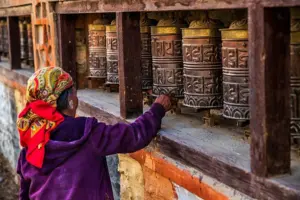
Along the way, trekkers encounter monasteries adorned with colorful murals, prayer wheels spun smooth by generations of hands, and mani walls etched with ancient mantras. Villages offer glimpses into Himalayan life, like children walking to school, farmers tending fields, and elders gathered in quiet conversation.
Luxury trekking allows time for these encounters to unfold naturally. Without the pressure of long distances or rigid schedules, there is space to linger, observe, and connect. Conversations with guides and lodge hosts provide context and understanding, transforming moments of observation into meaningful cultural exchange.
This balance between comfort and authenticity ensures that travelers experience Nepal not as spectators, but as respectful participants in a living mountain culture.
Ideal for Travelers Seeking More Than Adventure
Luxury trekking packages in Nepal appeal to a wide range of travelers. They are ideal for professionals with limited time who want a meaningful escape without physical exhaustion. They attract couples seeking a romantic yet adventurous journey, photographers drawn to dramatic landscapes, and mature travelers who value comfort without sacrificing exploration.
These treks are also well-suited for first-time trekkers who may feel intimidated by traditional Himalayan trekking but are eager to experience the mountains in a supportive environment. The combination of moderate walking days, quality accommodation, and expert guidance creates a sense of confidence and ease that enhances enjoyment.
Ultimately, luxury trekking is about choice, the choice to experience the Himalayas at a pace that feels natural, in surroundings that nurture rather than challenge, and with a level of care that turns a trek into a deeply personal journey.
Sustainability and Responsible Luxury
Modern luxury trekking in Nepal is increasingly aligned with principles of sustainability and responsible travel. Many premium lodges are locally owned and operated, contributing directly to regional economies and employment. Solar power, waste management systems, and community-focused initiatives are becoming integral to luxury trekking infrastructure.
By choosing ethical operators and well-designed routes, luxury trekking supports conservation while providing meaningful livelihoods for mountain communities. This conscious approach ensures that comfort does not come at the expense of the environment or local culture, but rather enhances their long- term preservation.
An Elevated Way to Experience the Himalayas
Luxury trekking in Nepal is not about escaping the mountains. it is about experiencing them more fully. By combining scenic routes with comfortable lodges, expert support, and thoughtful pacing, these journeys allow travelers to engage deeply with the landscape without distraction.
Each day brings the quiet joy of walking through extraordinary terrain, and each evening offers the simple pleasure of rest, warmth, and reflection. The Himalayas reveal themselves not as a test to endure, but as a place to savor step by step, view by view, moment by moment.
For those who believe that adventure and comfort can coexist, luxury trekking packages in Nepal offer a rare opportunity: to walk among the world’s highest peaks while feeling completely at ease, connected, and profoundly inspired.
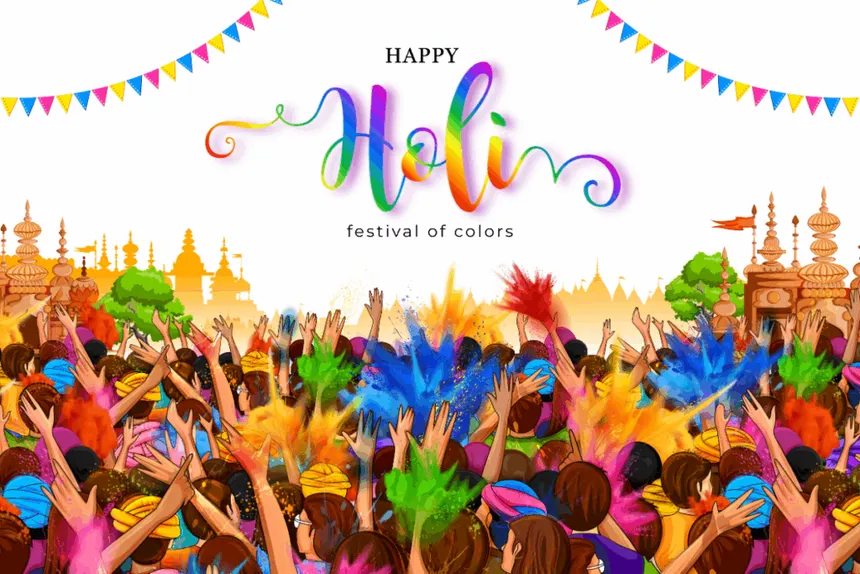
Holi 2026 in Nepal is expected to be more than just a colorful celebration. This year, the festival arrives at a meaningful time, blending tradition, tourism, youth culture, environmental awareness, and even the atmosphere of upcoming national elections. Across the country, from the hills to the Terai, Holi will once again transform streets, homes, and hearts with vibrant energy.
If you are searching for complete information about Holi 2026 in Nepal, including dates, traditions, the best places to celebrate, and how elections may influence the festival, this guide explains everything in detail, keeping the festive spirit alive.
When Is Holi 2026 Celebrated in Nepal?
Holi in Nepal follows the Hindu lunar calendar and will fall in early March 2026. What makes Nepal unique is that the festival is celebrated over two separate days. The hill regions, including the Kathmandu Valley, celebrate first, while the Terai region celebrates the following day. This two-day structure extends the excitement nationwide and gives the country a continuous festive rhythm.
In cities like Kathmandu, preparations begin several days in advance. One of the most symbolic traditions is the installation of the ceremonial Chir (also known as Lingo) at Basantapur Durbar Square, marking the official start of Holi festivities.
The Cultural and Mythological Significance of Holi
Holi carries deep spiritual meaning. It originates from the ancient story of Prahlada and Holika. According to Hindu mythology, Prahlada’s devotion and faith protected him from harm, while Holika’s evil intentions led to her destruction in the fire. This event is symbolized by Holika Dahan, in which bonfires are lit to represent the victory of good over evil.
The playful tradition of applying colors is linked to the divine love story of Radha and Krishna. Their joyful interaction is believed to have inspired the custom of smearing colors, which today represents friendship, equality, and celebration without barriers.
In Nepal, Holi has evolved beyond a religious festival. It has become a shared cultural celebration where people from different communities participate together, strengthening social harmony.
How Holi Is Celebrated Across Nepal
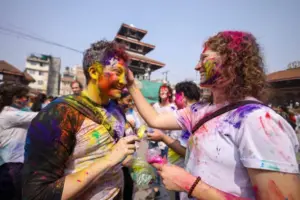
During Holi, major cities such as Pokhara, Lalitpur, and Birgunj will come alive with music, laughter, and clouds of color. In Kathmandu’s Basantapur area, thousands gather to celebrate with dance, traditional music, and festive enthusiasm.
Pokhara’s Lakeside area is particularly popular among tourists. The stunning backdrop of Phewa Lake, combined with vibrant color play, creates a breathtaking scene. In the Terai region, celebrations often feel even more energetic, with large community gatherings and extended festivities.
Families typically begin the morning by applying tika and colors at home. Elders bless younger members, sweets are shared, and then groups of friends head out to join community celebrations. Streets fill with music — from traditional bhajans to modern Nepali and Hindi party songs reflecting how Holi beautifully balances heritage and contemporary culture.
The Growing Tourism Appeal of Holi in Nepal
Holi is expected to attract many international visitors. Compared to some other countries, Holi in Nepal feels vibrant yet less overwhelming, making it attractive to travelers seeking a cultural yet manageable experience.
Areas like Thamel in Kathmandu and Lakeside in Pokhara often host organized Holi events with live music and safer celebration spaces. For tourists, the combination of Nepal’s historic architecture, friendly atmosphere, and colorful celebrations makes Holi an unforgettable travel experience.
Eco-Friendly Holi: A Rising Awareness in 2026
In recent years, environmental awareness in Nepal has increased significantly. For Holi 2026, many youth groups, schools, and community organizations are encouraging the use of herbal colors and reduced water consumption.
The idea is simple: celebrate with joy while protecting the environment. Organic colors, minimal plastic use, and responsible behavior are becoming part of modern Holi culture in Nepal. This shift reflects a broader national awareness about sustainability.
Will the Upcoming Election Affect Holi 2026?
One of the most discussed topics this year is the timing of national elections, which fall close to Holi 2026. Naturally, people are curious whether this will impact the celebrations.
The answer is yes, but only in certain ways.
As the election period approaches, authorities are expected to enforce the Election Code of Conduct. This means political rallies, campaign events, or party promotions will not be allowed during Holi celebrations. You are unlikely to see political flags or slogans mixed into public festivities.
Security presence in cities like Kathmandu and Pokhara may be slightly increased to ensure public safety. In some districts, restrictions on large public gatherings or alcohol sales might be implemented to maintain order.
However, it is important to understand that traditional and family-based Holi celebrations will continue normally. The essence of Holi colors, music, blessings, and community joy remains unchanged. In fact, many see this timing as symbolic: celebrating unity and togetherness just before participating in the democratic process.
Rather than reducing excitement, the election season may encourage a more respectful and responsible style of celebration.
Safety and Responsible Celebration
With larger gatherings and election-related security, responsible celebration becomes even more important in 2026. Using skin-friendly colors, respecting personal boundaries, avoiding reckless driving, and celebrating with consent are all essential.
Authorities typically increase patrols during Holi to prevent disturbances and ensure everyone enjoys themselves safely. The goal is not to restrict fun but to ensure that the festival remains joyful for all.
Why Holi 2026 in Nepal Feels Especially Meaningful
In today’s fast-paced world filled with digital distractions, economic challenges, and political discussions, Holi offers something refreshingly simple: connection. It is a reminder that despite differences in opinions, backgrounds, or beliefs, people can come together in celebration.
Holi represents more than colors. It symbolizes cultural pride, environmental awareness, youth energy, tourism growth, and civic responsibility, all blending into one vibrant national moment.
Holi 2026 will be colorful and lively, slightly shaped by the surrounding election atmosphere, but its heart remains unchanged. From the historic squares of Kathmandu to the scenic lakeside of Pokhara and the festive plains of the Terai, Nepal will once again celebrate the festival of colors with warmth and unity.
As the colors fill the air and laughter echoes through the streets, Holi will continue to remind everyone of hope, harmony, and renewal.
रंगहरुको पर्व होली २०२६ को हार्दिक शुभकामना!
Happy Holi 2026!
For decades, trekking was associated with rough trails, basic tea houses, heavy backpacks, and long days that tested both physical endurance and mental resilience. While that raw experience still appeals to hardcore adventurers, a new kind of traveler has emergedto the one who craves nature and challenge but refuses to compromise on comfort. This shift has given rise to a growing travel trend known as luxury trekking.
Luxury trekking packages redefine what it means to explore the world’s most spectacular landscapes. They combine the thrill of walking through dramatic mountain terrain with refined accommodation, personalized service, gourmet meals, and thoughtful pacing. In essence, luxury trekking allows you to immerse yourself in nature by day and unwind in comfort by night.
This blog explores what luxury trekking packages truly offer, why they are gaining popularity, the destinations that do them best, and how they are transforming the trekking experience for modern travelers.
Understanding Luxury Trekking: More Than Just Comfort
Luxury trekking is often misunderstood as simply “trekking with better hotels.” In reality, it is a carefully curated experience that elevates every element of a traditional trek.
A luxury trekking package focuses on:
Exclusivity – small private groups or tailor-made itineraries
High-quality accommodation – boutique mountain lodges or premium camps
Personalized service – expert guides, dedicated porters, and attentive support staff
Safety and pacing – flexible itineraries that prioritize acclimatization and well-being
Cultural depth – meaningful interactions with local communities
Rather than racing to a destination, luxury trekking encourages travelers to slow down, absorb the surroundings, and enjoy the journey in a more refined way.
Why Luxury Trekking Is Gaining Global Popularity
The rise of luxury trekking reflects broader changes in how people travel. Modern travelers value experiences over checklists and quality over quantity. Several factors have fueled this trend.
First, travelers are more health-conscious and selective about how they challenge themselves. Luxury treks offer physical activity without unnecessary hardship. Second, there is a growing demand for authentic yet comfortable experiences, particularly among professionals, families, and mature travelers. Finally, luxury trekking appeals to those who want adventure without logistical stress, and everything is seamlessly arranged.
Luxury trekking is not about eliminating challenge; it’s about removing discomfort that distracts from the experience itself.
Destinations That Define Luxury Trekking
The Himalayas: The Heart of Luxury Trekking
When people think of luxury trekking, the Himalayas inevitably come to mind. Nepal, in particular, has become the global hub for premium trekking experiences thanks to its infrastructure, hospitality, and dramatic scenery.
Everest Region Luxury Treks
The Everest region offers some of the most iconic luxury trekking routes in the world. Luxury lodges along the trail provide heated rooms, attached bathrooms, and panoramic mountain views, and with all the features unimaginable in traditional trekking just a few decades ago.
Treks in this region allow travelers to experience the grandeur of Mount Everest while enjoying thoughtfully paced itineraries and exceptional service. Some packages even include helicopter returns, allowing trekkers to avoid long descents while enjoying aerial views of glaciers and peaks.
Annapurna Region Luxury Treks
The Annapurna region is another favorite for luxury trekking, offering a blend of diverse landscapes, traditional villages, and accessible comfort.
Luxury treks here often include stays in elegant mountain lodges near the Annapurna Range, with fireplaces, manicured gardens, and locally inspired gourmet cuisine. This region is ideal for travelers who want stunning scenery without extreme altitude challenges.
Beyond Nepal: Expanding Horizons
Luxury trekking is no longer limited to Nepal. Other destinations around the world are embracing the concept.
In Bhutan, luxury treks blend high-end lodges with spiritual and cultural immersion.
In the Alps, travelers enjoy well-marked trails paired with historic mountain hotels and Michelin-level dining.
In South America, premium trekking routes lead through Patagonia’s wild landscapes with luxury eco-lodges providing comfort at the edge of the wilderness.
These destinations prove that luxury trekking is a global movement, adaptable to different terrains and cultures.
What’s Included in a Luxury Trekking Package?
One of the biggest advantages of luxury trekking packages is the clarity they provide. Everything is arranged in advance, allowing travelers to focus solely on the experience.
Premium Accommodation
Accommodation is the cornerstone of luxury trekking. Depending on the destination, this may include:
Boutique mountain lodges with private rooms
Heated tents with proper beds and linens
Five-star hotels in gateway cities
After a day of trekking, returning to a warm room, a hot shower, and a comfortable bed makes an enormous difference.
Gourmet Dining on the Trail
Food is another defining feature of luxury trekking packages. Instead of basic meals, travelers enjoy:
Freshly prepared multi-course dinners
Locally inspired dishes with international options
Dietary preferences catered to with care
Dining becomes part of the experience rather than just refueling.
Expert Guides and Personalized Support
Luxury trekking packages employ highly experienced guides with deep local knowledge. These professionals are trained not only in navigation and safety but also in storytelling, culture, and client care.
Private porters ensure travelers carry minimal weight, allowing them to enjoy the walk without physical strain.
Flexible Itineraries and Safety
Unlike fixed itineraries, luxury treks prioritize flexibility. Rest days can be added, walking hours adjusted, and routes modified based on weather or energy levels.
Comprehensive safety measures like oxygen support, medical kits, and emergency evacuation plans are standard, offering peace of mind throughout the journey.
Who Are Luxury Trekking Packages Designed For?
Luxury trekking appeals to a wide range of travelers, including:
Professionals seeking meaningful escapes from busy lives
Couples looking for unique honeymoon or anniversary experiences
Families traveling with older parents or teenagers
Adventurers who want comfort without sacrificing authenticity
Importantly, luxury trekking is not about status. It’s about intentional travel, where comfort enhances rather than overshadows the adventure.
Sustainability and Responsible Luxury
Modern luxury trekking operators increasingly emphasize sustainability.
Responsible luxury trekking focuses on:
Supporting local communities through fair employment
Using eco-friendly lodges and a waste management system
Preserving trails and natural habitats
True luxury lies in knowing your journey has a positive impact on the places and people you encounter.
Best Time to Choose a Luxury Trek
Timing plays a crucial role in the luxury trekking experience. The best seasons typically offer stable weather, clear views, and comfortable temperatures.
In the Himalayas, spring and autumn are the most popular seasons. During these months, trails are vibrant with color, and mountain vistas are at their most dramatic. Luxury trekking during peak seasons also ensures that premium lodges operate at full capacity, offering the best possible service.
Cost vs Value: Is Luxury Trekking Worth It?
Luxury trekking packages are undeniably more expensive than standard treks. However, the value lies in what you receive:
Comfort that preserves energy and enjoyment
Personalized service and expert planning
Reduced risk and stress
A deeper, more relaxed connection with the destination
For many travelers, luxury trekking transforms what could be an exhausting ordeal into a life-affirming journey.
The Future of Luxury Trekking
As travel continues to evolve, luxury trekking is set to grow even further. Travelers are seeking experiences that combine wellness, adventure, and meaning. Luxury trekking fits perfectly into this future, offering immersive journeys that respect both people and the planet.
The mountains will always demand respect, but how we experience them is changing. Luxury trekking proves that you don’t need to suffer to feel accomplished, and you simply need to walk with intention.
When people think about trekking in Nepal, they imagine breathtaking mountain and landscape views, along with adventure. But imagine reaching a Himalayan village after days of trekking, and it is filled with music, dance, colorful costumes, celebrations, and joyful culture. This is the magic of trekking in Nepal during the festival season.
While trekking across regions like Everest, Annapurna, Langtang, and Mustang, local festivals offer a rare opportunity to experience the culture beyond the usual trekking adventure. Some of the most vibrant local festivals celebrated in Nepal’s trekking regions are:
1. Mani Rimdu Festival: A Cultural Highlight of the Everest Trek
Trekking toward Everest Base Camp in October or November, high in the Khumbu region, introduces you to the Mani Rimdu Festival. It is one of the most sacred Sherpa Buddhist celebrations. This festival is celebrated by the local Sherpa and Tibetan people at monasteries such as Tengboche Monastery.
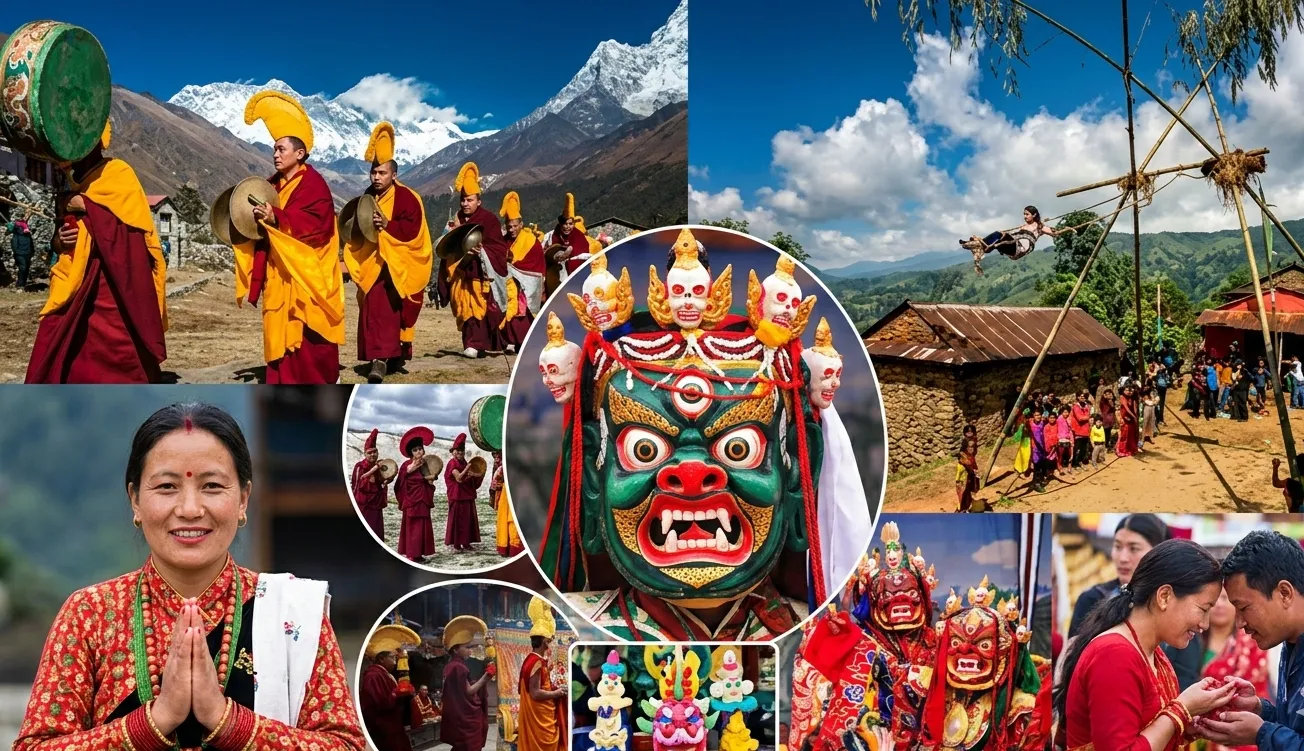
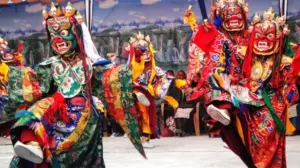
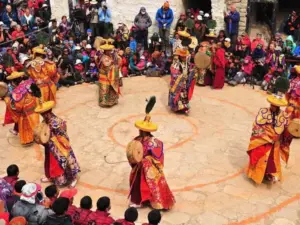
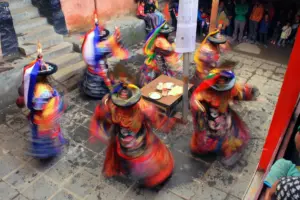
The Mani Rimdu Festival typically lasts 19 days, but only 3 days are open to the public and visitors. In the first 16 days of this festival, the monks at the Tengboche Monastery perform private rituals, prayers, and create a sacred sand mandala inside the monastery. During the final 3 days, the public is welcome to celebrate, where “Cham dance” (masked dances) are performed by monks, symbolizing the victory of good over evil.
The sound of long horns, rhythms, and drums allows trekkers to experience a combination of adventure and deep spirituality. This festival offers trekkers:
Sherpa culture and beliefs
Opportunity to observe authentic monastery rituals
A deeper understanding of Buddhism in the Himalayan region
A memorable cultural highlight during the Everest trek
2. Tiji Festival: The Sacred Celebration of Upper Mustang
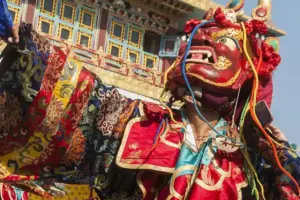
The Tiji Festival is celebrated every May and is a 3-day festival. The word “Tiji” comes from Tenpa Chirim, which means “Prayer of World Peace.” The Tiji Festival transforms Upper Mustang into a vibrant cultural setting with colorful costumes, dramatic masks, rhythmic drumbeats, and long Tibetan horns.
This festival is a spiritual cleansing ritual believed to bring harmony, protection, and prosperity to the region. The festival is organized by the monks of Chode Monastery, who present the myth of the appearance of a demon and its final defeat.
The Tiji Festival takes you to a Tibetan Buddhist kingdom untouched by rapid modernization. For trekkers, witnessing this adds cultural depth to the journey through living history.
3. Lhosar Festival: A New Beginning in the Mountains
The word “Lhosar” means “New Year” in the Tibetan language; therefore, it marks a new beginning for the Tamang, Gurung, and Sherpa communities. It is widely celebrated in different trekking areas such as Langtang Valley and the Annapurna Region.
Different ethnic groups observe Lhosar in their own way:
Tamang Lhosar – Usually in January/February
Gurung Lhosar – Usually in December
Sherpa Lhosar – Usually in February or March
The festival starts with thoroughly cleaned homes, symbolizing the removal of negativity and the welcoming of prosperity. Families gather to prepare traditional foods, wear cultural attire, visit monasteries for blessings, and watch traditional dances performed by monks with drums and cymbals.
For trekkers, experiencing Lhosar offers a warm cultural atmosphere that shows village energy, hospitality, and celebration.
4. Yartung Festival: Tradition Beyond the Monasteries
Typically celebrated in August in the highland districts of Manang and Upper Mustang, the Yartung Festival takes place 3 days after the monsoon season. It is deeply rooted in local communities, indicating strength, unity, and tradition in high Himalayan villages.
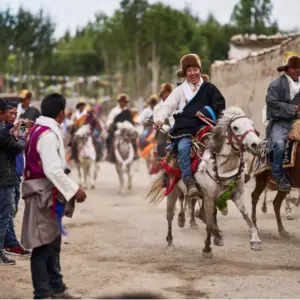
The highlight of Yartung is the thrilling horse racing competition. Young riders dressed in traditional attire race through village paths while loud cheers come from rooftops and hillsides. This creates an unforgettable atmosphere filled with excitement and energy.
In addition to horse racing, the festival includes traditional archery contests, singing and dancing, cultural performances, and feasts.
For trekkers walking along the Annapurna Circuit, this festival offers a rare opportunity to experience a mountain village full of celebration and community spirit beyond monasteries and temples.
5. Dumji Festival: Spiritual Unity in Himalayan Villages
Sherpa communities celebrate the Dumji Festival in the Everest region during June and July. It is observed across villages in the Khumbu, including Namche Bazaar. Dumji honors Guru Rinpoche, the spiritual master who introduced Buddhism to the Himalayan region.
During this festival, monasteries host special prayer ceremonies where monks chant sacred texts and perform ritual offerings. Unlike larger festivals like Mani Rimdu, Dumji is more intimate and locally rooted.
This festival provides trekkers with a rare opportunity to witness authentic Sherpa traditions, spiritual life, and devotion.
6. Janai Purnima: Faith and Tradition in the High Himalayas
Janai Purnima, also known as the “Sacred Thread Festival,” is an important Hindu celebration across Nepal that takes place during the full moon of August (Shrawan month).
During Janai Purnima, Hindu men replace their old sacred thread (Janai) with a new one, symbolizing purity, renewal, and spiritual protection. Many travel to sacred sites such as Gosaikunda Lake and other holy lakes, rivers, and temples to perform rituals and take holy baths.
This local festivals is also a time for family gatherings, feasts, and traditional celebrations. Priests conduct rituals, and communities gather for prayers for health and prosperity.
For trekkers, Janai Purnima offers a unique opportunity to witness Hindu traditions blended with village hospitality.
7. Chhewar: A Local Festivals in Trekking Regions
Chhewar is an important cultural and religious ceremony practiced in many Buddhist communities in the hill and trekking regions of Nepal. It is a family-based ritual that marks a young boy’s transition from early childhood into a new stage of life with greater spiritual and social awareness.
This ceremony usually takes place when a boy is between five and twelve years old. During the ritual, the boy’s head is shaved for the first time, which symbolizes purification, renewal, and the beginning of a new phase of life. Family members, monks, and relatives gather to offer prayers and blessings for the child’s healthy and prosperous future.
In Buddhist communities, the ceremony is often held at home or in a monastery where monks chant prayers and perform traditional rituals. The event is joyful and spiritual, with family gatherings, traditional food, and cultural celebrations.
Although the Buddhist Chhewar ceremony is mainly a private family event, trekkers staying in local teahouses in Himalayan villages may sometimes witness the festive atmosphere of the celebration. Experiencing such cultural moments can give travelers a deeper understanding of the traditions and spiritual life of local Himalayan communities.
8. Dashain and Tihar Festivals: Tradition and Togetherness in the Mountains
Dashain and Tihar are the two biggest and most widely celebrated festivals in Nepal. Dashain is usually celebrated in September or October and symbolizes the victory of good over evil, honoring Goddess Durga. The festival lasts fifteen days and is deeply rooted in Hindu tradition.
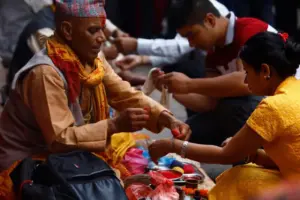
During Dashain, elders place tika (a mixture of rice, yogurt, and vermillion) on the foreheads of younger family members and give blessings for health and prosperity.
Tihar follows shortly after Dashain and lasts five days. Also known as the “Festival of Lights,” it celebrates harmony between humans, animals, and nature. Each day honors different beings: crows as messengers, dogs as loyal protectors, cows as symbols of prosperity, and brothers and sisters as a bond of protection. Groups of young people sing Deusi-Bhailo songs, visiting homes and spreading festive cheer.
For trekkers, this is a wonderful time to witness authentic family traditions, mountain villages glowing with oil lamps, and colorful decorations.
Why Experiencing Festivals While Trekking Is Special
Trekking during festivals allows you to:
Witness authentic Himalayan traditions
Interact with local communities
Learn about Buddhist and Hindu rituals
Capture unique cultural moments
Feel the spiritual energy of mountain life
Tips for Trekkers
Always ask before taking photographs during rituals.
Dress modestly when visiting monasteries.
Walk clockwise around stupas and Mani walls.
Be respectful and observe quietly during prayers.
Final Thoughts
The Himalayas are more than towering peaks; they are also about ancient cultures and vibrant communities. Festivals in trekking regions reveal the heart of mountain life.
So, when you plan your next trek, consider checking the local festival calendar. You might return home not just with photos of mountains, but also with stories of music, dance, and shared joy in the world’s highest villages.
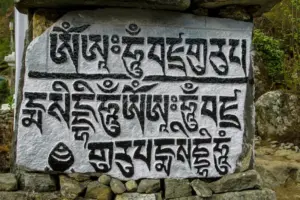
When you travel through the Himalayas of Nepal and Tibet, you are sure to encounter flat stones carved with divine inscriptions. These prayer walls are called “Mani Stone”, and they hold deep spiritual and cultural importance in Himalayan Buddhist traditions. If you are trekking to Annapurna Base Camp or Everest Base Camp, you will frequently see mani stone walls along the trail.
Here, we’ll explore the meaning of Mani Stones, their history, symbolism, and why they are important.
What Do “Mani Stones” Actually Mean?
The word “Mani” comes from the sacred Buddhist mantra, “Om Mani Padme Hum”.
This mantra is associated with the Bodhisattva of Compassion in Tibetan Buddhism. “Om Mani Padme Hum” means:
Om – Universal sound
Mani – Jewel
Padme – Lotus
Hum – Unity of wisdom and compassion
So, in short, it means “Hail to the Jewel in the Lotus”, and this writing is the form of prayer and meditation. Mani Stone is a stone carved with this powerful mantra that shows the act of devotion.
History of Mani Stones
Mani Stones are found in Nepal, Tibet, Bhutan, India, etc, and these stones are deeply connected to Tibetan Buddhism. They began appearing around the 15th century and spread widely over time as Buddhist teachings spread through the Himalayan regions.
This mantra is craved as:
Acts of devotion
Memorials for loved ones
Spiritual offerings
Way for good karma
Where are Mani Stones Usually Placed?
Mani Stones are arranged in long walls called Mani walls along village pathways, mountain trekking routes, monasteries, and stupas. In Kathmandu, near Boudhanath Stupa and Swayambhunath, the Mani Stone can be found and seen, which people show a sign of respect and spiritual practice by walking clockwise.
Spiritual Significance of Mani Stones
1. Compassion
When devotees carve or pass by Mani Stones, they are reminded to act with kindness, show empathy, and reduce harm in thoughts and actions. In Buddhist belief, compassion is also the wish to relieve the suffering of all living beings. Therefore, it is the heart of Mani Stones, and guides human behaviour. Mani Stones becomes a teacher of moral and spiritual values.
2. Protection
The Mani Stones are usually placed at village entrances, crossroads, mountain passes, or near monasteries and stupas. It is because Mani Stones are believed to act as spiritual protectors that protect us from Negative forces, misfortune, illness, etc. These are seen as the sources of spiritual protection, believing that the carved mantra purifies the surroundings and carries blessings into the world.
3. Spiritual Merit
In Buddhism, the act of carving a Mani Stone is considered a highly meritorious act because it spreads sacred teachings, spiritual peace, and honours compassion. Buddhism believes actions create karma; the person who carves Mani Stone is believed to have favourable rebirth, spiritual growth, removal of obstacles, etc.
4. Mindfulness
Because of the frequently placed Mani Stone, it acts as a daily gentle reminder to people or devotees to pause, reflect, and reconnect with spiritual peace and compassionate intention.
Mani Stone, in a sense act as the tool for mindful awareness that supports emotional balance and inner peace.
Materials and Artistic Style of Mani Stones
Mani Stones are made from: Slate, Flat stone slabs, and River stones.
These are carefully crafted from natural materials found in Himalayan landscapes. These stones are carved and painted in vibrant spiritual colours, such as white, which signifies purity; red, which signifies strength and compassion; blue, which signifies wisdom; and many more. These colours reflect symbolic elements of the Tibetan Buddhist tradition, which reflect its centuries-old spiritual tradition.
Mani Stone is entirely hand-carved, which means no two stones are exactly alike, making them a spiritual offering and a unique piece of religious art.
Travellers and Trekkers in Nepal experience these stones along mountain trails, offering a glimpse of Buddhist culture and the spiritual craftsmanship of Himalayan communities.
Why Mani Stones Still Matter Today?
Mani Stones are active expressions of Himalayan spiritual life. Even in today’s modern world, Mani Stones are powerful living symbols of faith and devotion.
Along trekking trails in Nepal, these stones silently accompany travellers, reminding them to slow down, connect with culture, reflect on themselves, and take the opportunity to experience spiritual Nepal.
When travellers walk past a Mani wall in the Himalayas, surrounded by flags, they feel a sense of peace that goes beyond adventure. A respectful traveller should remember:
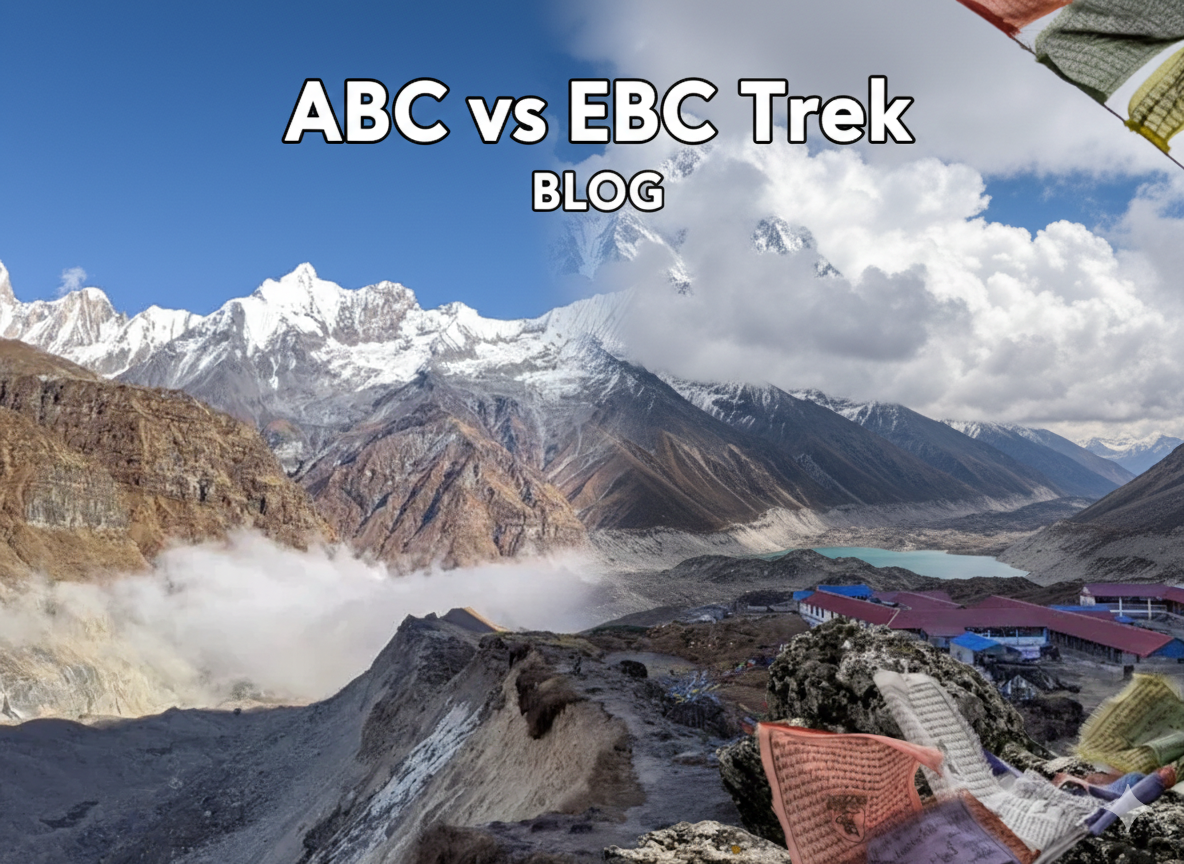
Nepal is a dream destination for trekkers, which offers unforgettable, breathtaking mountain scenery. If trekking in Nepal is on one of your bucket lists, then the Annapurna Base Camp (ABC) and Everest Base Camp (EBC) must be on your top list, which is a popular option among Europeans. Both of these treks promise you breathtaking views, adventure, and unique cultural experiences. They are preferred by the trekkers who enjoy the adventure in the Himalayas. So, which trek should you choose? Let’s break it down.
Annapurna Base Camp (ABC)
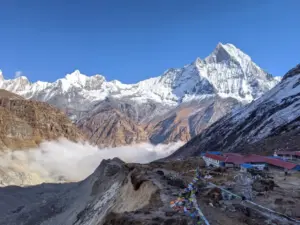
Annapurna Base Camp (ABC) Trek is one of the most remarkable treks of Nepal, which is located at an altitude of 4,130 meters, and takes you to the unforgettable mountain scenery of Mount Annapurna, the 10th highest peak of the world at 8,091 meters. This trek shows you the diverse landscape, culture of the Himalayas, and the breathtaking view of Mountains such as Annapurna I, Machhapuchare (Fishtail Mountain), and Hiunchuli.
ABC Trek starts from Nayapul or Ghandruk and ends at the Annapurna Base Camp (ABC). This trek takes you deep into the Annapurna region, where you can see lush forests, a diverse ecosystem, and cultural immersion in Gurung and Magar communities.
Everest Base Camp (EBC)
Everest Base Camp (EBC) Trek is another popular trek in Nepal that offers breathtaking scenes of Mount Everest and other mountain peaks. EBC trek is a high-altitude trek of 5,364 meters, an adventure through the Khumbu region. The highlight of this trek is ‘Kala Pattar’, which shows the unforgettable views of Mount Everest, Mount Lhotse, and Mount Ama Dablam.
EBC Trek starts from Lukla, which takes you to vibrant villages, stunning views, and a chance to immerse into the Sherpa culture, villages, and monasteries. One of the highlights of this trek is the terrific flight to Lukla.
1. Difficultly & Fitness
The difficulty level of ABC Trek is considered moderately difficult, which is more suitable for the first-time trekker or those who are seeking a peaceful and relaxed pace in the trek. 4-6 hours of hiking are involved in this trek in a day, with a moderate hiking attitude through forests, villages, and trails of Himalayans. The maximum altitude of this trek is 4,130 meters, which reduces the chance of severe altitude sickness. This makes it suitable for Europeans with a basic fitness level to complete the ABC trek. This is suitable for beginners, old travellers, and families to trek in a comfortable and peaceful situation.
But the Everest Base Camp Trek (EBC) is considered a high altitude challenge, designed which is suitable for the fit and adventurous Europeans. The daily hiking ranges from 5-8 hours of hiking, high and long climbs with uncertain and difficult trails. The Base Camp is at 5,364 meters, so careful precautions should be taken for altitude sickness. This trek requires high stamina, prior trekking experience, and physically demanding days.
2. Duration
The ABC Trek is completed generally in 7-10 days; this trek allowed a peaceful journey at a proper pace. Due to the short trek, this trek is suitable for Europeans who want to experience the Himalayas without taking extended leaves from work or school.
Whereas, EBC Trek usually takes 12-16 days to complete. The journey starts from Lukla, and it is a long and physically demanding journey. Additional preparation and prior experience are what matter most in this trek.
3. Scenery & Landscapes
ABC trek offers you the striking, lush forests, mountain peaks, views, waterfalls, and beautiful trails. These treks provide you with panoramic views of Annapurna I, Annapurna South, Machhapuchare, and Hiunchuli. The diversity of landscapes makes the ABC trek stunning without being extremely high altitude.
On the other hand, the EBC trek allows you to enjoy the Himalayan experience, with towering peaks such as Mount Everest, Lhotse, Nuptse, Ama Dablam, etc. These peak views are the rewards of this trek.
4. Cultural Experience
ABC Treks gives you the chance to immerse yourself in the traditional Gurung culture and experiences. You can interact with locals, know about their lives, cultures, and histories. Teahouses along the route are cosy and welcoming, that offers you the taste of Nepali hospitality.
The EBC Trek, however, offers Sherpa culture and traditions. This trek is rich in Sherpa monasteries and heritages. Key stops like Namche Bazar and Tengboche Monastery allow trekkers to experience the local culture, festivals, and mani walls.
5. Accommodation & Comfort
Usually, the teahouses and rooms of ABC Trek are more comfortable with private rooms and a relaxing atmosphere. Fewer crowds along the trails make this trek more peaceful, especially for the first timer.
Whereas the EBC Trek can be more basic due to the higher altitude, which offers shared rooms and simple meals. Stops like Namche Bazar and Everest Base Camp itself are crowded in the peak season. Adventure and patience are part of this trek.
The EBC Trek required Sagarmatha National Park permits and a TIMS card to set off on this trek. Fees for these permits are higher than those for the permits of ABC Trek.
7. Costs
The ABC Trek is slightly more affordable than EBC, due to its short duration and lower challenges. A European traveler expects about €600-€750 for a 7-10 day trek including food, tea houses, guides, and porter, and permits.
The EBC trek is more expensive due to the Lukla flight, permits, longer trek, and higher-altitude accommodations. The budget typically ranges from €900-€1100+, depending on the guides, porters, accommodation, and comfort.
Who should choose which trek?
i. Choose ABC Trek if:
You want moderate trekking.
You prefer short treks and cozy teahouses.
You are a first timer or have limited time.
ii. Choose EBC Trek if:
You seek high-attitude adventure and the Himalayas landscapes.
You are physically fit and prepared for a long hike.
You want a classic Everest experience.
ABC vs EBC Trek Comparison Table
Feature
Annapurna Base Camp (ABC) Trek
Everest Base Camp (EBC) Trek
Maximum Altitude
4,130 meters
5,364 meters
Difficulty Level
Moderately difficult
Challenging / High altitude
Best For
Beginners and first-time trekkers
Experienced and fit trekkers
Average Duration
7–10 days
12–16 days
Daily Hiking Hours
4–6 hours
5–8 hours
Starting Point
Nayapul or Ghandruk
Lukla
Major Highlights
Annapurna I, Machhapuchare, Hiunchuli
Everest, Lhotse, Ama Dablam, Kala Patthar
Landscape Type
Forests, villages, diverse terrain
High alpine, glaciers, rugged terrain
Cultural Experience
Gurung and Magar communities
Sherpa culture and monasteries
Accommodation
More comfortable teahouses
More basic at higher altitude
Crowd Level
Less crowded
More crowded in peak season
Permit Cost
Lower
Higher
Overall Cost
€600–€750
€900–€1100+
Altitude Sickness Risk
Moderate
Higher risk
Flight Required
No
Yes (Lukla flight)
Ideal For
Short, scenic, cultural trek
Classic Everest high-altitude adventure
ABC vs EBC Trek: Pros and Cons Scorecard
Annapurna Base Camp (ABC) Trek
Pros
Easier and beginner-friendly
Shorter duration (7–10 days)
Lower altitude risk
More comfortable teahouses
Less expensive overall
Diverse landscapes (forest + mountains)
No domestic flight required
Less crowded trails
Cons
Lower maximum altitude
Everest not visible
Slightly less “bucket-list” prestige
The weather can be humid in the lower sections
Everest Base Camp (EBC) Trek
Pros
Iconic Mount Everest experience
Higher altitude adventure
Dramatic Himalayan scenery
Rich Sherpa culture
Kala Patthar sunrise view
Lifetime bucket-list trek
Cons
More physically demanding
Higher altitude sickness risk
Longer trek duration
More expensive
Lukla flight delays possible
Basic accommodation at high altitude
Crowded in peak seasons
Quick Decision Score (User-Friendly)
Category
Winner
Beginner Friendly
✅ ABC
Budget Friendly
✅ ABC
Short Time Available
✅ ABC
Highest Adventure
✅ EBC
Bucket-List Experience
✅ EBC
Comfort & Ease
✅ ABC
Extreme Mountain Views
✅ EBC
Conclusion
Both the ABC and EBC trek offers you the unforgettable experience of the Himalayas, and Nepali hospitality and culture, but the decision is yours to make depending on your fitness, time, budget, and adventure style. ABC trek is suitable for Europeans who want to immerse themselves in the culture and hike at a peaceful pace, while EBC is ideal for high-attitude thrill seekers who want to experience Mount Everest.
Annapurna Base Camp Trek Cost 2026: European Trekkers’ Budget Guide
The Annapurna Base Camp (ABC) Trek is one of the most remarkable treks of Nepal, which is located at an altitude of 4,130 meters, and takes you to the unforgettable mountain scenery of Mount Annapurna, the 10th highest peak of the world at 8,091 meters. This trek shows you the diverse landscape, culture of the Himalayas, and the breathtaking view of mountains such as Annapurna I, Machhapuchare (Fishtail Mountain), and Hiunchuli.
If you are thinking of trekking with the panoramic views of mountain scenery, natural beauty, and immersing yourself in culture, then Annapurna Base Camp (ABC) is the perfect trek for you. But before taking on this trek, you need to know about the budget. Here is the complete breakdown of ABC Trek 2026:
Overview: What Influences Your Total Cost
Before knowing the actual cost, it’s important to know what affects your budget.
Season of Travel
The Spring and Autumn are the peak seasons for trek due to clear skies and stable weather, which causes a higher amount of flights, accommodation, and many more. Therefore, travelling in the off-season helps to save money.
Group Size
Due to the sharing arrangements of guide, porter, and transportation in the group, it helps to save costs.
Comfort Level
Your choice of meals, transportation, accommodation, and other factors affects the total cost.
Flight Cost from Your European City
International flight prices depend on season, city, and booking time.
1. International Flight from Europe to Kathmandu
The initial large cost of your journey is the flight from your European city to Kathmandu.
Round-trip flights: These usually cost you about ~ €550 – €1200, depending on your city, airline, and how far in advance you book.
2. Permits & Trek Documentation
The two mandatory permits that trekkers who want to go to ABC are:
Pokhara is the key entrance for the ABC Trek; the trek starts from here and can be reached by:
Domestic Flight (fastest option): ~ €85 – €110
Tourist Bus: ~ €9 – €18
3.2 Pokhara – Trek Starting Point
From Pokhara, you have to travel to reach trek starting points such as Nayapul, Ghandruk, or Kimche:
Jeep or jeep share: ~ €9 – €36
Local bus: ~ €2 – €4
4. Guide & Porter Costs
Guide and Porter assist you throughout the journey; it is important to hire an informative and trustworthy guide and porter.
Guide: ~ €23 – €36 per day
Porter: ~ €16 – €23 per day
5. Food & Accommodation on the Trail
The teahouse and lodges along the way are another thing to consider. The simple lodges and meals cost:
Accommodation: ~ €4 – €14 per night
Daily food Budget: ~ €18 – €28
Total Estimated Costs (Europe Edition)
The realistic 10-day Annapurna Base Camp Trek in 2026 for travellers coming from Europe:
Expenses Category
Estimated Cost
Europe – Kathmandu flight
~ €550 – €1,200
Domestic transport (Kathmandu – Pokhara – Trek Start)
~ €30 – €110
Trekking Permits (ACAP + TIMS)
~ €37 – €46
Guide & Porter (shared)
~ €280 – €470
Food & accommodation on trek
~ €180 – €300
Miscellaneous (gear, Wi-Fi, hot showers)
~ €50 – €120
Total Budget Range: ~ €1,130 – €2,250+ per person
Total cost varies based on the season, flight deals, group size, and comfort level. Travelling in a group, sharing porters & guides, and resources helps to reduce cost.
Tips for European Trekkers
Plan Ahead: Book flights and accommodation early.
Pack Smart: Pack light clothes, proper trekking shoes and gear. Don’t forget your water bottles and first-aid.
Extra Budget: Consider taking extra cash for the teahouse, Wi-Fi, or souvenirs.
Consider a Guided Trek: Having a guide ensures proper navigation, support, and guidelines.
Adjust Properly: Spend a day in Pokhara or Nayapul to get adjusted to the altitude.
Additional Costs to Consider
Hot Showers: ~ €4 – €14 per shower at teahouses.
Charging Devices/ Wi-Fi: ~ €1 – €5 per day for phone or camera.
Tips & Gratitude: ~ €4 – €9 per day for guides and porters, depending on their service quality.
Emergency/ Medical Costs: Altitude sickness, first aid supplies, or minor injuries can cost ~ €18 – €46, depending on the situation.
Travel Insurance: This is essential for trekking in Nepal, and it typically costs ~ €50 – €100 for two weeks.
Visa Fees: Nepal tourist visa for Europeans costs ~ €28 – €46 for 15–30 days.
Therefore, budgeting an extra ~ €100 – €150 for these ‘extra’ things will be a better decision.
Conclusion
The Annapurna Base Camp Trek is one of the most rewarding treks that offers breathtaking scenery, a chance to immerse yourself in the Himalayas’ culture, and a sense of accomplishment. While the total cost of the trek varies due to flight pricing, travel season, transportation, food and accommodation, guide & porters, or your choice of comfort, careful and proper planning ensures an unforgettable and smooth journey towards the Himalayas.
Many European trekkers find the 19-day Annapurna Circuit Trek more ideal for them, which offers the right balance of rest and unforgettable mountain scenery. Whether you decide to trek independently or with a guide, proper preparation will ensure you experience the peaceful journey successfully.
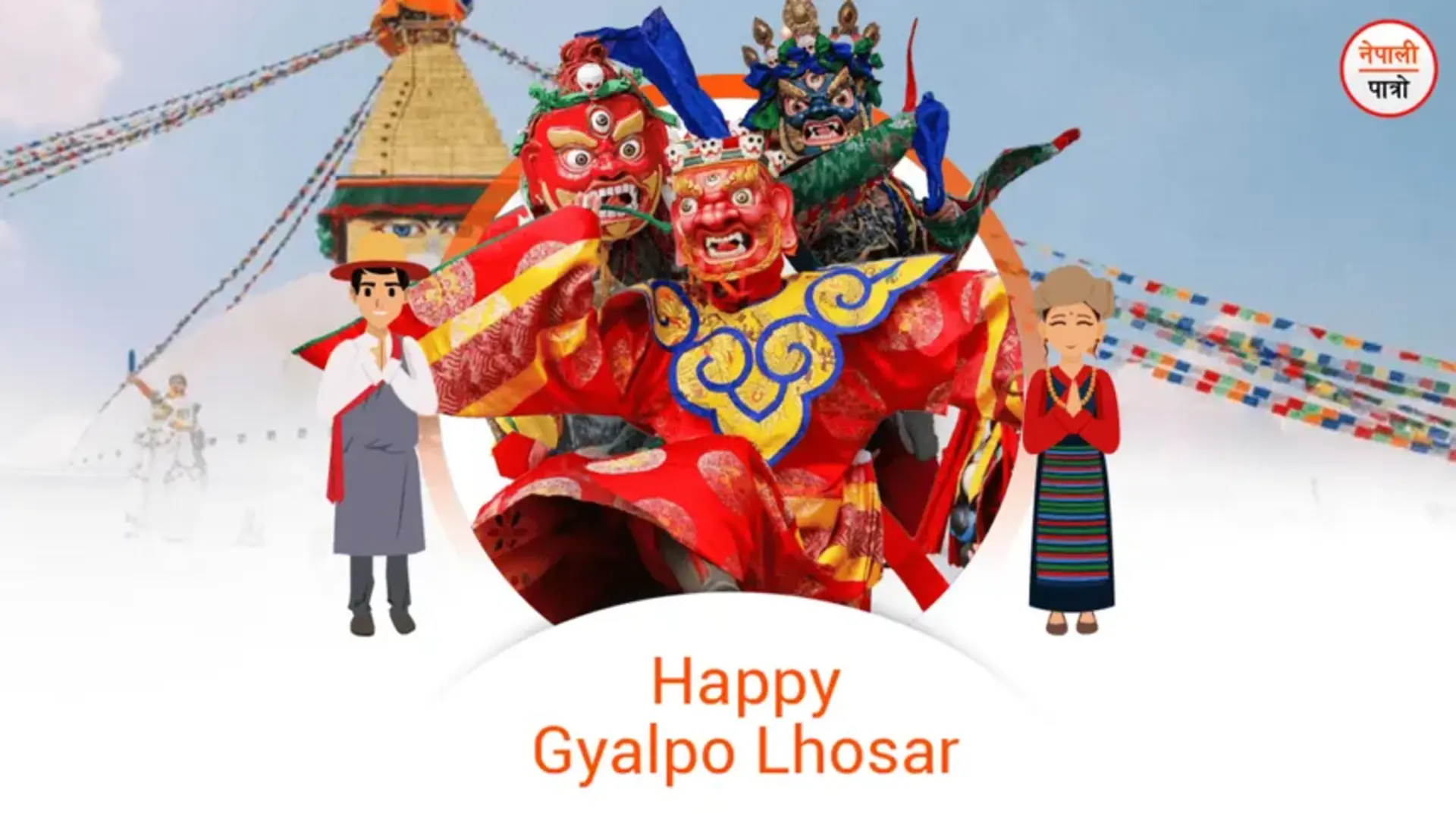
Today, communities across the Himalayas and around the world are celebrating Gyalpo Lhosar, the Tibetan New Year, a vibrant festival filled with prayer, family gatherings, traditional food, and cultural pride. Whether you’re in Nepal, India, Bhutan, or Tibetan communities worldwide, this day marks a powerful spiritual and cultural reset. Many trekkers combine their Himalayan adventure with the cultural experience of Gyalpo Lhosar. Popular routes like the Everest Base Camp Trek, Annapurna Base Camp Trek, and Langtang Valley Trek become even more meaningful when you witness local festivals along the journey.
If you’ve ever wondered what Gyalpo Lhosar means, how it is celebrated, and why it is so important, this guide will walk you through everything in a warm, human way.
What is Gyalpo Lhosar?
Gyalpo Lhosar is the Tibetan New Year festival.
“Gyalpo” means king
“Lo” means year
“Sar” means new
It is the most important festival in the Tibetan Buddhist calendar and is observed according to the lunar calendar, usually falling in February or March.
In places like Kathmandu, especially in the Boudha and Swayambhu areas, monasteries glow with butter lamps, colorful prayer flags flutter in the wind, and families come together in their finest traditional attire.
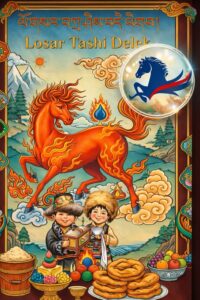
Gyalpo Lhosar 2026: Tibetan Year 2153 – The Fire Horse Year
Gyalpo Lhosar 2026 welcomes Tibetan Year 2153, known as the Fire Horse Year in Tibetan astrology.
The Tibetan calendar follows a 60-year cycle combining:
12 Zodiac Animals
5 Elements (Wood, Fire, Earth, Iron, Water)
Meaning of the Fire Horse Year
The horse symbolizes energy, movement, freedom, and determination.
The fire element represents passion, transformation, and power.
Together, the Fire Horse year is believed to bring:
Dynamic change
Bold decisions
Rapid growth
Strong leadership energy
This makes 2026 a year of action and transformation in Tibetan belief.
The History Behind Gyalpo Lhosar
The origins of Lhosar date back thousands of years, to pre-Buddhist Tibet during the ancient Bon religion. It was originally a winter incense-burning ceremony to please local spirits and deities.
Later, during the time of Tibetan kings, the celebration evolved into a New Year festival, hence the name Gyalpo (King) Lhosar.
Today, it beautifully blends:
Ancient Bon traditions
Tibetan Buddhism
Cultural rituals
Family-centered celebrations
How Gyalpo Lhosar is Celebrated Today
The celebration typically lasts 15 days, but the first three days are the most significant.
Preparation Days (Before New Year)
Families:
Thoroughly clean their homes (symbolizing removal of bad luck)
Decorate with prayer flags
Prepare traditional foods
Visit monasteries for blessings
Monasteries such as those near Boudhanath Stupa hold special prayer ceremonies.
New Year’s Day (Today 🎊)
Today is about:
Offering prayers for prosperity
Lighting butter lamps
Visiting relatives
Wearing traditional Tibetan dress (Chuba)
Sharing festive meals
People greet each other with:
“Tashi Delek!” (Auspicious blessings and good wishes)
Cultural Festivities & Community Gatherings
In Tibetan communities and Himalayan regions, you’ll see:
Mask dances (Cham dances)
Folk music performances
Community feasts
Exchange of gifts and khatas (ceremonial scarves)
In parts of Sikkim and Arunachal Pradesh, large public celebrations are organized.
Traditional Foods of Gyalpo Lhosar
Food plays a central role in the celebration.
Guthuk
Guthuk
A special noodle soup eaten before New Year’s Eve. It contains symbolic dough balls, sometimes filled with funny or meaningful items, that predict personality traits!
Khapse
Deep-fried crispy pastries made in various decorative shapes.
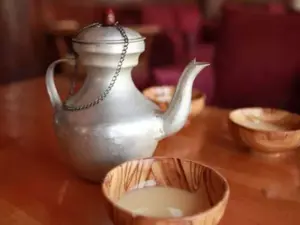
Butter Tea (Po Cha)
butter tea
A salty tea made with yak butter and tea leaves, warming and comforting in Himalayan winters.
Food during Lhosar symbolizes abundance, warmth, and togetherness.
Where is Gyalpo Lhosar Celebrated?
Gyalpo Lhosar is widely celebrated in:
Tibet
Nepal
India
Bhutan
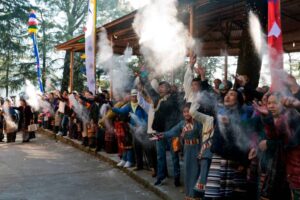
In Nepal, areas like Boudha and Swayambhunath come alive with prayer chants and incense smoke filling the air.
Spiritual Meaning of Gyalpo Lhosar
Beyond the colors and celebrations, Gyalpo Lhosar represents:
Letting go of negativity
Welcoming positivity
Strengthening family bonds
Renewing spiritual commitment
Practicing gratitude
It’s not just a new calendar year; it’s a fresh emotional and spiritual beginning.
Why Gyalpo Lhosar Matters Today
In a fast-moving world, festivals like Gyalpo Lhosar remind us to:
Pause
Reflect
Reconnect
Celebrate culture
Appreciate community
For travelers visiting Nepal during this time, witnessing Lhosar offers a deeper understanding of Himalayan culture and Tibetan Buddhist traditions.
As butter lamps flicker and families gather in warmth, Gyalpo Lhosar brings hope for prosperity, health, and happiness in the year ahead.
So today, wherever you are, take a moment to wish someone:
Tashi Delek! 🙏
May this new year bring clarity, courage, and compassion into your life.