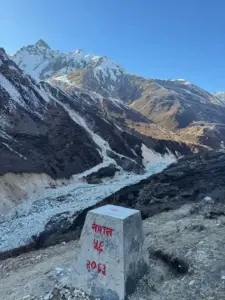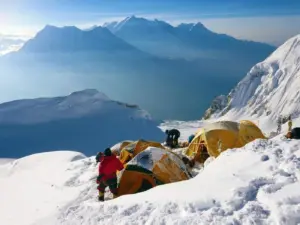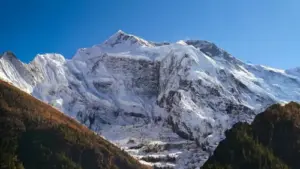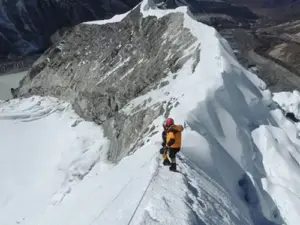
Dhampus Peak Climbing in 2026 — The Guide I Wish I Had Before Going

Okay, so I’ll be straight with you.

When I first started researching trekking peaks in Nepal, Dhampus Peak was not even on my list. Island Peak kept showing up everywhere. Mera Peak had a dozen agencies pushing it. Those are the names that dominate every “best Nepal climbing peaks” roundup, and honestly, I nearly just booked one of those and called it done.

Then someone who had actually been to Dhampus told me to stop overthinking it and just go there instead.

Best advice I ever ignored for six months before finally taking.

Dhampus Peak stands at 6,012 meters in Nepal’s Dhaulagiri region and is one of the most underrated climbs in the country. Not because it is secretly easy — it is not. because nobody knows about it — some people do. But because the combination of what you see, where you walk, and how few other teams you encounter up there is genuinely hard to find anywhere else on a trekking peak budget and timeline.

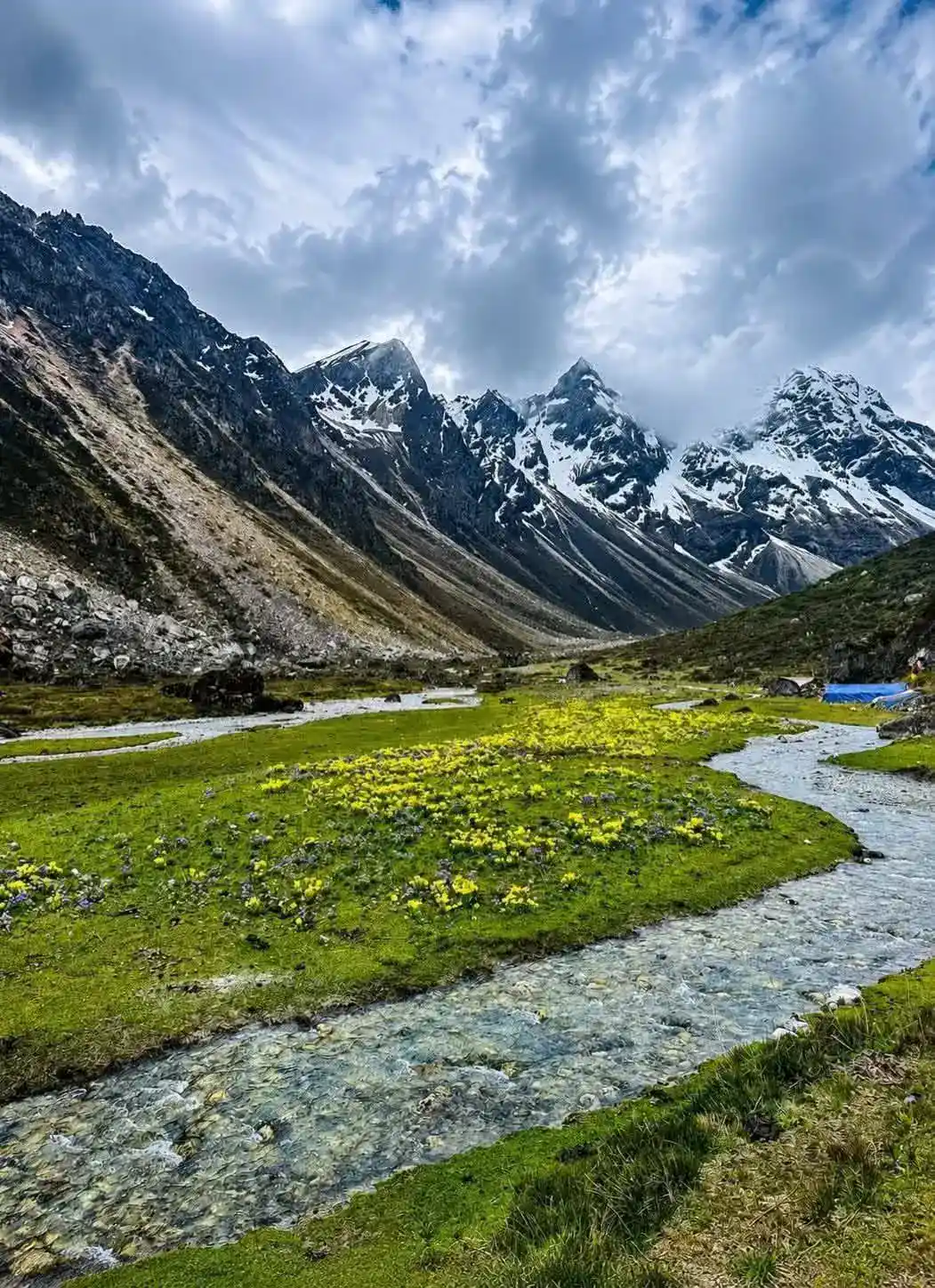
Thirty Himalayan peaks are visible from the summit. The Kali Gandaki Valley on the approach. A section called the Hidden Valley that sounds made up, but absolutely is not. And a base camp that does not feel like a parking lot in October.

Here is everything you need to plan this properly in 2026.

What Is Dhampus Peak and Where Exactly Is It

Some maps label this mountain as Thapa Peak. Both names refer to the same place — two names have been floating around in different agencies and expedition reports for years, so don’t be thrown off when you see both.

The mountain is in western Nepal, straddling the Myagdi and Mustang district border, sitting between the Annapurna and Dhaulagiri ranges. The Kali Gandaki gorge cuts right through this region. That gorge is, technically, the deepest river canyon on the planet, which starts to make sense once you are actually standing in it, looking up at the walls of the mountain on both sides.

The Nepal Mountaineering Association classifies Dhampus as a Group B trekking peak.

Elevation is 6,012 meters, or 19,724 feet. The standard climbing route goes up through the Hidden Valley and finishes along the west ridge with snow and glacier terrain in the final push.

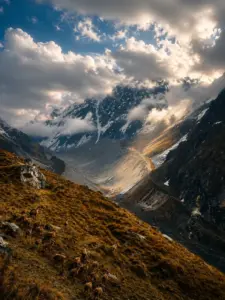
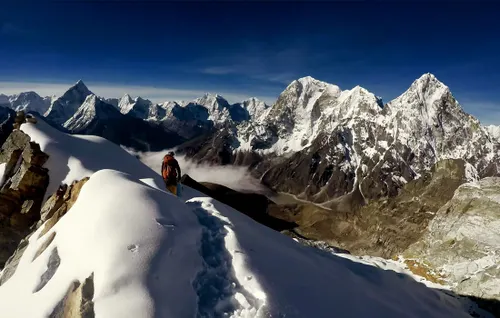
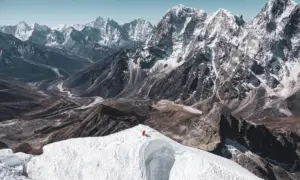
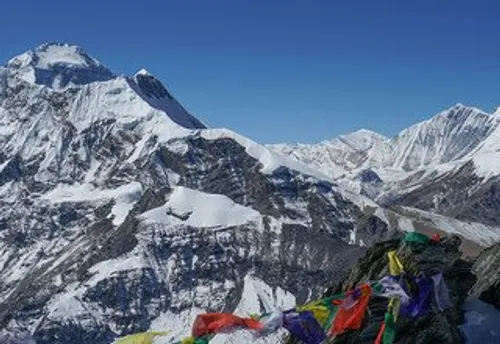
The summit view is the thing that people who have been there bring up unprompted, often months later. Dhaulagiri at 8,167 meters is almost uncomfortably close. Annapurna I, Tukuche Peak, Nilgiri, Hiunchuli, Tilicho Peak, Mukut Himal. Roughly thirty peaks on a clear day. That number is real, and the panorama genuinely earns it.

Detail Information

Detail Info
Elevation 6,012 m / 19,724 ft
Also Known As Thapa Peak
Location Myagdi & Mustang Districts, Nepal
Grade Non-technical to Moderate
Best Seasons Spring & Autumn
Typical Duration 14 to 18 days

How Hard Is This Climb

Not technically hard. That is the accurate answer.

No near-vertical faces. No mixed climbing that requires an ice climbing course as a prerequisite. You will use crampons and carry an ice axe, and your guide will go through the practical basics at base camp before any of it matters on the mountain. People who have never worn crampons before their Dhampus climb have reached the summit fine.

What the mountain does have, and what catches people genuinely off guard, is altitude.

Here is what 5,500 meters after five consecutive trekking days actually feels like — you wake up at 2 am with a headache pressing behind your eyes. Your sleeping bag feels both too hot and somehow not warm enough. You eat half your breakfast because your appetite left somewhere around 4,800 meters and did not come back. You are walking at a pace that would embarrass you at sea level, and your legs are doing it anyway like that is just how walking works now.

None of that is a fitness failure. It is just what altitude does.

People who have done Everest Base Camp or completed the Annapurna Circuit already know this version of themselves and tend to manage it well on Dhampus. People whose trekking experience is all below 3,000 meters sometimes get a rude introduction to it at the worst possible moment.

Fit, motivated beginners summit at Dhampus every season. It absolutely happens. Just go in knowing that your gym fitness and your altitude fitness are two separate and not especially related things.

When To Go — Real Answer Not Just “Spring or Autumn”

Spring means March through May. April and May are the months with the most stable weather, clearest skies, and the rhododendron forests on the lower trail sections in full bloom, which makes the approach genuinely beautiful in a way that feels almost unfair, given you are also about to climb a mountain. Spring permits cost USD 250 per person because demand is highest then.

Autumn is September through November. The permit drops to USD 125. After the monsoon clears out of the valleys, the air quality changes in a way that sounds like a cliché until you actually experience visibility from 6,000 meters in October. I have heard guides who have done this route dozens of times say October is their favourite month up there, and I believe them completely.

Monsoon, June through August, is not a climbing window. Leeches on the lower trail, dangerous weather above 5,000 meters, and mud on paths that need to be dry. People do attempt it, but the experience is a different and significantly worse thing.

Winter is theoretically possible. The cold above 5,000 meters in January is not the same category of cold as a chilly morning anywhere else. Unless serious cold-weather mountaineering is already part of your background, winter is a hard pass.

The Route — Kali Gandaki Into the Hidden Valley

You get to Jomsom by a short flight from Pokhara. That landing is one of the more dramatic approaches in aviation; the runway sits in a valley with mountains on both sides, and the wind through the gorge makes every pilot earn their landing. From Jomsom, you make your way to Tukuche in the Kali Gandaki Valley, and that is where the climb properly starts.

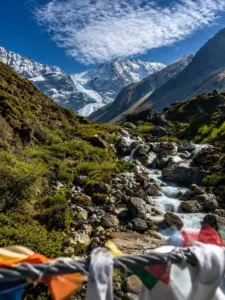
The trail from Tukuche follows routes that salt traders used between Nepal and Tibet for centuries. Carved mani stones, old stone walls, villages that were not built for tourism, and still feel that way. There is real remoteness here that the more travelled Nepal trekking circuits have largely lost.

After base camp and acclimatization days, the route pushes through French Pass at 5,360 meters and into the Hidden Valley. This section is why people who have done Dhampus become almost evangelical about it. Wide, silent, surrounded by giants, with almost no other teams passing through. Most people who trek in Nepal never see that this place exists.

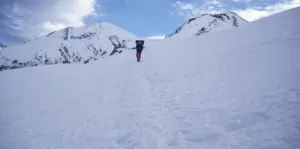
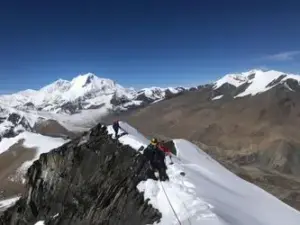
High Camp is set up from the Hidden Valley. Summit push goes out early the next morning, following the west ridge on snow and glacier terrain. The final section is exposed but manageable with the right footwear and a guide who knows the mountain. After the summit, descent goes back through toward Jomsom and a flight closes the loop to Pokhara.

Day by Day — 14 Day Itinerary

Day 1 — Land in Kathmandu. Meet your guide team, final permit paperwork, gear check.

Day 2 — Travel to Pokhara. The flight is 25 minutes. The bus is seven hours with better scenery.

Day 3 — Fly Pokhara to Jomsom. Drive or walk to Tukuche. Trek begins.

Days 4, 5, 6 — Trekking approach through the Kali Gandaki Valley. Teahouse accommodation throughout. Long days, good food, genuinely stunning scenery.

Days 7, 8 — Acclimatization at base camp level. Shorter hikes up and back. Your body needs these days even when you feel fine.

Day 9 — Move to High Camp.

Day 10 — Summit day. Early start, summit push to 6,012m, return to camp.

Days 11, 12 — Descent back to Jomsom.

Day 13 — Fly Jomsom to Pokhara. Hotel overnight.

Day 14 — Return to Kathmandu. Departure.

The extended 18 to 22 day version adds the full Dhaulagiri Circuit. If your schedule can absorb the extra days, that route is a serious upgrade to an already excellent trip.

Permits — Three of Them, None Optional

All three permits have to be arranged through a registered agency. The Nepal Mountaineering Association does not process individual applications. Give yourself two weeks minimum for the permit process.

The climbing permit costs USD 250 per person in spring. USD 125 in autumn. USD 70 in winter or summer. You also need the Annapurna Conservation Area Permit, known as ACAP, covering the protected region your trek passes through. And a TIMS Card, which is the standard trekking permit required across Nepal.

Total permit costs come in between USD 170 and USD 300, depending on the season.

What Everything Costs in 2026

A full expedition package with a reputable company — permits, guide, and climbing Sherpa, porters, cook staff, all accommodation from teahouses on the approach to tented camps on the mountain, all meals, and all transportation from Kathmandu through Pokhara and Jomsom and back — runs between USD 2,400 and USD 3,500 per person.

Outside that number: flights to Nepal from wherever you are, travel insurance with helicopter evacuation coverage, which is not negotiable on a Himalayan climb, any personal gear you want to own rather than rent, and tips for your crew, which local mountain staff genuinely rely on.

Green Horizon Tours builds packages without hidden costs. The number you receive in your quote is the trip you get.

Gear List — What You Actually Need

Clothing

Thermal base layer, fleece mid-layer, heavy down jacket, waterproof hardshell, insulated gloves with overmitts over them because regular gloves disappear at high altitude temperatures, balaclava, multiple pairs of wool socks. Summit mornings on this ridge are cold enough to make you regret every layering shortcut.

Boots

Double-layer mountaineering boots compatible with crampons for the technical sections, and a separate pair of hiking boots for the Kali Gandaki approach. Your feet will thank you for not spending a week on a trail in technical climbing boots.

Technical Gear

Crampons, ice axe, harness, helmet, and carabiners. Your agency specifies what they provide and what you source yourself or rent in Pokhara or Kathmandu.

Personal Essentials

Glacier glasses, SPF 50 sunscreen because UV at altitude is genuinely brutal and people underestimate it every single time, headlamp with fresh batteries, not the ones already in it, trekking poles, sleeping bag rated to minus 20 Celsius minimum, altitude medication, which you discuss with your doctor before leaving home, not after arriving in Nepal.

Altitude Sickness — Read This Part

Fitness does not protect you from altitude sickness. This is the most common misconception I encounter from people planning their first Himalayan climb. Some extremely fit people get knocked sideways above 5,000 meters. Some people in ordinary conditions walk through it. It is physiological and does not follow any logic related to how fast you can run a 5k.

Early signs: a headache that will not shift, nausea, no appetite, bad sleep, and a general mental fog that makes concentration harder than it should be. The moment any of those appear, tell your guide. The serious outcomes — fluid in the lungs or brain swelling — only happen when early warnings get ignored or pushed through.

Prevention is genuinely simple but has to be actually followed: stick to the acclimatization schedule without shortcuts, even on days when you feel perfectly fine, drink four litres of water daily, eat real meals, and when your guide says descend, you descend without a discussion about it.

Travel insurance with helicopter evacuation. Before you leave home. Non-negotiable.

Dhampus vs Other Trekking Peaks

Against Island Peak at 6,189 meters

Island Peak is more technical, significantly more crowded, and in the Everest region rather than the Annapurna. The summit day has a longer fixed rope section, and the base camp has noticeably more foot traffic throughout the season. Dhampus is quieter, slightly lower, and gives a wider panorama.

Against Mera Peak at 6,476 meters

Mera involves more sustained glacier work and sits higher. It is the natural next step after Dhampus rather than a direct comparison. Do Dhampus first.

Against Lobuche at 6,145 meters

Lobuche has steeper technical sections better suited to people with at least one trekking peak summit already on their record. Dhampus is where you start before Lobuche.

Questions People Actually Ask

Can a beginner do this?
Yes, with real preparation. Prior trekking above 4,500 meters is strongly recommended. Anyone who has completed Everest Base Camp or the Annapurna Circuit is well-positioned for Dhampus.

What is the success rate?
With proper acclimatization and a workable weather window, most prepared teams reach the summit. Altitude sickness and weather turn people back, not technical difficulty.

How far in advance should I book?
Three months ahead for spring. Six to eight weeks minimum for autumn, though earlier is genuinely better for date flexibility.

Is It Worth It

At 6,012 meters with Dhaulagiri filling the sky directly in front of you and the full Annapurna range stretched out to the east, with thirty peaks visible in every direction, and nobody else standing on that ridge with you — yes. It is absolutely worth it.

The trail is quiet. The Hidden Valley section is unlike anything else on the Nepal trekking map. The summit feels earned because it is. And the approach through the Kali Gandaki is the kind of walk that reminds you why you started caring about mountains in the first place.

Green Horizon Tours has been guiding climbs across Nepal since 1992. Our teams know Dhampus Peak through every season and every kind of weather. If you want a straight conversation about whether this climb suits your experience and timeline, reach out here — no sales pitch, just honest answers.

Pisang Peak Climbing: Cost, Difficulty, Itinerary and Everything You Actually Need to Know

I’ll be honest with you. When I first heard about Pisang Peak, I thought it was one of those mountains that operators hype up to sell packages to people who aren’t ready for something real.

I was wrong.

Pisang Peak is 6,091 meters. That’s not a number you throw around casually. That’s above the altitude where your body starts doing things you don’t expect, where a headache at 2 pm becomes a serious conversation by 8 pm, where every extra kilogram in your pack becomes a personal grudge. And yet every season, people with no climbing background show up, do the work, and stand on that summit. Regular people. Teachers, accountants, software developers. People who trained for it and picked a guide who knew what they were doing.

So the question isn’t really whether Pisang Peak is possible for you. It probably is. The question is whether you’ll prepare as it deserves.

pisang-peak

First, Where Even Is This Mountain?

Pisang Peak sits in Nepal’s Manang District, which is part of the Annapurna Conservation Area. You pass directly through the area if you’re doing the Annapurna Circuit, which is one reason why so many trekkers end up eyeing it. It’s right there. You’re walking past the base of it for days before you realize what you’re looking at.

The village of Upper Pisang sits at the foot of the mountain. Locally, the peak is called Jong Ri, which almost nobody outside the region knows. It was first climbed in 1955 by a German team and has been attracting climbers in growing numbers ever since. The Nepal Mountaineering Association classifies it as a trekking peak, their way of saying it’s achievable without an elite expedition team, but definitely not a stroll either.

From the summit on a clear morning, you can see Annapurna II, III, and IV almost close enough to touch. Gangapurna across the valley. Tilicho Peak. On the best days, a slice of Manaslu in the far distance. People who get up there say it’s the kind of view that rearranges something in your head. I believe them.

At a Glance

Details Information
Height 6,091 meters / 19,983 feet
Location Manang District, Annapurna region
Trip Length 16 to 20 days
Difficulty Moderate to Challenging
Best Time Spring and Autumn
Permits Three required
Skills Basic mountaineering

How Hard Is It, Genuinely?

This is what everyone wants to know, and nobody gives a straight answer to. So here’s mine.

The climbing itself is not the hard part for most people. Yes, you’re on crampons. Yes, you’re using an ice axe on the upper section. Yes, there are fixed ropes near the summit that you clip into. None of that is beyond what a reasonably coordinated person can learn quickly. Your guide will go through all of it with you at base camp. The technical side of Pisang is real, but it’s teachable.

What actually ends trips is altitude. Not fitness. Altitude.

You can run half marathons and still feel genuinely awful above 5,000 meters if your body hasn’t had time to adjust. The red blood cell count, the way your lungs process oxygen up there, that doesn’t improve with willpower. It improves with time, rest, and not being stupid about rest days. The itinerary has acclimatization built in for exactly this reason. The people who skip those days because they feel fine are usually the ones turning around at high camp two days later.

Beginners can absolutely climb Pisang Peak. But “beginner” means someone who has spent time at altitude before, who has done serious multi-day trekking, and who has genuinely trained for this in the months before. Not someone who goes to the gym three times a week and thinks that covers it.

The Route

pisang-peak

The approach goes through Upper Pisang village and climbs through high yak pastures above the treeline. There’s a stretch up here that’s just an open rocky plateau with prayer flags and massive silence and the mountain growing in front of you. It’s worth the whole trip before you’ve even reached base camp.

Base camp sits at around 4,300 meters. You spend a day or two here, do your climbing practice, and let your body adjust. Then, the high camp at roughly 5,400 meters, which is a shorter day physically but hits harder than you expect because of where your body is by now.

Summit day starts before dawn. Headlamps across the glacier, west ridge on snow and ice, and then the top. Most groups take five to seven hours from high camp. Descent follows the same route. By afternoon, you’re back at camp trying to eat something and process what just happened.

The western face of the mountain is blocked by a hanging glacier and rock slabs that make it essentially unclimbable from that side. The southwest ridge is the route and has been for decades.

Day by Day

Day 1 — Arrive Kathmandu

Gear check tonight, not tomorrow morning.

Day 2 — Drive to Besisahar or Bhulbhule

Seven or eight hours. Bring snacks and something to read.

Day 3 — Trek to Jagat

Day 4 — Trek to Dharapani

Day 5 — Trek to Chame

You’re gaining real elevation now. Pay attention to how you feel.

Day 6 — Trek to Lower Pisang

The peak starts coming into view.

Day 7 — Upper Pisang

Short acclimatization walk in the afternoon, nothing ambitious.

Day 8 — Rest Day in Manang

Do not skip this. Walk around the village. Eat. Sleep. That’s it.

Day 9 — Trek to Base Camp at 4,300 Meters

Day 10 — Training Day

Crampons, ice axe, rope technique. Ask every question you have.

Day 11 — Move to High Camp at 5,400 Meters

Day 12 — Summit Push

Then all the way back down to base camp.

Day 13 — Reserve Day for Weather

Used more often than people expect.

Day 14 — Start Heading Back Down Toward Manang

Days 15 to 20

Trek out, drive back to Kathmandu, done.

Total trip runs 16 to 20 days. Different operators structure this slightly differently, so confirm the breakdown before you book.

Best Time to Go

Ask any guide who has been up Pisang multiple times, and most of them will say April without much hesitation. The weather holds longer in spring, the sky stays clear in the mornings, and the snowpack on the upper sections is usually in good condition. It’s the season when everything cooperates.

October is the other option and a genuinely strong one. After the monsoon, the Himalayan air gets a clarity that people who’ve experienced it mention almost every time. The trail is slightly less busy than in the spring, which some people prefer. The permit costs less too, $175 versus $350 for the spring season.

Winter is technically possible in Manang because the district sits in a rain shadow and gets less snowfall than most of Nepal. But cold at high camp in December or January is a different category of cold, and the summit success rate drops. Not a first-time season.

Monsoon, June through August, is a firm no. Visibility goes, trails flood, the risk is pointless.

Season Months Conditions Permit
Spring March to May Best overall $350
Autumn Sept to Nov Excellent, clearer budget $175
Winter Dec to Feb Tough, not for beginners $175
Monsoon June to Aug Don’t $175

Permits You Need

Three of them. None optional.

The NMA climbing permit is the big one, issued by the Nepal Mountaineering Association. Spring costs $350 per person. Every other season it’s $175. There’s also a $500 garbage deposit that comes back to you at the end.

The Annapurna Conservation Area Permit is about $30 for foreign nationals. Standard for entering the region.

The TIMS card is around $10 and mandatory for all trekkers in designated Nepal trekking zones.

Most package operators roll all of these into the total price. Confirm that in writing before you pay anything. Some don’t, and the surprise later is never pleasant.

What the Whole Thing Costs

Prices in 2026 run across three rough tiers.

Package Per Person
Budget $1,500 to $2,000
Standard $2,000 to $2,800
Premium $2,800 to $3,500+

A standard package covers permits, a licensed climbing guide, porters, all meals on the trail, accommodation throughout, and transport from Kathmandu. Outside that: your personal gear, travel insurance, tips for the crew, and anything you spend in Kathmandu before and after.

You can rent crampons, a harness, and an ice axe in Thamel in Kathmandu at reasonable rates if you don’t own the gear already. Most shops there know exactly what a Pisang Peak trip needs.

Pisang Peak or Island Peak?

People argue about this constantly online. Here’s the simple version.

Pisang Peak Island Peak
Height: 6,091m Height: 6,189m
Annapurna Everest region
Moderate Moderate to harder
Quieter Busy
Full Annapurna panorama Everest and Lhotse
Lower cost Slightly higher

If being near Everest matters to you specifically, then Island Peak wins on location. But Pisang gives you the full Annapurna Circuit experience around the climb, fewer people waiting on the fixed ropes, and a summit view that most people find genuinely shocking in the best sense. For a first Himalayan climb, most guides will quietly point you toward Pisang. That says something.

Quick Answers to Things People Ask Before Booking

Can a beginner climb this?

With proper preparation and respect for the acclimatization schedule, yes. Without those two things, probably not.

How many days total?

16 to 20 days, Kathmandu to Kathmandu.

Is travel insurance mandatory?

More than mandatory. It must cover mountaineering at 6,100 meters and helicopter evacuation specifically. Read your policy line by line before you leave home. Some adventure policies cap at 4,000 or 5,000 meters and won’t cover this.

What’s the summit success rate?

No official numbers exist publicly. With a good guide, proper acclimatization, and reasonable weather, the majority of prepared climbers make it. Weather and how your body handles altitude are the two real variables.

Best single month?

April, if you’re going in the spring. October, if you’re going in autumn.

Why People Come Back Changed

There’s a specific feeling that happens somewhere on day ten or eleven of a climb like this.

Everything that felt urgent back home starts to seem a bit smaller. Not in a cliché way. Just in the practical sense that your whole brain is occupied with the next hour and the body scan you’re doing every twenty minutes to track how you feel.

People come back from Pisang Peak quieter about certain things. More sure of themselves about others. It sounds like something a brochure would say, but ask anyone who has stood on that summit, and they’ll tell you the same thing in their own words, unprompted.

If this is something you’re seriously considering for 2026, the team at Green Horizon Tour has done this route across seasons and knows it properly. Permits, guides, logistics, all handled. Reach out early because the spring spots fill faster than people expect.

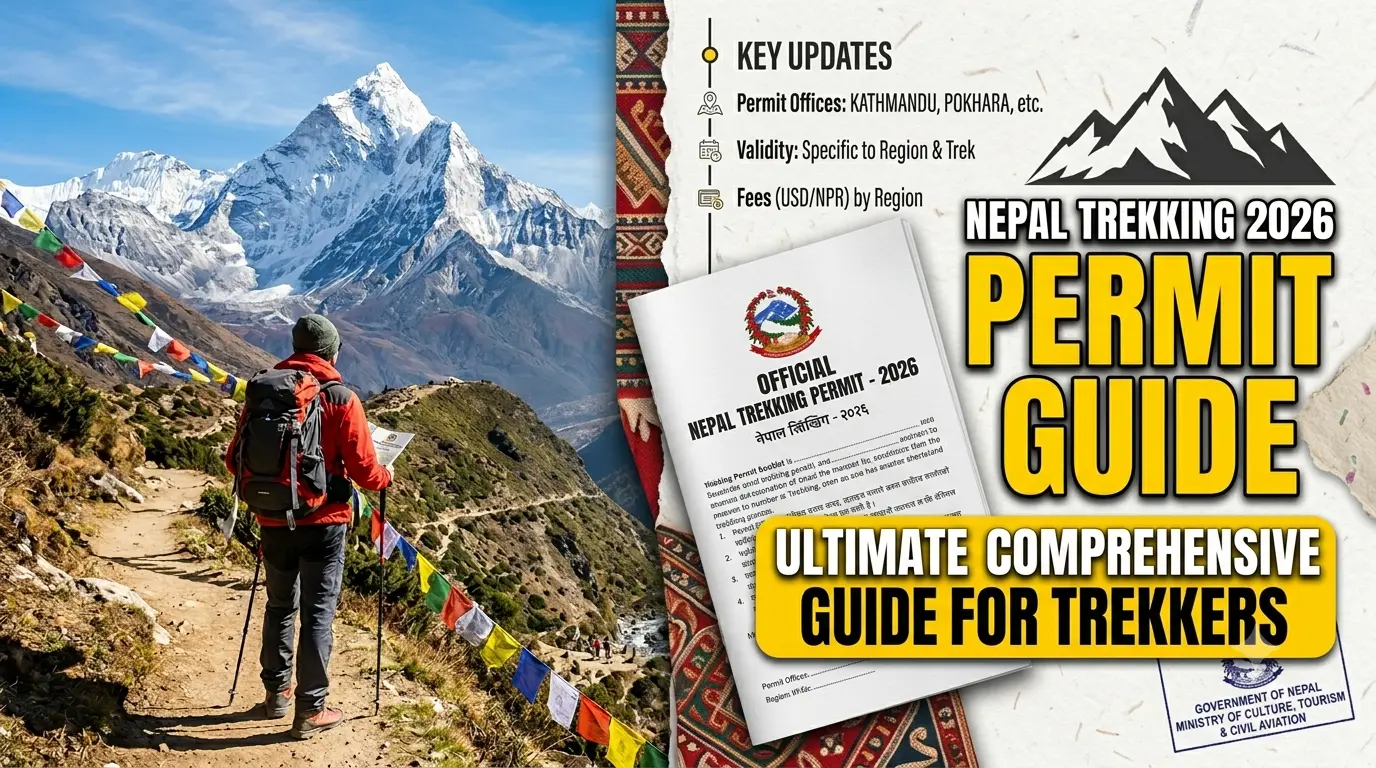
Nepal Trekking Permit Update 2026: The Ultimate Comprehensive Guide for Trekkers

Nepal remains the ultimate crown jewel of global adventure tourism, beckoning thousands of trekkers each year to stand among the highest peaks on earth. From the legendary footsteps leading to Everest Base Camp to the high passes of the Annapurna Circuit, the cascading waterfalls of Langtang, and the forbidden landscapes of Upper Mustang, the country provides unparalleled wilderness experiences.

However, the regulatory landscape of the Himalayas has evolved dramatically. The days of simply buying a generic paper booklet, packing a map, and setting off completely independent into any mountain valley are gone. To protect fragile high-altitude ecosystems, support local indigenous economies, and mitigate safety risks, Nepal’s trekking permit policies, fees, and safety laws have undergone a massive digital and structural overhaul.

Many trekkers arrive in Kathmandu completely unaware of recent landmark legal amendments, updated fee structures, or changes at regional checkpoints. This frequently results in costly administrative delays, unexpected fines, or being turned back at trail gates.

This comprehensive, definitive guide provides everything you need to know about Nepal’s trekking permit updates for 2026, covering specific costs, digital application pipelines, newly modified safety mandates, and actionable strategies for a seamless Himalayan adventure.

Why Does Nepal Require Trekking Permits?

Trekking permits serve a far greater purpose than mere bureaucratic administration. They are a multifaceted tool designed to ensure sustainable tourism management and maximize field safety.

+-------------------------------------------------------------------------+
|                    THE MULTI-PURPOSE PERMIT SYSTEM                      |
|                                                                         |
|  [ Safety & Rescue ]   --> Logs route paths for helicopter dispatch.    |
|  [ Local Revenue ]     --> Direct cash flows to trail-side schools/care.|
|  [ Eco-Preservation ]  --> Funds park rangers & wildlife conservation.  |
+-------------------------------------------------------------------------+

When you purchase a permit, your data and funds directly help authorities:

  • Monitor Visitor Movements: Tracking accurate entry, exit, and real-time location metrics across massive wilderness zones.

  • Improve Trekker Safety: Maintaining highly synchronized databases to quickly locate and coordinate help during severe weather events, avalanches, or medical emergencies.

  • Support Search and Rescue Operations: Providing immediate, legally verified reference data to rescue teams, ground search units, and helicopter evacuation dispatch networks.

  • Protect National Parks and Conservation Areas: Enforcing environmental preservation policies and funding trail rangers to prevent illegal deforestation and poaching.

  • Preserve Cultural Heritage: Reinvesting revenues directly into restoring centuries-old Buddhist monasteries (gompas), ancient stone pathways, mani walls, and shrines.

  • Generate Revenue for Local Communities: Ensuring tourism capital bypasses centralized urban systems and flows straight into mountain villages to construct local medical clinics, manage waste, and fund schools.

What Permits Are Required for Trekking in Nepal?

The permits you need depend entirely on your precise trekking destination, trail junctions, and duration of stay. Generally, an international trekker will require a customized combination of at least two of the following documents:

  • National Park Entry Permit: Mandatory if your trail cuts through legally protected national boundaries (e.g., Sagarmatha, Langtang, Rara, or Shey-Phoksundo).

  • Conservation Area Permit: Required for sustainably co-managed regional eco-zones (e.g., Annapurna, Manaslu, Gaurishankar, or Kanchenjunga).

  • Restricted Area Permit (RAP): A highly regulated, premium-tier authorization card mandatory for remote border-adjacent or culturally sensitive areas.

  • Local Municipality Entry Permit: Independent regional taxes managed directly by local governing councils rather than central tourism boards.

For over a decade, one of the most frustrating barriers for solo travelers visiting Nepal was the rigid “Minimum 2 Trekkers” rule for Restricted Area Permits (RAP). If you wanted to explore Upper Mustang, the Manaslu Circuit, or Dolpo, you were legally forced to find an additional foreign partner or purchase a fraudulent “ghost permit” just to satisfy a bureaucratic quota.

On March 22, 2026, the Department of Immigration (DoI), acting on strategic policy briefs from the Trekking Agencies’ Association of Nepal (TAAN), officially transformed this policy.

                    +------------------------------------+
                    |    THE 2026 SOLO RESTRICTED RULE   |
                    +------------------------------------+
                                      |
         +----------------------------+----------------------------+
         |                                                         |
         v                                                         v
[ True Independence ]                                    [ Non-Negotiable Guide ]
  - Single/Solo foreign trekkers                           - Guide mandatory at all times
  - No partner or group required                           - Must book through a 
  - Personalized RAP issued                                  TAAN-registered agency

What Changed in 2026?

  • Solo Restricted Area Permits Are Now Active: A single foreign trekker can now apply for and receive a Restricted Area Permit in their own name. You no longer need a second traveler in your party.

  • Pre-Arrival Digital Processing: Trekkers can now complete their permit applications completely in advance from their home country using their Nepal Tourist Visa Number or Visa Application Submission ID. This ensures all documentation is finalized before you arrive in Kathmandu.

  • The New 1:7 Guide-to-Trekker Ratio: For group travelers, the 2026 rules dictate that one licensed guide can accompany a maximum of 7 trekkers. If a group has 8 or more participants, the hosting agency must legally assign a second licensed guide to ensure maximum high-altitude safety.

Crucial Clarification: This update does not allow independent, guideless trekking. While you no longer need a second foreign companion, you are still legally required to hire a licensed local guide and process the permit through a TAAN-registered agency. Independent hiking in restricted zones remains strictly prohibited.

TIMS Card Update 2026: The Switch to E-TIMS

What Is a TIMS Card?

TIMS stands for Trekkers’ Information Management System. It acts as a central database to record itineraries, verify guide associations, and track real-time mountain safety metrics across the country.

Is TIMS Required in 2026?

The traditional, physical paper TIMS cards (the old independent green and group blue cards) have been completely phased out. In their place, Nepal has fully transitioned to a centralized, computerized E-TIMS (Electronic Trekkers’ Information Management System).

How E-TIMS Works in 2026

  • Mandatory Digital Registration: All foreign trekkers entering protected areas must be registered through the digital E-TIMS portal.

  • QR Code Scanners: The system generates a digital QR code linked directly to your passport, your travel insurance data, and your guide’s official license number. Real-time digital scanners are active at major checkpoints to verify your credentials.

  • The Price: The standard E-TIMS registration fee is NPR 2,000 (~$15 USD) per person.

  • The Structural Breakdown: Checkpoints in the Everest (Khumbu) and Annapurna regions do not enforce or check TIMS cards anymore, prioritizing their own conservation and municipality permits. However, E-TIMS remains strictly mandatory for Langtang, Manaslu, and far-western Nepal.

Breakdown of Key Trekking Regions & Permit Requirements

Nepal’s comprehensive “No Guide, No Trek” safety policy is fully active. Any foreign national hiking in a National Park, Conservation Area, or Restricted Zone must be accompanied by a licensed Nepali guide. Solo trekking without a guide on major trails is illegal and heavily monitored at checkpoints.

1. Annapurna Conservation Area (ACAP)

The Annapurna Conservation Area is Nepal’s largest protected sanctuary, encompassing world-famous routes like the Annapurna Circuit, Annapurna Base Camp (ABC), Mardi Himal, Khopra Ridge, and Ghorepani Poon Hill.

  • Permit Required: Annapurna Conservation Area Permit (ACAP).

  • Cost for Foreigners: NPR 3,000 (~$23 USD) + 13% VAT.

  • Where to Obtain: Tourism offices in Kathmandu or Pokhara, or via your registered trekking agency. It is valid for a single entry with no time limit.

  • Guide Rule: Strictly enforced. Checkpoints at trail entry points like Birethanti, Ghandruk, and Tatopani actively verify your guide’s credentials via the digital database.

2. Sagarmatha National Park & The Everest Region (Khumbu)

The Everest region operates independently of the central tourism office permit lines, utilizing a decentralized fee structure that directly benefits the local Sherpa communities.

  • Permit 1: Sagarmatha National Park Entry Permit

    • Required For: Everest Base Camp Trek, Gokyo Lakes, Three Passes Trek, and Everest Panorama.

    • Cost for Foreigners: NPR 3,000 (~$23 USD) + 13% VAT.

    • Where to Obtain: Can be bought at the park entrance gate in Monjo or online via the National Parks office interface.

  • Permit 2: Khumbu Pasang Lhamu Rural Municipality Permit

    • Required for: All trekkers entering the broader Khumbu region.

    • Cost for Foreigners: NPR 3,000 (~$23 USD) per person for the first 4 weeks.

    • Where to Obtain: This local entry token is paid directly in cash at local counters in Lukla or Monjo. It completely replaces the TIMS card in the Everest zone.

3. Langtang National Park

Boasting pristine alpine valleys, the holy waters of Gosaikunda Lake, and traditional Tamang cultural heritage, the Langtang region is highly accessible from Kathmandu.

  • Permit Required: Langtang National Park Permit + E-TIMS Registration.

  • Cost for Foreigners: NPR 3,000 (~$23 USD) + 13% VAT.

  • Where to Obtain: Processed via your agency or available at the park entrance checkpoint in Dhunche.

  • What it Supports: Wildlife protection, park ranger monitoring, and sustainable community development programs.

Restricted Area Permits (RAP) Detailed Index

If you intend to venture into the remote corners of the Himalayas that border Tibet, you must acquire a specialized Restricted Area Permit. Under the updated 2026 framework, remember that you can apply for these solo, but a licensed guide from a TAAN-registered agency is non-negotiable.

Here is the exact cost and duration structure for the most popular restricted zones:

Upper Mustang Permit

Often called the “Last Forbidden Kingdom,” Upper Mustang features striking semi-arid landscapes, ancient sky caves, and preserved Tibetan-Buddhist cultural sites.

  • Cost: $500 USD per person for the first 10 days.

  • Extended Stay: $50 USD per day for every day after the initial 10-day block.

Manaslu Circuit Permit

The Manaslu Circuit Trek has become one of Nepal’s fastest-growing deep mountain routes, prized as an authentic alternative to the busier Annapurna loops.

  • Autumn Peak Cost (September to November): $100 USD per person for the first 7 days ($15 USD per extra day).

  • Spring & Off-Peak Cost (December to August): $75 USD per person for the first 7 days ($10 USD per extra day).

  • Additional Requirements: Trekkers also need a Manaslu Conservation Area Permit (MCAP) for NPR 3,000 and an ACAP permit for NPR 3,000 to exit through Dharapani.

Upper Dolpo Permit

Immortalized by remote high-altitude lifestyles and the stunning turquoise expanse of Shey Phoksundo Lake, Upper Dolpo remains a pristine sanctuary.

  • Cost: $500 USD per person for the first 10 days.

  • Extended Stay: $50 USD per day for every day after the initial 10-day block.

Tsum Valley Permit

A sacred Himalayan valley tucked away in northern Gorkha, rich in ancient monasteries and meditation caves.

  • Autumn Peak Cost (September to November): $40 USD per person for the first week ($7 USD per extra day).

  • Off-Peak Cost (December to August): $30 USD per person for the first week ($7 USD per extra day).

Kanchenjunga & Taplejung Permits

Skirting the border of eastern Nepal and Sikkim, the base camp trails of Mt. Kanchenjunga (the world’s third-highest peak) offer incredible biodiversity.

  • Cost: $20 USD per person per week for the first 4 weeks ($25 USD per week thereafter).

Comprehensive Permit Cost Summary Table

Trekking Region / Permit Type Cost for Foreigners (Approx. USD) Guide Required? Primary Checkpoints
Annapurna (ACAP) NPR 3,000 (~$23 USD) Yes — Mandatory Birethanti, Ghandruk, Tatopani
Sagarmatha (Everest National Park) NPR 3,000 (~$23 USD) Yes — Mandatory Monjo Gate
Khumbu Municipality (Everest Local) NPR 3,000 (~$23 USD) Yes — Mandatory Lukla, Monjo
Langtang National Park Permit NPR 3,000 (~$23 USD) Yes — Mandatory Dhunche
E-TIMS Card (Non-Everest Zones) NPR 2,000 (~$15 USD) Yes — Mandatory System Scanned Online
Upper Mustang RAP $500 USD (for 10 days) Yes — Mandatory Kagbeni
Manaslu Circuit RAP (Peak Autumn) $100 USD (for 7 days) Yes — Mandatory Jagat
Upper Dolpo RAP $500 USD (for 10 days) Yes — Mandatory Suligad
Kanchenjunga RAP $20 USD (per week) Yes — Mandatory Taplejung

Guide Certification Levels Matching Your Route

Under the strict 2026 administrative safety guidelines, it is no longer enough to just hire any guide on the street. The Department of Immigration monitors guide certifications relative to the maximum altitude of your chosen trekking route:

  1. Basic Certification: Authorized for lower-altitude cultural routes and panoramic trails up to 4,000 meters (e.g., Ghorepani Poon Hill, short Langtang routes).

  2. Advanced Certification: Mandatory for high-altitude passes and base camps sitting between 4,000 meters and 5,500 meters (e.g., Everest Base Camp, Annapurna Circuit via Thorong La, Manaslu Circuit via Larkya La).

  3. Expedition Certification: Compulsory for technical alpine passes, peak climbing, and mountaineering expeditions operating above 5,500 meters (e.g., Island Peak, Mera Peak, Ama Dablam).

Pro-Tip: When booking your trek, do not simply choose an agency based on the cheapest price. Explicitly ask them to verify their guide’s TAAN registration and confirm that their certification level legally covers the maximum altitude of your itinerary.

Step-by-Step Guide: How to Obtain Your Permits

The 2026 digital overhaul has made the permit pipeline significantly cleaner, effectively eliminating the old, frustrating days of wasting your first morning in Kathmandu waiting in long queues at the government tourism offices.

+--------------------------------------------------------------------------+
|                       THE 2026 APPLICATION PIPELINE                      |
|                                                                          |
|  [ Gather Documents ] --> [ Submit to Agency ] --> [ Digital Approvals ]|
|  (Passport, Visa,          (TAAN-Registered)        (QR Code Issued       |
|   Photos, Insurance)                                 Before Arrival)     |
+--------------------------------------------------------------------------+

Step 1: Gather Your Vital Documents

Before applying, ensure you have clean, digital copies of the following:

  • Your physical passport (with a minimum of 6 months validity beyond your planned trek end date).

  • Your valid Nepal Tourist Visa number or your official Pre-Arrival Visa Submission ID.

  • 2 to 4 recent passport-sized photographs (digital and physical prints).

  • A detailed day-by-day travel itinerary with exact entry/exit dates and trailhead points.

  • A comprehensive travel insurance certificate in English, stating explicit coverage for high-altitude trekking and emergency helicopter evacuation up to your maximum route elevation.

Step 2: Choose a TAAN-Registered Trekking Agency

Because individual travelers cannot upload files directly into the restricted area portal, you must contact a licensed local agency. Verify their status with the Trekking Agencies’ Association of Nepal (TAAN) and finalize your guide assignment.

Step 3: Online Submission and Vetting

Your agency will initiate the workflow through the Department of Immigration (DoI) portal at nepaliport.immigration.gov.np. They will upload your documentation, visa data, insurance records, and your assigned guide’s official credentials into the computerized immigration system.

Step 4: Collection and Trail Checkpoints

While you can track the approval progress online using your unique Application Submission ID, the final permit is not fully activated until your agency presents your physical passport for a security check at the immigration office in Kathmandu. Once verified, a physical permit sticker or printout with an integrated tracking QR code is issued. Collect this from your agency before leaving Kathmandu, as it must be scanned by electronic checkpoint officers along the trail.

Common Permit Mistakes Trekkers Make

  • Assuming One Permit Covers an Entire Circuit: Many popular trekking loops cross regional borders. If you choose to hike the Manaslu Circuit, you will walk out via Dharapani, which officially sits inside the Annapurna zone. This means you legally require a Manaslu RAP, a Manaslu Conservation Area Permit (MCAP), and an Annapurna Conservation Area Permit (ACAP).

  • Carrying Only Digital Copies on Your Phone: While the registration system is fully digitalized, power outages and cold can drain smartphone batteries instantly, and cellular service can drop entirely in deep river canyons. Checkpoint guards frequently demand physical paper documents to stamp. Always carry high-quality printed copies of all permits.

  • Failing to Read the Insurance Fine Print: Nepal’s immigration department will reject permit applications if your travel insurance lacks explicit high-altitude clauses. Generic travel insurance policies often cap medical evacuation at 3,000 meters. Ensure your policy documents explicitly state coverage for helicopter rescue above 4,000 or 5,000 meters, depending on your trek.

  • Attempting to Evade Checkpoints: Trying to bypass official checkpoint gates via alternative side trails to avoid permit fees or mandatory guide rules is a serious legal offense. If caught, you face immediate fines (starting at NPR 12,000), permit confiscation, and being escorted back to the nearest road, while your insurance coverage becomes completely invalid.

Why You Must Book Through a Licensed Trekking Agency

The modern regulatory environment in Nepal makes a local, registered agency an essential partner for a successful expedition. Working with an accredited provider guarantees:

  • Legal Compliance: Seamless digital processing of complex national park, local municipality, and restricted area permits.

  • Safety Integration: Booking a first-aid trained, certified guide who monitors your health, tracks Acute Mountain Sickness (AMS) symptoms, and understands local weather patterns.

  • Logistical Management: Securing coveted teahouse rooms during the chaotic peak months (October/April) when popular lodges fill up completely by 2:00 PM.

  • Emergency Response: Under 2026 laws, emergency search and rescue coordination is a strict legal responsibility of your hosting agency. If an emergency arises, your agency can dispatch a rescue helicopter within minutes.

Frequently Asked Questions (FAQs)

Do I need a permit for every single hike in Nepal?

No. Short day hikes outside of protected park boundaries (such as walking along the immediate Kathmandu Valley rim trails like Nagarkot or Champadevi) do not require specialized national permits or E-TIMS registration cards.

Can I do the Everest Base Camp trek completely on my own without a guide?

No, not anymore. Under the current safety policies enforced across Nepal, all major protected areas—including the Sagarmatha (Everest), Annapurna, and Langtang networks—mandate that foreign trekkers be accompanied by a licensed local guide hired through an approved agency.

Can I apply for a Restricted Area Permit on my own?

While the landmark March 2026 update allows solo travelers to visit restricted regions without needing a second foreign companion, you still cannot apply directly over the counter yourself. The application must be filed on your behalf by a TAAN-registered local agency, and a licensed guide must accompany you throughout the restricted zone.

What happens if my flight to Lukla is delayed and my permit dates change?

Local checkpoint guards understand that mountain weather is highly unpredictable. For standard national park and municipality permits, minor schedule adjustments due to flight delays or health issues are easily accommodated at the trail gates. However, if you are changing your dates inside a highly restricted zone (like Upper Mustang), your guiding agency must update the immigration system portal to adjust your timeline.

Final Thoughts

Nepal’s trekking permit system plays a crucial role in protecting the country’s extraordinary mountain landscapes while ensuring visitor safety and supporting local communities. Whether you’re planning the legendary Everest Base Camp Trek, exploring the Annapurna region, discovering the beauty of Langtang, or venturing into remote destinations like Mustang and Dolpo, understanding permit requirements is essential for a smooth trekking experience.

Regulations can evolve from year to year, making it important to stay informed and work with trusted local experts whenever possible. By obtaining the correct permits and following responsible trekking practices, you’ll not only enjoy a safer journey but also contribute to the preservation of Nepal’s natural and cultural treasures for future generations.

Need Help Arranging Trekking Permits in Nepal?

Our dedicated local trekking specialists are ready to handle the administrative logistics so you can focus entirely on your physical preparation. Let our professional team assist you with:

  • Flawless processing of National Park, Municipality, and E-TIMS documentation

  • Advanced Restricted Area Permit (RAP) pre-arrival clearance

  • Sourcing top-tier, certified, first-aid trained mountain guides and porters

  • Managing domestic mountain flights (Kathmandu/Ramechhap to Lukla) and ground logistics

  • Booking prime teahouse accommodations during peak seasons

  • Designing fully customized, perfectly acclimatized Himalayan itineraries

Contact us today to begin planning a seamless, legally compliant, and unforgettable Himalayan adventure in Nepal!

Digital Nomad Visa Nepal: Complete Guide for Remote Workers in 2026

The world of work has changed dramatically over the past few years. More professionals than ever are working remotely, building businesses online, freelancing, consulting, or managing companies from anywhere with a reliable internet connection.

As digital nomads search for destinations that combine affordability, natural beauty, cultural richness, and a slower pace of life, Nepal has emerged as one of the most exciting locations in Asia. Known for its majestic Himalayan mountains, ancient temples, vibrant culture, and welcoming people, Nepal offers a unique experience that differs significantly from traditional digital nomad hubs like Bali, Thailand, or Portugal.

Imagine waking up to the crisp morning air of the Himalayas. You grab a hot, steaming cup of local Himalayan coffee or spiced masala chai, open your laptop, and log into a Zoom call with a backdrop of snow-capped peaks that most people only see on postcards.

For years, the phrase “digital nomad Nepal” meant playing a stressful game of visa roulette—constantly tracking your short-term tourist limits, planning forced border runs, and dealing with unpredictable internet connections. However, entering 2026, the global remote work landscape has shifted completely, and Nepal has formally thrown its doors open to the location-independent workforce.

With the official rollout and expansion of its long-term stay options for remote workers, interest in the Nepal Digital Nomad Visa has grown rapidly. Whether you’re a freelancer, entrepreneur, software developer, content creator, marketer, or remote employee, Nepal presents an unparalleled opportunity to work while experiencing one of the world’s most remarkable destinations.

This comprehensive guide covers everything you need to know about the Nepal Digital Nomad Visa, living costs, internet quality, taxation, coworking spaces, and the best places to stay.

What Is the Nepal Digital Nomad Visa?

digital-nomad-visa

A digital nomad visa (DNV) is a specialized residence permit designed for individuals who earn income from foreign employers, international clients, or online businesses while residing temporarily in another country. Unlike traditional work visas, digital nomad visas do not require employment from a local company.

The Nepal Digital Nomad Visa officially replaces the old, exhausting cycle of utilizing short-term tourist entries for remote work. Conceived by the Nepal Tourism Board, the Office of the Prime Minister, and the Department of Immigration, this structured framework lets you legally live and work in the country while earning your income entirely from foreign sources.

Key Highlights of the Program

  • Long-Term Security: The visa program structures your stay via a five-year multiple-entry framework, granted in renewable chunks of at least one year per entry.

  • Freedom of Movement: As a multiple-entry visa, you can come and go as you please without voiding your residency status or having to reapply.

  • Spouse & Dependent Inclusions: You don’t have to leave your loved ones behind; the policy allows primary applicants to include their legal spouses and immediate dependents in their stay.

Important Note: To protect local employment, digital nomad visa holders are strictly prohibited from engaging in local business activities or taking up domestic jobs within the Nepalese market. Your income must come entirely from entities established outside of Nepal.

Why Remote Workers Are Choosing the Himalayas

Many digital nomads initially consider established hotspots such as Bali, Chiang Mai, Lisbon, or Medellín. However, Nepal offers distinct advantages that make it an increasingly attractive alternative for location-independent professionals.

Traditional Hubs Nepal: The Himalayan Alternative
High Tourist Saturation Authentic Cultural Immersion
Crowded Coastal Cafes Majestic Himalayan Views
Rising Living Costs Incredible Budget Value
Commercialized Experiences Genuine Local Connections
Overcrowded Coworking Spaces Peaceful and Inspiring Work Environments
Fast-Paced Lifestyle Balanced Work-Life Experience
Limited Adventure Variety Trekking, Wildlife, Culture & Spirituality
Expensive Accommodation Affordable Long-Term Living
Highly Competitive Nomad Communities Growing Opportunities for Meaningful Networking
Typical Remote Work Destinations One of Asia’s Most Unique Remote Work Experiences

1. Affordable Cost of Living

Compared to many Western countries and even saturated Southeast Asian hubs, Nepal provides exceptional value for money. A remote worker can comfortably live a high-quality lifestyle in Nepal while spending significantly less on accommodation, transportation, food, entertainment, and domestic travel. This high affordability allows digital nomads to extend their travels, maximize their personal savings rate, or reinvest heavily into growing their online businesses.

2. Incredible Natural Beauty

Few countries offer the dramatic landscapes found in Nepal. You can actively work from a trendy urban café in Kathmandu one week and enjoy tranquil mountain views in Pokhara the next. The country boasts easy access to bucket-list attractions, including:

The ability to seamlessly combine daily professional productivity with world-class outdoor adventure makes Nepal highly appealing to the active remote worker.

3. Rich Culture, Heritage, and Community

Nepal is home to centuries-old traditions, ancient architecture, and deeply spiritual lifestyles. Remote workers frequently seek meaningful cultural immersion rather than simply working from an isolated beach resort. Nepal offers a rich tapestry of Buddhist monasteries, Hindu temples, traditional Newari villages, local festivals, and diverse ethnic communities. Nepalese culture operates deeply on the ancient Sanskrit proverb “Atithi Devo Bhava” (The Guest is God), making it one of the safest and most genuinely welcoming countries in the world.

4. Growing Digital Infrastructure

Internet connectivity in Nepal has undergone a massive modernization effort. Scheduled power outages (known historically as “load-shedding”) are entirely a thing of the past. Major cities now boast high-speed fiber internet, expanding 4G and 5G mobile networks, modern coworking spaces, and beautifully designed laptop-friendly cafés.

Why More Remote Workers Are Looking Beyond Traditional Hubs

For years, destinations like Bali, Chiang Mai, Lisbon, and Medellín dominated the digital nomad scene. While these locations remain popular, many remote workers are beginning to seek something different—less crowded, more authentic, and better connected to nature.

Nepal offers a refreshing alternative.

Instead of competing for a seat in a packed beachfront café, digital nomads can work with panoramic Himalayan views, explore centuries-old cultural heritage sites, and enjoy a significantly lower cost of living. The country combines productivity, adventure, spirituality, and cultural immersion in ways that few destinations can match.

Whether you’re a freelancer, entrepreneur, remote employee, or content creator, Nepal provides an opportunity to experience a lifestyle that goes beyond the typical digital nomad routine.

The Nepal Advantage

✅ Authentic cultural experiences

✅ Affordable long-term stays

✅ Stunning mountain landscapes

✅ Growing coworking ecosystem

✅ Adventure at your doorstep

✅ Wellness and spiritual retreats

✅ Friendly local communities

✅ Less crowded than mainstream nomad destinations

In a world where many digital nomad hubs are becoming increasingly crowded and expensive, Nepal stands out as one of the last truly transformative destinations for location-independent professionals.

Who Can Apply? Eligibility & Core Income Streams

The Nepal Digital Nomad Visa targets individuals who can demonstrate an independent income stream generated entirely outside the host country. The primary eligible groups include:

  • Remote Employees: Professionals working full-time or part-time for companies located outside Nepal (e.g., software engineers, marketing specialists, project managers, data analysts).

  • Freelancers and Contractors: Individuals providing independent services to international clients (e.g., graphic designers, writers, SEO consultants, web developers, video editors).

  • Entrepreneurs and Startup Founders: Business owners operating location-independent companies, such as SaaS founders, agency owners, and e-commerce entrepreneurs.

  • Content Creators: Digital creators earning income through YouTube, blogging, affiliate marketing, online courses, or international sponsorships.

Financial & Document Requirements

One of the most attractive aspects of the Nepal Digital Nomad Visa is its accessibility. Compared to the steep income thresholds required by European nations or regional neighbors like Japan, Nepal offers some of the most reasonable financial barriers in the world.

To successfully apply, remote workers must fulfill the following core requirements:

1. Proof of Remote Income or Savings

The government provides two flexible pathways to prove your financial self-sufficiency:

  • The Income Path: A minimum monthly income of $1,500 USD derived from sources outside of Nepal.

  • The Savings Path: A verifiable bank balance of at least $20,000 USD held in a recognized financial institution.

2. Verification of Remote Professional Status

You must explicitly prove that your profession can be performed completely online. This is demonstrated via:

  • Active employment contracts, accompanied by a formal letter from your employer verifying your remote status.

  • Freelance agreements, client invoices, a professional portfolio, and recent business bank statements.

  • Official business registration certificates and corporate revenue statements if you own an online agency or e-commerce shop.

3. Comprehensive Health Insurance

Healthcare infrastructure in Nepal varies wildly between urban hubs and remote trekking routes. To ease the burden on public systems, the government mandates that all applicants hold an international health insurance policy with a minimum coverage limit of $100,000 USD, specifically valid for treatment in Nepalese hospitals and inclusive of emergency medical evacuation provisions.

4. Valid Passport & Clean Background

Applicants need a passport valid for at least six months beyond their intended stay, alongside a clean criminal record supported by a police clearance certificate from their home country.

Step-by-Step Application Process

Navigating immigration systems can occasionally feel daunting, but the application process for Nepal’s DNV has been thoroughly digitized through the Department of Immigration’s updated portal.

Step 1: Gather Documentation

Prepare digital copies of your passport, income proofs (such as 3 to 6 months of bank statements, salary slips, or tax returns), corporate registries, insurance documents, passport photographs, and your background check.

Step 2: Submit the Online Application

Access the official Department of Immigration government portal. Fill out the comprehensive digital nomad application form with your personal details, travel history, professional background, and your proposed residential address within Nepal. Upload all scanned supporting documentation.

Step 3: Verification and Fee Review

Pay the designated visa processing fee directly through the portal’s integrated digital payment gateway. Once paid, your application enters a sequential review process involving identity verification by the Ministry of Home Affairs and financial vetting by the Ministry of Finance.

Step 4: Receive Approval & Visa Issuance

Upon approval, you will receive an official electronic visa confirmation. When you arrive at Tribhuvan International Airport (KTM) in Kathmandu, immigration officers will verify your biometric data and stamp your official long-term residence permit into your passport.

Unmatched Incentives: Taxes, Banking, and Lifespan Perks

The true genius of Nepal’s digital nomad framework lies in the auxiliary perks wrapped into the legislation. The government isn’t just letting remote workers stay; they are actively making it practical to build a highly functional everyday life.

1. The 5% Flat Tax Incentive

Taxation is usually the ultimate headache for long-term travelers. Nepal addresses this with an incredibly competitive, business-friendly structure:

  • First 183 Days: Completely tax-exempt on foreign-earned income.

  • Beyond 183 Days: If you reside in Nepal for more than 183 days in a calendar year, you become a tax resident and are subject to an incredibly lucrative, concessional flat 5% income tax rate on your foreign earnings.

2. Local Banking Freedoms

Constantly relying on international credit cards or paying high ATM withdrawal fees gets old fast. DNV holders are legally permitted to open personal bank accounts with local commercial banks and conduct transactions in foreign currency.

  • The $50,000 Rule: If your local savings exceed $50,000 USD, any surplus funds can be freely transferred back to foreign accounts at any time.

  • Account Liquidation: Should you choose to leave the country permanently or let your visa lapse after five years, you have the explicit right to withdraw and repatriate your entire bank account balance.

3. Vehicle Ownership & Licensing

Under the nomad visa guidelines, you are legally entitled to purchase and register a personal vehicle (car or motorcycle) in your own name. Furthermore, the policy officially accredits valid driving licenses issued in your country of origin, saving you from navigating complex local licensing exams.

Technical Infrastructure & Internet Quality

Reliable internet is non-negotiable for digital nomads. While copper-wire systems caused headaches in the past, modern fiber networks have completely transformed urban Nepal.

Fiber Internet

Fixed broadband fiber connections are the absolute standard in urban centers via major internet service providers (ISPs) like  Vianet, CG Net, NT-Fiber, WorldLink, DishHome, and Classic Tech.

  • Speeds Available: Commercial lines easily offer 50 Mbps, 100 Mbps, 300 Mbps, and up to 1 Gbps.

  • Reliability: Highly stable and perfectly optimized for seamless Zoom video calls, cloud computing, continuous streaming, and large file transfers.

  • Cost: Packages are remarkably economical, ranging from $15 to $30 USD per month.

Mobile Data & 5G

4G networks provide exceptional coverage across major cities and highways, while 5G rollouts continue expanding rapidly within the Kathmandu Valley and Pokhara. The primary telecom networks are Ncell and Nepal Telecom (NTC). A massive 20GB high-speed mobile data pack can be bought for under $8 USD, serving as an excellent and affordable backup hotspot during occasional weather-related disruptions.

Pro-Tip for Nomads: While urban infrastructure is highly dependable, rural connectivity drops significantly the moment you enter deep trekking trails or high-altitude mountain villages. If you plan a multi-day trek, use satellite internet alternatives where available (like Starlink in select lodges) or notify your clients that you will be temporarily offline.

Best Cities in Nepal for Digital Nomads

Choosing the right base can significantly impact your remote work experience. Nepal offers a diverse spectrum of environments, from high-energy metropolitan hubs to peaceful lakeside sanctuaries.

1. Kathmandu: The High-Energy Capital & Business Hub

Kathmandu is Nepal’s capital, primary economic engine, and the core epicenter of the country’s startup ecosystem.

+--------------------------------------------------------------+
|                          KATHMANDU                           |
|  [ Fastest Fiber Internet ]      [ Largest Coworking Network]|
|  [ Top Private Hospitals  ]      [ Endless Cultural Sites ]  |
+--------------------------------------------------------------+
  • The Vibe: Fast-paced, historic, chaotic, and buzzing with networking opportunities.

  • Where to Work: Neighborhoods like Jhamsikhel and Patan are packed with specialty coffee roasters and laptop-friendly spaces.

  • Best For: Entrepreneurs, tech professionals, and long-term residents who want maximum networking and access to modern amenities.

2. Pokhara: The Peaceful Lakeside Sanctuary

Pokhara is widely considered the crown jewel of the digital nomad lifestyle in Nepal. Situated right alongside the peaceful waters of Phewa Lake and directly underneath the majestic Annapurna range, it perfectly balances productivity with lifestyle.

  • The Vibe: Laid-back, health-conscious, adventurous, and incredibly scenic.

  • Where to Work: The Lakeside district is lined with open-air cafes featuring steady Wi-Fi, organic menus, and a thriving expat community.

  • Best For: Freelancers, lifestyle entrepreneurs, writers, and creatives who want a perfect work-life balance and instant access to weekend hiking trails.

3. Lalitpur (Patan): The Creative & Artistic Suburb

Technically a distinct historic city separated from Kathmandu by the Bagmati River, Patan acts as the trendy, artsy extension of the capital.

  • The Vibe: Highly collaborative, design-forward, and rich in traditional Newari architecture.

  • Where to Work: Thriving creative coworking spaces like Rem.Work and Work Around, hidden courtyard cafes, and artisanal workshops.

  • Best For: Designers, consultants, remote freelancers, and those who want a tight-knit neighborhood feel within arm’s reach of Kathmandu’s main facilities.

4. Bhaktapur: The Cultural Time Capsule

Located on the eastern edge of the Kathmandu Valley, Bhaktapur offers a quieter, deeply historic environment.

  • The Vibe: Timeless, meditative, and visually stunning with its red-brick pavement and well-preserved wood carvings.

  • Best For: Researchers, writers, and creative professionals seeking minimal distractions, fewer tourist crowds, and an authentic window into ancient Nepalese history.

Comprehensive Cost of Living Breakdown

Your purchasing power goes incredibly far in Nepal. Because your earnings are generated in stronger foreign currencies while your local daily expenses are paid in Nepalese Rupees (NPR), maintaining an exceptional standard of living is highly affordable.

A comfortable, mid-range monthly budget for a single digital nomad generally hovers between $900 and $1,300 USD. Let’s break down the realistic numbers:

Accommodation Costs

  • Budget Studio/Apartment: $150 – $300 USD / month (Ideal for solo travelers seeking clean, basic, and functional local housing).

  • Mid-Range Fully Furnished Apartment: $300 – $700 USD / month (Located in prime digital nomad areas, featuring premium fiber internet, backup power options, air conditioning, and modern appliances).

  • Premium/Luxury Serviced Residences: $700 – $1,500+ USD / month (Luxury penthouses or serviced mountain-view properties with inclusive housekeeping, gyms, and top-tier security).

Food & Dining Costs

Local dining is incredibly cheap, and even high-end Western cafes are highly affordable:

  • Local Restaurant Meal (e.g., Momos or standard Dal Bhat): $3 – $8 USD

  • Mid-Range Tourist/Expat Restaurant Meal: $5 – $15 USD

  • Specialty Cafe Cappuccino / Latte: $1.50 – $3 USD

  • Average Monthly Food/Groceries Budget: $150 – $300 USD

Transportation & Utilities

  • Monthly Infrastructure Utilities (Fiber internet, mobile data, electricity): $30 – $60 USD

  • Monthly Local Transportation (Using ride-sharing apps like Pathao/inDrive or local taxis): $30 – $100 USD

Coworking Spaces & Networking Opportunities

As the community grows, dedicated coworking spaces continue expanding across major urban areas. These hubs provide digital nomads with guaranteed internet uptime, backup power generators, professional meeting rooms, and a focused environment to network with local entrepreneurs and international remote workers.

Space Name Location Primary Features
Rem.Work Lalitpur (Patan) Premium high-speed fiber, vibrant local startup community, ergonomic seating, and excellent networking events.
Work Around Kathmandu Quiet zones, meeting rooms for client calls, outdoor garden workspace, and free-flowing local coffee.
Lakeside Hubs & Cafes Pokhara Indoor/outdoor hybrid spaces overlooking the lake, relaxed networking, ideal for creative freelancers.

Kathmandu’s tech and startup ecosystem is growing rapidly. By working from these spaces, you can easily attend local entrepreneur meetups, tech conferences, and collaborative business networking groups that open doors for unexpected international partnerships.

Weekend Adventures: Maximizing Work-Life Balance

One of Nepal’s greatest strengths is that your weekends will feel like a bucket-list vacation. You don’t have to wait for a two-week annual holiday to experience world-class travel.

  • Short Day Hikes: Explore the scenic rims of the Kathmandu Valley, such as Nagarkot, Shivapuri, Champadevi, or Dhulikhel, offering panoramic views of the Himalayas right after your Friday shift ends.

  • Short Trekking Escapes: Take a week of light remote work from Pokhara and spend your long weekends conquering accessible, world-famous routes like the Mardi Himal trek, Poon Hill, or paths leading toward Annapurna Base Camp.

  • Wildlife Safaris: Head south to the sub-tropical plains of Chitwan National Park or Bardia National Park for a weekend of elephant tracking, canoeing down crocodile-filled rivers, and spotting wild rhinos and Bengal tigers.

  • Spiritual Retreats: Immerse yourself in profound self-care by booking weekend stays at peaceful Buddhist monasteries, specialized meditation centers, or holistic yoga retreats scattered around Pokhara and the valley.

       Mon - Fri (Productivity)             Sat - Sun (Adventure)
[ 300 Mbps Fiber ] -> [ Client Calls ]  =>  [ Himalayan Trekking ] -> [ Safaris ]

Challenges of Living in Nepal as a Digital Nomad

Every destination has its unique set of trade-offs. To maintain realistic expectations, digital nomads should be aware of the following local challenges:

  • Infrastructure Differences: While modern buildings are excellent, older neighborhoods or rural areas may not match the strict infrastructure standards of highly developed Western countries. Unpaved roads can turn muddy during the monsoon.

  • Traffic Congestion and Air Quality: Kathmandu experiences heavy traffic congestion during peak commuting hours. Air quality can fluctuate significantly and become dusty, particularly during the dry winter season. Investing in a quality indoor air purifier and wearing a protective mask during active transit is highly recommended.

  • Seasonal Weather (Monsoon): The monsoon season (typically June to September) brings heavy rainfall, which can disrupt domestic flights, cause localized landslides on mountain highways, and temporarily limit outdoor trekking activities.

  • Public Transit Learning Curve: The local public microbus system is chaotic, crowded, and completely un-digitized. However, you can easily bypass this challenge by downloading local ride-sharing apps.

Essential Local Apps for Nomads

  • Pathao: The absolute go-to ride-sharing application in Nepal. You can instantly book incredibly cheap motorcycle taxis (the fastest way to cut through city traffic), order food delivery, or request standard cars.

  • inDrive: A highly popular alternative ride-share app operating on a peer-to-peer bidding system, allowing you to negotiate fares directly with drivers in real-time.

  • eSewa & Khalti: The premier digital wallets in Nepal. Once you open your local digital nomad bank account, you can link it to these apps to seamlessly scan QR codes at local supermarkets, cafes, and utility vendors.

Is Nepal Better Than Bali or Thailand for Digital Nomads?

The answer depends heavily on your personal lifestyle priorities and professional goals.

  • Choose Nepal if you want: Majestic mountain scenery, profound cultural immersion, world-class alpine trekking, deep spiritual experiences, an elite 5% tax incentive, and a refreshing lack of over-tourism or tourist saturation.

  • Choose Bali or Thailand if you prioritize: A beach-centric lifestyle, massive established Western expat communities, active nightclub scenes, and heavily saturated digital nomad ecosystems.

Many remote workers find that while Southeast Asia offers comfortable, predictable tourist paths, Nepal provides a far more authentic, grounding, and personally transformative remote work experience.

Conclusion & Final Thoughts

Nepal is no longer just an exclusive destination for hardcore mountaineers and backpackers. It is rapidly transforming into a compelling, highly strategic option for digital nomads who refuse to compromise between professional productivity, extreme affordability, rich culture, and pristine natural beauty.

From the bustling, historic streets of Kathmandu to the peaceful, mountain-framed lakeside cafés of Pokhara, Nepal offers remote workers an environment where high-tech work and deep geographical exploration coexist seamlessly. For freelancers, entrepreneurs, content creators, and remote employees looking for an intentional life beyond conventional, overcrowded nomad hubs, Nepal provides an experience that is both professionally rewarding and personally life-changing.

As digital nomad visa programs continue to evolve and infrastructure improves throughout 2026, Nepal is firmly poised to become Asia’s premier Himalayan destination for location-independent professionals. Pack your laptop, secure your health insurance, and prepare to elevate your career to a completely new altitude. The roof of the world is waiting for you.

Frequently Asked Questions (FAQs)

Can I apply for the Nepal Digital Nomad Visa if I am an Indian citizen?

No. Under the historic 1950 Indo-Nepal Treaty of Peace and Friendship, Indian citizens do not require a visa to enter, reside, or work in Nepal. Indian remote workers can move, live, and work freely in the country without going through the DNV application process.

Can I bring my family members on this visa?

Yes. The current digital nomad visa framework explicitly allows successful primary applicants to include their legal spouses and dependent children in their long-term residence permit framework.

What happens if I want to leave Nepal before my 5-year visa period expires?

The visa operates on a flexible, multiple-entry framework. You are not forced to stay for five continuous years. You can leave and return at your convenience. If you decide to end your stay permanently, you can fully close your local bank accounts and legally repatriate all your remaining foreign currency funds.

Is the 5% tax applied to money I earn within Nepal?

No, because you are strictly prohibited from earning money within Nepal. The 5% flat tax applies strictly to your foreign-sourced income (your overseas remote salary, freelance client payments, or foreign corporate revenues) if you spend more than 183 days a year inside the country.

Women’s Solo Travel Guide to Nepal (2026): Safety, Trekking, Culture & Essential Tips for Independent Female Travelers

Nepal has solidified its reputation as one of the world’s most empowering and deeply rewarding destinations for solo female travelers. Nestled in the heart of the Himalayas, this vibrant nation offers an unparalleled mix of jagged mountain landscapes, ancient heritage, deep spirituality, and a culture of hospitality that treats visitors with profound respect.

For women seeking adventure, self-discovery, or cultural immersion, Nepal presents a safe and welcoming canvas. The deeply rooted philosophy of Atithi Devo Bhava (The guest is equivalent to God) means that locals—especially in traditional communities—frequently look out for independent female travelers like extended family.

However, traveling solo as a woman in a developing, traditional society requires a thoughtful blend of cultural awareness, smart planning, and practical safety steps. This ultimate comprehensive guide covers everything you need to navigate Nepal safely, confidently, and independently in 2026.

1. Is Nepal Safe for Solo Female Travelers?

solo-travel

The short answer is yes. Nepal is widely considered one of the safest destinations in South Asia for women traveling alone. Violent crime against tourists is exceedingly rare. However, like any travel destination, staying alert and understanding localized risks is key to a smooth journey.

Petty Theft & Scams

In crowded tourist hubs and transit points, petty crimes like pickpocketing, bag snatching, and phone theft can happen.

  • High-Risk Zones: Thamel (Kathmandu), Lakeside (Pokhara), local bus stations, and crowded local festivals or markets.

  • Precaution: Keep your valuables tucked away in secure, zipped compartments and avoid displaying expensive electronics unnecessarily.

Harassment & Staring

While physical aggression is rare, solo women may encounter persistent staring, unwanted attention, or occasional flirtatious comments. This behavior is typically harmless curiosity rather than predatory, but it can feel intrusive.

  • Precaution: Projecting confidence, wearing modest clothing, and maintaining clear boundaries will deter most unwanted attention.

Trekking Risks

Statistically, the greatest threats to solo travelers in Nepal stem from environmental factors rather than crime. Altitude sickness (Acute Mountain Sickness), unpredictable mountain weather, trail accidents, and geographic isolation are serious considerations. Proper preparation and adhering to local trekking regulations mitigate these risks completely.

2. Best Destinations for Solo Female Travelers

Certain destinations in Nepal offer an ideal mix of robust tourist infrastructure, vibrant social scenes to meet fellow travelers, and stellar safety standards.

                    TOP SOLO FEMALE DESTINATIONS
                                │
         ┌──────────────────────┼──────────────────────┐
         ▼                      ▼                      ▼
  Lakeside, Pokhara      Thamel, Kathmandu       Bandipur Village
(Relaxed, Safe, Easy)  (Vibrant, Social, Hub)  (Charming, Cultural)

Pokhara (Lakeside): The Perfect Soft Landing

Pokhara is arguably the most female-friendly city in South Asia. The Lakeside district is highly walkable, clean, and lined with cozy cafes, yoga retreats, and shops overlooking Phewa Lake. It boasts a relaxed atmosphere, exceptionally low crime rates, and serves as the ultimate gateway to the Annapurna region.

Kathmandu: The Vibrant Cultural Hub

As the capital city, Kathmandu is the energetic heart of Nepal. While chaotic, it is packed with historic temples, UNESCO World Heritage Sites, and social hostels. Staying in Thamel gives you access to walking tours, gear shops, and social cafes, while staying near Boudhanath Stupa provides a peaceful, spiritual environment centered around Tibetan Buddhist culture.

The Annapurna Region: Pristine, Well-Marked Trails

For trekkers, routes like Ghorepani Poon Hill, Mardi Himal, Annapurna Base Camp, and the classic Annapurna Circuit offer fantastic infrastructure. Trails are highly visible, frequently traveled, and lined with cozy teahouses, making them incredibly approachable for solo travelers looking to meet others.

Bandipur: A Secure Step Into Newari Tradition

This beautifully preserved, pedestrian-only hilltop town is a living museum of traditional Newari architecture. With no motorized vehicles allowed on its main brick street, it offers a peaceful, tight-knit communal atmosphere where solo women can wander safely at any hour.

Lumbini: A Sanctuary for Reflection

The birthplace of Buddha is a serene destination in the southern plains. Women traveling alone appreciate its calm, meditative atmosphere, historic monasteries built by various nations, and renowned meditation centers.

3. Solo Trekking in Nepal & Hiring Female Guides

Trekking through the Himalayas is a transformative experience, but doing it solo as a woman requires a careful assessment of safety and regulations.

       Body (Physical Challenge) + Speech (Local Connection) + Mind (Confidence)
                                        │
                                        ▼
                        THE REWARDS OF MOUNTAIN JOURNEYS

The New Trekking Regulations

The Government of Nepal has implemented stricter safety guidelines that mandate licensed guides for most high-altitude trekking zones to prevent solo trekkers from going missing in remote regions. Even on unrestricted trails, trekking entirely alone without a companion or guide is highly discouraged due to sudden weather shifts and terrain hazards.

The Rise of Female Trekking Guides

The demand for certified female trekking guides has surged significantly. Hiring a female guide or joining an all-women group trek offers unique advantages for independent travelers:

  • Complete Comfort: It eliminates any potential vulnerability or social awkwardness regarding rooming and personal space in remote mountain teahouses.

  • Exclusive Cultural Access: Female guides bridge the gap into the private worlds of Himalayan women. You will find yourself invited into local teahouse kitchens, learning about matriarchal structures, and sharing stories that male guides rarely have access to.

  • Economic Empowerment: Tourism in Nepal has historically been male-dominated. By consciously hiring a certified woman guide, you directly fund female financial independence and encourage sustainable career tracks for young women in mountain communities.

Trusted Women-Led Agencies: Look into reputable organizations like 3 Sisters Adventure Trekking and their sister NGO Empowering Women of Nepal (EWN) in Pokhara, or specialized Kathmandu-based female guiding agencies. Always ensure your guide holds an official license from the Trekking Agencies Association of Nepal (TAAN).

4. Understanding Cultural Expectations & Dress Codes

Nepal remains a traditional, patriarchal, and conservative society. Understanding local norms instantly commands respect from communities and significantly minimizes unwanted attention.

Dress Moderately (The Absolute Rule)

While brief clothing is tolerated inside the immediate backpacker bubbles of Thamel or Lakeside, dressing revealingly outside these zones is considered highly inappropriate.

  • Cities & Villages: Keep your shoulders and knees covered. Loose, lightweight linen trousers, maxi skirts, and t-shirts are excellent choices. Avoid low-cut tops, short shorts, and spaghetti straps.

  • Religious Sites: When visiting temples or monasteries, always dress modestly. Carry a light scarf or shawl in your daypack to drape over your shoulders or head when required. Always remove your shoes before entering temple interiors.

Social Etiquette & Boundary Setting

  • The Namaste Greeting: Avoid initiating physical contact, like handshakes, with local men unless they offer first. Instead, press your palms together at chest level and say “Namaste”. It is a beautiful, deeply respected greeting that naturally establishes a polite personal boundary.

  • The “Marriage Question”: Locals are deeply family-oriented and will casually ask solo women, “Are you married?” or “Where is your husband?” This is almost always innocent small talk. If you want to deter persistent conversation, simply smile and say your husband is working or joining you in a few days. Wearing a simple band on your ring finger works wonders.

  • Monastery Etiquette: Never touch a monk’s robes or sit directly next to them on a bench. Public displays of affection (PDA) are frowned upon throughout the country.

5. Transportation and Accommodation Dynamics

Navigating transit and lodging with a safety-first mindset ensures a stress-free trip.

Transportation Tips

  • Ride-Sharing Apps: In Kathmandu, avoid relying entirely on unmetered street taxis. Download local apps like Pathao or InDrive. They track your ride via GPS, provide driver profiles, and display transparent, fixed pricing.

  • Tourist Buses: When traveling between Kathmandu, Pokhara, and Chitwan, prioritize tourist buses (like Jagadamba, Soyambhu, or Greenline) over local public buses. They offer assigned seating, predictable schedules, better safety standards, and more comfortable drives.

  • Domestic Flights: For longer distances (e.g., Kathmandu to Pokhara or Lukla), domestic flights save massive amounts of time and avoid exhausting, bumpy road journeys.

Accommodation Strategies

Nepal caters beautifully to solo budgets. Look for accommodations that prioritize community and security:

┌─────────────────────────┬──────────────────────────────────┬──────────────────────────────────┐
│ Accommodation Type      │ Best For...                      │ What to Look For                 │
├─────────────────────────┼──────────────────────────────────┼──────────────────────────────────┤
│ Female-Friendly Hostels │ Socializing & meeting partners   │ Female-only dorms, keycard locks │
│ Local Guesthouses       │ Budget comfort & cozy vibes      │ Family-run, excellent reviews    │
│ Authentic Homestays     │ Deep cultural immersion          │ Community-vetted networks        │
│ Boutique Hotels         │ Premium security & relaxation    │ 24-hour reception, central spots │
└─────────────────────────┴──────────────────────────────────┴──────────────────────────────────┘
  • The Safety Checklist: Before booking, verify recent reviews written by other solo female travelers. Ensure the property has secure window locks, proper interior door deadbolts, a 24-hour staffed reception desk, and well-lit entryways.

6. Practical Planning: Best Seasons, Health & Budgets

When to Visit

  • Autumn (September–November): The absolute peak season. Offers crystal-clear mountain views, stable weather, and bustling trails. It is incredibly easy to meet travel partners during these months.

  • Spring (March–May): The second-best window. Wild rhododendrons bloom across the hills, skies are warm, and trekking conditions are excellent.

  • Winter (December–February): Clear, crisp days but freezing temperatures in the mountains. Great for city exploration and lower prices.

  • Monsoon (June–August): Characterized by heavy rainfall, leeches, and potential landslides. High-altitude trekking is limited, though cultural tours remain viable.

Health, Hygiene & Travel Insurance

  • Water Safety: Never drink tap water. Use a refillable bottle equipped with a built-in filter (like LifeStraw or Grayl), use water purification tablets, or utilize filtered water refilling stations at your accommodation.

  • Feminine Hygiene: While pads are widely available in cities, tampons and menstrual cups are exceptionally difficult to find outside Kathmandu and Pokhara. Pack an ample supply of your preferred menstrual products before flying out.

  • Comprehensive Insurance: Ensure your travel insurance policy explicitly covers high-altitude trekking (up to 5,000–6,000 meters) and emergency helicopter medical evacuation.

Sample Daily Budgets for Solo Women

Travel Style Estimated Daily Cost (USD) What It Includes
Budget Traveler $25 – $40 / day Social hostel dorms, local cafes, public/tourist bus transport, and independent city walks.
Mid-Range Traveler $50 – $100 / day Private boutique guesthouse rooms, domestic flights, guided day tours, mid-range dining.
Luxury Traveler $150+ / day Five-star heritage hotels, private vehicle rentals, premium wellness retreats, luxury trekking lodges.

7. Frequently Asked Questions (FAQs)

Is Nepal safe for first-time solo female travelers?

Absolutely. Nepal is highly recommended as a beginner-friendly destination for solo women. The country features a deeply welcoming culture, an established tourist trail, incredibly low rates of violent crime, and a supportive, close-knit global community of travelers.

Can I easily find a female trekking partner in Nepal?

Yes. If you choose not to hire a guide, you can easily find travel partners by staying in social hostels in Thamel or Lakeside, joining dedicated solo travel Facebook groups (like Solo Female Travelers), or looking at notice boards in local cafes.

Do I need to carry cash, or are credit cards widely accepted?

While upscale hotels and restaurants in Kathmandu and Pokhara accept credit cards, Nepal remains a cash-driven economy. You will need local Nepalese Rupees (NPR) for local transport, entry tickets to heritage sites, markets, and all mountain teahouses. Carry a reliable debit card and pull cash from ATMs in major cities before heading into the mountains, as ATMs do not exist on most trekking trails.

Is public display of affection allowed?

No. Nepal is culturally conservative. Holding hands, hugging, or kissing in public—regardless of gender configuration—is frowned upon and will attract uncomfortable, disapproving attention from locals.

Final Thoughts: A Journey of Empowerment

Solo travel through Nepal is far more than an adventurous holiday—it is a deeply transformative experience. Navigating the vibrant, chaotic streets of Kathmandu, looking out over a sea of clouds from an alpine ridge, or sharing a warm cup of milk tea with a local family cultivates a profound sense of resilience, inner peace, and self-confidence.

By respecting local customs, dressing mindfully, choosing verified accommodations, and tapping into the incredible network of local female guides, you will unlock a safe, inspiring, and completely unforgettable journey. Nepal has a unique ability to challenge you, inspire you, and ultimately welcome you home.

Are you interested in evaluating a specific trekking itinerary tailored to your fitness level, or would you like a curated list of the top-rated, female-friendly social hostels in Kathmandu and Pokhara?

Is June a Good Time to Visit Nepal? The Complete Travel Guide for 2026

When travelers think about visiting Nepal, most immediately picture the peak trekking seasons of spring and autumn. As a result, June is often overlooked or outright dismissed. However, this lesser-known travel period offers a unique side of the country that many visitors never get to experience.

To answer the burning question simply: Yes, June can be an excellent time to visit Nepal—but it entirely depends on where you go, how you plan to travel, and what your expectations are.

June marks a major transition period in South Asia, shifting from the final hot days of spring into the summer monsoon season. While some travelers hesitate because of the possibility of rain, those who venture into Nepal in June 2026 are rewarded with lush green landscapes, fewer crowds, lower travel costs, and authentic cultural experiences. Whether you are an adventurous trekker wanting to explore isolated cultural enclaves, a budget traveler looking for lower rates, or a photographer craving vibrant landscapes, planning your trip wisely turns this “off-season” into a spectacular journey.

This comprehensive guide covers everything you need to know about traveling to Nepal in June 2026, including detailed weather breakdowns, top destinations, monsoon-proof trekking opportunities, costs, packing recommendations, and survival tips.

1. Understanding Nepal’s Weather & Climate in June

June is a transitional month in Nepal’s climate calendar. Historically, the summer monsoon officially crosses into eastern Nepal around June 10th to June 15th, gradually moving westward across the country over the subsequent weeks. In 2026, climate patterns indicate a slightly erratic transition, where early June retains many hot, dry characteristics of late spring, while late June sees more consistent monsoon rains.

The weather is a tale of multiple elevations and varies significantly depending on where you travel:

Kathmandu Valley

The weather in Kathmandu during June is generally warm, pleasant, and highly manageable.

  • Daytime Temperatures: 25°C to 31°C (77°F to 88°F)

  • Nighttime Temperatures: 18°C to 22°C (64°F to 72°F)

Mornings are frequently clear and sunny, while afternoon showers and localized thunderstorms become increasingly common as the month progresses, serving to clean the air and clear away the dust.

Pokhara

Pokhara experiences much higher rainfall than most parts of Nepal due to its geographic location directly beneath the massive Annapurna range, which acts as a rain trap.

  • Daytime Temperatures: 24°C to 30°C (75°F to 86°F)

  • Nighttime Temperatures: 20°C to 24°C (68°F to 75°F)

While rain is frequent—often manifesting as heavy downpours in the late afternoon or night—the surrounding hills, lakesides, and mountains become exceptionally green and beautiful.

Chitwan & The Terai (Southern Plains)

The southern lowlands are significantly warmer, heavier, and more humid as the tropical air mass settles in.

  • Daytime Temperatures: 30°C to 38°C (86°F to 100°F)

  • Nighttime Temperatures: 24°C to 28°C (75°F to 82°F)

The climate here feels like a steam room. While it remains a suitable time for wildlife viewing—especially during the early part of the month—the intense afternoon heat requires a slower travel pace.

Mountain Regions

Higher-altitude regions remain much cooler and more physically comfortable for walking. Temperatures vary based on elevation but generally range from 5°C to 20°C (41°F to 68°F). Many trekking areas remain fully accessible, although visibility may occasionally be affected by shifting cloud decks.

2. Why June Can Be a Great Time to Visit Nepal

Many travelers automatically avoid Nepal in June 2026 because they associate it strictly with monsoon weather. However, if you look past the surface-level warnings, there are several compelling reasons why June deserves serious consideration.

Fewer Tourists and Less Crowding

One of the grandest advantages of visiting Nepal in June is the drastic reduction in tourist numbers. Popular attractions, heritage sites, and trekking trails become incredibly quiet compared to the packed spring and autumn windows. This means:

  • More peaceful, contemplative sightseeing experiences at sacred monuments.

  • Clean photography opportunities without a sea of selfie sticks.

  • Less crowded trekking routes and empty teahouses.

  • Highly personalized service from guides, drivers, and hotel staff.

Beautiful, Vibrant Green Landscapes

If you dislike the dry, dusty, brown landscapes of the late winter months, June will be a revelation. The first rains of the season act as a life-giving tonic for the countryside. Terraced farms, deep valleys, and hillsides erupt into vibrant, neon shades of green. Rivers flow strongly, waterfalls cascade down canyon walls with roaring power, and the entire natural world feels completely refreshed.

Lower Travel Costs

Because June is universally considered a shoulder or off-peak season, the cost of traveling within Nepal drops substantially. If you are a budget-conscious traveler, you can capitalize on major discounts:

  • Hotel and boutique lodge rates are often slashed by 20% to 40%.

  • Domestic flight availability is high, and premium tour packages are more affordable.

  • Trekking agencies and transportation providers are far more open to pricing negotiations.

Better Availability of Accommodation

Finding premium rooms in popular destinations like Thamel in Kathmandu or Lakeside in Pokhara is incredibly easy in June. Even luxury boutique lodges frequently have immediate availability, granting you ultimate flexibility to alter your itinerary on the fly without booking months in advance.

3. The Challenges of Visiting Nepal in June

An honest, comprehensive guide must balance the silver linings with the genuine complications of the season. Traveling during a monsoon transition introduces specific obstacles you must be prepared to face.

Increasing Rainfall & Humidity

Rainfall becomes steadily more frequent as the weeks pass. Travelers should expect humid conditions, sudden afternoon thunderstorms, and wet roads. In lower regions like Chitwan, the high humidity can make outdoor walking physically exhausting, requiring plenty of hydration.

Reduced Mountain Visibility

Cloud cover can frequently obscure panoramic mountain views, particularly during late June. If your primary, uncompromised dream is to sit on a balcony and stare at an uninterrupted wall of snow-capped peaks all day long, the clear skies of October and November are better suited for you. In June, mountain views are a game of chance—though early mornings often surprise you with sudden, dramatic clearings.

Logistical Disruptions (Flights and Roads)

Monsoon rains introduce real logistical headaches. Heavy downpours mean low visibility, which can lead to temporary delays or cancellations for domestic flights—especially small aircraft flying into mountain airstrips. Furthermore, highways carved into Nepal’s steep hills are prone to muddy conditions and landslides, which can delay road travel.

Leeches and Slippery Trails

In the damp, lower trekking elevations and forested hills, the wet conditions bring out leeches (jugas). While completely harmless, they are a nuisance. Trails also become muddy, slick, and physically demanding to navigate, requiring careful footing.

4. Best Places to Visit in June 2026

Not all destinations in Nepal are equally affected by the arriving monsoon. By aligning your itinerary with the country’s unique geography, you can find regions that are at their absolute prime.

[Bay of Bengal Monsoon Winds] ---> Dumps rain on Southern Slopes (Pokhara / Lowlands)
                                        |
                                  [HIMALAYAN WALL] (Annapurna / Dhaulagiri Ranges)
                                        |
                                        v
                                 [RAIN SHADOW ZONE] ---> Dry, sunny, perfect for:
                                                         * Upper Mustang
                                                         * Upper & Lower Dolpo

A. The Himalayan Rain-Shadow Paradises

When moisture-heavy monsoon winds blow north, they hit the massive physical barrier of the Annapurna and Dhaulagiri mountain ranges. The air is forced upward, cools, and dumps its moisture on the southern slopes. By the time the clouds cross over to the northern side of the peaks, they are completely dry. This creates a geographic phenomenon known as a rain shadow, making these destinations perfect for June travel.

Upper Mustang (The Forbidden Kingdom)

Upper Mustang is arguably Nepal’s ultimate treasure during the monsoon season. Located entirely within the rain shadow, it receives very little rainfall, offering dry trekking conditions, comfortable temperatures (around 20°C), and bright skies.

In June, melting peak snow feeds the valley floors, causing barley fields to turn emerald green and alpine wildflowers to bloom against a dramatic backdrop of wind-sculpted, desert-like ochre cliffs. Because it is a restricted area, it sees very few tourists; in June, you will have the ancient walled capital of Lo Manthang and century-old monasteries entirely to yourself.

Dolpo (Upper & Lower)

Another spectacular rain-shadow destination, Dolpo offers a remote, rugged trekking experience immortalized in classic travel literature. June opens up access to the deep blue, crystal-clear waters of Phoksundo Lake and clears the high mountain passes of heavy winter snow. It is an ideal refuge for adventurous travelers seeking untouched Bon and Tibetan Buddhist cultures, completely insulated from the rainy season.

B. Kathmandu Valley & Pokhara

  • Kathmandu Valley: Historic sites like Pashupatinath Temple, Boudhanath, Swayambhunath, and the ancient Durbar Squares of Kathmandu, Patan, and Bhaktapur remain excellent in June. The afternoon rain showers wash away the city dust and leave the brick architecture looking vibrant. Morning sightseeing is highly rewarding, followed by long afternoons exploring world-class indoor museums or enjoying Thamel’s cafe culture.

  • Pokhara: Pokhara becomes incredibly lush and scenic. While you must navigate frequent rain, the waterfalls (like Davis Falls) become roaring and powerful, and boating on a quiet Phewa Lake surrounded by emerald hills is deeply peaceful. On clear mornings, the reflection of the Annapurna range against the fresh landscape is stunning.

C. Chitwan National Park

Wildlife enthusiasts can still enjoy safari experiences in June, particularly during the early part of the month before the vegetation grows too tall. Morning safaris offer excellent opportunities to spot one-horned rhinoceroses, Bengal tigers, crocodiles, and exotic birds along the riverbanks.

5. Trekking in Nepal During June: Best Route Options

Can you go trekking to Nepal in June 2026? Yes, but destination selection is critical. While classic, exposed routes like Everest Base Camp or the full Annapurna Circuit face severe flight cancellations at Lukla and high landslide risks on lower trails, these specific routes offer favorable conditions:

  • Upper Mustang Trek: The gold standard for June. Arid, culturally rich, and completely unbothered by monsoon rains.

  • Nar Phu Valley Trek: A remote, hidden gem trek tucked behind the Annapurna range, offering relatively dry conditions and zero crowds.

  • Lower Mustang Trek: A shorter, highly accessible option around Jomsom, Muktinath, and Marpha that provides spectacular canyon scenery and comfortable teahouse stays.

  • Langtang Valley Trek: Suitable during early June. It offers lush forest walking and alpine views before the heavier, late-monsoon downpours set in.

  • Mardi Himal Trek: An excellent choice for a short trek in early June, offering dramatic, close-up mountain views from high ridges before the afternoon clouds roll over the valleys.

6. Festivals and Cultural Experiences

June is a culturally rich, highly joyous month to experience local traditions up close without competing with tourist crowds.

Saga Dawa (The Month of Merits)

Observed with immense devotion by Tibetan Buddhist communities, Saga Dawa commemorates the birth, enlightenment, and parinirvana (passing) of Gautama Buddha. The festival is celebrated over an entire lunar month, with its most holy day—the full moon day of Saga Dawa Düchen—falling at the very turn of the season.

Celebrations are incredibly vibrant around the great stupas of Boudhanath and Swayambhunath in Kathmandu. Visitors can quietly witness thousands of devotees chanting, offering butter lamps, spinning prayer wheels, and participating in sacred spiritual gatherings. Because it is known as the “Month of Merits,” it is a time of immense generosity, virtue, and compassion, making it a beautiful period for cultural immersion.

Ropain Festival (The Monsoon Rice Planting)

nepal-in-june

Celebrated on Asadh 15 of the Nepali calendar (typically June 29th), this is one of the most joyful agricultural festivals in Asia. Known as National Paddy Day (Dhan Diwas), it marks the official start of the rice-planting season.

Farmers gather in mud-soaked terraced fields to plant rice saplings to the rhythm of traditional folk songs (Asare Git). The day quickly turns into a playful celebration where locals and travelers jump into the mud together, splash each other, dance, and share the traditional festival meal of Dahi-Chiura (beaten rice with yogurt). The fields surrounding Pokhara, Bhaktapur, and Kaskikot are fantastic places to experience this firsthand.

7. What to Pack for Nepal in June

Packing appropriately is the line between a miserable trip and an incredible adventure. Because June is both hot and wet, leave your heavy winter gear behind and focus on high-performance, lightweight layers.

Essential Clothing

  • Lightweight, Breathable Shirts: Moisture-wicking fabrics that dry quickly in high humidity.

  • Waterproof Shell Jacket: Opt for a lightweight, breathable Gore-Tex jacket with underarm ventilation zippers. Avoid heavy insulated raincoats; they will cause you to sweat profusely.

  • Quick-Dry Hiking Pants & Shorts: Lightweight synthetic materials that won’t hold water.

  • Rain Poncho or Sturdy Umbrella: A compact travel umbrella is incredibly useful for walking around cities when it is too warm for a full jacket.

  • Footwear: Waterproof hiking boots with deep rubber lug soles for slick trails, paired with quick-drying trail sandals (like Tevas or Chacos) for urban exploring.

Travel Accessories

  • Waterproof Backpack Cover: Essential for keeping your gear dry during sudden downpours.

  • Dry Sacks / Plastic Liners: Line the inside of your daypack with heavy-duty bags to protect electronics.

  • Power Bank: Essential for keeping phones and cameras charged during temporary rural power outages caused by storms.

  • Sun Hat & Sunglasses: For the intense, bright morning sun.

Health and Safety Items

  • High-DEET Insect Repellent: To ward off mosquitoes in the lowlands and Pokhara.

  • Anti-Leech Defense: Carry a small pouch of fine salt or a concentrated saltwater spray bottle. Dabbing salt on an attached leech causes it to drop off instantly without tearing the skin.

  • Sunscreen & First-Aid Kit: Basic medications, hand sanitizer, and blister band-aids.

8. Travel Costs in Nepal During June 2026

Traveling during the shoulder season offers excellent value for money across all categories. Here is a realistic breakdown of what you can expect to spend:

Accommodation

Accommodation Tier Estimated Cost per Night (USD)
Budget Hotels & Teahouses $10 – $25
Mid-Range Hotels $30 – $80
Luxury Hotels & Boutique Resorts $100 – $300+

Food & Drink

  • Local Restaurants (Dal Bhat, Momo, Chowmein): $2 – $8 per meal.

  • Tourist Cafes & Restaurants (Thamel/Lakeside): $8 – $20 per meal.

  • Fine Dining: $20+ per person.

Transportation

Domestic travel remains relatively affordable. Many local airlines, private jeep operators, and tour agencies offer promotional rates or flexible discounts during the shoulder season to keep vehicles moving.

9. Photography Opportunities in June

Photographers often discover that June reveals a far more dramatic, artistic side of Nepal than the clear, flat blue skies of autumn.

  • Vibrant, High-Contrast Landscapes: The clean, rain-washed air creates unbelievable clarity. The neon green terraced fields stand out sharply against dark stone villages and mountain backdrops.

  • Atmospheric, Dramatic Clouds: Monsoon clouds add incredible depth, scale, and moodiness to mountain photography. Catching a jagged peak piercing through a breaking sea of mist makes for an elite composition.

  • Powerful Waterfalls and Rushing Rivers: June is the prime season for long-exposure water photography. Rivers swell to their maximum capacity and roadside waterfalls cascade with thunderous power.

  • Intimate Cultural Encounters: With fewer tourists competing for space, locals are relaxed. You can capture genuine, candid portraits of daily life, agricultural work, and temple devotion without intrusion.

10. Practical Travel Tips for June Success

To ensure a seamless, stress-free trip, weave these five practical rules into your travel strategy:

  1. Start Your Activities Early: The monsoon is a creature of the afternoon. Make it a habit to wake up by 5:30 AM. Mornings offer the coolest temperatures, clearest skies, and the highest statistical probability of catching stunning mountain views before clouds roll in. Plan to finish trekking or outdoor city tours by 1:00 PM.

  2. Build Absolute Flexibility into Your Schedule: Never plan a rigid, tight itinerary. Always leave a 2 to 3-day buffer window at the very end of your trip in Kathmandu. If a landslide temporarily delays a highway bus or a low cloud deck grounds flights out of mountain airstrips like Jomsom, your buffer ensures you won’t miss your international flight home.

  3. Book Experienced, Local Guides: Local guides understand seasonal shifts intimately. They know which specific trails turn into mud hazards, how to spot alternative paths, and possess real-time networks to check road conditions before you set out.

  4. Purchase Premium Travel Insurance: Ensure your insurance policy explicitly covers weather-related trip interruptions, flight delays, and emergency high-altitude helicopter evacuation.

  5. Monitor Weather Forecasts Constantly: Keep a close eye on local meteorological updates and check in regularly with your hotel hosts or trekking agency regarding regional highway conditions.

Who Should Visit Nepal in June?

June is Perfect For:

  • Budget Travelers: Who want premium hotel stays, private transport, and boutique experiences at a fraction of peak-season prices.

  • Nature Lovers & Photographers: Who crave dramatic lighting, mist-shrouded peaks, and incredibly vibrant, alive green landscapes.

  • Cultural Explorers: Who want to immerse themselves deeply in authentic celebrations like Saga Dawa and the Ropain Festival without fighting tourist crowds.

  • Rain-Shadow Trekkers: Adventurers who want to cross off bucket-list regions like Upper Mustang or Dolpo under ideal, dry, and crowd-free conditions.

  • Repeat Visitors: Travelers who have seen Nepal in the dry autumn and want to witness its softer, greener, and more intimate side.

June May Not Be Ideal For:

  • First-time trekkers are completely dead-set on guaranteed, all-day panoramic views of Mount Everest or completing the classic Annapurna Circuit.

  • Travelers who experience high stress when facing sudden itinerary changes, domestic flight delays, or occasional rain showers.

  • High-altitude mountaineers require completely stable, predictable weather windows.

Final Verdict: Is June a Good Time to Visit Nepal?

Absolutely. While Nepal in June 2026 may not offer the consistently clear, flat skies of autumn, it provides something equally valuable and far more intimate.

By steering away from vulnerable, exposed mountain trails and heading straight for the spectacular rain-shadow plateaus of Upper Mustang and Dolpo, or by immersing yourself in the rich, mud-splashed joy of local agricultural festivals, you will unlock an authentic perspective of the country that ordinary tourists never get to see. Rather than viewing June as an off-season, think of it as Nepal’s beautiful hidden season—where the crowds vanish, the landscape comes alive, and the legendary warmth of the Nepalese people shines brighter than ever.

The Ultimate Guide to Saga Dawa in Nepal: Sacred Sites, Local Rituals, and the Month of Merits

What Is Saga Dawa?

Saga Dawa is one of the most sacred months in Tibetan Buddhism. It commemorates the birth, enlightenment, and parinirvana (passing away) of Gautama Buddha. Observed during the fourth month of the Tibetan lunar calendar, Saga Dawa is a time of spiritual reflection, compassion, generosity, and religious devotion.

For Tibetan Buddhists around the world, Saga Dawa represents an opportunity to deepen spiritual practice and accumulate merit through positive actions.

Meaning of Saga Dawa

The term “Saga Dawa” comes from the Tibetan language:

  • Saga refers to a star associated with the Virgo constellation.
  • Dawa means “month.”

Together, Saga Dawa refers to the fourth month of the Tibetan lunar calendar, which is considered especially auspicious in Tibetan Buddhist tradition.

Why Is Saga Dawa Important?

Saga Dawa is significant because it honors three pivotal events in the life of Gautama Buddha:

1. The Birth of Buddha

Buddhists celebrate the birth of Prince Siddhartha Gautama, who would later become the Buddha and the founder of Buddhism.

2. The Enlightenment of Buddha

After years of spiritual practice and meditation, Siddhartha attained enlightenment and became the Buddha, discovering the path to liberation from suffering.

3. The Parinirvana of Buddha

Saga Dawa also commemorates the Buddha’s final passing into parinirvana, marking the completion of his earthly journey.

What Is Saga Dawa Düchen?

The full moon day of Saga Dawa, known as Saga Dawa Düchen, is considered the holiest day of the month.

According to Tibetan Buddhist beliefs, the effects of both positive and negative actions are multiplied on this day. As a result, devotees place special emphasis on ethical conduct, prayer, and charitable activities.

How Is Saga Dawa Celebrated?

Throughout the month, Buddhists engage in various religious and community activities.

Prayer and Meditation

Many practitioners spend additional time in prayer, meditation, and recitation of sacred texts to cultivate wisdom and compassion.

Pilgrimage and Circumambulation

Devotees visit monasteries, temples, and sacred sites, often performing circumambulation (walking around a holy structure in a clockwise direction) as an act of devotion.

Acts of Generosity

Giving to the poor, supporting monasteries, and making offerings are common practices during Saga Dawa.

Vegetarianism and Compassion

Many Buddhists avoid eating meat during Saga Dawa as an expression of compassion toward all living beings.

Releasing Animals

Some devotees participate in symbolic animal-release ceremonies to promote kindness and respect for life.

Saga Dawa Celebrations in Nepal

Saga Dawa is widely observed in Nepal, particularly among Tibetan Buddhist communities.

Two of the most important religious sites where celebrations take place are:

  • Boudhanath
  • Swayambhunath

During Saga Dawa, thousands of devotees gather at these sacred sites to offer prayers, light butter lamps, spin prayer wheels, and participate in religious ceremonies.

Spiritual Practices During Saga Dawa

Many practitioners use this sacred month to strengthen their spiritual discipline through:

  • Daily meditation
  • Chanting mantras
  • Reading Buddhist teachings
  • Practicing generosity
  • Observing ethical conduct
  • Participating in community service

These practices are believed to generate positive karma and foster inner peace.

Lessons of Saga Dawa

Saga Dawa encourages individuals to reflect on the core teachings of Buddhism, including:

  • Compassion for all living beings
  • Mindfulness and self-awareness
  • Generosity and kindness
  • Non-violence
  • Spiritual growth and wisdom

The month serves as a reminder of the Buddha’s teachings and the importance of living a meaningful and ethical life.

While the massive flagpole ritual at Tarboche in Tibet captures global headlines, you do not have to cross the northern border to feel the raw, transformative energy of the Saga Dawa Festival.

Right here in Nepal—the very birthplace of Siddhartha Gautama—the fourth month of the Tibetan lunar calendar turns local stupas, ancient meditation caves, and trans-Himalayan valleys into hotbeds of intense devotion. Known colloquially as the “Month of Merits,” Saga Dawa commemorates the birth, enlightenment, and parinirvana (passing) of Shakyamuni Buddha.

Because any virtuous deed performed during this month is believed to multiply its karmic return exponentially, the atmosphere in Nepal’s Buddhist hubs undergoes a profound shift. This guide explores exactly how Saga Dawa is uniquely celebrated across Nepal, detailing the profound importance of the Kora, the contrasting day-and-night energies of its primary sites, and why this current year represents a once-in-a-generation spiritual alignment.

saga-dawa

1. 2026: The Rare Fire Horse Year Alignment (Once Every 60 Years)

If you are experiencing or planning for Saga Dawa this year, you are stepping into an incredibly rare astrological and spiritual convergence.

In the Tibetan and Himalayan lunisolar calendar, each year cycles through 12 zodiac animals and 5 cosmic elements. The Year of the Horse arrives only once every 12 years. However, the specific alignment of the Fire Horse Year is a true once-in-a-lifetime occurrence that happens only once every 60 years (the last one was in 1966).

THE 2026 SACRED KICK: A DOUBLE AMPLIFIER

[Saga Dawa Moon] ──► Multiplies merit millions of times on the Full Moon
         +
[Fire Horse Year] ──► Acts as a cosmic accelerator for spiritual progress

Why the Horse Year Changes Everything

In Himalayan Buddhist cosmology, the horse is a symbol of rapid spiritual progress, tireless energy, and untamed prana (life force). It is the vehicle of the mind and the core of the Lungta (Wind Horse) that carries prayers across the universe on the wind.

Furthermore, historical tradition dictates that Shakyamuni Buddha was born in a Horse Year, and completing a sacred pilgrimage or mountain Kora during a Horse Year is traditionally believed to grant spiritual merit equivalent to completing 13 ordinary circuits.

When you combine the merit-multiplying power of the Saga Dawa month with the fiery, transformative velocity of the 2026 Fire Horse, this year’s festival becomes an unprecedented window for burning away ancient negative karma and accelerating inner growth.

2. Understanding the Kora: The Act of Walking Meditation

At the absolute center of Saga Dawa is the practice of the Kora (sacred circumambulation). To the casual observer, a Kora looks like a massive crowd walking in a circle around a monument. To the practitioner, it is a physical and mental moving meditation.

THE THREEFOLD PURIFICATION OF KORA

Body (Walking the Path) + Speech (Mantra Chanting) + Mind (Devotion)
                                       │
                                       ▼
                       THE THREEFOLD PURIFICATION OF KORA

The Spiritual Mechanics of the Kora

The Direction

A Kora is always performed in a clockwise direction, keeping the sacred monument or mountain safely on your right-hand side. This honors the ancient tradition of keeping holy objects at one’s core.

The Threefold Devotion

A proper Kora engages the entire human instrument. The body purifies its karma by walking the grueling distance; the speech purifies itself by continuously chanting mantras (such as Om Mani Padme Hum); and the mind purifies itself by visualizing the Buddha and generating boundless compassion for all living beings.

The Cumulative Power

During Saga Dawa, completing multiple Koras is paramount. Pilgrims track their progress using Mala (108-bead prayer strings) or handheld wrist counters. It is believed that walking a Kora with a pure heart unties the knots of worldly attachment and realigns the practitioner with the Dharma.

3. The Rhythm of the Crowds: Day vs. Night Dynamics

The experience of performing Kora changes dramatically depending on the position of the sun. During Saga Dawa, Nepal’s three main Buddhist landmarks exhibit completely different daytime and nighttime personalities.

Sacred Site Daytime Crowd Vibe Nighttime Crowd Vibe
Boudhanath Intense, rhythmic, and bustling Ethereal, glowing, and meditative
Swayambhunath Festive, social, and widespread Serene, cool, and introspective
Namobuddha Monastic, ritualistic, scenic Quiet, deeply personal, silent

Boudhanath Stupa: The Dynamic Human Tide

Boudhanath is the undeniable focal point of Saga Dawa in Kathmandu, and its gates never truly seem to rest during the holy month.

The Day Crowd

As early as 3:30 AM, a tidal wave of humanity hits the inner circle. The daytime crowd is dense, fast-paced, and highly rhythmic. Elderly grandmothers in traditional Tibetan chubas anchor the inner track, moving with steady devotion, while younger practitioners weave through the outer edge. The air is warm, thick with the smell of burning juniper incense (Sang), and vibrant with the sound of clacking prayer beads and low-muttered mantras.

The Night Crowd

As dusk falls, the energy shifts from industrious to completely ethereal. The daytime dust settles, and tens of thousands of glowing yak-butter lamps are lit around the stupa’s base. The night crowd moves at a slower, more meditative pace. Bathed in a warm, flickering golden glow, the Kora turns into a silent, deeply spiritual procession beneath the illuminated eyes of the Buddha.

Swayambhunath Stupa: The Hillside Pilgrimage

Perched on a steep hilltop overlooking the valley, Swayambhunath divides its crowd naturally by altitude and time of day.

The Day Crowd

The daytime crowd participates in the sweeping, valley-level Saga Dawa Kortsay. Thousands of non-monastic devotees form an enormous circle that encompasses the entire base of the hill rather than just the upper platform. It is lively, social, and deeply community-oriented. Local families set up stalls under canvas tents to practice Dana (generosity)—handing out free glucose water, juice, and hot tea to sweaty pilgrims navigating the massive loop.

The Night Crowd

As the daytime heat fades, the action climbs up the 365 stone steps to the main platform. The night crowd at Swayambhunath is much cooler and quieter. With the entire Kathmandu Valley sparkling like a sea of lights below, night-time pilgrims perform their upper Kora in relative serenity, accompanied only by the soft chanting of monks from the adjacent monasteries and the rustle of wind through the prayer flags.

Thrangu Tashi Yangtse Monastery (Namobuddha): The Mountain Sanctuary

Located on a high ridge in Kavre, Namobuddha offers a stark contrast to the urban intensity of Kathmandu.

The Day Crowd

The daytime crowd consists of a mixture of local Tamang and Newar villagers, dedicated pilgrims from Kathmandu, and hundreds of resident young monks. The daytime Kora winds around the sacred hill where the Buddha famously offered his body to a starving tigress. The energy is highly ritualistic, punctuated by the sounds of traditional long horns (dungchen) echoing from the main monastery halls during midday prayer assemblies.

The Night Crowd

Once the day-tripping buses leave for Kathmandu, Namobuddha drops into profound Himalayan silence. The night crowd is small and intensely focused, made up mostly of overnight travelers and resident monastics. Under a clear, star-filled sky, a handful of pilgrims circumambulate the stupa illuminated by simple strings of lights and butter lamps. It is an ideal space for solo contemplation and deep, undistracted mantra recitation.

4. On-Page Utility: The “Month of Merits” Survival Checklist

If you are planning to join the Kora crowds during the peak of the festival, use this practical matrix to navigate the space safely and respectfully:

Element Best Practice / Action Why It Matters
Direction of Kora Always walk clockwise around stupas, shrines, mani walls, and prayer wheels. Walking counter-clockwise disrupts the spiritual flow and is considered highly disrespectful.
Dietary Consciousness Opt for strict vegetarianism when eating out near holy sites during the month. Saga Dawa emphasizes Ahimsa (non-harm). Local restaurants around Boudha ban meat entirely during this time.
Photography Etiquette Always ask permission before filming individual pilgrims, especially during night vigils. Flash photography ruins the meditative ambiance of the butter-lamp lighting and intrudes on private prayers.
Footwear and Attire Wear easily removable shoes; keep shoulders and knees fully covered. You will be stepping in and out of active temple rooms and monastery halls constantly.
Navigating the Flow If you need to rest, step completely out of the circular track toward the shop fronts. Stopping abruptly in the middle of a dense daytime Kora at Boudha causes a human traffic jam.

5. Frequently Asked Questions (FAQs) About Saga Dawa in Nepal

When exactly is Saga Dawa celebrated?

Saga Dawa spans the entire fourth month of the Tibetan lunar calendar, typically falling between mid-May and mid-June. The absolute peak day of the festival, called Saga Dawa Düchen (the Full Moon day), changes annually on the solar calendar.

Why is the Horse Year considered so special for this festival?

In Tibetan astrology, the Horse Year occurs only once every 12 years. According to tradition, Buddha was born in a Horse Year. Performing a pilgrimage or Kora during this astrological window causes spiritual actions to be dynamically amplified, traditionally yielding merit equivalent to 13 ordinary circuits. The rare Fire Horse Year configuration arrives only once every 60 years.

Can non-Buddhists or tourists participate in the Kora?

Yes, absolutely. The Kora lines are welcoming to anyone moving with a spirit of peace and respect. You do not need to be a practicing Buddhist to walk the circuit; simply step into the crowd, maintain a clockwise direction, match the walking pace of those around you, and experience the moving meditation.

Can I buy meat around Boudha or Swayambhu during Saga Dawa?

It is highly unlikely. Out of respect for Ahimsa (non-harming) during the holy month, the vast majority of local restaurants and butchers around major Buddhist enclaves close their meat sections completely. Expect delicious, hearty vegetarian and vegan options like mushroom momos, laphing, and traditional lentil-based dal bhat.

Which is better to visit: Boudhanath or Swayambhunath?

Both offer entirely different structural experiences. If you want to witness a massive, rolling human tide and a sea of evening butter lamps on flat ground, choose Boudhanath. If you prefer a hillside climb, panoramic views of Kathmandu, a vibrant community-led outer-hill loop, and a cooler evening breeze, head to Swayambhunath.

6. Practical Logistics for Travelers in Nepal

Beating the Heat

Because May/June marks the pre-monsoon summer season in Nepal, daytime temperatures in Kathmandu can easily climb above 30°C (86°F). To stay energized, emulate the locals: complete your active physical Koras during the cool morning hours (5:00 AM – 8:00 AM) or join the glowing lamp walks after 6:30 PM.

High-Altitude Trekking Connections

For adventure travelers, the 2026 Horse Year makes this the ultimate time to trek through high-altitude, culturally Tibetan Buddhist regions of Nepal like Upper Mustang, Dolpo, or the Manaslu Circuit. The local village monasteries along these routes host unique, isolated festival rituals and pristine mountain Koras that offer a rare glimpse into an ancient world, far away from city crowds.

Staying Connected in the Himalayas: Sim Cards, Wi-Fi, and Charging on Nepal’s Trekking Trails

Imagine this: You’ve just spent six grueling hours trekking up a rocky, wind-swept trail. Your legs are like lead, but as you round a final bend, the clouds part to reveal the glowing, snow-capped peak of Mount Ama Dablam or Annapurna South. It is a moment of pure, jaw-dropping magic. Naturally, your first instinct is to pull out your phone, snap a photo, and share it with your loved ones back home—or perhaps verify the local weather forecast for tomorrow’s high-altitude pass.

But then you look at the top corner of your screen: No Service. Trekking in Nepal is an unforgettable journey into the wild, but it shouldn’t mean dropping completely off the grid unless you want to. Whether you need to check in with your family, manage a remote work project from a high-altitude tea house, or post your daily milestones on Instagram, staying connected in the Himalayas is entirely possible. However, the digital landscape changes dramatically the higher you climb.

From choosing the right local SIM card to navigating prepaid mountain Wi-Fi networks and avoiding exorbitant device-charging fees, this comprehensive guide covers everything you need to know about staying connected on Nepal’s premier trekking routes.

1. Local SIM Cards in Nepal: Ncell vs. NTC (Nepal Telecom)

For the vast majority of your journey, your primary line of communication will be a local Nepalese SIM card. International roaming packages from Western carriers are not only incredibly expensive, but they also rarely clear the technical hurdles required to ping off local mountain towers effectively.

In Nepal, the telecommunications market is dominated by two primary networks: NTC (Nepal Telecom), the state-owned provider often locally referred to as Namaste, and Ncell, a private telecommunications giant. Choosing between them depends heavily on where you are going.

Feature NTC (Nepal Telecom) Ncell
Best For High-altitude & remote routes Cities, towns, and lower elevations
4G Speed in Cities Good / Stable Lightning Fast / Excellent
High Altitude Signals (>4,000m) Best chance of 3G/4G connectivity Rapidly drops to No Service
Tourist Packages Availability Simple, budget-friendly data bundles Highly flexible, massive data plans
eSIM Support Yes Yes

NTC (Nepal Telecom): The King of Remote Coverage

This comprehensive guide serves to enhance your trekking experience in Nepal’s Himalayas by outlining essential information regarding SIM cards, Wi-Fi availability, and charging options. It highlights the advantages of NTC SIM cards for high-altitude regions and Ncell for urban areas and lower valleys, ensuring optimal connectivity. Furthermore, it addresses the purchase process for SIM cards, necessary documentation, and the limitations of eSIMs, while providing insights into network coverage for popular trekking routes such as Everest, Annapurna, and Langtang. Additional considerations include Wi-Fi options in teahouses, charging costs, and practical tips for battery maintenance in cold conditions.

If your trekking itinerary takes you deep into the mountains—such as the upper stretches of the Everest Base Camp route, the Manaslu Circuit, or the restricted valleys of Mustang—NTC is your best option. Because it is backed by the government, NTC prioritizes infrastructure in rural and geographically challenging terrains.

While its 4G speeds in bustling cities like Kathmandu or Pokhara might feel slightly slower than Ncell’s, NTC shines when the altitude climbs past 3,500 meters (11,480 feet). When Ncell towers completely vanish into thin air, you will often find an NTC signal quietly blinking with a usable 3G or 2G connection, allowing text messages and basic WhatsApp notifications to pass through.

Ncell: The Speed Daemon of Lower Elevations

sim-cards

Ncell is the private alternative, immensely popular for its slick marketing, user-friendly mobile app, and blistering 4G/LTE speeds across urban regions. If you are doing a lower-altitude or highly developed trek—such as the Ghorepani Poon Hill trek or the lower stretches of the Annapurna Base Camp route—Ncell works flawlessly.

Ncell data plans are incredibly cheap and easy to configure. However, once you push past major mountain trading hubs like Namche Bazaar (Everest region) or Manang (Annapurna Circuit), Ncell’s infrastructure tapers off significantly. It is the perfect choice for digital nomads who plan to work intensively from a café in Pokhara or a comfortable lodge in Thamel, but it shouldn’t be your sole lifeline in the deep backcountry.

The Pro-Tip: The Dual-SIM Strategy

sim-cards

If your smartphone supports dual physical SIM cards or a combination of a physical SIM and an eSIM, the smartest strategy is to buy both.

Load a primary data package onto an Ncell SIM for high-speed internet in the valleys and lower towns. Keep an NTC SIM as your backup option for when you cross high-altitude thresholds. This hybrid setup ensures you have the absolute best coverage footprint available in the country.

2. Where and How to Buy a SIM Card (and eSIMs)

Getting your hands on a local SIM card in Nepal is a straightforward process, provided you have the correct documentation ready.

Buying at Tribhuvan International Airport (TIA)

sim-cards

The absolute easiest place to secure your SIM card is immediately after landing at the arrivals hall of Kathmandu’s Tribhuvan International Airport. Both NTC and Ncell maintain brightly lit, dedicated kiosks specifically designed to handle arriving international travelers.

The staff at these airport counters are incredibly efficient. They will help you select a tourist data plan, scan your passport, and even physically install and test the SIM card in your device to ensure it is functioning before you step into a taxi.

Buying in Thamel, Kathmandu, or Lakeside, Pokhara

sim-cards

If your flight lands late at night when the airport kiosks are closed, do not stress. You can easily purchase a SIM card the next morning at any authorized telecommunications outlet or local electronics shop in tourist hubs like Thamel in Kathmandu or Lakeside in Pokhara. Look for the official blue signs for NTC or purple signs for Ncell.

Documents You Must Bring

To comply with Nepalese telecommunications regulations, you cannot simply buy a SIM card over the counter without registration. You must present the following:

  • A physical copy of your passport.

  • A copy of your valid Nepalese tourist visa.

  • One passport-sized photograph (though many modern shops can now take a digital photo of you using a smartphone on the spot).

  • Cash in Nepalese Rupees (NPR) to pay for the starter kit and data package.

What About Travel eSIMs?

The digital travel world has shifted heavily toward global eSIM providers like Airalo, Nomad, or Holafly. While these services offer unparalleled convenience—allowing you to install a data profile via a QR code before your flight even takes off—they come with a massive catch in Nepal.

Global travel eSIMs do not own physical infrastructure; they lease data roaming rights from local networks (typically Ncell). Consequently, a travel eSIM will suffer from the exact same geographic limitations as a standard Ncell card at high altitudes, but at a significantly higher price point. If your phone relies strictly on eSIM technology, your best bet is to visit the official NTC or Ncell websites or their brick-and-mortar stores in Kathmandu to purchase a localized, native Nepalese eSIM rather than a generic international roaming profile.

3. Trail-by-Trail Connectivity Breakdown

To give you an accurate picture of what to expect while walking, let’s look closely at how mobile data behaves across the three most popular trekking regions in Nepal.

Trekking Region NTC Mobile Data Ncell Mobile Data Alternative Wi-Fi Availability
Everest Base Camp (EBC) Stable up to Tengboche Stable up to Namche Excellent via Everest Link Ecosystem
Annapurna Circuit / ABC Widespread in valleys Excellent up to Manang Good (Teahouse Wi-Fi networks)
Langtang Valley Trek Reliable up to Kyanjin Drops past Langtang Moderate (Local satellite internet)

1. The Everest Base Camp (EBC) Route

The Khumbu region is one of the most technologically advanced mountain regions in the world, thanks to decades of heavy mountaineering investments.

  • Lukla to Namche Bazaar (2,860m – 3,440m): Both NTC and Ncell offer rock-solid 4G coverage. You can easily make crystal-clear video calls, stream videos, and upload high-resolution image galleries. Namche Bazaar acts as the digital capital of the trail; enjoy the high-speed data here, as it represents the peak of mobile internet quality.

  • Tengboche to Dingboche (3,860m – 4,410m): Beyond Namche, Ncell’s infrastructure drops off significantly, frequently showing a weak 3G or 2G signal. NTC maintains an intermittent but functional 4G and 3G signal along the valley floor, sufficient for texts, emails, and basic browsing.

  • Lobuche, Gorak Shep, and EBC (>4,900m): Mobile data becomes incredibly scarce and erratic. NTC may occasionally pick up a weak signal near Gorak Shep, but it cannot be relied upon for data. In this upper alpine zone, mobile data is practically useless, and you must transition to localized satellite networks.

2. The Annapurna Region (Circuit & Base Camp)

The Annapurna region benefits from a lower average altitude and closer proximity to major highways and towns, making mobile signals more reliable throughout the valleys.

  • Annapurna Circuit: Ncell and NTC offer excellent coverage through the lower villages. As you climb toward Manang (3,540m), Ncell remains surprisingly stable. However, once you leave Manang to tackle the grueling ascent toward Thorong Phedi and the Thorong La Pass (5,416m), both networks completely disappear. Coverage stays dead until you drop down the other side into the holy settlement of Muktinath and the windy hub of Jomsom, where high-speed 4G returns instantly.

  • Annapurna Base Camp (ABC): Mobile towers track cleanly along the Modi Khola river valley. You will have decent coverage through Chomrong and Dovan. However, as you enter the deep, rocky amphitheater of the Annapurna Sanctuary (Machapuchare Base Camp and ABC), the towering stone walls block out transmission signals, resulting in highly spotty coverage.

3. The Langtang Valley Trek

Langtang is a shorter, deeply rewarding trek, but its narrow, steep canyon topography creates unique challenges for cellular tower positioning.

  • Syabrubesi to Lama Hotel: Cellular coverage is decent but can drop unexpectedly depending on whether your trail is shielded by a cliffside.

  • Langtang Village to Kyanjin Gompa (3,430m – 3,870m): Following extensive reconstruction efforts, NTC has established a stable presence in Langtang Village. At Kyanjin Gompa, the final overnight stop, NTC data works intermittently. Ncell data is highly unreliable here, meaning NTC is the undisputed choice for the Langtang corridor.

4. Mountain Wi-Fi: Teahouse Networks & Prepaid Data Cards

When mobile towers inevitably fade into the mountain mist, your next option for connectivity is local Wi-Fi. Almost every modern tea house along major routes features some form of internet access. However, do not expect a standard, free residential fiber connection. Mountain Wi-Fi relies on line-of-sight radio links or satellite dishes, and access comes with distinct terms.

Standard Teahouse Wi-Fi

In lower-altitude villages, tea houses will often sell you their local Wi-Fi password for a small, flat fee ranging from NPR 300 to NPR 800 (approximately $2 to $6 USD) per device for the duration of your overnight stay.

While convenient, these networks suffer heavily from a phenomenon known as “bandwidth choking.” Imagine thirty cold, tired trekkers all entering the communal dining hall at 5:00 PM after a long walk. The moment everyone simultaneously connects to post photos and text their families, the local router becomes completely overwhelmed. The speed drops to a crawl, and even sending a simple text message can take minutes.

The Strategy: If you must use the teahouse Wi-Fi, try waking up an hour before breakfast or waiting until late at night after the dining hall empties. With fewer users actively draining the bandwidth, you can browse at a much more reasonable speed.

To bypass unreliable teahouse routers, private internet service providers have built dedicated, region-wide wireless networks across major trekking trails. The most famous of these is Everest Link, which blankets the Khumbu/Everest trail, while Air Jalma services portions of the Annapurna and Langtang zones.

Instead of paying a single tea house for a password, you purchase a prepaid scratch card or a digital data pack at a local shop or your lodge. These cards provide a unique login code that grants you access to specialized wireless hotspots broadcasting across almost every village on the trail.

Trekking Region NTC Mobile Data Ncell Mobile Data Alternative Wi-Fi Availability
Everest Base Camp (EBC) Stable up to Tengboche Stable up to Namche Excellent via Everest Link Ecosystem
Annapurna Circuit / ABC Widespread in valleys Excellent up to Manang Good (Teahouse Wi-Fi networks)
Langtang Valley Trek Reliable up to Kyanjin Drops past Langtang Moderate (Local satellite internet)
  • Pros: Everest Link is significantly faster and more reliable than generic teahouse routers. It operates independently of the lodge’s internal network, allowing you to maintain a stable connection even in high-altitude zones like Lobuche and Gorak Shep.

  • Cons: The data is capped, meaning background updates can burn through your balance quickly. Additionally, it only functions while you are within range of a participating village or lodge; the service does not work while you are actively hiking on the trail between settlements.

5. Powering Your Journey: The Reality of Charging Electronics

All the internet data in the world won’t help you if your smartphone battery dies from the biting alpine cold. Managing your power consumption is arguably more critical than managing your connectivity.

Why Charging Costs Money in the Mountains

In Kathmandu and Pokhara, you can plug your devices into wall outlets for free. In the mountains, however, electricity is a scarce, precious commodity. Lower villages operate on small, community-run micro-hydroelectric plants, while high-altitude settlements rely exclusively on solar panels mounted to tea house roofs.

Because keeping the lights on and running kitchen appliances strains these fragile systems, tea houses charge a tiered fee to power your electronic accessories.

  • Lower Altitudes: Charging costs between NPR 200 and NPR 400 ($1.50 to $3 USD) per full device charge.

  • High Altitudes (>4,000m): As power storage becomes scarcer, fees rise to NPR 500 to NPR 800 ($4 to $6 USD) per device.

  • The Power Bank Premium: Charging a large, high-capacity power bank can cost double or triple the price of a standard smartphone because it draws significantly more current from the lodge’s batteries.

Outlets: A Rare Commodity

Do not expect to find an electrical outlet inside your private bedroom. In ninety percent of Himalayan tea houses, the only available plugs are located on a single charging strip mounted in the communal dining hall.

In peak trekking seasons, these charging stations turn into a competitive battleground. Dozens of trekkers vie for a handful of slots to plug in phones, cameras, and power banks. If the weather is cloudy for multiple days in a row, solar generation plummets, and lodge owners may shut down the charging station entirely to preserve power for essential lighting.

6. Practical Packing & Technical Survival Guide

To avoid unexpected costs and keep your devices safe from the elements, implement these tactical tech habits on your trek.

1. Invest in a High-Capacity Power Bank

The absolute best financial and logistical investment you can make is to purchase a high-quality 20,000mAh power bank (such as an Anker or Baseus unit) before leaving for Nepal.

Make sure to charge this power bank completely to one hundred percent while you are still in Namche Bazaar or Manang, where electricity is still cheap and abundant. A full 20,000mAh bank can recharge a standard smartphone four to five times. By relying entirely on your personal power reserve during the upper four to five days of your ascent, you can completely avoid the steep, high-altitude charging fees levied by the topmost tea houses.

2. Protect Batteries from Extreme Cold

Lithium-ion batteries hate the cold. When temperatures drop below freezing, the chemical reactions inside your battery slow down dramatically, causing its charge level to drop rapidly from 60% down to 5% in mere minutes.

  • During the day, do not keep your phone inside your backpack or an exposed exterior pocket. Keep it stored in an inner jacket pocket close to your chest, allowing your natural body heat to insulate the battery.

  • During the Night: Never leave your phone, camera batteries, or power bank sitting on a nightstand or on the floor of your unheated bedroom. Tuck all your electronics securely inside the bottom of your sleeping bag before you go to sleep. Your body heat will prevent the batteries from draining overnight.

3. Stop Your Phone from Burning Through Data Backgrounds

Because mountain internet data is metered and expensive, you must prevent your smartphone from silently draining your megabytes via hidden background processes. Before you head out on the trail, adjust your settings:

  • Turn off Automatic App Updates.

  • Disable Cloud Photo Backups (such as iCloud or Google Photos syncing). Wait until you return to Kathmandu to upload your trip galleries.

  • Set your messaging applications to not download media automatically (preventing large videos or photos sent in group chats from draining your data allowance).

  • Download your navigation aids, such as Google Maps or Maps.me, for complete offline use so you can navigate via GPS without requiring an active cellular connection.

Summary: Your Checklist for Connected Trekking

To ensure you stay connected seamlessly without any surprises, follow this quick, step-by-step digital roadmap:

  • [ ] Before Arrival: Purchase a heavy-duty 20,000mAh power bank and download all regional maps for offline use.

  • [ ] At Kathmandu Airport: Stop by the arrival kiosks and secure an NTC or Ncell physical SIM card or localized tourist eSIM.

  • [ ] In the Lower Valleys: Use your mobile data freely for heavy tasks while speeds are high and signals are strong.

  • [ ] At Mountain Hubs (Namche/Manang): Top up your phone data plans and charge every power bank to maximum capacity before electricity costs rise.

  • [ ] In the Upper Alpine Zone: Turn off your cellular roaming data to preserve battery, buy an Everest Link or Air Jalma card if you need internet access, and sleep with your electronics inside your sleeping bag.

By planning your digital setup ahead of time, you can document your incredible Himalayan adventure, stay safe on the trail, and keep in touch with the world—all while immersing yourself fully in the pristine beauty of Nepal’s mountain landscapes. Safe travels, and enjoy every single step of your journey with Green Horizon Tours!

Realistic Connectivity Expectations by Altitude

For example:

Altitude Typical Connectivity
Below 3,000m Excellent 4G
3,000–4,000m Mixed 3G/4G
4,000–5,000m Weak/intermittent
Above 5,000m Mostly Wi-Fi only

Frequently Asked Questions (FAQs)

Can I trek solo in Nepal without a guide or internet access?

No. Under Nepal’s strict “No Guide, No Trek” safety policy, independent or solo trekking without a government-licensed guide is prohibited across all major national parks, conservation areas, and restricted regions (including Everest, Annapurna, and Langtang). You must book your trek through a registered agency like Green Horizon Tours, which will handle your E-TIMS registration and pair you with an authorized guide. Your guide will also serve as your primary safety link if you lose personal cellular service.

Which is better for trekking in Nepal: Ncell or NTC?

For high-altitude, remote trekking routes, NTC (Nepal Telecom) is the clear winner because its state-backed infrastructure provides better coverage above 3,500 meters. However, Ncell offers faster 4G/LTE data speeds in cities like Kathmandu and Pokhara, as well as lower-elevation valleys. For the safest and most reliable setup, we recommend utilizing a dual-SIM smartphone with both networks.

Does Wi-Fi work at Everest Base Camp (EBC)?

Mobile data networks (NTC and Ncell) do not work at Everest Base Camp or Gorak Shep. Instead, connectivity in this high-altitude alpine zone relies entirely on satellite internet. You can purchase a prepaid wireless data pass from Everest Link, a private hotspot provider with networks installed in the tea houses throughout the Khumbu region.

Everest Link packages generally cost around NPR 2,000 (~$15 USD) for a 10 GB data pack and NPR 3,000 (~$22 USD) for a 20 GB heavy data pack, typically valid for 30 days. You can easily buy these scratch cards at local shops and lodges in Namche Bazaar, Dingboche, or Lukla.

How much cash should I bring to pay for device charging?

You should budget approximately NPR 300 to NPR 800 ($2.50 to $6 USD) per individual device charging session. Prices increase with altitude because high-altitude tea houses rely on limited solar energy systems. To completely avoid these fees, invest in a high-capacity 20,000mAh power bank and charge it fully in lower towns where electricity is still cheap and abundant.

Can I use an international eSIM in the mountains of Nepal?

While international travel eSIMs (like Airalo or Holafly) are convenient for your arrival in Kathmandu, they lease network space from Ncell. This means an international eSIM will face the exact same coverage drops as a standard Ncell card once you ascend past 3,500 meters. For reliable mountain coverage, it is much better to purchase a physical or native tourist eSIM directly from an NTC or Ncell kiosk at the airport.

Everest Base Camp Trek: Complete Guide 2026 (Itinerary, Cost & Tips)

Everest Base Camp trek is the world’s most iconic trekking route — 130 kilometres through the Khumbu Valley, past Sherpa villages, ancient monasteries, and glacial moraines, to the foot of the world’s highest mountain at 5,364 metres (17,598 ft). No technical climbing required. Just your legs, your lungs, and the most spectacular mountain scenery on Earth.

This guide covers everything you need to plan your EBC trek in 2026: the full 14-day itinerary, current permit fees, realistic costs, difficulty level, best seasons, and packing essentials — written by the Nepal trekking experts at Green Horizon Tours & Travels.

⛰ Everest Base Camp Trek — Quick Facts

Altitude (Base Camp) 5,364 m / 17,598 ft
Highest Trekking Point Kala Patthar — 5,545 m / 18,192 ft
Duration 12–14 days (round trip from Lukla)
Total Distance ~130 km (80 miles) round trip
Starting Point Lukla (2,860 m) — scenic flight from Kathmandu
Difficulty Moderate — no technical skills required
Best Seasons March–May & September–November
Cost Range USD $1,200–$2,000 (local guided package)
Required Permits Sagarmatha NP Permit + Khumbu Pasang Lhamu Permit
Guide Required? Yes — Nepal mandates a licensed guide (2023 regulation)
Trekkers hiking toward Himalayan peaks on the Everest Base Camp trail in Nepal
The classic EBC trail — trekkers ascending toward the Khumbu Valley with Himalayan giants on the horizon. Photo: Unsplash (Tanya Grypachevskaya)

Why Trek to Everest Base Camp?

Standing at the foot of Mount Everest (8,849 m) is a profound experience even without climbing a single metre of the actual mountain. The Everest Base Camp trek is a journey through one of the most dramatic and culturally rich landscapes on Earth.

  • No mountaineering skills needed. The trek is a walking route — challenging due to altitude, not technical terrain.
  • Sherpa culture. You’ll pass through villages like Namche Bazaar, Khumjung, and Dingboche — home to the legendary Sherpa people whose knowledge and endurance built Himalayan mountaineering.
  • World-class mountain views. Everest, Lhotse (8,516 m), Makalu (8,485 m), Cho Oyu (8,188 m), Ama Dablam (6,812 m) — the Khumbu Valley is surrounded by six of the world’s fourteen 8,000m peaks.
  • Achievable bucket list. With good preparation, healthy adults of most ages (including 60+) complete the trek every season.
Note: Everest itself is not visible from Base Camp — the West Shoulder and Nuptse block the view. Kala Patthar (5,545 m) — a 45-minute climb above Gorak Shep — is the trek’s highest point and the classic Everest viewpoint. Sunrise from Kala Patthar is one of the most photographed moments in all of adventure travel.

How Hard Is the Everest Base Camp Trek?

The EBC trek is rated moderate to challenging. Here’s what that actually means:

What Makes It Hard

  • Altitude, not terrain. The trail is well-maintained with no scrambling or fixed ropes. But altitude above 3,500 m reduces oxygen significantly — your body works harder at rest than at sea level on a run.
  • Consecutive days of walking. You’ll hike 5–8 hours per day for 12–14 days. Cumulative fatigue is real.
  • Cold nights. Temperatures at Gorak Shep (5,164 m) drop to -15°C and below in spring and autumn nights.

Who Can Do It

  • Adults with reasonable cardiovascular fitness — you don’t need to be an athlete, but regular hiking (3–5 hours, 2–3x per week) in the 3 months before the trip is essential.
  • Ages 16 to 70+ — the trail sees trekkers of all ages each season.
  • No prior high-altitude experience required, though it helps. Proper acclimatization days are built into the itinerary.

How to Train for EBC

Start training 3–4 months before departure:

  1. Long-distance hiking with a loaded pack (8–10 kg) on trails with elevation gain
  2. Cardio base: running, cycling, swimming — 30–45 min, 4x/week
  3. Stair training with a loaded daypack
  4. Practice trekking poles — they reduce knee strain by 20–25% on descents
Mount Everest viewed through colorful Buddhist prayer flags on the Everest Base Camp trek
Mount Everest viewed through prayer flags. The prayer flags strung across mountain passes are a defining visual of the EBC trek. Photo: Pexels

Best Time to Trek to Everest Base Camp

  • Clear skies and stable weather
  • Rhododendron forests in bloom below Namche
  • Everest climbing season — Base Camp is active with expedition teams
  • Busier trails and teahouses — book in advance
  • Temperatures: -5°C to +10°C in the Khumbu at altitude

Autumn (September–November) — Best Conditions

  • October is widely considered the single best month for EBC — post-monsoon skies are crystal clear
  • Excellent mountain visibility
  • Cooler than spring but less crowded
  • Temperatures: -10°C to +8°C at altitude; colder in November
  • Heavy rainfall, leeches on lower trails, cloud cover obscures views
  • Landslide risk on access roads
  • Lower teahouse prices if you’re flexible — but views and trail conditions suffer

Winter (December–February) — For Experienced Trekkers Only

  • Fewer crowds, stunning snow-covered landscapes
  • Temperatures plunge to -20°C and below at Gorak Shep
  • Some teahouses close; requires cold-weather gear and experience
Aerial view of Namche Bazaar the main gateway town on the Everest Base Camp trek in Nepal
Namche Bazaar (3,440 m) — the acclimatization hub and main trading town on the EBC route. Photo: Unsplash

Everest Base Camp Trek Itinerary: Day-by-Day (14 Days)

The standard EBC itinerary follows the classic Lukla–Base Camp route with two built-in acclimatization days. Highlighted rows are rest/acclimatization days — do not skip these.

Day Route Altitude Walking Time
1 Kathmandu → Fly to Lukla → Trek to Phakding 2,652 m 3–4 hrs
2 Phakding → Namche Bazaar 3,440 m 5–6 hrs
3 Acclimatization Day — Namche Bazaar (hike to Everest View Hotel, 3,880 m) 3,440 m 3–4 hrs optional hike
4 Namche → Tengboche 3,870 m 5–6 hrs
5 Tengboche → Dingboche 4,410 m 5–6 hrs
6 Acclimatization Day — Dingboche (hike to Nangkartshang Peak, 5,083 m) 4,410 m 4–5 hrs optional hike
7 Dingboche → Lobuche 4,940 m 5–6 hrs
8 Lobuche → Gorak Shep → Everest Base Camp → return to Gorak Shep 5,164 m (sleep) 7–8 hrs
9 Gorak Shep → Kala Patthar (sunrise) → Pheriche 5,545 m (Kala Patthar) 6–7 hrs
10 Pheriche → Namche Bazaar 3,440 m 6–7 hrs
11 Namche Bazaar → Lukla 2,860 m 6–7 hrs
12 Fly Lukla → Kathmandu (buffer day for flight delays) 1,400 m Flight ~30 min
13 Buffer / Rest day in Kathmandu
14 Depart Kathmandu
Important: Trekkers do not sleep at Everest Base Camp. You reach EBC on Day 8 as a day visit, then return to Gorak Shep (5,164 m) to sleep. Kala Patthar is climbed early morning Day 9 for sunrise views of Everest — the highest point on the entire trek.
Trekker standing at Everest Base Camp Nepal at 5364 metres altitude sign
Reaching Everest Base Camp at 5,364 m — the moment every EBC trekker trains for. Photo: Pexels

Everest Base Camp Trek Cost: Complete Breakdown (2026)

The total cost depends on whether you book a package tour or organize independently, and which level of comfort you choose. Here is a realistic 2026 breakdown:

Expense Budget Mid-Range Premium
Guided Trek Package (14 days, guide + porter + teahouse) $900–$1,200 $1,400–$1,800 $2,500–$4,000
Sagarmatha NP Permit NPR 3,000 (~$22) — same for all
Khumbu Pasang Lhamu Rural Municipality Permit NPR 2,000 (~$15) — same for all
Kathmandu–Lukla Round-Trip Flight $180–$320 (varies by season)
Travel Insurance (mandatory for high altitude) $80–$120 $120–$180 $180–$300
Guide Tip (customary) $100–$150 (guide) + $50–$80 (porter)
Snacks, drinks, charging, Wi-Fi on trail $50–$80 $100–$150 $150–$250
TOTAL ESTIMATED (excl. international flights to Nepal) $1,400–$1,800 $2,000–$2,800 $4,000–$7,000+
Hidden costs to budget for: Hot showers ($2–$5), phone/camera charging ($1–$3 per device), Wi-Fi ($2–$5/hr in higher villages), water purification tablets, Diamox altitude medication (~$10). These add $80–$150 over 12–14 days.

Required Permits for EBC Trek (2025/2026)

You need two permits for the Everest Base Camp trek. Note: the TIMS card is no longer required for the Khumbu/Everest region — many older guides still list it incorrectly.

1. Sagarmatha National Park Entry Permit

  • Cost: NPR 3,000 (approximately USD 22) per person
  • Where to get it: Nepal Tourism Board office in Kathmandu, or at the park entrance in Monjo
  • Covers entry into Sagarmatha National Park, a UNESCO World Heritage Site

2. Khumbu Pasang Lhamu Rural Municipality Entry Permit

  • Cost: NPR 2,000 (approximately USD 15) per person
  • Where to get it: Only available in Lukla or Monjo — cannot be obtained in Kathmandu
  • Required for all trekkers entering the Khumbu region including Namche Bazaar and beyond
2023 Regulation: Nepal now requires all trekkers in high-altitude areas to be accompanied by a licensed registered guide. Solo/unguided trekking on the EBC route is not legally permitted for foreign nationals. Your Green Horizon Tours package includes a certified guide — this is a legal requirement, not an upsell.
Colorful Tibetan Buddhist prayer flags on Himalayan mountain pass Everest trek Nepal
Prayer flags at a mountain pass — always pass mani stones and chortens on the left (clockwise) as a sign of respect. Photo: Unsplash

Getting There: Flights to Lukla

All EBC treks begin with a flight from Kathmandu’s Tribhuvan International Airport to Lukla (Tenzing-Hillary Airport, 2,860 m). The 30-minute flight over the Himalayan foothills is a trip highlight in itself.

  • Airlines: Tara Air, Summit Air, Sita Air (small twin-otter or caravan aircraft)
  • Cost: USD $180–$320 round trip per person
  • Important: Always build 1–2 buffer days into your itinerary. Lukla flight cancellations due to weather are common, especially in spring. Your Green Horizon guide monitors conditions and manages rebooking.
  • Tenzing-Hillary Airport has a 527-metre runway ending at a cliff — consistently rated among the world’s most dramatic airports.

Accommodation & Food on the Trek (Teahouse Guide)

The entire EBC route is a teahouse trek — no camping required. Teahouses are family-run mountain inns providing a bed and meals at each stop.

What to Expect

  • Rooms: Simple twin rooms with basic beds and thick blankets. Private rooms in lower villages; dormitories may be the only option at Gorak Shep.
  • Food: Dal bhat (lentil soup + rice + vegetables) is the classic trekking fuel — nutritious, everywhere, and often unlimited refills. Also pasta, pizza, noodle soup, porridge, and Tibetan bread.
  • Electricity & Wi-Fi: Available in most teahouses; solar-powered above Namche. Charging costs $1–$3. Wi-Fi is slow but available for $2–$5/hour.
Tengboche Monastery stone building surrounded by Himalayan peaks Nepal EBC trek
Tengboche Monastery (3,867 m) — the spiritual heart of the Khumbu region. Many trekkers receive a blessing here before continuing to Base Camp. Photo: Unsplash

What to Pack: EBC Gear Essentials

Clothing (Layering System)

  • Moisture-wicking base layers (merino wool or synthetic) — 2–3 sets
  • Insulating mid-layer (fleece or down jacket) — essential above 4,000 m
  • Waterproof/windproof outer shell (Gore-Tex or equivalent)
  • Down jacket or puffer — critical for evenings at altitude
  • Trekking trousers (zip-off convertible style), warm hat, sun hat, buff/neck gaiter
  • Gloves (liner + waterproof outer), trekking boots (broken-in before departure)

Essential Gear

  • Trekking poles (reduce knee strain by 20–25% on descents)
  • Headlamp + spare batteries
  • Sleeping bag rated to -15°C
  • Daypack (25–30L) + duffel bag for porter (porter carries up to 15 kg)
  • Water purification (Steripen or tablets)
  • High SPF sunscreen (50+) and UV-protective sunglasses — glacial UV exposure is severe
  • First aid kit: blister supplies, Diamox (consult doctor), ibuprofen
  • Power bank (20,000 mAh) + offline maps downloaded (Maps.me or Gaia GPS)

Altitude Sickness: What You Need to Know

Acute Mountain Sickness (AMS) (WHO guidance) is the most common medical issue on the EBC trek. At 5,000 m there is roughly 50% of the oxygen available at sea level.

Symptoms of AMS

  • Headache, nausea, fatigue, dizziness, loss of appetite, difficulty sleeping
  • If severe: confusion, loss of coordination, wet cough — these are signs of HAPE/HACE. Descend immediately.

Prevention

  • Ascend slowly. The standard itinerary’s acclimatization days exist for a reason — never skip them.
  • “Climb high, sleep low” — the daily acclimatization hikes follow this principle.
  • Drink 3–4 litres of water per day
  • Avoid alcohol and sleeping tablets above 3,500 m
  • Consider Diamox (acetazolamide) — consult your doctor 4–6 weeks before departure
Golden rule: Never ascend with symptoms of AMS. If symptoms worsen, descend immediately — there is no treatment at altitude that substitutes for descent. Your Green Horizon guide carries a pulse oximeter and is trained in high-altitude first aid.

The Khumbu Icefall: What Trekkers Need to Know

The Khumbu Icefall is one of the most famous — and most dangerous — sections of the Everest climbing route. It sits above Base Camp, between 5,364 m (Base Camp) and Camp I at approximately 5,900 m.

Trekkers do not enter the Khumbu Icefall. You can see it from Base Camp — a dramatic cascade of broken glacial ice — but access is strictly restricted to permitted mountaineering expeditions. The trek ends at Base Camp where the mountaineering route begins.

Solo trekker with backpack walking up mountain trail toward Everest Base Camp Nepal
The final approach to Gorak Shep — the last teahouse stop before Everest Base Camp. Photo: Unsplash

Route Variations: Beyond the Classic EBC Trek

EBC + Gokyo Lakes Trek (17–20 days)

Adds the stunning Gokyo Valley — turquoise glacial lakes at 4,700–5,000 m and Gokyo Ri (5,357 m) viewpoint. Connected to the EBC route via the Cho La Pass (5,420 m).

EBC Three High Passes Trek (20–22 days)

Crosses Kongma La (5,535 m), Cho La (5,420 m), and Renjo La (5,360 m) — the most comprehensive Khumbu circuit. Requires strong fitness and prior trekking experience.

Helicopter Return

Fly out from Gorak Shep by helicopter — saves 3 days of descent. Cost: $250–$500 per person (shared helicopter). Popular with trekkers with tight schedules.


Top Photography Spots on the EBC Trek

  1. Kala Patthar (5,545 m) — sunrise view of Everest, Nuptse, and the entire Khumbu Himalaya
  2. Tengboche Monastery — prayer flags, monks, and Ama Dablam rising behind the roof
  3. Hillary Suspension Bridge — swinging bridges above the Dudh Koshi River gorge
  4. Namche Bazaar from the ridge above — the whole horseshoe valley visible at once
  5. Everest Base Camp — the Khumbu Glacier and the scale of Everest’s South Face
  6. Ama Dablam from Pangboche — considered the world’s most photographed mountain for its perfect pyramid profile
Trekker at Everest Base Camp Nepal surrounded by dramatic Himalayan mountain panorama
Arriving at Everest Base Camp — the Khumbu Glacier and surrounding Himalayan giants create a panorama that no photograph fully captures. Photo: Pexels

Frequently Asked Questions

How long does the Everest Base Camp trek take?

The standard Everest Base Camp trek takes 12 to 14 days round trip from Lukla. This includes two built-in acclimatization days and a buffer day for Lukla flight delays. Shorter 10-day itineraries exist but skip acclimatization days — significantly increasing altitude sickness risk.

How much does the Everest Base Camp trek cost in 2026?

A complete guided EBC trek from Kathmandu costs USD $1,200–$2,000 for a standard local agency package including guide, porter, teahouse accommodation, and most meals. Additional costs: permits (~$37), Kathmandu–Lukla flights (~$180–$320 round trip), travel insurance ($80–$180), tips, and on-trail expenses ($80–$150). Total budget: approximately $1,800–$3,000 excluding international flights to Nepal.

Do I need a guide for the Everest Base Camp trek?

Yes. As of 2023, Nepal requires all foreign trekkers in high-altitude areas to be accompanied by a licensed registered guide. Solo trekking on the EBC route is not legally permitted for foreign nationals.

Is the Everest Base Camp trek suitable for beginners?

Yes — the EBC trek requires no technical climbing skills. However you should be comfortable hiking 5–8 hours per day with a daypack. Start a structured training program at least 3 months before your trek date.

What permits do I need for the Everest Base Camp trek?

Two permits are required: (1) Sagarmatha National Park Entry Permit — NPR 3,000 (~USD 22), obtainable at Nepal Tourism Board in Kathmandu or at Monjo; and (2) Khumbu Pasang Lhamu Rural Municipality Entry Permit — NPR 2,000 (~USD 15), only available in Lukla or Monjo. Note: the TIMS card is no longer required for the Khumbu region.

Can you see Mount Everest from Everest Base Camp?

No — Everest’s summit is not visible from Base Camp. The West Shoulder and Nuptse block the view. The best Everest viewpoint is Kala Patthar (5,545 m), a 45-minute climb above Gorak Shep, included in the standard itinerary.

What is the best month to trek to Everest Base Camp?

October is widely considered the single best month — post-monsoon skies are crystal clear and mountain visibility is at its peak. April and May offer stable weather and Everest climbing season activity at Base Camp. Avoid June–August (monsoon) unless you are flexible on views and trail conditions.

How do I prevent altitude sickness on the EBC trek?

Ascend slowly and never skip acclimatization days. Drink 3–4 litres of water per day, avoid alcohol above 3,500 m, and consider Diamox (acetazolamide — consult a doctor before your trip). If symptoms appear, do not ascend further. If symptoms worsen, descend immediately.

Can older trekkers (50+, 60+) do the Everest Base Camp trek?

Yes — many trekkers in their 50s, 60s, and even 70s successfully complete the EBC trek each season. Age is not a barrier; cardiovascular fitness and patience on the ascent are what matter. A pre-trek medical checkup is strongly recommended.

What is the highest point on the Everest Base Camp trek?

The highest point reached on the standard EBC trek is Kala Patthar at 5,545 m (18,192 ft) — not Everest Base Camp itself (5,364 m). Kala Patthar is climbed on the morning after reaching Base Camp and provides the best panoramic view of Mount Everest on the entire route.

Ready to Trek to Everest Base Camp?

Green Horizon Tours & Travels runs small-group and private EBC treks year-round. Licensed Nepali guides, full permit support, teahouse bookings, and airport transfers — all included. Packages from USD $1,350 per person.

View EBC Trek Package & Book →

Inside a Nepali Tea House Experience: What Trekkers Can Really Expect

Nobody tells you about the smell.

That hit of woodsmoke and something frying in yak butter the second you push open the door of a Nepali tea house after eight hours on a trail. Your calves are screaming. Your lips are cracked from the dry altitude air. And then you step inside, and this little wooden room just… wraps around you like a blanket.

That is the Nepali tea house experience. And once you have had it, you will spend years trying to explain it to people who haven’t.

This is not a polished description of facilities and room types. This is what it actually feels like to sleep, eat, and spend your evenings in one of these mountain lodges. The good parts, the uncomfortable parts, and the parts that make you want to cry a little without fully understanding why.

What Even Is a Tea House?

tea-house

A tea house in Nepal is a small family-run lodge sitting along a trekking trail. Not a hotel. Not a hostel. Something that does not really have a Western equivalent.

The simplest version of one is a room attached to someone’s kitchen. The most developed version has a proper dining hall, hot showers, and a menu that lists pasta, pizza, and apple pie alongside Dal Bhat. Both of them are called tea houses, and both of them are worth every rupee.

They started centuries ago as rest stops for traders moving goods between Tibet and Nepal across the high passes. Somewhere along the way, trekkers showed up. The families who ran these stops started building extra rooms, expanding their kitchens, and eventually, the entire system that makes independent trekking in Nepal possible was born. Today, you could walk the entire route to Everest Base Camp or Annapurna without carrying a tent, a stove, or a single meal. The tea houses handle everything.

Where You Will Find Them

Everest Base Camp

The Everest Base Camp route is the most famous tea house corridor in the world. From the moment you land in Lukla, every settlement along the trail to Gorak Shep has at least a few lodges waiting for you. Namche Bazaar, about three days in, has tea houses that would genuinely surprise you — decent wifi, hot showers that actually work, menus with things like lasagne and fresh-baked bread.

Annapurna Region

The Annapurna region gives you a different energy. The tea houses on the circuit and the route to Annapurna Base Camp are monitored by Nepal’s conservation authority, so pricing is standardized, and quality is consistent. Something is reassuring about that, especially if it is your first time on a long trail.

Langtang

Langtang, sitting just north of Kathmandu, has lodges that feel more intimate. Fewer trekkers, smaller dining rooms, more time actually talking to the families who run the place. If you want to feel like less of a tourist and more of a guest, Langtang does that.

Manaslu

Manaslu is where things get properly remote. The tea houses there are basic in the way that makes you genuinely grateful for a flat surface to sleep on. It is raw, and it is real, and it is spectacular.

The Room Situation — Be Honest With Yourself

tea-house

The rooms are small. Usually two single beds pushed against opposite walls, a window, a blanket folded at the foot of the bed, and a door with a lock that you will use. That is it. Plywood construction in most places. Walls that are more of a suggestion than a sound barrier.

At lower elevations and in the bigger villages, you might get an attached bathroom, a thicker mattress, even a heater. Do not count on any of that above 4,000 meters. Up there, you get the bed and the blanket, and you are grateful.

The blankets are fine. But at altitude, fine is not always enough. Bring a sleeping bag. Even a lightweight one makes the difference between a rough night and a decent one. Temperatures inside unheated rooms at 4,500 meters can go well below freezing. Your feet will let you know.

Electricity runs on solar in most high-altitude tea houses. Charge your phone and camera batteries before 9 pm when the power starts to dip. Better yet, carry a power bank so you are not scrambling the next morning with 4% battery before a seven-hour walk.

One thing nobody puts in the brochure: the walls between rooms are thin enough that you will hear every cough, every alarm, every whispered conversation from your neighbors. Buy earplugs before you leave Kathmandu. Buy two pairs.

The Food Is Better Than You Think

Dal Bhat

Dal Bhat. You will eat it on day one, and you will still be ordering it on day fourteen, and you will not be sick of it. Lentil soup poured over steamed rice, vegetable curry on the side, pickle, sometimes a papad, refills usually included. It is perfectly engineered for people who need to climb a mountain the next morning.

Most tea houses offer free second helpings of Dal Bhat. This is not an accident. The families who built this dish into the daily rhythm of mountain life understood long before sports nutritionists did what a body needs at altitude. Eat it. Order extra. Do not feel embarrassed.

Other Food You Will Find

Beyond Dal Bhat, the menus are longer than you expect. Tibetan bread, which is thick and doughy and fried and perfect with honey, shows up at every breakfast table on every trail. Momos appear in the evenings — steamed dumplings stuffed with vegetables or meat — and on a cold night after a long day, they taste obscenely good. Noodle soups, thukpa, porridge, eggs cooked four different ways, and pancakes. You will not go hungry.

Prices climb as you climb. A bowl of noodles that costs you NPR 200 in a lower village might cost NPR 500 near the top of the trail. This is not exploitation. Every single ingredient you are eating was carried up that mountain on a porter’s back. The price makes sense when you picture that.

The Part of Tea House Life Nobody Really Talks About

The Dining Room

Every tea house has one central room where everyone eats. There is usually a stove in the middle of it — a big oil drum or a wood burner — and by 6 pm, that room fills up with every trekker who arrived that afternoon. Germans, Koreans, Australians, a few locals, your guide if you have one, and the family’s kids doing homework in the corner.

What happens in those rooms over the course of an evening is something I have never been able to fully explain. People who were strangers three hours ago end up swapping trail beta, sharing food off their plates, and playing cards on the benches. Someone gets a headache from the altitude, and three people immediately produce different remedies. Someone else pulls out a speaker. The fire gets going properly around 7 pm, and the room gets loud and warm and a little bit magical.

You go there to eat. You stayed for two hours longer than you planned. This happens every single night.

The People Running These Places

Sherpa families in the Everest region. Gurung and Tamang families in Annapurna and Langtang. These communities have been hosting strangers for generations, and it shows in a way that is very hard to describe without sounding sentimental.

The hospitality is not a performance. Nobody is playing a role. A woman brings you butter tea because you look cold and she has noticed. An older man explains the weather forecast for the next two days using hand gestures and broken English that somehow communicates more than the app on your phone. The kids wave from across the room. There is a warmth in these interactions that has nothing to do with tourism and everything to do with how these communities actually are.

Take your boots off at the door. Greet people with Namaste. Eat what is put in front of you with genuine appreciation. Do not treat the dining room like a restaurant — it is someone’s home. These small things matter, and the families notice them.

What It Costs

Tea houses in Nepal are genuinely affordable, especially in the lower sections of any route. Rooms run between USD 5 and USD 15 a night, depending on altitude and location. Dal Bhat is usually USD 4 to USD 8. A hot shower, where available, costs around USD 2 to USD 5 on top of that. WiFi is another USD 2 to USD 5 if you need it. Charging your devices separately might cost USD 1 to USD 3.

Carry cash the whole way. Nepali rupees. Most tea houses have no card machine, ATMs vanish after the lower villages, and being stuck without local currency on a high mountain is a genuinely stressful situation you do not need. Load up before you leave Kathmandu.

WiFi and Hot Showers — The Honest Version

WiFi

WiFi exists on the major routes. In Namche Bazaar, it is perfectly usable. At Dingboche or Lobuche on the EBC route, it is slow and unreliable. Above 5,000 meters, do not count on it at all. Buy a local SIM with a data package in Kathmandu if staying connected matters to you.

Hot Showers

Hot showers follow the same logic. Available in most tea houses in the lower and mid-altitude sections. Solar-heated. Extra charge. Above 4,000 meters, they get less common and cooler. At the highest lodges, a wet wipe is a completely respectable substitute, and no one will judge you for it.

The Real Challenges

The cold at night above 4,000 meters is not a small thing. Rooms are unheated. Thin walls. You feel the altitude in your sleep in ways that are hard to predict. Some nights are fine. Some nights, you are awake at 3 am with cold feet and a headache that ibuprofen barely touches.

Toilets at the higher elevations are squat style, shared with the other rooms on your floor, and basic in every sense. Bring toilet paper because tea houses run out. Bring hand sanitiser. Know that these are the conditions going in, and they will not bother you the way they might if you arrived expecting otherwise.

Privacy is minimal. Walls are thin. The communal nature of tea house trekking is mostly a wonderful thing and occasionally not. Some mornings, you want five minutes of quiet, and the dining room does not offer that. Step outside with your tea and watch the mountains until you feel better. This always works.

Before You Go — Practical Things Worth Knowing

  • Take more cash than your budget says you need. The trail has a way of producing expenses that did not appear in the planning.
  • A sleeping bag rated to 0°C minimum is not optional above 4,000 meters, regardless of what any packing list says.
  • Charge devices early every evening. Solar power fades by 9 pm on most high-altitude routes.
  • Book your guide before peak season. October and November are incredibly busy, and tea houses fill up completely on popular stretches.
  • Drink water all day. More than feels necessary. Altitude dehydration is quiet and quick, and it will take your legs from you before you realize what happened.
  • Go easy on alcohol above 3,000 meters. It hits harder, and the hangover at altitude is a punishment that does not fit the crime.

Which Trek Should You Do First?

Annapurna Base Camp Trek

If it is your first time and you want a proper introduction to the Nepali tea house experience with a good level of comfort and incredible scenery, the Annapurna Base Camp Trek is hard to beat. Well-run lodges, diverse landscapes, and tea houses that give you a genuine taste of mountain life without pushing you into the most remote conditions.

Everest Base Camp Trek

If you want the full iconic Himalayan experience and you are willing to go higher and push harder, the Everest Base Camp Trek is the one. The tea houses along that route are part of trekking history, and stepping into them feels like stepping into every story you have ever read about Nepal.

Langtang Trek

Langtang is the right call if you want fewer people, more authentic family interactions, and something that feels a little less like a tourist trail.

All of them are extraordinary. Pick based on what you want to feel, not just what you want to see.

The Thing That Actually Stays With You

When you get home, and people ask what Nepal was like, you will talk about the mountains. The scale of them, the light on them in the morning, the way they sit there, completely indifferent to how small you feel.

But late at night, when you are being honest, what you think about is the dining room at 7 pm with the stove going and a cup of something hot and a table of strangers who felt like friends by the time you went to bed. You think about the woman who brought you tea without being asked. The kid who pointed at your boots and laughed. The guide who sat with you through a hard morning without saying a word because he understood that was what you needed.

The mountains are what bring people to Nepal. The tea houses are what send them home changed.

If you are ready to find out what that feels like for yourself, the team at Green Horizon Tour has been planning authentic Himalayan trekking journeys for years. Reach out, and we will help you build a trip worth every single step.

Quick Answers for Common Questions

Are Nepali tea houses safe for solo travelers?

Yes, completely. Tea houses on major trekking routes are safe and welcoming for solo trekkers. Lock your room, keep valuables in your bag, and use normal common sense.

Do tea houses provide blankets?

They do, but bring your own sleeping bag for high-altitude treks. The blankets are not always enough once you are above 4,000 meters.

Can vegetarians eat well in tea houses?

Better than almost anywhere. Dal Bhat is vegetarian, most soups and noodle dishes are vegetarian, and the breakfast options are almost entirely plant-based. Eating meat at altitude carries more risk than it is worth anyway.

Is WiFi reliable on the trails?

In lower and mid-altitude sections, yes. Above 4,500 meters, do not rely on it. Get a local data SIM in Kathmandu as a backup.

Do tea houses take cards?

Almost none of them do. Cash only. Nepali rupees. Carry more than you think you need.

How cold is it inside at night?

At 4,000 meters and above, room temperatures can drop below 0°C. A sleeping bag is essential.

Which trek has the best tea house trail overall?

Everest Base Camp for the iconic experience. Annapurna Circuit or ABC for comfort and variety. Langtang for something quieter and more personal.

plane-image
Easy booking systems

How to book a trip?

select-trip
Select a trip &
make free inquiry
safe-payment
Make online payment to
confirm the trip
traveler-icon
Get confirmation & ready for the trip