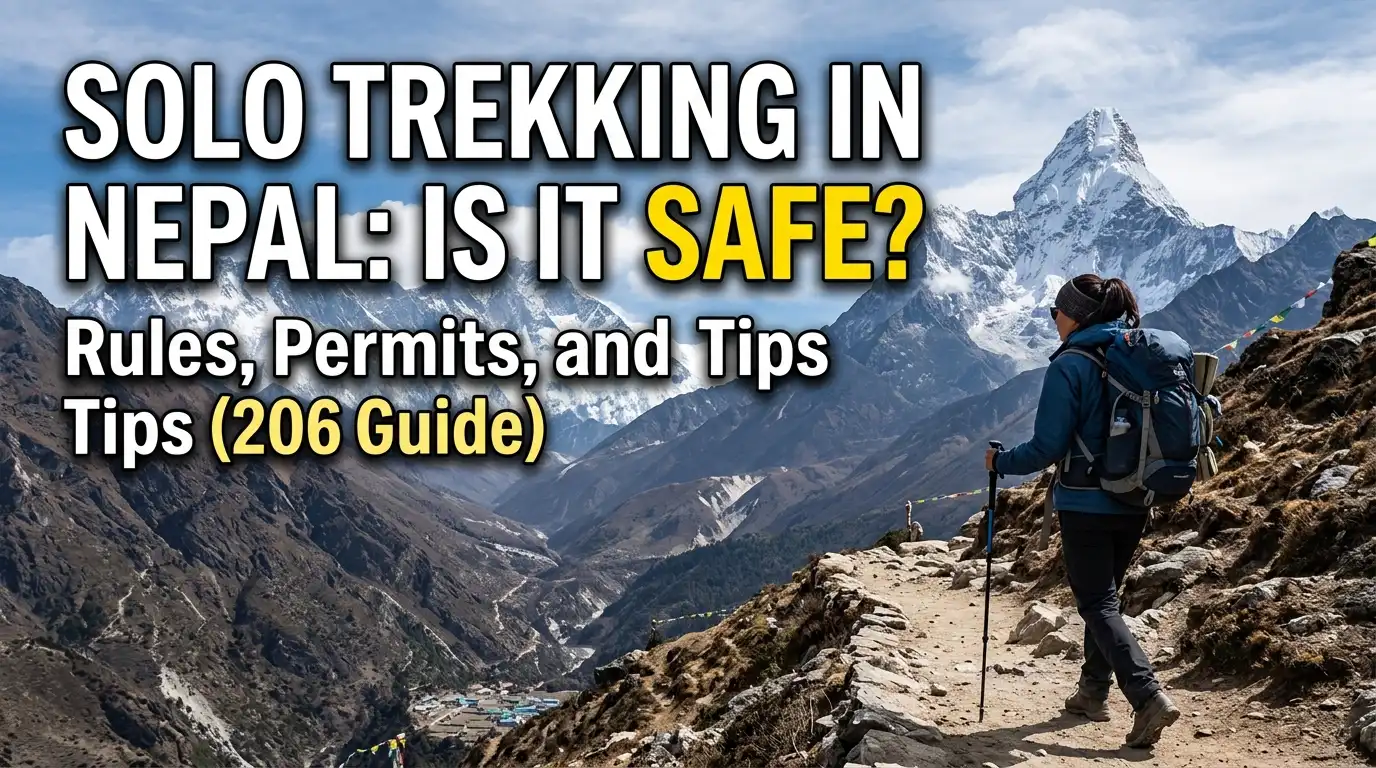
Solo Trekking in Nepal: Is It Safe? Rules, Permits and Tips (2026 Guide)

I get this question a lot. Someone finds out I’ve trekked in Nepal and immediately asks, “But is it actually safe to go alone?”

And my answer is always the same. Yes. But you need to know what you’re walking into.

Nepal in 2026 is not the Nepal of ten years ago. The rules have changed, the permit system has changed, and if you’re planning a solo trek based on a blog post from 2022, you’re going to hit walls at checkpoints that nobody warned you about. This guide is written to fix that.

So, Can You Actually Trek Alone in Nepal?

Short answer — yes, foreigners can trek alone in Nepal.

But here’s the thing: most travel blogs don’t explain clearly. “Solo trekking” in Nepal now means you travel without a companion. It does not mean you travel without any local support. Since April 2023, the government has made it compulsory for foreign trekkers to hire a licensed guide on trails that pass through national parks, conservation areas, and restricted zones.

Now, before you close this tab — that’s not as bad as it sounds. You’re still doing your own itinerary, walking at your own pace, sleeping where you want. You just have a licensed professional walking with you on regulated routes.

What actually changed recently is bigger news. In March 2026, Nepal scrapped the old rule that required at least two foreign trekkers on a single restricted area permit. Upper Mustang, Manaslu, Dolpo, and Tsum Valley — all of these remote zones now allow solo permit applications. One person, one permit. That was genuinely not possible before 2026.

So yes — solo trekking in Nepal is allowed, and it’s more accessible for lone travellers now than it’s ever been.

Is Nepal Safe for Solo Trekkers? Real Talk.

Let me say something that gets glossed over in most travel content.

Nepal is one of the safest countries in Asia for solo travellers. The kind of petty crime that ruins trips in other popular destinations — pickpocketing, tourist scams, street harassment — is genuinely rare here. Mountain villages run on hospitality. Teahouse families along the main trails have been hosting trekkers for decades, and they take that seriously. You are not a target in Nepal. You are a guest.

What demands serious respect is the landscape.

Altitude sickness is the number one reason trekkers end up in trouble in Nepal. Not bad people. Not bad luck. Altitude. And the thing about it is that it doesn’t care how fit you are. You can run marathons and still get hammered by altitude if you ascend too fast. The rule that actually works is simple — don’t gain more than 500 metres per day once you’re above 3,000 metres, and schedule proper rest days at Namche Bazaar or Manang, depending on your route. Ignore this, and you will suffer for it.

The weather is unpredictable in ways that catch first-timers off guard. Himalayan mornings are usually clear and gorgeous. By early afternoon, the clouds build. By 3 pm in certain seasons, you might be in rain, hail, or near-whiteout conditions on a pass that looked completely fine at breakfast. The trekkers who consistently have good experiences in Nepal are the ones who start walking by 6 or 7 am and are already at their next teahouse before things turn.

Getting lost is also more real than people think. On busy routes like Everest Base Camp, the trail is obvious. On quieter sections, at junctions, in fog or snow, things get confusing fast. Offline maps saved my trip more than once. Download Maps.me or Gaia GPS in Kathmandu before you leave the city. Don’t trust the phone signal above a certain elevation.

The safety verdict? Popular routes in Nepal are genuinely safe with proper preparation. Remote restricted zones carry a higher real risk, which is exactly why mandatory guides exist there in the first place.

Nepal Trekking Rules for 2026 — What You Actually Need to Know

The core rule is this. Every non-Nepali trekker inside a national park, conservation area, or restricted zone must hire a licensed guide or porter-guide through a government-registered trekking agency. This has been the law since 2023, and it is enforced. People do get turned back at checkpoints. Don’t be that person.

The March 2026 change lifted the two-foreigner minimum on restricted area permits. Thirteen districts that were previously group-only are now open to solo permit holders. You still need a licensed guide. You still need a TAAN-registered agency to arrange the paperwork. But the solo barrier on these incredible remote routes is gone.

Also new for high-altitude routes in 2026 — helicopter evacuation insurance above 4,000 metres is now a legal requirement when you apply for permits. This gets checked. Sort it before you arrive in Nepal. It’s not expensive and genuinely matters if something goes wrong above Gorak Shep.

Where guides are legally mandatory and enforced hard: Everest Base Camp, the entire Khumbu region, and all restricted area destinations, including Upper Mustang, Manaslu Circuit, Dolpo, and Kanchenjunga.

Where national policy requires guides but checkpoint enforcement varies: Annapurna region, Ghorepani Poon Hill, Langtang Valley.

Fully unregulated for foreign trekkers in Nepal: nowhere in 2026.

Permits for Solo Trekking in Nepal — Here’s What You Need

Every region has its own permit requirements, and that’s where the confusion usually comes from. Here’s a clean breakdown.

TIMS Card

This registers your details — name, route, emergency contact — into a national database. If you go missing, this is the first document search and rescue teams look up. Cost is NPR 2,000 to NPR 3,000 for foreign nationals, depending on whether you apply through an agency or independently. One exception — the Everest region no longer uses TIMS. Local municipality permits have taken their place there.

National Park and Conservation Area Permits

Annapurna Conservation Area Permit costs NPR 3,000, which is roughly USD 23. Sagarmatha National Park for the Everest route is the same base rate plus 13% VAT. In the Khumbu region, you also need the Khumbu Pasang Lhamu Rural Municipality permit at NPR 3,000, checked at Monjo before the park entrance. Langtang National Park follows a similar structure.

Restricted Area Permits

Upper Mustang moved in 2026 from a flat USD 500 for the first ten days to USD 50 per day based on actual time spent. For a short trip, this is significantly more affordable. Manaslu Circuit costs USD 100 per week during peak season (September to November) and USD 75 per week the rest of the year. All restricted area permits go through a TAAN-registered agency only — no self-application option exists.

Trek Permits Required Approx Cost (USD)
Ghorepani Poon Hill ACAP + TIMS ~$38
Annapurna Base Camp ACAP + TIMS ~$45
Everest Base Camp SNP + Khumbu Municipality ~$30
Langtang Valley Langtang NP + TIMS ~$38
Manaslu Circuit TIMS + Conservation + RAP $175+
Upper Mustang ACAP + TIMS + RAP $50/day

Best Solo Treks in Nepal — Honest Takes on Each Route

Ghorepani Poon Hill — 3 to 5 days
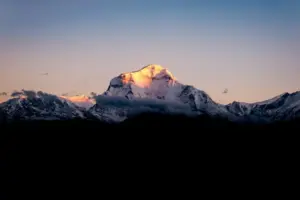
Poonhill-trek-through-pokhara

If this is your first time trekking at altitude, do this one. The trail is well-marked, teahouses are solid, and the altitude stays manageable. The sunrise from Poon Hill at 3,193 metres — Dhaulagiri and Annapurna South lit up in orange and pink — is genuinely one of those views you’ll talk about for years. No experience required, just reasonable fitness.

Langtang Valley — 7 to 10 days
solo-trekking

Langtang is criminally underrated, and I will die on this hill. It’s a few hours by road from Kathmandu, far less crowded than the Annapurna and Everest corridors, and the Tamang culture up in these villages is something the busier routes simply can’t offer anymore. Altitude gets serious above Kyanjin Gompa — plan acclimatisation carefully and don’t rush it.

Annapurna Base Camp — 10 to 12 days
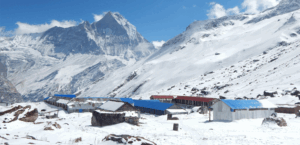
This is a proper trek. The sanctuary section near base camp — a natural amphitheatre with peaks above 7,000 metres on every side of you — is one of those places where you stop and just stand there for a while because no photo is going to capture what you’re actually seeing. Spring and autumn are the windows. Don’t attempt this in the monsoon season.

Everest Base Camp — 12 to 14 days
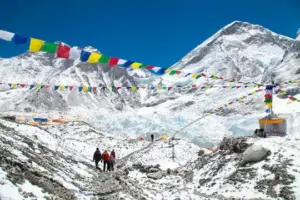
solo-trekking

The route that everyone knows and that still somehow delivers. Licensed guide enforcement is real and thorough in the Khumbu in 2026. Acclimatisation days at Namche Bazaar and Dingboche are not negotiable — skip them, and you will pay for it at a higher altitude. Physically, it’s within reach for most people with decent fitness. Mentally, it requires patience with the schedule.

Not for First-Time Solo Trekkers

Manaslu Circuit and Upper Mustang are both worth doing at some point. They are not beginner territory. Logistics are complex, restricted area permit paperwork is involved, and these are the kind of treks that genuinely benefit from working with an agency that has done them before.

What Does Solo Trekking in Nepal Actually Cost?

On popular routes, budget USD 25 to USD 50 per day.

Teahouse beds run USD 5 to USD 15 per night. Meals — and dal bhat with its unlimited rice refills is the best trekking food deal on earth — cost USD 4 to USD 8 at most teahouses on main routes. Permits add USD 40 to USD 80, depending on the region. A licensed guide is USD 25 to USD 35 per day and is now effectively a mandatory budget line on most regulated routes.

Transport from Kathmandu or Pokhara to the trailhead is USD 15 to USD 50, depending on whether you take a bus or fly.

For a 12-day Everest Base Camp solo trek — guide, permits, accommodation, food, local transport — expect to spend USD 900 to USD 1,400 before your international flights.

Tips for Solo Trekking in Nepal That Nobody Bothers Writing Down

Tell the teahouse owner where you’re going each morning. Not just someone back home — the people at your lodge that night. People notice when an expected trekker doesn’t show up. This informal check-in system has helped locate missing trekkers more than once.

Sort offline maps in Kathmandu before you get anywhere near the mountains. Maps.me and Gaia GPS both work well. Cell signal on high passes is wishful thinking. You want your route saved and accessible without internet before you need it.

Start walking early. Every day. I cannot stress this enough. Himalayan mornings are clear and stable. Afternoons are when things change. Most dangerous situations on Nepal’s trails involve trekkers who started late and walked into conditions they didn’t have the light or energy to handle.

Take altitude acclimatisation seriously before any symptoms arrive. The 500 metre rule above 3,000 metres exists for a reason. Rest days are not wasted days. If you feel symptoms of altitude sickness — real symptoms, not just tiredness — go down, not to bed at the same elevation.

Get travel insurance that covers helicopter evacuation above 4,000 metres and check the policy actually covers Nepal mountain rescue. This is legally required for high-altitude permit applications in 2026. And beyond the legal requirement, it’s just the intelligent thing to do when you’re walking around at 5,000 metres.

Pack light, but don’t be clever about your rain layer or sleeping bag. Extra weight is brutal above 4,000 metres. Wet gear from a cheap jacket is worse.

Solo vs Guided Trekking in Nepal — Which Makes More Sense?

Category Solo (with mandatory guide) Full Guided Package
Cost More affordable overall Higher, everything included
Flexibility Walk at your own pace Set an itinerary with the group
Permit handling You sort through an agency The agency does everything
Best for Experienced independent trekkers First-timers or those who prefer ease

Honestly, in 2026, the line between these two is thinner than it used to be. Because a guide is mandatory on most major routes anyway, you’re already getting professional local support regardless of which option you choose. The real decision is whether you want to handle logistics yourself or hand that off completely.

FAQs — Solo Trekking in Nepal

Can I do the Everest Base Camp alone?
Without a travel companion, yes. Without a licensed guide, no. Guide requirements are enforced at multiple checkpoints on the Khumbu route in 2026. No exceptions.

Is the TIMS card still required?
On most routes, yes. The Everest region is the exception — local municipality permits replaced TIMS there. Confirm requirements for your specific route with your agency before leaving.

Is Nepal safe for female solo trekkers?
Yes. Nepal is genuinely one of the safer countries in Asia for women travelling alone. Main trekking routes have consistent teahouse coverage, locals are welcoming, and a licensed guide adds a meaningful practical safety layer.

Best time to go?
October and November are the clearest skies and driest conditions. March to May is the second window with rhododendrons blooming at lower elevations. Monsoon and winter are possible but much harder — not recommended for solo first-timers.

Bottom Line — Should You Trek Solo in Nepal?

Yes. If the route is right and the preparation is real.

Poon Hill, Langtang, Annapurna Base Camp, Everest Base Camp — all realistic for solo trekkers who follow the 2026 rules, hire a licensed guide, and take the altitude seriously. You don’t need a group. You don’t need a companion. You need preparation, current information, and local support on the ground.

For restricted areas like Upper Mustang or Manaslu Circuit, do it through an agency that has handled these permits before. The complexity is real, and the margin for error in remote zones is small.

The mountains will wait for you. Go when you’re ready. Go prepared.

Want someone to sort the permits, licensed guide, and route planning for your solo Nepal trek without the stress? Green Horizon Tour works with solo trekkers and knows these trails properly. Reach out before you book anything.
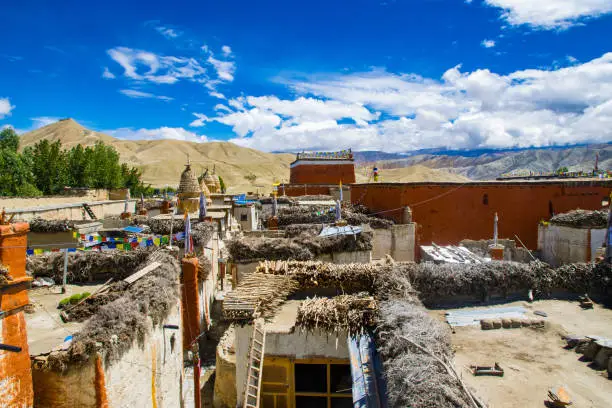
Upper Mustang Trek Guide (2026): Cost, Route, Permits & Best Time

Nobody warned me the cliffs would be red.

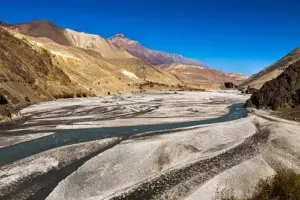
I’d spent weeks reading about Upper Mustang before I went, looking at permit costs, checking itineraries, and watching whatever footage existed online. And somehow, standing in the Kali Gandaki valley with those copper-red canyon walls rising on both sides of me, I was still not prepared for what the place actually looked like.

That’s Upper Mustang. It does that to people.

If you’re trying to figure out whether this trek is worth the planning and the cost, you’re in the right place. I’ll go through everything, permits, route, seasons, packing, the works. This Upper Mustang trek guide will help you understand the full journey. This Upper Mustang trek guide covers everything you need to know before you go. But I’ll also be straight with you about the things other guides skip over, because there are a few.

Why the Upper Mustang Trek Guide Is Nepal’s Most Mysterious Adventure

Here’s something worth knowing upfront. Upper Mustang is not the Nepal that most people picture. The green hills, the terraced fields, the thick jungle mist, none of that exists up here.

What you get instead is high desert. Bone dry, wind-blasted, otherworldly in a way that makes first-time visitors go quiet for a bit.

The reason for that is geography. The Annapurna and Dhaulagiri ranges sit just south, and they block the monsoon almost entirely. Upper Mustang sits in its rain shadow, which means it stays dry when the rest of Nepal is soaked, and it looks more like the Tibetan Plateau it borders than the Nepal most trekkers know.

The whole region was its own kingdom for centuries. Called Lo. Ruled by the same royal dynasty for 25 generations, based out of the walled city of Lo Manthang, running on trade revenue from the salt routes between Tibet and India. When China closed Tibet in the 1950s, the salt trade died. The economy collapsed. CIA-backed Tibetan resistance fighters used the valley as their base through the 1960s. Nepal sealed the whole region off in the late 1970s and kept it sealed until 1992.

That history matters because it’s why the place still looks the way it does. Active monasteries with murals painted in the 1400s. A walled city where the former royal palace still stands. Roughly 3,500 trekkers per year. Compare that to the 40,000-plus who walk the Annapurna Circuit, and you start to understand what the restrictions actually protect.

People call it the Last Forbidden Kingdom, and for once, that is not marketing. It earned the name honestly.

Upper Mustang Trek at a Glance

Duration 10 to 14 days trekking / 7 to 9 days by jeep
Difficulty Moderate
Highest Point Lo Manthang at 3,840m, passes up to 4,200m
Starting Point Jomsom, flight from Pokhara
RAP Permit Cost USD 50 per person per day
ACAP Permit USD 30 per person
Best Season March through November
Guide Required Yes, legally mandatory

Upper Mustang Trek Route Overview

upper-mustang-trek-guide

The flight from Pokhara to Jomsom takes around 20 minutes. Book the earliest available departure, because the Kali Gandaki wind picks up by mid-morning and later flights get cancelled more often than not.

From Jomsom, the trail moves north. Kagbeni is the first real stop and also where the Restricted Area Permit checkpoint sits. Officers check your paperwork here before you can continue north into Upper Mustang. Past that checkpoint, the landscape shifts noticeably. Less green, more dust, cliffs that keep changing colour as the light changes through the day.

The route goes through Chele, Syangboche, Ghami, Tsarang, and then Lo Manthang. On the way back, most itineraries take a slightly different path through Drakmar and Ghiling, so you’re not walking the same ground twice. It makes the return feel like a different trek rather than a reversal.

Major Villages on the Upper Mustang Trek

upper-mustang-trek

Kagbeni feels medieval because, structurally, it mostly is. Buildings pressed tight against each other, stone underfoot, a large monastery visible from the trail as you approach. The restricted zone checkpoint is here, and it is staffed properly.

Chele is usually the first overnight inside Upper Mustang, sitting in a canyon with rock walls close enough on both sides to make the sky look like a strip.

Ghami has a mani wall that stretches for hundreds of metres, one of the longest in Nepal, with prayer carvings added to it generation after generation.

Tsarang sits below a ridge monastery that earns more photographs than any single building on the route.

Lo Manthang is what the whole trek is about: four active temples, a royal palace, alleys narrow enough to brush both walls with your arms, and views from the city walls that take a moment to fully believe.

The Fascinating History of Upper Mustang

The Kingdom of Lo was founded in the 14th century. Ame Pal, the founding king, built Lo Manthang and established a dynasty that ran the region for six centuries. The salt trade between Tibet and the Indian lowlands kept the kingdom solvent. Lo controlled key points along that route and taxed the traffic.

When China moved into Tibet in the 1950s, the trade stopped. Just stopped. The economic foundation of the kingdom disappeared in a few years. Then came the CIA operation, which used the remote Mustang valleys to support Tibetan resistance fighters from the early 1960s until the operation was wound down in the early 1970s when the US and China normalised relations.

Nepal closed Upper Mustang to foreigners shortly after and kept it closed until 1992.

Nepal abolished its monarchy in 2008 when the country became a republic. The Kingdom of Lo went with it officially, though the last king, Jigme Dorje Palbar Bista, was treated as a living cultural institution by locals until he died in 2016. His portrait still appears inside homes in Lo Manthang. People speak about him with an ease and warmth that does not feel like nostalgia for a political institution. It feels more personal than that.

What six centuries of relative isolation and then a few decades of carefully managed tourism have produced is a place where the old ways are not performed for visitors. They are still the actual ways. That distinction is rarer than people realise, and it is the reason to go.

Best Seasons to Trek Upper Mustang

Spring, between March and May, is the most popular window. The weather is predictable, temperatures are manageable at altitude, and visibility is generally good. May specifically is worth timing around if possible because the Tiji Festival falls in this month. The Tiji Festival is a three-day ceremony in Lo Manthang involving masked dances and religious rituals that have been performed for centuries. In 2026, the dates are May 13 to 15. The community participates in it as something that matters, not as a cultural demonstration for arriving trekkers. The difference shows, and it changes what the experience feels like.

Monsoon between June and August is Upper Mustang’s best-kept secret, and most guides barely mention it. The Annapurna and Dhaulagiri ranges block almost all monsoon rainfall from entering the region. Pokhara is grey and wet, the Annapurna trails are slippery and crowded with people who didn’t know how to avoid them, and Upper Mustang sits in dry sunshine with barely any other trekkers on the route. Photographers specifically seek out this window for the quality of light after rare, brief showers.

Autumn, from September through November, gives the clearest mountain views of the year. Peak trekking season across Nepal, but Upper Mustang still sees a fraction of the numbers that Everest and Annapurna attract.

Winter, from December through February, is cold enough at higher elevations to require proper gear and commitment. The lower sections of the route are walkable. Most people leave this window to the ones who specifically want near-total solitude and have tested their cold-weather kit before.

How Much Does the Upper Mustang Trek Cost?

The permit structure changed significantly in late 2025, and most blogs I’ve read haven’t caught up to it yet, so I’ll be clear about what the current situation actually is.

The old system charged a flat USD 500 for ten days regardless of how long you spent inside the restricted zone. If you were in Upper Mustang for two days or nine, same price. That structure was abolished. The current rate is USD 50 per person per day, counted from when you cross the Kagbeni checkpoint heading north.

A five-day restricted zone itinerary now costs USD 250. Ten days cost USD 500. Twelve days cost USD 600. You pay for the actual days you’re there.

Upper Mustang Restricted Area Permit Cost

Expense 2026 Cost
Restricted Area Permit (RAP) USD 50 per person per day
Annapurna Conservation Area Permit (ACAP) USD 30 per person
Licensed guide USD 20 to 30 per day
Teahouse accommodation and meals USD 15 to 30 per day
Pokhara to Jomsom return flights USD 150 to 200 per person

A complete 12-day guided package from a reputable agency usually runs between USD 1,800 and USD 3,000 per person. The gap is real and comes down to group size, accommodation standard, and what the agency bundles into the package price.

Why is the Upper Mustang expensive compared to most treks in Nepal? The RAP is the straightforward answer. Government-set, non-negotiable, no agency can discount it. Add mandatory guide fees, the Jomsom flights, and the reality that teahouse infrastructure here is thinner than on the Everest or Annapurna corridors, and the total adds up quickly. The cost structure is also what keeps this place from being overrun—worth understanding before resenting it.

Permits Required for Upper Mustang Trek

Two permits, both arranged through a registered Nepali trekking agency. There is no way to apply for either independently, full stop.

The Restricted Area Permit goes through the Department of Immigration in Kathmandu or Pokhara. Processing takes two to three working days once documents are submitted. You need a passport valid for at least six months, a copy of your Nepal visa, passport photos, and travel insurance documentation. Your agency handles the submission.

The Annapurna Conservation Area Permit covers the lower sections of the route at USD 30 per foreign national, processed alongside the RAP by the same agency.

March 2026 brought one rule change worth knowing. The requirement for a minimum group of two foreign trekkers was officially removed. Solo travellers can now enter Upper Mustang accompanied only by a licensed guide. The mandatory licensed guide requirement stays exactly as it was. That part has not changed and will not.

How Difficult Is the Upper Mustang Trek?

Moderate is the honest answer, though two things catch people who’ve done other moderate Nepal treks by surprise.

The altitude is the obvious one. Passes reach around 4,200 metres, and Lo Manthang sits at 3,840 metres. These are real numbers where altitude sickness is a genuine possibility, particularly if you’re pushing the itinerary and skipping the acclimatisation days because you feel fine. Don’t skip the acclimatisation days. Feeling fine at 3,500 metres in the morning does not always predict feeling fine at 4,200 metres in the afternoon.

The wind is the less obvious one and in some ways the harder one. The Kali Gandaki corridor channels some of the strongest sustained afternoon winds in the Himalayas through a relatively narrow valley. It picks up by midday and keeps going. After a full day of walking into it, your legs feel fine, but the rest of you is worn down in a way that doesn’t happen on a calm mountain trail. Ask your guide about early starts. Getting to your overnight village before the wind peaks makes a real difference to how the afternoon feels.

Can beginners do the Upper Mustang Trek? Yes. People complete this route in their 50s and 60s regularly. Walk a lot in the months before you come. Take the acclimatisation days. Start early. That’s most of it.

Top Highlights of the Upper Mustang Trek

Lo Manthang is the reason most people come, and it delivers more than expected, which is unusual. Two full days is the minimum that does it justice. The four temples inside the walled city each have their own character. Jampa Gompa is the oldest, built in the 1400s, small and dark and serious. Thubchen Gompa has clay sculptures and restored murals that have been there since before the printing press existed in Europe. Walking the city walls in late afternoon with the Himalayan ridgeline sitting above the desert plateau behind it is the kind of view that people describe years later when asked what they remember most about Nepal.

The sky caves cut into the cliff faces throughout Upper Mustang don’t exist anywhere else in Nepal. Ancient chambers hollowed into rock walls at heights that seem impossible without modern equipment, used for burial and meditation by people who lived in this valley thousands of years before the current villages were built. Some are still being studied. Dozens are visible from the trail on a clear day.

The Kali Gandaki gorge runs between Annapurna to the east and Dhaulagiri to the west. Two of the world’s ten highest mountains. One of the deepest gorges on earth. On a clear morning, walking the valley floor with both peaks fully visible, the scale is hard to take in all at once.

And the quiet on the trail. Six hours of walking and you see maybe four other trekkers. No music from a chai shop, no group photos being organised at every viewpoint. Just you, the guide, the wind, and the red cliffs.

What to Pack for the Upper Mustang Trek?

Wind protection over rain protection. It barely rains here, but the wind is relentless and cold. A buff or light scarf for the dusty lower valley sections. Strong sunscreen and lip balm every day without exception, the altitude and dry air accelerate sunburn badly, and most people don’t bring enough. A two-litre water bottle, the gaps between villages can be longer than expected.

Trekking poles for the rocky descents toward Jomsom on the return. Proper trekking boots with ankle support rather than trail runners, the uneven rocky trail sections earn the boot weight. A sleeping bag rated to at least minus five Celsius because remote teahouse blankets in shoulder season will not do the job alone. Warm layers for evenings even in May because 3,800 metres cools down fast after sunset, regardless of how warm the afternoon was.

One thing most packing lists don’t mention: bring more cash in Nepali Rupees than you think you need. ATMs exist in Jomsom. After Jomsom, they largely stop existing.

Frequently Asked Questions About Upper Mustang Trek

Is Upper Mustang worth it?

Yes. Not worth it at any price for any traveller in any situation, but worth it for what it actually is. A place where Tibetan Buddhist culture has survived genuinely intact rather than been reconstructed for tourism. A landscape unlike anything else in Nepal. Solitude on the trail is increasingly rare anywhere in the Himalayas. The permit fees fund conservation and community programs in a region with very limited other income sources. Understanding that before the trip changes how the cost feels.

Can beginners do the Upper Mustang Trek?

Yes. No technical skills required, no prior high-altitude experience necessary. The things that matter are building real acclimatisation days into the itinerary and not treating them as optional, walking regularly for a few months before you come, and going with a guide who knows the signs of altitude sickness and takes them seriously.

Why is Upper Mustang expensive?

The Restricted Area Permit at USD 50 per person per day is the primary driver and is set by the Nepal government. No agency can reduce it. Mandatory guide fees, the Jomsom flights, and limited teahouse infrastructure compared to other Nepal trekking corridors all add to the total. The cost structure keeps annual visitor numbers low and is largely why the place still looks the way it does.

How many days do you need for the Upper Mustang Trek?

Ten days is achievable for fit trekkers who’ve already acclimatised to altitude. Twelve is more realistic for most people. Fourteen gives you room for side valleys and extra time in Lo Manthang without feeling like you’re always trying to cover ground. The time in Lo Manthang specifically is worth protecting. One day is not enough, and most people who do one day say so afterward.

Is the Upper Mustang Trek Worth It?

There’s a kind of travel where you spend the whole time checking the place against the version of it you built in your head beforehand.

Upper Mustang breaks that habit because the place is better than the version you built.

The photographs don’t capture what Lo Manthang feels like from inside it. The quiet on the trail is something a photograph cannot communicate. Standing in front of murals in Thubchen Gompa that were painted before Columbus sailed is an experience that no other Nepal trek offers. The red cliffs in the late afternoon light. The Tiji Festival, if your timing works out. This Upper Mustang trek guide is designed to help you plan better. The way the desert opens up past Kagbeni into something that feels more like Central Asia than South Asia.

The permits, the guide requirements, and the agency paperwork. None of that is an obstacle. That is what keeps this place from becoming what every other popular trek in Nepal eventually became.

Go. Plan it properly. Take the two days in Lo Manthang. Start your days early before the wind comes up.

Visit greenhorizontour.com to explore our Upper Mustang Trek packages or get in touch to build a custom itinerary around your actual dates.

Dhukpu Kunda: 5 Breathtaking Secrets of this Sacred and Authentic Hidden Gem

The Himalayas are often defined by their giants—Everest, Annapurna, and Ama Dablam. Yet, for those who seek the “Himalaya of the Soul,” the true treasures lie in the quiet, high-altitude sanctuaries that the modern world has yet to pave over. Dhukpu Kunda (also known as Dupu Kunda or Dupu Pokhari) is exactly that: a shimmering, sacred turquoise lake tucked away in the upper reaches of the Helambu Valley (Hyolmo).

Sitting at an elevation of approximately 4,050 to 4,500 meters, Dhukpu Kunda is more than just a body of water. It is a site of ancient Buddhist miracles, a theater of jagged peaks, and one of the last remaining “off-the-beaten-path” destinations within a two-day reach of Kathmandu.

When we think of trekking in Nepal, our minds often jump straight to the crowded trails of Everest or the classic circuits of Annapurna. But for those who have walked the misty ridges of the Helambu and Langtang regions, there is a different kind of magic—one that feels less like a tourist track and more like a pilgrimage into the soul of the Himalayas.

Among these high-altitude secrets is Dhukpu (or Druphug), a place where the air grows thin, the prayer flags snap in the wind, and the line between the physical and spiritual worlds begins to blur.

The Cave of Accomplishment

In the local Hyolmo dialect, Druphug translates to the “Cave of Accomplishment.” Tucked away at nearly 4,000 meters, just a steep climb above the ancient village of Tarkegyang, this isn’t just a geographical point on a map. It’s a site of deep meditation, believed to have once been the sanctuary of the great yogi Milarepa.

Stepping into the Dhukpu area feels like entering a Beyul—one of the hidden valleys spoken of in ancient texts. Here, the landscape changes from the lush, rhododendron-filled forests of lower Helambu to a rugged, alpine world of lichen-covered rocks and swirling clouds.

The High-Altitude Connection: From Dhukpu to the Lakes

What makes this region truly special is how it connects the dots between the culture of Helambu and the high-mountain drama of Langtang.

If you follow the trails higher, you eventually cross the Laurebina Pass, a challenging gateway that leads you to the shimmering, sacred waters of Gosaikunda. While the “Dudh Kunda” of Solukhumbu might be more famous by name, the high-altitude “Kundas” (lakes) of Langtang carry an energy that is impossible to ignore.

During the full moon of August, these trails come alive. You’ll find yourself walking alongside pilgrims—not just tourists—who are making their way to the holy lakes to wash away a lifetime of karma.

Why Trek Here?

  1. The Proximity: You can be at the trailhead within a few hours’ drive from Kathmandu, yet it feels worlds away from the city’s chaos.

  2. The Culture: Helambu is the home of the Hyolmo people. Their hospitality is quiet, genuine, and deeply rooted in Tibetan Buddhism.

  3. The Quiet: Unlike the “expressway” trails elsewhere, you can walk for hours here with nothing but the sound of your own breath and the distant chime of yak bells.

1. The Mystique of Helambu: Land of the Hyolmo

Before reaching the lake, one must understand the landscape. Helambu is the ancestral home of the Hyolmo people. Their culture is a rich tapestry of Tibetan Buddhism, unique mountain architecture, and a dialect that echoes the high plateau.

Unlike the commercialized hubs of Lukla or Namche, Helambu feels like a living museum. The trails are lined with ancient mani walls (prayer stones) and chortens. To trek toward Dhukpu Kunda is to walk through a “Beyul”—a hidden valley or “hidden land” blessed by Guru Rinpoche as a place where the physical and spiritual worlds meet.

2. The Spiritual Significance of Dhukpu Kunda

In the Himalayan tradition, high-altitude lakes are rarely just geographical features; they are considered the abodes of deities or the locations of great spiritual events.

The Legacy of Guru Rinpoche

Legend holds that Guru Padmasambhava (Guru Rinpoche), the lotus-born master who brought Buddhism to Tibet, spent significant time meditating in the caves near Dhukpu Kunda during the 8th century. Local elders tell stories of his “hidden treasures” (terma) buried within the rocks of the surrounding mountains.

The 108 Monks

The area is famously associated with the Dupu Cave. It is said that 108 highly realized Buddhist monks once lived in these caves for over three years, practicing intensive meditation. For the spiritual seeker, the vibration of the area is distinct—a profound silence that feels heavy with history.

3. Why Dhukpu Kunda is the Ultimate “Hidden Gem.”

If you are tired of the “trekker traffic jams” of the Everest Base Camp trail, Dhukpu Kunda offers a refreshing alternative.

Unparalleled Views

From the ridges above the lake, the horizon explodes with white peaks. You aren’t just looking at the mountains; you are surrounded by them:

  • Jugal Himal Range: The closest and most imposing neighbors.

  • Dorje Lakpa (6,966m): Known for its pyramid-like shape.

  • Gangchempo (6,387m): A stunning peak often called the “Yellow Mountain.”

  • Gaurishankar: Visible on clear autumn days.

Authentic Cultural Immersion

Because the Dhukpu region isn’t saturated with tourists, the hospitality you receive in villages like Tarkeghyang and Melamchi Ghyang is genuine. You aren’t just a “customer”; you are a guest in a Hyolmo home.

4. How to Reach Dhukpu Kunda: The Route

There are several ways to approach the lake, but the most rewarding involves a loop through the heart of Helambu.

The Standard Itinerary (Approx. 6–8 Days)

  1. Kathmandu to Sundarijal / Melamchi Pul: The starting point.

  2. Chisapani: A classic first stop with views of the Langtang range.

  3. Kutumsang: Entering the Langtang National Park.

  4. Tharepati: A high ridge (3,640m) that serves as the junction for the Gosainkunda and Helambu trails.

  5. Melamchi Ghyang / Tarkeghyang: The cultural hubs.

  6. Base of Dhukpu: A steep ascent into the wilderness.

  7. Dhukpu Kunda: The final destination before descending back toward the valley floor.

5. Biodiversity: Red Pandas and Rhododendrons

The trail to Dhukpu Kunda passes through some of Nepal’s most pristine temperate forests.

  • Flora: In April, the hills are on fire with rhododendron blooms (the national flower of Nepal) in shades of crimson, pink, and white.

  • Fauna: The area is a prime habitat for the Red Panda. While they are shy and rare to spot, the quiet nature of this trail increases your chances. You may also spot the Himalayan Tahr (wild goat) and the colorful Danphe (Lophophorus).

6. Planning Your Trip: Essential SEO Tips for Travelers

When searching for this trek, keep in mind that spelling can vary. You might see it listed as:

  • Dupu Pokhari Trek

  • Helambu Sacred Lake Trek

  • Dhukpu Kunda Pilgrimage

When to Go

  • Autumn (Oct–Nov): This is the “Golden Window.” The monsoon rains have washed the dust away, leaving the sky a deep cobalt blue and the mountains crystal clear.

  • Spring (Mar–May): Best for nature lovers who want to see the forests in full bloom.

Level of Difficulty

While not as high as Thorong La Pass, the ascent to Dhukpu Kunda is Moderately Strenuous. You will be climbing to nearly 4,500m, so acclimatization is key. One should not rush the ascent from Tarkeghyang.

7. What to Pack for the High Altitude

The weather at Dhukpu Kunda can change in minutes. Even in the sun, the wind at 4,000m+ is piercing.

  • Layering is Key: A moisture-wicking base layer, a warm fleece middle, and a wind/waterproof outer shell.

  • Footwear: Broken-in trekking boots with good ankle support.

  • Sustainability: Carry a reusable water bottle and purification tablets. Helambu is a fragile ecosystem; let’s keep it “hidden” and clean.

8. Summary: Why You Should Go Now

Dhukpu Kunda represents the “Old Nepal.” It is a place where you can still hear the wind whispering through prayer flags without the hum of helicopters or the chatter of large groups. It is a journey for the photographer, the spiritual seeker, and the trekker who wants to see the Himalayas as they were decades ago.

If you are looking for a trek that combines unspoiled nature, deep Buddhist heritage, and raw mountain beauty, Dhukpu Kunda is waiting.

A Note for the Soul (and the Traveler)

Trekking to Dhukpu and through the Helambu circuit isn’t about checking a “base camp” off a list. It’s about the slow morning tea in a smoke-warmed kitchen, the sight of Langtang Lirung peaking through the mist at dawn, and the feeling of accomplishment when you reach a sacred cave that has seen centuries of seekers.

If you’re looking for a journey that offers more than just a photo op—a journey that offers a bit of peace—the high ridges of Helambu are waiting.

FAQ about Dhukpu Kunda

Q: Do I need a guide for Dhukpu Kunda?

While experienced trekkers can navigate the main Helambu circuit alone, reaching Dhukpu Kunda involves less-marked trails. A local guide is highly recommended to ensure you don’t miss the sacred caves and to help with navigation in the higher altitudes.

Q: Is there accommodation at the lake?

There are no luxury teahouses at the lake itself. Most trekkers camp or stay in very basic seasonal shepherd huts or monasteries nearby. Expect a rustic, authentic experience.

Q: What permits are required?

You will typically need the Langtang National Park Entry Permit and the TIMS (Trekkers’ Information Management Systems) card.

Dhukpu Kunda is more than a destination; it’s a transition. It transitions you from the noise of the city to the silence of the peaks, and from the mundane to the miraculous.

The Ultimate Guide to Trekking in Nepal: Do You Really Need a Guide in 2026?

Nepal is often described as the “Roof of the World.” For decades, it has served as a sanctuary for those seeking to test their limits against the backdrop of the planet’s highest peaks. From the rugged beauty of the Everest Base Camp to the spiritual serenity of the Annapurna Sanctuary and the mystical, rain-shadowed valleys of Upper Mustang, the Himalayas offer an experience that is as much internal as it is physical.

However, as you sit down to plan your expedition, you will inevitably hit the most debated topic in the trekking community: Do you need a guide in Nepal?

In 2026, the answer is more complex than a simple “yes” or “no.” Between shifting government regulations, evolving safety standards, and a new emphasis on sustainable tourism, the choice you make will define your entire Himalayan experience. This comprehensive guide explores every angle of this decision, from legal mandates and costs to safety protocols and cultural depth.

For years, Nepal was a haven for “Free Individual Trekkers” (FITs). You could grab a backpack, buy a map in Thamel, and head into the mountains. However, following several high-profile disappearances of solo trekkers and the increasing cost of search-and-rescue operations, the Nepal Tourism Board (NTB) transitioned to a mandatory guide policy.

The Current Mandate

As of March 2026, the Nepal government has fully standardized the requirement for all foreign trekkers to be accompanied by a government-licensed guide when entering National Parks and Conservation Areas.

This policy covers the “Big Three” regions:

  1. Sagarmatha (Everest) Region

  2. Annapurna Region

  3. Langtang Region

Why the Change?

The shift wasn’t just about bureaucracy; it was about Safety and Sustainability.

  • Safety: Every year, solo trekkers went missing due to sudden blizzards or altitude-induced disorientation. Having a guide ensures that there is always a professional on-site to initiate a rescue.

  • Economic Impact: Hiring a guide ensures that the tourism dollar stays within the local mountain communities, providing livelihoods for thousands of families in high-altitude villages.

  • Environmental Protection: Guides are trained in “Leave No Trace” principles, ensuring that the fragile alpine ecosystem isn’t littered with waste.

2. The Practical Advantages: Why a Guide is Your Best Asset

Even if it weren’t a legal requirement, most experienced Himalayan veterans would still recommend a guide. Here is why:

A. Mastering the “Silent Killer”: Altitude Sickness

Acute Mountain Sickness (AMS) is the primary risk for anyone trekking above 3,000m. The symptoms—headache, nausea, and dizziness—can quickly escalate into High Altitude Cerebral Edema (HACE) or High Altitude Pulmonary Edema (HAPE), both of which can be fatal.

A licensed guide is trained to:

  • Monitor your oxygen levels: Most guides now carry pulse oximeters to check your blood oxygen saturation every evening.

  • Enforce acclimatization: They know exactly where you should sleep to follow the “climb high, sleep low” rule.

  • Decide when to turn back: In the “death zone” of ego, a guide provides the objective voice of reason when you are too exhausted to realize you are in danger.

B. Navigation in Unpredictable Terrain

Himalayan trails are dynamic. A path that was clear yesterday could be buried under a landslide or a sudden October snowstorm today.

  • Local Knowledge: Guides know the “shortcuts” and the safer alternative routes that don’t appear on paper maps or GPS apps.

  • Winter/Monsoon Shifts: During the shoulder seasons, many high passes (like Thorong La or Cho La) become treacherous. A guide’s ability to read the clouds and the wind can be the difference between a successful crossing and a dangerous retreat.

C. The Bridge to the Culture

Without a guide, you are merely a spectator. With a guide, you are a guest.

  • Language Barrier: While many teahouse owners speak basic English, the true stories of the mountains are told in Nepali, Sherpa, or Gurung. Your guide acts as a translator, allowing you to have meaningful conversations with the monks at Tengboche or the farmers in the Manang valley.

  • Spiritual Context: Why do you walk clockwise around a stupa? What do the different colors of prayer flags represent? A guide provides the context that turns a “hike” into a pilgrimage.

3. Logistical Peace of Mind

The administrative side of trekking in Nepal has become increasingly digitized in 2026. The days of standing in long lines at the tourism office in Kathmandu are mostly gone, but the digital systems can be finicky for foreigners.

E-TIMS and Permits

The Digital Trekkers’ Information Management System (E-TIMS) is now the standard. These permits are linked to your guide’s license. If you are with an agency, they handle all of this for you. You simply provide your passport copy and photos; they provide the paperwork that gets you through the checkpoints.

Securing the Best Teahouses

In peak months (October and November), the popular routes like the Annapurna Circuit or the Everest Base Camp trail are incredibly crowded.

  • The “Guide Network”: Guides use their mobile phones to call ahead to the next village. Because they have long-standing relationships with lodge owners, they can secure a room for you, while independent travelers might find themselves sleeping on a dining room bench.

  • Food Safety: Guides know which kitchens maintain the highest hygiene standards and which “special of the day” is actually fresh.

4. Understanding the Costs: Budgeting for 2026

Trekking in Nepal remains one of the best value-for-money adventures in the world, but you must budget correctly for your support staff.

Daily Rates for Trekking Staff

Position Daily Rate (USD) Responsibilities
Professional Licensed Guide $35 – $55 Navigation, safety, logistics, and in-depth cultural education.
Porter-Guide (Hybrid) $25 – $40 Carries a limited load (up to 12kg) and provides basic guidance in English.
Porter $20 – $30 Carries your heavy gear (up to 20kg). Does not usually speak English.

Tipping Culture

Tipping is not just “extra”—it is an expected part of the mountain economy. In 2026, the standard tip for a guide is roughly 15% to 20% of the total cost of the trek. This is usually presented in a “tipping ceremony” on the final night of the trek.

5. Decision-Making: Should You Go “Solo-Guided” or in a Group?

Since you now need a guide by law, the real choice is about the style of your trek.

The Case for Private Guided Treks

If you value privacy and flexibility, hiring a private guide is the best option.

  • Custom Pace: If you find a village you love, you can stay an extra day. If you’re feeling strong, you can push a little further.

  • One-on-One Learning: You have the undivided attention of an expert who can teach you about Himalayan flora, fauna, and history.

The Case for Group Expeditions

Joining a group (fixed departures) is ideal for solo travelers who want to meet like-minded people.

  • Lower Costs: You share the cost of the guide and potentially some transport.

  • Shared Motivation: When the trail gets steep and the air gets thin, having a “trail family” to cheer you on is incredibly motivating.

6. How to Choose a Guide and Agency

Not all guides are created equal. To ensure a high-quality experience, follow these 2026 vetting standards:

  1. Check the License: A legitimate guide must carry a license issued by the Ministry of Tourism and the Nepal Academy of Tourism and Hotel Management (NATHM). Ask for a photo of their ID.

  2. Verify the Agency: Ensure the trekking company is a member of TAAN (Trekking Agencies’ Association of Nepal). This ensures they pay their staff fair wages and provide them with proper insurance and gear.

  3. Insurance is Mandatory: Do not hire a “freelance” guide off the street in Thamel. If they get injured or suffer from altitude sickness, you could be legally and financially responsible for their evacuation. Reputable agencies provide full insurance for their staff.

7. The Final Verdict

In the modern era of Himalayan trekking, the question is no longer about whether you can navigate a trail with a map. It’s about being a responsible traveler who values safety, cultural immersion, and local economic support.

Hiring a guide is the single most impactful thing you can do to ensure your Nepal trek is successful. You aren’t just paying for someone to show you the way; you are paying for a safety officer, a translator, a storyteller, and a friend.

Plan Your Journey with Green Horizon

At Green Horizon, we specialize in creating authentic, safe, and deeply personal trekking experiences. Our guides are not just employees; they are locals who have grown up in the shadow of the peaks they walk. We handle every detail—from your E-TIMS permits and internal flights to your acclimatization schedules—so you can simply breathe in the mountain air and enjoy the journey.

Contact Us to Start Your Adventure:

Ready to stand at the base of the world’s highest mountains? Reach out today for a free itinerary consultation!

Frequently Asked Questions (FAQ)

1. Can I still trek solo in the Everest region?

While the local municipality in Everest (Khumbu) sometimes has slightly different rules than the central government, the 2026 trend is toward mandatory guidance for all. It is highly recommended to check with us 30 days before you depart for the absolute latest local policy.

2. What happens if I don’t hire a guide?

You will likely be stopped at the first National Park checkpoint (e.g., Monjo for Everest or Jiri/Birethanti for Annapurna). Without a registered guide and a valid E-TIMS card, you will be denied entry and potentially fined.

3. Does my guide need to be from my specific trekking region?

Not necessarily, but it helps. A Sherpa guide for the Everest region or a Gurung guide for the Annapurna region often provides a much deeper level of local “insider” knowledge.

4. Is there a difference between a “Guide” and a “Leader”?

In larger expeditions, a “Leader” is often a highly experienced mountaineer with advanced medical training, while a “Guide” focuses on the daily trail navigation and logistics. For standard treks, a licensed trekking guide is more than sufficient.

5. How do I pay my guide?

Usually, you pay the trekking agency the contract price, and the agency pays the guide’s salary. However, tips should be given in cash (Nepali Rupees) directly to the guide at the end of the trek.

Have you trekked in Nepal before? What was the most valuable thing your guide taught you? Share your experience in the comments below!

Mother’s Day Reflection: 5 Powerful Truths About a Mother’s Love

She Never Asked for a Thank You

A Mother’s Day reflection

Mother’s Day is often filled with flowers, cards, and celebration. But there is a particular kind of love that does not announce itself. There is a particular kind of love that does not announce itself. It does not arrive at the door with flowers or a card. It does not sit down at the dinner table and say, look at everything I have done for you. It simply shows up every single morning, before anyone else is awake, and it gets to work.

That is the love I grew up inside of without knowing it. The love my mother gave me so quietly and so completely that I mistook it for the way things just were.

I was probably in my late twenties the first time I really stopped and thought about what it must have cost her. Not in money. Sometimes, it’s only when you’re far from home—on a long journey or in the mountains—that Mother’s Day begins to feel different. In everything else. Moments like these often come to you when you’re far from home, like during a long journey through the Everest Base Camp.

It’s strange how Mother’s Day, more than any other time, makes you revisit the smallest memories.

The Things She Carried

mother's-day

My mother used to wake up before the sun did. I know this not because I saw it, but because I never once went to the kitchen in the morning and found it empty. There was always something warm already on the stove. There was always a presence there, faintly moving, quietly preparing. I thought that was just what mornings looked like.

She carried our schedules in her head like a second brain. She remembered which teacher liked which format for homework. She knew that I hated the seam of my socks and would carefully turn them inside out every morning before I woke up. She remembered my best friend’s allergies, my brother’s fear of loud noises, and my father’s preference for tea over coffee on rainy days. She held all of this, all of us, without a notebook or a system. Just in that quiet, exhausted, reliable mind of hers.

What I understand now, and could not have understood then, is that she must have been tired. Not just physically. The kind of tired that comes from being needed so completely by so many people that your own needs become background noise, then silence.

The Conversations We Did Not Have

One of the stranger things about growing up is the way you slowly realize your parents existed before you did. That they had ambitions and heartbreaks and favourite songs and whole chapters of life that had nothing to do with being your parent.

I once found a photograph of my mother when she was maybe twenty-three. She was laughing at something off camera, hair loose, completely at ease with herself. I looked at it for a long time. I could not reconcile the person in that photograph with the one who packed my school bag and argued with the electric company, and stayed up when I had a fever. Both were real. I had only ever seen one of them.

We do not ask our mothers who they are. We ask them for things. We ask them to fix things, remember things, approve of things, and worry about things. And they answer, usually, because that is what they have become to us. The one who answers.

There are things I wish I had asked her earlier. What she wanted to do when she was young, and the world still felt like it was hers to choose from. Whether she was scared when she became a mother. Whether there were moments she missed her own mother with a grief so physical it felt like a bruise. I ask her some of these things now. Her answers surprise me every time.

What Motherhood Actually Looks Like Up Close

Now that some of my friends are mothers, I watch them with a new kind of attention. I notice the moment they are in the middle of a sentence, and their child calls for them, and they stop, mid-thought, and go, just like that. The sentence does not get finished. They do not seem to notice.

The pivot is so automatic it looks like breathing.

I notice the way they study their children when the children are not watching. The way they memorize them. There is something almost scientific about it, and something almost devotional.

I think of all those years I was mesmerized by someone without knowing it. All those small moments that meant nothing to me and everything to her. The first time I tied my own shoes. The way I mispronounced certain words well into my childhood, and she never corrected me, because she admitted years later, she thought it was too lovely to fix.

She was keeping a record I never knew existed. And somewhere inside her, she still has it.

The Day I Finally Said It Out Loud

A few years ago, I called my mother on an ordinary Tuesday. No occasion. I just called because I was thinking about her, and I thought, for once, I should say it rather than assume she knows it.

I told her I had been thinking about all the mornings she woke up before everyone else. About the sock seams. About the photograph where she was laughing. I told her I understood now, or was beginning to, what it meant to put people before yourself so consistently that you stopped counting it as sacrifice and just called it Tuesday.

She was quiet for a moment. Then she said something I think about often. She said, I do not do it for the thank yous. I do it because you are my favourite thing that has ever happened to me.

That is it, really. That is the whole architecture of it. She never needed me to understand. She just needed to show up, and she did, and she still does.

To Every Mother Reading This

mother's-day

I know Mother’s Day can be a complicated thing. For some, it is a celebration. For some, it is grief. For some, it is both at once, which is perhaps the most honest way to hold any important relationship.

But if there is someone in your life who has mothered you, in whatever form that took, I think today is worth more than a card or a bouquet. I think it is worth a phone call where you say the actual thing. Where you tell them you see what they did. You see what it costs. And you are grateful not in the generic way, but in the specific way. The way that names the sock seams and the early mornings and the photograph and all the ordinary Tuesdays.

Because the thing about mothers is that they already know you love them. They have always known. What they do not always know is that you noticed. And noticing, it turns out, might be the whole gift. This Mother’s Day, I think it is worth more than a card or a bouquet. Because the thing about mothers, especially on Mother’s Day, is that they already know you love them.

Happy Mother’s Day.


Restricted Trekking Routes in Nepal: Complete Guide (Permits, Cost & Rules)

Nobody told me about the checkpoints until I was already planning the trip.

I’d been reading about Upper Mustang for weeks, convinced I’d just fly into Pokhara, find a guide in the bazaar, and figure the rest out as I went. That’s how I’d done Annapurna. Worked fine. I assumed Nepal was Nepal.

It’s not that simple with restricted areas. Not even close.

Restricted trekking zones are government-controlled regions where the rules are actually enforced. Not the polite suggestion kind of rules. The kind where uniformed officers at staffed checkpoints turn you around if your paperwork isn’t exactly right. I know someone this happened to. Two days into the approach, sent back to Kathmandu, and the permit fees were gone.

So this guide exists to make sure that doesn’t happen to you. It covers what these areas actually are, which ones are worth the cost, what permits you need. and what they currently cost in 2025 and 2026, and the rules you genuinely cannot work around.

Why Some Parts of Nepal Are Off-Limits Without Special Permission

Nepal has fifteen officially restricted trekking zones. To enter any of them, you need something called a Restricted Area Permit, which comes from the Department of Immigration in Kathmandu.

The catch that surprises most people: you cannot apply for this yourself. There’s no online form, no counter at the airport, no way to sort it independently once you’re already in the country. It has to go through a registered Nepali trekking agency that submits your documents to the immigration department on your behalf. This is not a formality you can skip or delay until you arrive.

Why do these zones exist in the first place? Three main reasons. A lot of restricted areas share a border with Tibet, and the Nepali government keeps a close track of movement through those corridors. Cultural reasons matter too — communities in places like Tsum Valley and Upper Mustang have maintained living traditions for centuries partly because outside influence has stayed low, and the permit system is one of the mechanisms keeping it that way. And then there’s the environment. Dolpo and Kanchenjunga hold ecosystems with wildlife that has largely disappeared from the rest of South Asia. Low visitor numbers are part of why they’re still there.

The money from your permit fees goes somewhere real, for what it’s worth. Local schools, trail maintenance, and conservation programs in the areas you’re walking through.

Upper Mustang

This is the one people know about, even if they don’t know the details.

The region was completely sealed off to foreign visitors until 1992. Not restricted — sealed. And the landscape reflects that history. You’re not walking through a lush Himalayan forest here. Upper Mustang is a high desert, genuinely. Wind-carved cliffs in ochre and rust. Ancient cave dwellings cut into cliff faces by people who lived there centuries ago. The walled city of Lo Manthang, sitting at 3,840 metres, looks like something from a different era entirely, which it is.

The culture is Tibetan, not Nepali. The monasteries aren’t attractions. They’re working institutions. Some of the older residents speak a dialect that sounds nothing like Nepali.

Permit costs changed in November 2025, and the change is significant. Before, you paid USD 500 flat for ten days regardless of how long you were actually inside the restricted zone. That system is gone. The current rate is USD 50 per person per day from the moment you cross the Kagbeni checkpoint. So a five-day visit costs USD 250. A twelve-day visit costs USD 600. You only pay for what you actually use. You still need the Annapurna Conservation Area Permit on top, around USD 20 to 25. A licensed guide is required. Minimum two trekkers on the permit.

March through November is the viable window. Spring and autumn are clearer and more predictable.

Manaslu Circuit

manaslu-circuit-trek

Straight up: Manaslu Circuit might be the best trekking route in Nepal that most people aren’t doing.

It circles the eighth-highest mountain in the world. The Larkya La pass at just over 5,100 metres is a genuine physical test, not the kind of pass you saunter over. The villages along the way still carry real Tibetan cultural roots rather than the version adapted for tourism that you sometimes find on busier trails. And the trail is quiet. Not metaphorically quiet. Actually quiet.

For permits, you’re looking at the restricted area permit billed weekly, the Manaslu Conservation Area Permit, and if your route finishes by crossing into the Annapurna region, the ACAP as well. Budget somewhere around USD 100 or more in permit fees, depending on how long your itinerary runs. Your agency handles the applications, but knowing the cost structure before you sit down with them is useful.

March to May and September to November are the windows that work.

Tsum Valley

manaslu-valley-and-tsum-valley-trek

Tsum Valley doesn’t get as much attention as Manaslu, even though it’s often done as part of the same trip, and that’s a shame because it’s something else entirely.

Hidden behind the Ganesh and Sringi Himalaya ranges, the valley has been a Tibetan Buddhist pilgrimage route for generations. Active monasteries, terraced fields growing buckwheat and barley at altitudes that seem to defy the logic of farming, communities where traditions that barely exist elsewhere are still part of daily life.

Permit-wise, it falls under the same conservation area as Manaslu, so the structures overlap. Most trekkers combine both into one longer itinerary, which makes practical sense and gives you time to actually take in what you’re seeing.

Same seasonal windows as Manaslu: spring and autumn.

Kanchenjunga

restricted-trekking

Far eastern Nepal is its own world. The third-highest mountain on earth dominates the skyline, and the two base camp routes are among the least-walked major trekking routes in the country.

The wildlife is specifically remarkable here. Red pandas in the lower forests. Snow leopards are present, though not commonly spotted. Himalayan wolves. Rhododendron forests in spring that look almost aggressively colourful. Annual visitor numbers in this region stay genuinely low, and the ecosystems reflect that.

Permit costs are more manageable than in most restricted areas. The Kanchenjunga Conservation Area Permit is around 2,000 NPR. The Restricted Area Permit runs roughly USD 20 per week. Getting there from Kathmandu adds to the overall budget, but the permit component is not the expensive part of this particular trek.

March to May and October to November.

Dolpo

upper-dolpo-trek

Dolpo is not for everyone, and it doesn’t try to be.

Upper Dolpo has a restricted area permit that costs USD 500 for the first ten days, then USD 50 for each additional day. That’s before you factor in the domestic flights to remote airstrips, full camping logistics because teahouse infrastructure is limited across much of the route, a licensed high-altitude guide, and porters for the camping gear. This is an expedition, not a teahouse trek.

Lower Dolpo is a different proposition at USD 20 per week for the restricted permit. Both sections move through Shey Phoksundo National Park. Phoksundo Lake is there, and the lake is worth going to see specifically — the colour is a deep, almost impossible turquoise that photographs don’t quite capture, and in-person catches you off guard.

What the expense buys you in Dolpo is a region that feels genuinely separated from the world outside it. That feeling is rare now. Dolpo still delivers it.

May through October works best here. The mountain ranges cast a rain shadow that keeps Dolpo drier during the monsoon than most of Nepal, which is counterintuitive but real.

What Each Permit Costs Right Now

Trek Restricted Area Permit Other Permits You’ll Need
Upper Mustang USD 50 per person per day ACAP (~USD 20–25)
Manaslu Circuit Weekly rate, roughly USD 100+ total MCAP required
Tsum Valley Combined with Manaslu MCAP required
Kanchenjunga ~USD 20 per week KCAP (~2,000 NPR)
Upper Dolpo USD 500 (first 10 days), USD 50 per day after Shey Phoksundo NP permit
Lower Dolpo USD 20 per week Shey Phoksundo NP permit

The Guide Situation

People ask whether there’s a workaround. Hire a guide on paper, trek independently on the ground. Use the guide for the checkpoints and then split off.

There isn’t a workable version of this. Checkpoints along restricted routes check your permit and your guide’s credentials together. If the guide isn’t present or the documentation doesn’t line up, you get sent back. Permit fees already paid don’t come back with you.

Setting the legal side aside, the practical argument for a legitimate guide in these areas is strong on its own. Trails in restricted zones are often unmarked or minimally marked. Weather at altitude moves faster than forecasts suggest. A medical evacuation from Dolpo or Kanchenjunga is a logistical operation that takes real time to set in motion. A guide who knows the terrain personally, has contacts in the villages, and can communicate with locals is not a luxury add-on. That’s the baseline infrastructure that makes these treks function safely.

One more thing: you need a minimum of two trekkers on the restricted area permit. Solo travellers need to either join a group departure or ask their agency to clarify whether their guide’s presence satisfies the minimum requirement for their specific trek.

Restricted Treks Popular Routes (EBC, Annapurna)
Crowd level Very few trekkers Busy in peak season
Permit cost Higher Lower
Guide Required by law Strongly recommended
Trail marking Often minimal Well-marked
Cultural feel Largely intact More tourism-adapted
Total cost Considerably more More budget-friendly

Before You Go — Things That Actually Matter

Permits take time. Three to four weeks of lead time before departure is the comfortable zone. Last-minute processing through the Department of Immigration is possible but stressful, and you don’t want to start a remote trek having been stressed by paperwork for the past week.

Acclimatisation is not optional. Most restricted area routes cross passes between 4,500 and 5,400 metres. Spending extra days at moderate altitude before heading into the high terrain makes a measurable difference to how your body performs up there. Neither Kathmandu at 1,400 metres nor Pokhara, lower than that, is adequate preparation for Larkya La.

Cash, Nepali Rupees, more than you think you need. Permit fees quoted in USD are paid in Rupees at the point of collection. ATMs exist in Kathmandu and Pokhara. After that, they become increasingly theoretical.

Ask before photographing. Some communities are relaxed about cameras. Others genuinely aren’t. The villages and monasteries in restricted areas are places where people live and practice their religion. Behave as a guest, not a sightseer.

Questions People Usually Have

What is a restricted trekking area in Nepal?

A government-designated zone that requires a Restricted Area Permit for entry. The permit must be obtained through a registered Nepali trekking agency. Cannot be applied for individually under any circumstances.

Which treks need special permits?

Upper Mustang, Manaslu Circuit, Tsum Valley, Kanchenjunga, Upper and Lower Dolpo, and Nar Phu Valley all require Restricted Area Permits alongside standard conservation or national park permits.

Can I go without a guide?

No. A licensed guide is legally required for the entire duration of any restricted trek. No permit is issued without confirmed guide and agency documentation. There are no exceptions to this.

What do permits cost realistically?

USD 20 per week at the low end (Kanchenjunga, Lower Dolpo), USD 50 per person per day for Upper Mustang, and USD 500 for ten days in Upper Dolpo. Total trip costs stack on top of that: flights, agency fees, guide, porter, food, and accommodation.

Are these treks worth the extra expense?

For people who’ve done the classic routes and want something that hasn’t been smoothed into a tourism product yet — yes. The quiet alone is worth something. The cultural depth is worth more.

Come Trek With Us

Green Horizon Tour runs restricted area treks with guides who have walked these routes personally. Not read about them. Walked them.

We handle the permits, the agency submissions, the checkpoint documentation, and the logistics. You handle showing up with decent boots and a willingness to be somewhere most people haven’t been.

Visit greenhorizontour.com to see current restricted trek packages or reach out to build a custom itinerary around your dates and budget.

The paperwork is the hard part. We make it not hard.

Nepal at 2083: A Nation Reborn Through Fire and Hope

A Reflective Chronicle

New Year 2083 B.S.

Nepal at 2083 is a reflection of a nation reborn through political change, youth movements, and hope for transformation. There is something about a new year in Nepal that never quite feels like what the calendars tell you it should be. You step outside in the warmth of Baisakh, the jacaranda trees beginning their slow purple bloom across Kathmandu valley, and somewhere between the smell of incense from the neighborhood temple and the distant thud of dhol drums, you ask yourself the same question that every Nepali generation has asked before you: Are we finally getting somewhere?

I have been asking myself that question a lot lately. And this year, for the first time in a long while, I think the answer might actually be yes.

Nepal at 2083: The Country We Inherited

To understand where Nepal stands in 2083, you first have to remember what we carried into this decade. We were a country that had survived a decade-long civil war, a catastrophic earthquake, a global pandemic, and more governments than most people can count on two hands. Political instability was not just a phrase in a newspaper editorial. It was the smell of the air. It was the reason your uncle left for Qatar, and your cousin was filling out paperwork for a Canadian visa.

The statistics from the early 2070s and 2080s told a grim story. Youth unemployment hovered stubbornly above thirty percent in most years. Brain drain had hollowed out universities, hospitals, and engineering firms. Corruption indices consistently ranked Nepal in the bottom third among South Asian nations. The rivers flooded every monsoon, and the cities choked on dust every spring, and the government seemed perpetually too busy reshuffling coalition partners to pay attention to either.

And yet Nepal survived. It always has. That is both the tragedy and the miracle of this place.

The Year Everything Cracked Open

The turning point, if historians will agree on one, probably started not with a single dramatic event but with a slow accumulation of frustration that finally found its voice around 2079 and 2080.

Those were the years when a generation that had grown up watching YouTube tutorials on governance and reading about anticorruption movements in other countries decided that enough was enough. Young Nepalis who had previously channeled their energy into studying abroad or building startups suddenly turned around and faced the system directly.

The Gen Z protest movement, which the press began calling “Naulo Nepalko Awaj” or the New Voice of Nepal, began quietly enough. A few thousand university students gathered at Maitighar Mandala in Kathmandu following yet another parliamentary deadlock that had paralyzed government services for weeks. Social media amplified what the traditional press initially ignored. Within seventy two hours, the gathering had spread to Pokhara, Biratnagar, Butwal, Dhangadhi, and dozens of smaller cities and towns.

What was striking about this movement was what it was not. It was not a partisan rally. It was not funded by a single political party or backed by an NGO with foreign money.

These were young people, mostly between eighteen and thirty, who had organized themselves through WhatsApp groups and TikTok videos and who carried handwritten signs that said things like “We deserve a government that shows up to work” and “Stop stealing our future.”

The demands were specific and unglamorous, which somehow made them more powerful. The protesters wanted transparent public procurement. They wanted civil service examinations that were not rigged. They wanted the parliament to actually convene and vote. They wanted politicians who had been charged with corruption to step aside while investigations proceeded. They wanted the electricity to stop cutting out in the middle of online classes.

They were not asking for a revolution. They were asking for a country that functioned.

When the Streets Spoke Louder Than Parliament

The protests of 2080 became the largest sustained civic mobilization in Nepal since the People’s Movement of 2062 and 2063. For forty-one consecutive days, demonstrations continued in Kathmandu alone. Counter movements organized by party loyalists tried to paint the protesters as foreign agents or destabilizing forces, a familiar playbook that had worked many times before.

It did not work this time.

Part of the reason was generational. The party structures that had dominated Nepali politics since the 1990s were built around hierarchies of loyalty and patronage that simply did not appeal to young people who had grown up in a more networked, less deferential world. When a senior party leader went on television and told protesters to “trust the process,” the clip was remixed into a satirical video within hours and had been shared four hundred thousand times by the next morning.

The protests also had an unexpected ally in the diaspora. Nepalis living in Australia, the United States, the United Kingdom, South Korea, and across the Gulf states began sending not just remittances but also solidarity. Virtual town halls connected protesters in Kathmandu with Nepali engineers in Melbourne and Nepali nurses in London who were all asking the same question: Why should we have to leave to live a dignified life?

That question reframed the political conversation in a way that no opposition politician had managed to do for years. Suddenly, the brain drain was not just an economic statistic but a moral indictment.

The Political Earthquake of 2081

By 2081, the pressure from the streets had produced something unexpected: genuine political realignment.

The old tripartite shuffle between the major communist factions and the Nepali Congress, which had defined Nepali politics for three decades, began to fracture not from the top but from within. Younger members of these parties, who had grown up watching their elders form and dissolve alliances every few months, began breaking ranks.

A coalition of reform-minded legislators from across party lines, many of them first and second-term members of parliament in their thirties and early forties, pushed through an Anti-Corruption and Governance Reform Act that had been stalled in committee for six years. The bill introduced independent oversight of government procurement, mandatory asset disclosure for all civil servants above a certain grade, and, for the first time, real legal teeth for enforcement.

Nobody expected it to pass. It did, by a narrow margin, in the early hours of a Thursday morning that most senior party leaders apparently did not think was worth attending.

The passage of that act was celebrated in the streets the way Nepal usually celebrates cricket victories, which is to say, loudly, emotionally, and with people dancing in intersections until three in the morning.

It was not enough on its own. Nobody pretended it was. But it was a signal that the architecture of impunity that had protected the politically connected for so long was starting to show cracks.

The Federal Experiment Finally Takes Hold

One of the underreported stories of the 2080s has been the gradual, imperfect, but real deepening of federalism.

When Nepal adopted its federal constitution in 2072, the skeptics were plentiful and often correct. Provincial governments were established without the resources, trained personnel, or genuine authority to do much of anything. Many became simply smaller and more
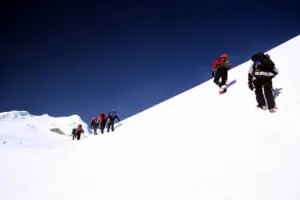
local versions of the dysfunction that people had hoped federalism would dismantle.

But by the late 2070s and into the 2080s, something began to shift. A few provinces, particularly Gandaki and parts of Lumbini, started using their authority over local development planning in genuinely innovative ways. Gandaki in particular developed a model of integrating remittance income with local agricultural investment that produced measurable improvements in rural income. It was far from perfect and had its own share of controversy, but it demonstrated that the federal structure could generate local solutions rather than just replicating central government failures at a smaller scale.

The 2082 local elections were the most competitive and least violent in Nepali history. Turnout among first-time voters under twenty-five reached sixty-eight percent nationally, a number that would have seemed fantastical a decade earlier. Women won mayoral positions in fourteen of twenty-two major urban municipalities. Independent candidates, not affiliated with any major party, won over two hundred local government seats across the country.

The political class noticed. When voters demonstrate that they will actually choose differently, politicians begin, however slowly, to behave differently.

The Economy: Painful Transitions and Fragile Gains

It would be dishonest to write a celebration of Nepal in 2083 without acknowledging that the economy is still fundamentally fragile in ways that no amount of political progress has yet resolved.

The remittance economy, which has kept Nepal’s foreign exchange reserves stable and millions of families out of poverty for decades, is slowly and painfully restructuring.

Automation has hit Gulf construction and manufacturing harder than anyone predicted, and the number of Nepali migrant workers in certain categories has declined significantly since 2078. This has created real hardship in districts that had become structurally dependent on remittance income.

At the same time, the digital economy has grown faster in Nepal than almost any other sector over the past decade. Kathmandu now has a legitimate tech startup ecosystem with several companies that have attracted serious regional investment. Fiber broadband has reached seventy-two percent of rural municipalities, up from under thirty percent a decade ago. A Nepali software company became the first from this country to list on a foreign stock exchange in 2081, which was the kind of news that required a moment to absorb.

Tourism has recovered from the twin shocks of the pandemic era and some difficult years of infrastructure neglect, though the recovery is uneven. The Everest corridor remains crowded to a degree that conservationists find alarming. But the development of community-based trekking routes in less-visited regions, especially in the far western hills and the trans Himalayan zones of Mustang and Dolpo, has begun distributing tourism income more broadly and more sustainably.

Agriculture remains the employment base for a majority of Nepalis, and it remains undercapitalized, underirrigated, and burdened by fragmented landholding patterns that make modernization genuinely difficult. Climate change is making everything worse. The glaciers are retreating. The monsoon is less predictable. Flooding in the Terai has become more severe and more frequent. These are problems that require both national investment and international cooperation, and progress on both fronts remains frustratingly slow.

A Generation That Refuses to Leave

Perhaps the most significant thing happening in Nepal in 2083 is something that is difficult to quantify in any dataset.

Young Nepalis are increasingly choosing to stay.

This is not universal, and it would be foolish to romanticize it. Many young people still leave, and many who leave are making a rational and entirely understandable choice. The opportunities abroad remain real, and the opportunities at home remain limited in important ways.

But the generation that organized the protests of 2080, that voted in record numbers in 2082, that built the startups and the advocacy organizations and the independent media outlets and the community libraries and the urban farming cooperatives, that generation has made a different calculation. They have decided that Nepal is worth the fight.

You see it in unexpected places. A twenty-six-year-old woman from Rupandehi who turned down a scholarship to a university in the Netherlands because she was in the middle of building a mobile health platform for rural maternal care. A twenty-nine-year-old man from Solukhumbu who came back from three years in South Korea with savings, skills, and a plan to start a trekking equipment manufacturing cooperative in his home district. Young journalists in Pokhara, Dharan, and Nepalgunj are building local investigative outlets on almost no budget because they believe accountability journalism matters.

These are not extraordinary people in the sense of having access to resources or connections that others lack. They are extraordinary only in their stubbornness, which is perhaps the most Nepali quality of all.

What the Protests Left Behind

The protest movements of 2079 to 2082 left behind something more durable than any single piece of legislation. They left behind a political culture that is, incrementally but genuinely, less tolerant of the status quo. The young people who held signs at Maitighar are now running for local office, joining civil society organizations, working inside government ministries, and teaching in public schools. Their presence is changing institutions from within, slowly and imperfectly, but visibly.

A new civic vocabulary has entered common use. Questions about conflict of interest and transparency that once seemed like the domain of academics and development workers now come up in ordinary conversations. A mayor who, a few years ago, might have quietly directed a road contract to a cousin now has to worry about an Instagram account with two hundred thousand followers documenting every pothole and every suspicious tender.

This is fragile. Democratic culture is always fragile. It requires constant tending. But in Nepal in 2083, more people are tending it than at any point in this country’s troubled modern history.

The Mountains Have Not Changed

Through all of this, which is both the comfort and the challenge of this country, the mountains remain exactly as they were.

Sagarmatha still rises to the same height. The Koshi still runs from the same glaciers. The rhododendrons still bloom red across the same hillsides every spring. Pashupati still receives the same prayers at the same ghats where prayers have been offered for more than a thousand years.

Nepal’s relationship with its own landscape, which is to say with its own identity, is changing in ways that are worth watching. A younger generation of Nepalis is engaging with questions of environmental stewardship, indigenous rights, and climate justice in ways that draw on both global frameworks and deeply local knowledge. The movement to protect community forests, the campaigns against plastic in mountain trails, and the advocacy for Tharu and Madhesi cultural rights within a federal framework are connected threads in a larger conversation about what kind of country Nepal wants to be.

That conversation has no clean resolution. It probably never will. Nepal is too complicated and too contradictory for clean resolutions.

A Personal Reckoning

I want to be careful not to write a story that is more hopeful than the facts allow.

Nepal in 2083 is still a country where getting justice in a court of law depends enormously on who you know. It is still a country where caste discrimination shapes life chances in ways that official rhetoric has not yet managed to change. It is still a country where women face violence and discrimination that laws have only partially addressed. It is still a country where the border with India creates economic dependencies and political pressures that limit sovereignty in ways most Nepalis feel, but few discuss openly.

The generation that rose in protest did not fix these things. It could not. These are problems with roots that run deeper than any single movement can reach in a few years.

What that generation did was make it harder to pretend that these problems do not exist. They made it more difficult for the comfortable to stay comfortable without at least acknowledging that something is wrong. They changed the emotional tenor of civic life from resigned cynicism to something more like impatient engagement.

That is nothing. In fact, looking at the arc of Nepali history, it might be everything.

The Year Ahead

So here we stand at the threshold of 2083, a year that will begin, as Nepali years always do, with the smell of flowers and the sound of drums and the particular quality of Baisakh light over the Himalayan skyline.

The parliament faces a full legislative calendar of difficult choices on fiscal policy, education reform, and climate adaptation. Provincial governments will continue the messy work of building functional institutions from scratch. Local governments will be held accountable by citizens who have discovered that accountability is actually possible. Young people will continue the unremarkable and essential work of building something better than what they inherited.

None of this is guaranteed. Nepal has disappointed its own hopes many times before and will likely do so again. Hope, in this country, has always had to be held with a certain firmness, an acknowledgment that it can be lost, combined with a refusal to let it go entirely.

But standing here today, I find myself with more reasons for that kind of hope than I have had in years. Not the naive hope that imagines the future will simply be better. The harder, more honest hope that recognizes the future can be made better by enough people willing to do enough difficult and unglamorous, and necessary work.

Nepal is not there yet. But Nepal is on its way.

Naya Barsha 2083 ko Shubhakamana. May this year bring us closer to the country we deserve to be.

What Green Horizon Knows That the Internet or Your Guidebook Doesn’t?

Local trekking companies like Green Horizon carry real-time knowledge, unwritten trail secrets, cultural relationships, and flexible support that no guidebook or Google search can replicate. Their on-ground experience is the difference between a trip that works and one that doesn’t.

There’s this thing travelers do before visiting Nepal. They spend weeks on it. Tabs open everywhere. Lonely Planet bookmarked. Reddit threads saved. YouTube videos watched at 1.5x speed. They build what feels like a solid plan. Then they land in Kathmandu, and within 48 hours, half of what they prepared turns out to be either outdated, wrong, or just… not how things actually work here.

Not their fault. The internet isn’t lying to them. It’s just not local.

That’s the gap. And it’s bigger than most people realize before they get here.

Why the Green Horizon Trekking Guide Beats Google and Guidebooks?

green-horizon-trekking-guide

Guidebooks go to print and then sit. The Lonely Planet edition someone’s carrying might reference a teahouse that burned down two seasons ago, or a trail that got rerouted after a landslide, or a festival date that shifted because the lunar calendar moved it again. Guidebooks are not wrong exactly. They’re just frozen in time.

The internet is faster, sure, but it has its own problems. Most trekking content online is written by someone who did one trip, once, and now considers themselves an authority on Nepal. Or worse, it’s SEO content written by someone who’s never left their desk. You can feel it in the writing. Vague, generic, no specifics that only come from actually being there.

Neither of these gives you what a local company gives you. Which is someone who was on that trail last week?

What Local Expertise Actually Means in Nepal?

green-horizon-trekking-guide

This isn’t just a feel-good phrase. Local knowledge in Nepal is genuinely operational. It changes decisions. It changes days.

Green Horizon’s guides grew up in these regions. Some of them have been walking these trails since before they were labeled on any map. They know which pass has been icy since October, which teahouse switched owners and dropped in quality, and which village is hosting a Tamang festival the week your group walks through. That last one doesn’t appear on any itinerary you’d find online. It just happens, and a local guide knows how to walk you into it.

They also speak the language. Not just Nepali generally, but the dialects, the village rhythms, the way to greet an elder in a Gurung household versus a Sherpa one. Those small things open doors that money can’t, and that no booking platform can arrange for you from the outside.

7 Things Green Horizon Knows That Others Simply Don’t:

1. The trails nobody publishes

The popular routes are popular because they have been written up. That’s circular, and it means the most interesting paths in Nepal often aren’t in any guidebook. Green Horizon knows the side trail from Ghorepani that cuts through a rhododendron forest most trekkers walk straight past. The village above Langtang Valley, where three families still make the kind of yak cheese nobody exports. These aren’t dramatic secrets. They’re just the things you learn from years of walking, not from reading.

2. Weather that’s actually current

A forecast on your phone gives you a regional picture. A guide who talked to the teahouse owner in Deurali yesterday gives you something more useful: the pass was frozen at 5 am this morning, wait until 9. That level of real-time detail is the difference between a safe crossing and a miserable, dangerous one. No app has it.

3. Cultural access that can’t be scheduled

Nepal’s festivals run on lunar calendars. Some of the best ones aren’t listed anywhere tourists look. Green Horizon’s team knows what’s coming up, what’s worth adjusting your itinerary for, and more importantly, how to enter those spaces respectfully. Showing up to a monastery ceremony uninvited is very different from walking in with someone the monks already know.

4. Itineraries that bend without breaking

Online booking platforms sell fixed packages. Day one here, day two there, this many kilometers, this teahouse. Life doesn’t work that way in the mountains. Someone in the group needs an extra rest day. The weather closes a route. A completely unexpected opportunity presents itself. A local company doesn’t panic when the plan changes. They just make a new one, because they know enough to do that confidently.

5. Where to actually eat and sleep

Not every teahouse is equal. Not close. Green Horizon knows which ones have genuinely clean kitchens, which ones have the hot water they advertise, which family-run lodge on the Langtang trail makes a dal bhat worth sitting down for. That knowledge comes from repeat visits, from relationships, from guides who stay in these places off-season, too. No review on TripAdvisor tells you what a local already knows by instinct.

6. How to spend less without losing anything

Booking through an international operator typically adds 30 to 60 percent to the cost. That markup pays for offices in London or Sydney, marketing teams, and booking platforms. It does not make your trek better. Booking directly with Green Horizon cuts that middleman completely. The guide quality is identical. The mountain doesn’t change price based on who arranged the booking.

7. Emergency response that works

This one matters most. When something goes wrong at altitude, and sometimes something does, response time is everything. Green Horizon has contacts at rescue coordination centers, relationships with helicopter evacuation services, and guides trained in altitude sickness recognition. They’re not escalating your problem through a foreign office in a different time zone. They’re handling it, in Nepali, on the ground, right now.

Local Company vs Online Planning: The Real Comparison

What You Need Internet Research Green Horizon
Current trail conditions Outdated or generic Updated weekly from guides on the trail
Flexible itinerary Fixed package, no changes Adjusted in real time as needed
Cultural access What tourists are shown What locals actually share
Cost International markup added Direct local pricing
Emergency support Find a number, call, and wait On-ground response immediately
Hidden routes Whatever got published What guides have walked for years

The Real Problems That Happen Without Local Help

Travelers who plan entirely from the internet tend to run into the same categories of trouble. They book teahouses that don’t exist anymore. They underestimate trail time because the blog they read was written by a fast solo trekker, not a family of four. They miss the permit requirements that have changed since the article was published. They overpay at Trailhead shops because nobody told them the going price. They walk past a monastery at exactly the wrong time to enter and don’t know why.

None of this is catastrophic. But it compounds. And it makes a trip that should have been extraordinary feel like it was just fine.

When do you especially need local experts?

  • First-time Nepal trekkers, always. You don’t know what you don’t know yet, and that’s precisely when local knowledge protects you most.
  • Families and anyone traveling with children or older adults. The stakes are different. The flexibility requirement is higher. A local company adjusts without drama.
  • Anyone going off the main routes. Popular trails have enough other trekkers that you can figure things out as you go. Remote areas don’t work that way. In Dolpo or far western Nepal, if something goes wrong, you need someone who is already prepared for it.

How to Choose the Right Local Company?

Check for Nepal Tourism Board registration and TAAN membership. Any legitimate company has both and shows them without being asked. Read reviews on TripAdvisor and Google, but look past the star rating. Read what people actually say about their guide by name, about what happened when something went wrong, and about whether the company communicated honestly. Those details matter more than a 4.9 average.

Ask questions before you book. How long have your guides been working these routes? Who specifically would lead our trek? What’s your emergency protocol above 4,000 meters? A good company answers all of that clearly. A bad one gets vague.

Green Horizon has been operating in Nepal long enough that their guides know these mountains personally, not professionally. That’s a different thing. And it’s exactly the thing no guidebook can give you.

Travel Smarter. Travel Local.

Most people who come to Nepal want more than a completed checklist. They want the thing that stays with them afterward. The unscheduled moment. The family who invited them in. The trail nobody else was on that morning. The guide who knew exactly when to push and when to stop.

That’s not in any guidebook. It lives in the people who know this place for real.

Green Horizon Tour is built on that. Local, licensed, genuinely knowledgeable. Reach out and tell them what you’re planning. The conversation alone will already tell you more than three hours of internet research.

FAQs

green-horizon-trekking-guide

Why is local knowledge important for trekking in Nepal?
Trails change. Teahouses close. Permits update. Festivals shift dates. Local companies track all of it continuously. Guidebooks and websites can’t keep up.

Are guidebooks outdated for Nepal travel?
Partially, yes. They’re useful for general orientation but regularly lag on trail conditions, permit requirements, and practical logistics that change seasonally.

Is it cheaper to book with a local company?
Usually 30 to 60 percent cheaper than international operators for equivalent or better service, because you’re cutting out the reseller markup entirely.

What do local guides provide that others can’t?
Language, cultural relationships, real-time trail intelligence, emergency contacts, and a decade of walking the exact routes you’ll be on.

Can I rely only on internet research for trekking in Nepal?
For basic orientation, fine. For actual planning and safety, no. The gap between what’s published and what’s current on the ground is too wide to risk it.

Best Trekking Routes in Nepal for Kids Under 12(Easy & Safe Family Treks)

Trekking routes in Nepal for kids were something I almost said no to three years ago. Three years ago, I almost talked my husband out of this trip entirely.
We had two kids, seven and nine at the time, and I was convinced Nepal trekking was something you did before kids, not with them. I’d seen the photos. The climbers. The serious faces and the heavy gear and the altitude tents. And I thought, no way. Not with a second grader who still needs someone to tie his shoes.

We went anyway. And I’ll tell you exactly what happened. My nine-year-old cried on day one because her feet hurt. My seven-year-old refused to eat dinner that night because he said the dal smelled weird. And by day three, both of them were racing each other up the path to Poon Hill at five in the morning while my husband and I wheezed behind them, trying to keep up.

So yes. Kids under 12 can go trekking in Nepal. They can do it safely. They can do it happily. And if you pick the right route and stop trying to treat it like an adult expedition, your children will probably do it better than you.

Here’s everything I wish someone had told me before we booked.

Is Trekking in Nepal Safe for Kids?

trekking-routes

Safe is a funny word because nowhere is perfectly safe, and Nepal isn’t trying to pretend otherwise. But honestly? The popular family routes in Nepal felt safer than I expected. Better marked than some trails I’ve done in Europe. Teahouses every few kilometres. Locals who immediately want to feed their children something.

The altitude concern is real and worth taking seriously. Kids don’t always tell you when they feel off, and that’s the actual danger. Not the trails, not the distances. Just altitude and the fact that children are bad at reporting symptoms.

Stay below 3,500 metres and that risk drops dramatically. All six routes in this guide do exactly that, or give you a clear option to stay below it. Get a guide who knows what early altitude sickness looks like in children. And go slow. Go genuinely, uncomfortably slow. Slower than that. Now you’re at the right pace.

Why Families Keep Coming Back to Nepal

It’s not one thing. It’s everything together.

The teahouses are a big part of it. You’re not camping. You’re not cooking. You finish walking, you sit at a table, someone brings your kid a plate of fried rice or pasta or Tibetan bread, and a cup of hot chocolate. Then they sleep in a bed. Then you do it again tomorrow. That structure is genuinely easier to manage with children than most people expect.

The cost matters too. We did five days, including the guide, the accommodation, all meals, and two porters, for around what a weekend glamping trip costs back home. That’s not a typo.

And then there’s the people. I keep coming back to this because it genuinely surprised me. In one village, an older woman came out of her house just to give my son a small cloth bracelet. She didn’t speak English, and he didn’t speak Nepali. He wore that bracelet for four months after we got home. Still talks about her. That’s Nepal.

Best Trekking Routes in Nepal for Kids Under 12

1. Ghorepani Poon Hill Trek

Four to five days. This is where most families start, and most families don’t regret it.

Maximum altitude is 3,210 metres, which keeps the risk of altitude sickness low. Walking days are four to five hours, sometimes less. The trail goes through a rhododendron forest that in March and April looks like someone went absolutely wild with a pink and red paintbrush across every hillside. Gurung villages along the way are small and quiet, and the kind of place where your kid will want to look inside every doorway.

But the thing everyone does this trek for is sunrise from Poon Hill itself. You’re out of bed at four in the morning. It’s cold and dark, and your kids are complaining, and you’re wondering why you agreed to this. Then the light comes up behind Dhaulagiri and hits the Annapurna range, and the whole sky turns colours that don’t have proper names. My daughter didn’t say a single word for about ten minutes. Just stood there with her mouth open. She’s twelve now and still brings it up.

Good for kids aged 7 and above with some walking experience.

2. Everest View Trek

Five to six days. You come home having seen Everest with your own eyes. Not on a screen. Actually seen it. That’s the whole point.

This one reaches 3,880 metres at the Everest View Hotel, higher than Poon Hill, so you need to build in a proper acclimatisation day and watch your kids carefully through the middle days. Headache or not hungry means you stop, rest, maybe go down a bit. No heroics.

For kids aged 9 and above who are reasonably active and not prone to getting carsick on winding roads, this trek is absolutely doable and worth every bit of extra planning. The Sherpa villages in the Khumbu are unlike anywhere else on earth.

3. Langtang Valley Trek (Short Version)

Four to six days. Only a few hours from Kathmandu by road, which cuts a huge chunk of the travel stress right out of the trip.

Langtang is quieter than the Annapurna routes. Way quieter. The valley has this wild, dramatic quality, big green slopes, yak pastures, rivers that are so loud you feel them before you hear them. The Tibetan cultural influence in the villages is fascinating for kids who’ve been doing some reading about the region beforehand.

At Kyanjin Gompa, there’s a cheese factory. Made from yak milk using old Swiss techniques. I mention this specifically because both my kids, who refused to eat any local food for the first day and a half, ate an entire block of yak cheese between them. Go figure.

4. Australian Camp Trek near Pokhara

Two to three days. This is the one to do if your kids are young, under 7, or if your family has never done anything like this before.

The trail is gentle. The altitude is nothing to worry about. The views of Annapurna from the camp are genuinely spectacular in a way that feels almost unfair given how short and easy the walk is. You’re back in Pokhara in two or three days, which means if someone gets a blister or a cold or just decides they hate trekking, you have not committed to anything catastrophic.

Start here. Figure out whether your family likes it. Then plan the longer trek for next time.

5. Nagarkot to Dhulikhel Trek near Kathmandu

One to two days. Don’t underestimate this one just because it’s close to the city.

The ridge walk between Nagarkot and Dhulikhel gives you Himalayan views on a trail that’s genuinely easy, zero altitude concerns, and close enough to Kathmandu that you can do it as a day trip or an overnight. We did it before our main Poon Hill trek as a kind of warm-up, and our kids were immediately obsessed. Combine it with a day in Bhaktapur, and you’ve got a brilliant two-day introduction to Nepal before the real trekking starts.

6. Helambu Trek

Four to five days. Low altitude, quiet trails, Sherpa and Tamang villages, and almost no other tourists.

This trek never shows up on the front page of trekking roundups, and I think that’s because it doesn’t have one dramatic selling point. It’s just genuinely, consistently beautiful the whole way through. Families who do Helambu tend to be the ones who’ve already done Poon Hill and want something different. They almost always say it was their favourite.

Nepal vs Other Family Trekking Destinations

Factor Nepal European Alps Patagonia
Cost for a family Very affordable Expensive Very expensive
Easy trails for young kids Excellent Good but pricey Very limited
Where you sleep Warm teahouses Mountain huts Usually camping
Culture along the trail Deep and real Moderate Minimal
Altitude issues Manageable on the right routes Low Low
The youngest age at which it works Around 6 Around 8 Around 10

Tips I Learned the Hard Way

Let your child set the pace. Completely. Throw your adult hiking pace out entirely. The families I saw struggling on the trail were always the ones where a parent was slightly ahead and slightly impatient. The families having a great time were the ones where the kid was basically leading.

On hydration, set a phone alarm every 45 minutes. When it goes off, everyone drinks. No discussion. Kids at altitude stop feeling thirsty properly and will walk right into dehydration without realising it.

Pack snacks your child will actually eat when tired and grumpy at altitude. This is not the moment for the healthy snacks you bought at the airport. Chocolate. Biscuits from village shops. Dried mango. Whatever your kid genuinely loves. I packed those little fruit jelly packets my son liked, and he ate them every single day like they were medicine. They basically were.

Hire a guide. This is not optional advice dressed up as optional. A good guide who knows family trekking changes the entire experience. Ours in Nepal knew every teahouse owner on the Poon Hill route, knew which paths got slippery after rain, knew how to talk to my daughter when she hit a wall on day two and needed five minutes with someone who wasn’t her parents. Worth every rupee and then some.

What to Actually Pack for Kids

Shoes that have been worn before. Weeks before. The month before, ideally. New hiking boots on a Nepal trail will destroy your child’s feet by day two.

Warm base layers that pull moisture away from the skin. A fleece that actually fits. A windproof jacket, because even in spring, the mornings in Nepal are genuinely cold. Sunscreen is applied every single morning without negotiation because UV at altitude is brutal. A small daypack for each older child carrying their own water bottle and snacks, so they feel ownership of the trek.

Enough pairs of warm socks to change daily. A basic first aid kit. Whatever your doctor prescribes for altitude concerns. And wet wipes. Infinite wet wipes.

When to Go

March through May is the sweet spot. Rhododendrons are out, the weather is mostly stable, temperatures are comfortable for walking with kids, and the mountain views are usually clear.

September through November is equally reliable, maybe even better for views.

June through August is monsoon season. The trails get slippery, leeches come out on the lower paths, and the mountains hide behind clouds for days at a time. December and January can work on low routes, but you’re packing heavier, and the cold makes everything harder for young children.

The Mistakes That Actually Ruin These Trips

Choosing a route that’s too hard because you feel like the easy one won’t justify the flights. It will. The easy routes in Nepal are not boring. They’re extraordinary.

Ignoring symptoms in your kid because they seem minor. Unusual headache, not wanting to eat, and more tired than the day before at the same altitude. These are the signs. Take them seriously. Go down if needed. Nobody has ever regretted going down.

Rushing. Over-planning. Cramming six walking hours into a day because you want to see more. The families who come home saying Nepal was the best trip of their lives are almost always the ones who did less and felt more.

One Last Thing

The morning we left Nepal, my son asked if we could move there.

He was seven. He had complained about the smell of dinner on day one. He had needed his shoes tied every morning of the trek. And at the end of it, he wanted to live there.

I’ve thought about that a lot since. I think what happens on these trails with children is that they get to be capable in a way that normal life doesn’t give them. They walk somewhere hard, and they make it. They eat food they’ve never tried. They talk to people with whom they share no language. They wake up at four in the morning and see a mountain turn gold, and they understand, maybe for the first time, that the world is enormous and genuinely worth exploring.

Nepal gives kids that. The trails are easy enough to be safe and hard enough to matter. That combination is rarer than you’d think.

Go. Take your kids. Book through a team that knows what they’re doing and knows these mountains properly.

Green Horizon Tour is at greenhorizontour.com. Tell them your children’s ages and what kind of pace you’re hoping for. They’ll take it from there.

FAQs

What is the easiest trek in Nepal for kids?
Australian Camp near Pokhara. Two to three days, very low altitude, gentle trails, brilliant Annapurna views. It’s where families with young children or first-timers should always start.

Is Everest Base Camp suitable for kids under 12?
Genuinely no for most kids this age. Too long, too high, too physically demanding. The Everest View Trek gets you into the Khumbu with actual Everest views at a fraction of the difficulty and risk.

At what age can children start trekking in Nepal?
Short day hikes work from around age 5 or 6 on low-altitude trails near Pokhara or Kathmandu. Multi-day treks work well from age 7 upward, with some preparation walking beforehand.

Do children need permits for trekking in Nepal?
Yes, TIMS cards and national park permits apply to everyone, including children. A proper agency like Green Horizon Tour sorts all of this before you ever reach a trailhead.

How long should kids trek per day?
Three to five hours of actual walking. Split it up. Rest when someone asks to rest. Stop when something interesting appears, a waterfall, a funny-looking yak, a suspension bridge that bounces. Those stops are not delays. They’re on the trip.

Best Adventure Activities in Nepal for Thrill Seekers (2026 Guide)

Adventure Activities in Nepal are among the most thrilling in the world. From trekking through the towering Himalayas to paragliding over Phewa Lake, bungee jumping into gorges, and exploring jungle safaris, Nepal offers an unmatched variety of adrenaline-packed adventures. Spread across a country smaller than most people expect, these activities are available at prices that genuinely surprise visitors.

Ask someone who has been to Nepal what it is actually like and watch their face. They pause. They usually say something like “you just have to go,” which is an annoying non-answer until you go, and then you completely understand why that is the only honest thing they could say.

Nepal does not work the way other adventure destinations work. You do not show up, tick off a list, and go home satisfied. You show up, do three things on the list, discover six more you had never heard of, and find yourself at a teahouse somewhere above 3,000 metres calculating whether you can extend your visa. It happens to people constantly. The mountains and the river gorges and the jungle lowlands, just have a pull that is hard to explain until you are inside it.

And for adventure specifically, Nepal is difficult to beat. Eight of the world’s fourteen highest mountains are here. Glacier-fed rivers tear through gorges that took millions of years to form. Pokhara sits at the edge of a lake looking directly at the Annapurna range and has somehow become one of the best paragliding spots on the entire planet. Chitwan, down south, has tigers and one-horned rhinos walking around freely. All of this within one country, most of it under a budget that would barely cover one activity in Switzerland.

Why Nepal Works So Well for Adventure Tourism

The honest answer is geography. Nepal’s topography is just absurdly varied for a country this size. You have altitude going from roughly 60 metres at the Terai lowlands all the way up past 8,800 metres at Everest, and almost every kind of terrain in between — subtropical jungle, river gorges, high-altitude desert, rhododendron forests, glaciers. That variety creates conditions that make different adventure types possible within short distances of each other.

The other honest answer is price. Nepal is not cheap in the way that “budget travel” sometimes implies low quality. It is more than the dollar goes very far here. A tandem paragliding flight over Phewa Lake with the whole Annapurna range stretched behind you costs $35 to $40. The same activity in New Zealand costs $200 plus. The bungee jump at The Last Resort — 160 metres over the Bhote Koshi gorge, one of the most dramatic bungee setups in Asia —runs $90 to $110. Comparable setups elsewhere charge closer to $200.

Beginners do well here, too. That gets underplayed. Nepal is not exclusively for people who have done this before. The paragliding operators in Pokhara run beginner courses every single day. The Trishuli rafting works for people who have never been in a raft. The shorter treks, like Poon Hill, are done every week by people in fairly ordinary physical shape who just want to see the mountains. Nepal has a genuine range.


Top 10 Best Adventure Activities in Nepal

1. Trekking in the Himalayas

adventure-activities-in-Nepal

Trekking is what Nepal is most known for, and it deserves that reputation. Everest Base Camp gets the most attention — and fairly, it is extraordinary —but the Annapurna Circuit is arguably a better overall experience for most people because the terrain variety is wider, the villages are more interesting to walk through, and the altitude progression is slightly more forgiving if you are newer to high-elevation trekking.

Neither route requires technical climbing skills. Base Camp sits at 5,364 metres, and the walk in takes around twelve days each way, which is a long time to be doing something physically demanding. Fitness matters. Patience matters more. The people who enjoy it most are not always the fittest; they are the ones who are genuinely willing to slow down and let the landscape arrive at its own pace.

Worth knowing: Lukla flights, the standard way to start the Everest route, get delayed frequently. Build flex days into any Everest itinerary, or you will spend time being anxious about missing flights home.

2. Paragliding in Pokhara

adventure-activities-in-Nepal

Pokhara’s reputation for paragliding is not hype. The thermal conditions above the Phewa Lake valley are genuinely reliable, the views from altitude are mountains-and-lake at the same time, and the tandem flights are smooth enough that people with no experience regularly describe them as one of the most enjoyable things they have ever done. Flight duration is typically 30 to 45 minutes. You do not control anything. You run four steps, and you are in the air, and your only job after that is to look around and try to take it in.
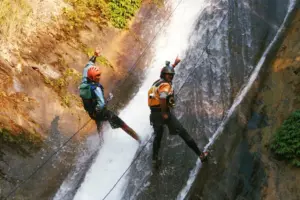
Go in the morning. Clouds build over the valley from midday onwards, and the mountains are clearest in the first few hours of light.

3. Bungee Jumping at The Last Resort

adventure-activities-in-Nepal

About three hours east of Kathmandu, The Last Resort runs what remains one of the most intense bungee setups in Asia. The jump is from a suspension bridge strung over the Bhote Koshi gorge. The freefall is 160 metres. The river below is loud and white and very far down, and your brain knows exactly how far down it is the whole time you are standing on that platform.

Nobody who has done this pretends it is not terrifying. That is the point. Most people describe the twenty seconds after the bounce settles as the most alive they have felt in a long time. The operators are experienced, and safety standards are rigorous. But it is still a 160-metre freefall into a gorge, and you should go in knowing that.

4. White Water Rafting

adventure-activities-in-Nepal

Nepal’s rivers come straight off Himalayan glaciers, and that means cold, fast, and very real. The Trishuli is the most accessible from Kathmandu and Pokhara and handles beginners well — Class III rapids, good scenery, easy logistics. If you want something harder, the Bhote Koshi near The Last Resort runs Class IV and V and is a different kind of experience entirely.

Multi-day trips on the Sun Koshi are worth looking at if you want rafting to be a proper adventure rather than a half-day activity. Nine days start to finish, camping on river banks, moving through landscapes that most tourists never see. People who have done Sun Koshi consistently put it among the best things they have done anywhere.

5. Zipline in Pokhara

adventure-activities-in-Nepal

The Zip Flyer above Pokhara is genuinely one of the world’s steepest ziplines. You launch from a hilltop, and the gradient is steep enough to push you over 120 km/h before you reach the valley floor. The whole run is under two minutes. People who have done both the zipline and the bungee often say the zipline made them more nervous, which is a strange thing to say about something you are attached to the entire time. The views on the descent are extraordinary if you can manage to open your eyes.

6. Jungle Safari in Chitwan National Park

jungle-safari

Chitwan gets overlooked by people who think Nepal is only mountains. That is a mistake. Chitwan National Park is a UNESCO World Heritage Site in the country’s southern lowlands, about five hours by road from Kathmandu, and it is one of the better wildlife destinations in Asia.

One-homed rhinos are genuinely common here. Tigers exist in real numbers. Canoe safaris along the Rapti River at dawn are the kind of slow, quiet experience that stays with people far longer than the adrenaline activities do —watching a rhino on the opposite bank while your canoe drifts without sound is not something you forget quickly.

Do not go for just one day. Two is minimum, three is better.

7. Mountain Biking

adventure-activities-in-Nepal

The Kathmandu Valley rim trails run through Newari villages, hilltop temple complexes, forested sections, and open ridgelines with mountain views that stop you in your tracks. The cultural element makes it different from mountain biking almost anywhere else. You are not just riding terrain, you are moving through centuries of history with occasional technical descents.

Experienced riders will find it properly challenging in places. First-timers can take gentler routes.

8. Rock Climbing

adventure-activities-in-Nepal

Nagarjun Forest sits close to Kathmandu city and has natural rock faces suited to beginners through intermediate levels. Several indoor walls in Thamel handle complete newcomers who want to try before committing to outdoor climbing. The options scale up significantly as you move toward the mountains.

9. Peak Climbing

mera-peak-climbing

Island Peak at 6,189 metres and Mera Peak at 6,476 metres are where recreational trekking ends and something more serious begins. Neither demands advanced technical experience, but both will ask for more than most people have been trained for. The approach to Mera is remote and beautiful and exhausting in exactly the right way. From the summit on a clear day, you can see five 8,000-metre peaks simultaneously. Everest, Lhotse, Makalu, Kanchenjunga, Cho Oyu — all at once. There is genuinely no way to prepare for what that looks like.

10. Canyon Swing and Canyoning

adventure-activities-in-Nepal

The canyon swing at The Last Resort launches from the same bridge as the bungee, but instead of dropping straight down, you swing outward in a wide pendulum arc across the gorge at around 150 km/h. A different kind of fear from the bungee. Bigger and more sustained. Canyoning routes on rivers near Chitwan and the Trishuli involve rappelling active waterfalls and swimming through gorge sections with guides who know every metre. Physically demanding and genuinely fun.

Best Adventure Activities for Beginners in Nepal

Pokhara is where to start. Paragliding first —zero experience needed, the instructor manages everything, and you will land already thinking about how soon you can go again. Poon Hill trek is three to four days, with a manageable gradient, and the sunrise view from the top over Dhaulagiri and the Annapurna range is the kind of thing people bring up for years afterwards.

Trishuli rafting on the easier sections is another good start —proper rapids, cold glacier water, and no experience required. Chitwan safari needs no physical preparation at all. You sit in a jeep or a canoe, and the wildlife does all the work.

Extreme Adventure Activities in Nepal

Bungee at The Last Resort. Bhote Koshi Class IV/V rafting. Island Peak or Mera Peak climbing. Canyon swing. These are not theme park versions of extreme adventure. They are the real thing, run by professionals who take safety seriously, but the underlying activity is genuinely demanding and cannot be made otherwise.

What Does Adventure in Nepal Actually Cost

Activity Nepal New Zealand Switzerland
Paragliding tandem $35 — $60 $180 — $280 $200 — $350
Bungee jumping $90 — $110 $175 — $225 $180 — $240
White water rafting $80 — $100 $120 — $160 $150 — $200
Zipline $55 — $70 $100 — $150 Unavailable
Jungle safari 2 days $150 — $200 Unavailable Unavailable
EBC Trek guided all-in $1,200 — $1,800 Not comparable Not comparable

A week of mixed adventure —rafting, paragliding, a short trek, one adrenaline activity — is doable for under $600 all-in if you plan sensibly. That includes food and accommodation.

When Should You Go

October is the single best month for most people. Post-monsoon air means mountain views that look almost artificial; they are so sharp. Temperatures at trekking altitude are cold at night but manageable during the day, and the trails are alive.

March through May works well, too. Rhododendrons are blooming at mid-altitude, temperatures are warmer, and fewer people are on the trails than in autumn.

June through August — the monsoon — is genuinely difficult for trekking. Leeches on trails, cloud blocking mountain views, rivers running dangerously high. Chitwan is an exception. Wildlife is actually more active during this period, and safari conditions are often surprisingly good.

December through February suits lower-altitude activities fine. Cold at elevation, but Pokhara, Chitwan, and the valley trails are perfectly pleasant.

Safety: The Honest Version

Book with Nepal Tourism Board-registered operators. Not because it is a formality but because it genuinely matters. Ask them directly what their emergency protocols are. Ask about guide certifications. Any operator worth booking will answer both without any fuss.

Altitude sickness is the most common serious problem on Himalayan treks, and it does not care how fit or young you are. Ascend slowly. Drink more water than you feel necessary. Do not push through symptoms because you have a tight itinerary. A schedule is not worth a medical emergency in a remote valley.

Tell someone at home where you are going and when you expect to be back. Check the weather before any outdoor activity. When your guide says conditions are not right — and they will sometimes say this — that call is not open to debate. These people read this mountain and this river every single day. You have been here a week.

Nepal vs Everywhere Else for Adventure

Switzerland has the Alps and an organised infrastructure. New Zealand has excellent adrenaline tourism and great scenery. Both are good. Neither has Himalayan-scale altitude, nor glacier rivers, nor a jungle national park with tigers, nor aerial sports over a mountain lake, all within a single two- week itinerary, for prices that do not require you to remortgage anything.

Nepal is in a category by itself for the combination of what it offers, what it costs, and how genuinely wild the landscape still is.

How to Actually Plan This Trip

Start with your base locations. Pokhara for aerial and water sports —that is your adventure hub. Kathmandu for trekking access and cultural orientation before you head into the mountains. Chitwan for wildlife, best tackled at the end when your legs need a rest from trails.

Factor in permit costs early. Annapurna Conservation Area permits, Sagarmatha National Park entry for Everest treks, and TIMS cards —these add up and catch people off guard when they have already fixed their budget.

Only check reviews from the last six months. Operator quality shifts and reviews from 2022 tell you almost nothing about what a company is like in 2026.

Rent gear in Thamel rather than carrying it from home—down jackets, sleeping bags, trekking poles — all available cheaply in Kathmandu’s main tourist district. Your airline baggage allowance will thank you.

Build in slack days. Lukla flights are delayed. Weather changes. Rivers shift. The travellers who fight the schedule end up stressed in one of the most beautiful places on earth. The ones who leave room in the plan consistently have the best trips.

Closing Thought

People come back from Nepal changed in ways that are hard to explain without sounding dramatic. Something about the scale of the landscape and the slowness of moving through it on foot, and the way the people here treat strangers — it adds up to something that ordinary tourism does not produce.

The trails are open in 2026. The Bhote Koshi is running. The thermals above Pokhara are doing what they always do.

Stop putting it off.

Book your Nepal adventure with Green Horizon Tours at greenhorizontour.com and let the team put together an itinerary that actually fits what you are looking for.

Frequently Asked Questions

Trekking by a wide margin. Everest Base Camp and Annapurna Circuit draw the biggest numbers every year. Among non-trekking activities, paragliding in Pokhara gets booked more than anything else.

Is Nepal safe for adventure sports?

Yes, with registered operators. The industry is properly regulated, and top companies work to international safety standards. Do your research, ask direct questions before booking, and you will be in capable hands.

What is the cheapest adventure activity in Nepal?

Day hikes around Pokhara or the Kathmandu Valley with a local guide start from around $10 to $20. Paragliding at $35 to $40 is an extraordinary value for what it actually delivers.

Can complete beginners do adventure activities in Nepal?

Genuinely yes. Paragliding, Trishuli rafting, Chitwan safari, and shorter treks like Poon Hill run daily with first-timers, and no prior experience is needed for any of them.

Which city is best for adventure in Nepal?

Pokhara offers the widest range of activities in one location. Kathmandu for trekking access and logistics. Chitwan for wildlife. Most good itineraries include all three.

plane-image
Easy booking systems

How to book a trip?

select-trip
Select a trip &
make free inquiry
safe-payment
Make online payment to
confirm the trip
traveler-icon
Get confirmation & ready for the trip
Chat on WhatsApp